Top 100 Mechanisms in Board Games: 90-81
Games in This Video
12 games are featured in this video — they unlock as you watch.







Transcript
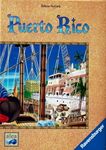
hi i'm adam porter and this is my top 100 board game mechanisms of all time we started a couple of days ago with numbers 100 to 91 and i explained that i'm a board game designer and so i really get involved with looking at how games work trying to get behind the scenes and think about right how do we piece these things together and what different clever combinations of mechanisms can create new experiences so hopefully this list is going to give you a whole load of ideas about different experiences that you could have if you picked up one of these games or if you're a designer different types of mechanisms you could bring together in your own designs to to create the sort of worlds that you want for your players or the sort of emotions that you want your players to experience number 90 is the follow mechanism as it's become known i didn't always know it as the following mechanism this is something that seems to have come up over the last couple of years this term but what we're talking about here is that mechanism i think first employed in puerto rico although i'm not particularly familiar with the game puerto rico i have played it but i play san juan more frequently the card game version so this is the mechanism where if i choose to do a certain action in the game so let's say i choose to build then everybody else can build at the same time okay so i choose the action but everybody benefits from it however i get an extra kickback i get a better version of that build action so it's really satisfying because everybody's involved in every turn of
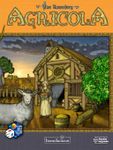
the game you know everyone's involved in every decision anybody makes and there's lots of sort of hoping that okay i'm not gonna take that action maybe there's two things you want to do so i'll do this but i'm hoping another player might do this on another turn and yes i'll get a slightly lower version of it but i'm still benefiting or maybe you're hoping they won't do it so that you get the benefit the the extra special version of that action another great game that uses this is the often overlooked game skylands that came out a couple of years ago from queen games this uses the the follow mechanism in a tile laying game number 89 is resource conversion so this is where i have a set of resources in board games i suppose that's often uh wood and clay and reed and stone or it might be sheep and uh and cows grain and as you can see here i'm talking about agricola and we can convert those resources from one thing to another the wood becomes fences or becomes stables and that houses the animals and the stone can be used alongside the reed to upgrade your house to turn the rooms from wooden rooms into clay rooms or into stone rooms and so on and so resource conversion can be really satisfying now there are some games which have made the entire game resource conversion so games like um splendor and century spice road that's a really sort of classic example of that and recently the game little factory did this as well
where you're taking resources on cards and then you're swapping them for other better cards and then eventually you can swap those better cards for even better cards which are gonna score you points sometimes i find this mechanism a little bit dry um it doesn't feel like there's too much going on we're just cranking an engine and just waiting until i'm able to actually pull in the genuinely rewarding stuff you know those really high points cards but i've got to go through a whole lot of grinding before i get there but i do enjoy it in a thematic sort of euro game like agricola where i'm running my farm and i'm really thinking about what i'm doing and everything makes sense a lot of euro games have this sort of stuff in them that's why it's further down the list is because sometimes i don't like the grind of it i want the rewards more quickly i don't have to wait and wait and wait to get those big rewards number 88 is a nice simple one which is a replenishing market so if you think about ticket to ride in ticket to ride we've got some cards laid out and on my turn i can take cards from that central display or i can take them blind from the top of the deck and then immediately some more cards are laid out for the next turn okay a nice simple mechanism but it's really really versatile it's used in lots and lots of different games um and it's just satisfying it's just nice a nice recent twist on it was in enchanted plumes which i've talked about a little bit on the channel over the last couple of months but enchanted blooms has a slight twist in that on your turn you can either draw cards from the top of the deck or in which case you're getting
them blind or you can take them from that central display but in that case you've got to swap them with cards from your hand and so your hand size is constantly altering because if i swap them well i'm not actually getting anything new my hand is not increasing in size and so sometimes i can swap with the middle sometimes i'm going to want to be taking them blind to try and build up my supply of cards a little bit more and i found that really satisfying twist on this replenishing market um style game number 87 is contract fulfillment and what i mean by this is those games that have like an objective i've got a card in my hand which says i've got to fulfill this i've got to eat certain colors of bamboo with my panda in order to achieve this objective or grow different levels of bamboo in that garden or i've got to connect this city to this city in ticket to ride in order to score points so having something in hand probably several things that you can work towards even better if it's several different objectives because then okay this one's not working out so well for me i'll put that on the wayside and i'll work on a different objective and maybe i'll come back to that one later it's really nice to have a purpose to know what you're aiming for and to be aiming for something that's different to the other players and not to quite know what they're going for so these sort of secret hidden objectives you see them in games like wingspan as well and they're really satisfying because they give you a sense of purpose number 86 is income so i do like an economic game i like a
game where i'm i'm spending stuff i'm investing and i'm getting the rewards back okay but income is great when each round or each turn i'm generating stuff or every now and then in the game i get stuff and it's the amount that i get the income that i get is based on my previous actions so this might be in patchwork where i've laid down a whole bunch of different patches on my quilt but every now and then i'm going to get a whole lot of buttons back and those buttons are going to be really useful for me in buying even better and better patches as we move forward or in tigris and euphrates where i've laid out certain tiles and those tiles are going to keep generating me cubes and these cubes are going to be the things that win me the game but the more tiles i have down the more cubes i'm going to be getting so each turn i get more and more if i can lay down a temple then they're really going to churn out cubes and give me loads and loads of stuff fantastic i love sky every time i i put down a tile with i think it's a barrel then i'm going to get some coins at the start of each turn and maybe i've got more of those than anybody else because they're focusing on some other aspect of their map so i really like games where i get income throughout the game even better if that income is determined by my previous actions in the game number 85 is almost the opposite this is what i'm calling feed your workers because of agricola in agricola at the end at every harvest i've got to feed my workers so regardless of what i'm getting on with in terms of building my farm i better be gathering food because
every now and then i'm going to have to pay my workers with that food and it could be something totally different it could be a penalty of some sort stefan feld games often have this where you know every now and then we have to pay off to to avoid an infestation of rats or a fire um or a plague or you know whatever it could be all sorts of different things an attack by different enemies and so you've got to while you're planning all your other stuff you're doing all your nice building stuff you've also got to have this in the back of your mind that you're going to have to fight off that peril at the end of each round some players really don't enjoy this sort of mechanism i know that i like it because i like the stress and the tension that it creates okay i do like that feeling of i can't quite do everything that i want to do i better deal with that or otherwise i'm going to take a penalty or maybe i push my luck and just accept the penalty and just think well do you know what i'm not going to worry about that fire let it burn i'm going to deal with this i'll deal with that later okay i think that's quite a satisfying sort of push your luck moment that can come from these games number 84 is i suppose it's kind of specific to power grid this one although i've looked it up and i've found out that it is known as stat turn order okay what we're talking about here is that thing in power grid where the the player order it doesn't just go clockwise around the table it changes and it changes depending on what we've done during the game so in power grid specifically you know if you're you don't want to be ahead okay
because if you're ahead on points you're going to be playing later in the turn you know the turn order is kind of reversed if you want to play first you better be behind on points and it's really valuable going first so there's a lot of biding your time and different phases of the game that works differently so in some phases of the game the the player who's ahead will go first and in other phases of the game the player who's behind will go first depending on whether it's a benefit to go first or not and i really like that dynamic player order it can be a little tricky to keep track of because of course we're also accustomed to that idea of turn order just goes clockwise around the table but as a mechanism it does work really really well as a sort of theoretical mechanism yeah it's a really good balancing system so i really like that it's one way of preventing runaway leaders is to say well if you're out in front you're playing last number 83 is dice drafting and we'll be coming back to dice rolling quite a lot throughout this list i expect um but i do quite like that those mechanisms where you roll a bunch of dice and then you each select a different result this kind of mitigates the randomness of dice people think of dice rolling as being extremely random but if we roll all the dice into one central pool and then take turns to pick the dice results which most benefit us then that can be a really satisfying mechanism so dice drafting a great example is again grand austria hotel that's a big um strategic euro game where we're we're helping our
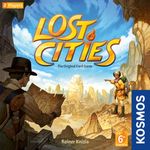
customers find feed them so that they'll stay in our hotel and then put them into the rooms and so on but it's all driven by this this pool of dice where you select one in order to take a certain action pioneer days uses dice in all sorts of different clever ways so when i take that dice i can then use it to power a different type of action on the board all sorts of different things for example dealing with some sort of peril like we've talked about with the feed your workers mechanism or it could be to take some sort of income or to take a special action card okay so really satisfying dice drafting in pioneer days number 82 is that two player mechanism where you're competing over a central row of cards or locations so usually there's a row of cards in between you and then we're playing cards to either side of that central row to try and dominate or take ownership of one of the central cards so this is classically seen in the two-player games lost cities um shoten totten and hana makoji and my own game i designed with rob fisher which is compromat which uses a kind of blackjack mechanism where we're playing blackjack against each other to take control or take ownership of that central card which might give us a special power for a future turn might give us victory points or work towards some sort of set and so the final one on this list of 10 90 to 81 number 81 is a race to solve a puzzle okay so this features in games like dimension it features in my own game quasil which again i designed with rob
fisher where we've got a a puzzle is laid out by laying out a series of cards and then we race to to fit those those different um dice into that different orientation shown on the puzzle it might be something like the genius square where we're putting polyamino blocks in into a grid and trying to complete that before the other player or it might be something a little bit more complex like ricochet robots where we're trying to calculate the lowest number of possible moves in order to get one robot from one location to another location bouncing off the walls as they go and you're trying to do it in fewer moves than the other players i find this really satisfying sitting down doing a puzzle on my own is great but if you can turn it into a competitive activity that adds a lot of fun to it too so as we did in the previous video we're going to now talk about one mechanism that i don't particularly enjoy in games and thankfully it's one that doesn't come up all that often although i see it fairly frequently in prototype games when i'm playing at their play test groups and things like this so this is victory points as currency so it's where you built up a pile of victory points then you can spend some of those victory points to power up special abilities and what this tends to do is create a runaway leader because the person who's ahead on points can afford to lose some of those points they get their special ability and then they pull even further ahead in terms of the victory points so to that kind of double use of victory points is is really frustrating and in fact it's better if it goes the other way i prefer it if the players who are
behind in the victory points get the special ability so that they can pull back some of that distance so that is the mechanism that i don't enjoy for this video so that's my numbers 90 to 81 please come back and join me in the next couple of days when i'll be putting up the next list numbers 80 to 70. i hope you've seen some games there that take your fancy or some mechanisms that you haven't fully explored yet that you might want to look into so i'll see in a couple of days in the meantime leave some comments let me know what you think of these mechanisms do you enjoy that sort of game some examples of the genres that i've talked about that maybe i haven't mentioned that maybe i might enjoy so i'd like to hear those things i could look up myself and i'll see you in a couple of days