Why your next Board Game may be like this.
Games in This Video
13 games are featured in this video — they unlock as you watch.






Transcript
Well, hello. Well, usually an episode of our new Lost in the Shuffle show has been airing in this time slot, and nine new episodes of Lost in the Shuffle return on Monday, May 5th. So, be sure to subscribe and turn on notifications and all that stuff if if you want to be reminded about those. But today, today we have something a little bit different for you. Longtime viewers may recognize this as the set of the Head in the Cloud series, which over the course of 200 episodes that I recorded, spanning four years. I discussed tabletop games, tabletop gaming, and the tabletop games industry. And eventually, I ended that series back in 2018 after I got to a point where I felt like I had said everything that I was compelled to say.
Yeah, it looks like there's at least one more of these editorial things that's been brewing in the old brain box recently. And fair warning to you, today's topic is going to involve realworld politics stuff. So, if you'd rather keep your board game infotainment light and fluffy, well, this is your chance to escape now to a different video. But if you are still here, well, welcome. I'm Chaz Marlor and I would like to introduce you to what very well may be your next board game. This modest little box of bits is small, cheap to produce, and efficiently shipped. No frrills, no enhancements, just compact fun for the whole family. Priced the same as his current full-size counterparts. Now, this may sound surprising given the fact that tabletop gaming has arguably been enjoying an unprecedented boon, a golden age of sorts, even since the mid1 1990s when the literal gamechanging game Settlers of Katon was first released. Katon introduced many new people to modern board games and opened the floodgates for new players and new publishers to start designing bigger and bolder and brilliant games. In fact, as of April 2025, games make up the highest grossing category on the crowdfunding website Kickstarter with over $2.6 billion pledged across more than 95,000 gaming
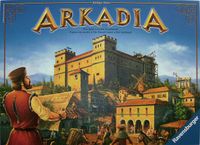
related projects. And as inevitably happens when you have a growing industry perpetuated by innovation and facilitated by a healthy international trade infrastructure, games have become more inventive, extensive, elaborate, expansive, enormous even. In fact, over on my game shelf right now, we have, for example, Gloom Haven, the bestselling 19 pounds of dungeon monsters and strategic cardplay that you could find. and Aridia, 1,600 cubic inches of fighting and questing in a sandbox environment. Then there's Foundations of Rome, which it itself fills up an entire call shelf, all on its lonesome. I recently came across this ridiculously oversized high roller edition of the horse racing game Ready, Set, Bet. Then we got Freedom Five, a bountiful box of bits that's rivaled only in size by the equally enormous enclosure its expansion comes in. And we are not done yet, cuz we still have to make way for Aldara.
Perhaps the biggest board game box that I now or ever have had on the shelf. This plentiful, plump pile of precious, playable paper and plastic pieces would not be possible to procure without, well, first, without my gracious and extremely patient spouse, who caves into my pleas to invest in more and more walls full of game shelves, but also without the polymerization of our good buddy crude oil. That's right, petroleum. They are falling down behind me. black gold, Texas tea, liquid dinosaurs, the stuff that powers our cars to drive the world economy. And actually, speaking of cars, there is what I think is a pretty good analogy for what we're seeing happen in the tabletop industry right now. Because decades ago, a phenomenon similar to what's turbocharging our tabletop treasures also forever changed the American auto industry. In the 1950s, cars in the United States started growing bigger and heavier and more powerful, a trend that reflected both the era's booming postWorld War II economy and Americans' satiable appetite for style and comfortable things. The 1960s continued the trend with the rise of muscle cars and enormous V8 engines.
By 1973, vehicles like the Lincoln Continental MarkV were introduced, stretching over 19 ft long and weighing more than 4,500 lb. Neat. But then suddenly came the 1973 oil embargo, triggered when OPEC imposed sanctions against several nations, including the United States. The resulting embargo led to an abrupt, widespread fuel shortage. Prices quadrupled almost overnight, triggering a national energy crisis marked by long gas lines, fuel rationing, and a spike in inflation. In response, the US automotive industry began leaning towards energy conservation and fuel efficiency. And the gasg guzzling Lincoln Continental Markvs of the 1970s pulled over to make way for smaller, more fuelefficient Honda Civics and Toyota Corollas. Year after year, vehicles became smaller, lighter, and more efficient, culminating at the end of the decade with the Geometro, which featured three-cylinders, 55 horsepower, and the same top speed as a well-fed horse rolling downhill. The auto industry made a massive decadesl long shift in the size, features, and quality of their products. In part because in 1973, a sudden, arguably completely unavoidable economic disintegration ended an entire era of oversized luxury vehicles,
leaving car manufacturers scrambling to develop smaller, more efficient products that their customers could purchase without having to worry about whether or not they could afford them if the price of gas were to go sideways. Now, in 2025, a sudden, arguably completely avoidable economic disintegration threatens to end an entire era of oversized luxury tabletop games, leaving publishers scrambling to develop smaller, more efficient products that their customers could purchase without having to worry about whether or not they could afford them if the price of imports were to go sideways. And if that's the case, well then your next board game may follow the trend established by the auto industry. Smaller, cheaper to manufacture, more efficient to pack, less expensive to ship, and potentially the same price as what you're paying now for 19 pounds of dungeons, monsters, and strategic cardplay. Thanks in very large part to the potential economic uncertainty and disintegration being made possible by the haphazard application of short-sighted and self-defeating tariffs. tariffs that one single individual member of the current US administration has somehow been allowed to loophole himself into being empowered to introduce mere weeks into this gross mismanagement of import taxes. This financial footshootery has already begun
to wreak havoc on numerous US trading partners, domestic companies, and American employees, or should I say former employees. Because on April 17th, the company Greater Than Games, publisher of well-known games, Spirit Island, Sentinels of the Multiverse, and Medium, to name just a few, was shuttered by its parent company Flat River Group, resulting in all of its employees being laid off. Additionally, independent publisher Final Frontier Games closed their doors while still in the middle of running three crowdfunding projects, citing sudden import taxes among its reasons for going out of business. Shortly before that, the president of Underdog Games, Nick Bentley, confirmed that his company had laid off almost its entire staff in order to quote, "Give the company the best chance of keeping the lights on during the tariff tsunami." And it's not just small publishers that are being affected. mere hours before recording this, publishing powerhouse Seimon, who have run more multi-million dollar Kickstarters than I could list, have announced that they have reduced their staff and will be pausing all future game development and new crowdfunding campaigns until global trade conditions have stabilized. That shouldn't take long.
Heck, even Tom Vassel, founder of the YouTube channel The Dice Tower, which posts a new board game review video every 14 minutes, posted on social media last week that for the very first time, they have been charged import taxes on a review copy of a board game that they've received in the mail. But at least the economic fallout doesn't get any worse than that. Is something I would say if the economic fallout didn't get any worse than that. Because in a recent blog post on his company's website, Jaime Stegmire of Stonemer Games, publishers of Wingspan and Scythe, among other titles, stated that the tariffs applied to their products are equal to $14.50 for every $10 that they spend on manufacturing for an estimated total of $1.5 million of additional expenses just in import taxes. I mean, good grief. How does a company even start to deal with such a sudden increase in precinary penalties imposed by a preposterous presidential policy? Well, in Stonemer's case, one of the strategies that their company of eight US citizens is undertaking is to temporarily just keep their products housed overseas. a move that actually saves them money by paying to warehouse their games in China while they wait for the tariffs to hopefully decrease by the time that they need to replenish their domestic inventory. And Stonem Games isn't alone in that approach. Designer and publisher Jeff
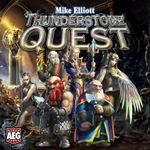
Anklestein has lamented that his company has a $10,000 shipment of games that they've been holding in China as well in order to postpone paying a potential $15,000 in tariff taxes. Publisher level 99 games will reportedly ship their completed Kickstarter game Spooktacular to backers all over the world except for those backers in the United States with the copies that were destined for US residents being held until further notice. American backers of the expansions to Dead Reckoning and Thunderstone Quest from AEG won't be receiving those items anytime soon as fulfillment of their US orders has been paused as well. And I expect that more companies will be following suit and declining to bring their products into the country as well. Now, one potential pitfall of placing pallets of product in purgatory, procrastinating overseas is that eventually local demand for those products may increase beyond the supply available on hand. I mean, it's simple supply and demand. And what happens to prices when supply doesn't meet demand?
To me, this doesn't sound like a scenario that would help to bring down the prices of those already tariffed imports anytime soon, if at all. Instead, this may only help to further spread economic anxiety across the country from sea to shining sea as well as across its borders into the territories of our trading partners, or should I say our former trading partners. Because it is quite possible that the president's pointless price posturing's primary payoff is that our former foreign friends in fabrication and fulfillment decouple from the United States, finding other countries to go work with, leaving the land of the free out of the equation entirely. And how much financial sense does it make then for Uncle Sam to rake in an 11 billion% import tax if those products are no longer being imported? And that's why these two factors, a diminished supply of products due to keeping inventory offshore as long as possible, combined with the possibility that foreign providers simply decide to stop selling to US markets, are why your next board game, if you're in the United States, at least may just look like this. Actually, you know what? On second thought, it may look like this. Just nothing at all. That's great. And sure, no, the argument could be made that board games are just a luxury, not a
necessity. No. Yeah, absolutely. That is certainly true. But what the tabletop games industry is enduring is being inflicted on every American company that either imports materials from overseas or works with a company that does. How many of those can there be? Makes me wonder, what products do you use every day that use imported materials? and how many of those items aren't luxuries. Now, at this point, if I were me, I may be asking myself, what, if anything, can I do to improve the situation? Well, I don't know. I mean, honestly, I'm totally running on contempt and disgust here. But even though the economic turmoil that the United States is currently inflicting on its own citizens is completely unnecessary, it's also hopefully still reversible. And I do believe that the first step towards inflicting change for the better is for each of us to start finding opportunities to speak up, speak out, speak often. Using your voice empowers others to do the same. And that courage that you'll find in doing that is how change begins. That's why I made this video to use my little voice to hopefully try and encourage all of us to use our voice. That's all I got.