Casual Gamers Are RUINING Board Gaming
Games in This Video
13 games are featured in this video — they unlock as you watch.







Transcript
Here's the headline we're stuck with this week. Casual gamers are ruining board gaming. Adam swears I'm being dramatic. I swear I'm not. Let's settle this. Right. So, we're going to start by blaming the nicest people in the hobby. Great opening energy, Eve. I'm not blaming them personally. I'm blaming what the industry has done in their name. There's a difference, and I think by the end of this episode, you're going to agree with me, even if you pretend you don't. Let me set the scene. Remember that Cosmic Encounter night back in 2019? The one at my place with six people crammed around the table. 20 minutes in, someone had already been called a traitor, two alliances had collapsed and colluded, and you were quietly plotting revenge with a kind of patience that should probably concern your therapist. I remember. I still think about that card I slammed down that wiped half the fleets. That game mattered, not because the stakes were real, but because every decision I made affected every single person at that table, and they were all watching me like hawks. Exactly the point. Now, fast forward to last month. You brought over that mid-weight Euro, the one with the glowing three-page BoardGameGeek spread, and we played it for two and a half hours. When we packed it away, I realized I had barely looked at what any of you were doing the entire game. I had my engine, you had yours, and we overlapped in maybe four or five moments across the whole session. I caught that, too. We might as well have been playing alone at the same table. The game was fine. It was well designed, but calling it board gaming felt generous. It was more like a spreadsheet with prettier
cardboard. And that's the shift I want to talk about tonight, because this is not a small drift in the hobby. The industry sits at roughly $12.8 billion in 2025, with projections pushing toward $20.6 billion by 2034. That's staggering growth, and the question worth asking out loud is whether the people responsible for that growth actually understand what made this hobby worth growing in the first place. Okay, but before you go full grumpy old gamer on me, let's agree on what was great about board gaming before this supposed decline. The word you keep reaching for is conflict, and I want to make sure we're using it carefully. Not cruelty, not spite for its own sake. I'm talking about the kind of deliberate, structured human conflict that forces you to read another person, bluff them, outmaneuver them, negotiate with them, and reckon with them across a shared physical space.
That's something no video game, no app, no screen can ever truly replicate. You are sitting across from another human being who is actively trying to beat you, and every move you make is a social act as much as a strategic one. Twilight Imperium lives or dies on that. You're not just building a galactic empire, you're managing relationships with the people in the room, forging treaties you may or may not honor, reading the table for who's about to pull ahead, and deciding whether to let them or kneecap them first. The game takes 8 hours and earns every single minute, because the drama is generated entirely by the humans at the table, not by the rulebook. Root does the same thing in a fraction of the time. The asymmetric factions don't just play differently, they play against each other in ways that depend entirely on who's in the room. That three-player Root game we ran last year, where the Erie player built this enormous presence in the top half of the board, and the Marquise and I spent the whole back half in this uneasy cold war, because neither of us wanted to be the one to break first and get crushed by them. Nobody told us to do that. The game created the conditions, and we filled them with actual tension. That's design doing its job. And go back further. Diplomacy, published in 1959, a game that has ended more friendships than any other title in board gaming history. No dice, no luck, just seven players, a map of pre-World War I Europe, and the unspoken expectation that you will lie to everyone at the
table at some point, because the game is literally unwinnable if you don't. It's sabotage, and it's perfect, and it would not get published today. Not by a mainstream publisher, not a chance. Oh, it would get published. It would get published and then immediately gutted with a variant that lets you score points for cooperation or whatever, which brings us to where things went sideways. Right. So, somewhere in the last 10 to 15 years, a design philosophy crept into the mainstream that treated direct player conflict as a problem to be engineered away. The reasoning is understandable commercially. Casual players don't enjoy being targeted. They get upset when someone destroys their hard-built engine. They complain about king-making and feel-bad moments in reviews. Those reviews affect sales, and so designers and publishers started quietly declawing their games. And the result is the genre that now dominates the mainstream market, the multiplayer solitaire game. You know the type. Each player has their personal board, each player has their personal supply of resources. The shared board, if there even is one, functions mostly as a scoring track or a market row everyone dips into independently. Players rarely block each other in any meaningful way.
And I know someone listening is about to yell at me about Wingspan, so let me be careful here. Wingspan is a genuinely well-designed game for what it is. It's beautiful, it's approachable, and it has brought a lot of people into the hobby who might never have found us otherwise. But But what it is is almost entirely self-contained. My bird cards are mine. My engine is mine. The bird feeder dice pool is technically shared, but competition for it is minimal and rarely decisive. I've played Wingspan a dozen times and never once felt that electric discomfort of knowing someone at the table was specifically out to disrupt my plans. To its fans, that's a feature. To me, it's an absence. I'll push back a little, because I think Wingspan does what it's trying to do brilliantly. Not every game has to be a knife fight.
Sometimes you want to sit with people and build something pretty. Fair, and I wouldn't rip Wingspan out of the hobby if I could. My problem isn't that it exists. My problem is that the hobby's center of gravity has shifted toward that experience and away from the Cosmic Encounters and the Diplomacies. Terraforming Mars is the one that really drives it home for me. The premise alone, competing corporations racing to make a planet habitable. That should be inherently confrontational, and there are moments, especially in the standard projects and milestone races, but the dominant experience across a full game is building your own tableau and watching your own engine hum while you occasionally glance at the global parameters. That five-player session we did a few months back, you and I had almost zero meaningful interaction across four hours of play. We were building entirely separate economic engines pointed at the same finish line.
We barely spoke except to pass the deck. Four hours of parallel processing in the same room. That's when it hit me how strange it is that we call that playing together. Compare that to Arcs, one of the most confrontational and demanding games released in recent years. Every card you play has consequences for the people around you. The court deck is shared. The initiative system means playing aggressively in one round directly shapes who leads the next. Deals can be made, broken, and punished. There is a moment in almost every game of Arcs where someone makes a move and the whole room goes quiet for 3 seconds while everyone processes the implications. That silence is board gaming at its best. Inis is the other one I keep coming back to, the Celtic area control game. Card drafting means everyone is watching what others take as much as what they keep. Control of territories is contested, not quietly accumulated. The winning conditions are publicly visible the whole game, so the table is constantly in the state of semi-organized vigilance against whoever's closest to victory. That Inis game where I spent the entire final round convincing you the player between us was about to win, purely to redirect your aggression. I was right, technically. It worked. The table erupted when you realized what I'd done.
That's the kind of memory the hobby is supposed to generate. I'm still mad about that, by the way. But fine, you've made your point. The games that reward interaction produce better stories. So, why isn't that winning commercially? Because the numbers don't reward it. Casual gamers, people who play a few times a year, who buy games at Target or Amazon based on visual appeal, are now the majority of the market's spending. Monopoly, a game almost universally considered deeply flawed by serious hobby standards, led all board game titles in 2024 with over 8.1 million units sold, generating around $243 million in revenue. The hobby games that dominate BoardGameGeek rankings barely register at that scale. 8.1 million units of Monopoly in 1 year, after decades of people like us telling everyone it's broken. The market does not care what we think, and the conclusion publishers draw from that data is rational. Games that cause feel-bad moments get punished in casual reviews. Games that let players feel competent and rewarded without directly threatening other players get purchased more broadly. Games that teach in 10 minutes at a family gathering have a vastly larger addressable market than games that require a 90-minute rules explanation. So, they build for that audience, and in doing so, they reshape what mainstream hobby gaming looks like entirely. Over 150 new board games launched in 2023 were tied to TV shows, movies, or book franchises, and 2025
alone flooded the market with Lord of the Rings themed releases from multiple publishers targeting the same recognizable IP. Licensed games are almost always designed for accessibility over depth. The brand recognition carries the purchase, the mechanics just need to be inoffensive enough to not generate negative word of mouth. Nobody designing the Stranger Things board game for a casual Christmas buyer is sitting down to engineer tense multiplayer diplomacy. They're designing something approachable, thematic, and forgettable. And there's a related problem the casual market has directly fueled. Casual buyers judge a game partly by the weight of the box and the impressiveness of its components. A game stuffed with detailed plastic miniatures photographs beautifully on Instagram, looks spectacular on a shelf, and communicates premium to someone who doesn't yet have the vocabulary to evaluate a rulebook.
The miniature creep, the inexorable expansion of component counts and box sizes, driven not by mechanical necessity, but by marketing logic. And all those components cost money, and that money has to come from somewhere. Prices have inflated. Import and tariff pressures in 2025 hit smaller publishers hard enough that roughly 23% of them indicated possible closure due to cost burdens. Cephalofair, the company behind Gloomhaven, one of the most celebrated hobby titles of the modern era, publicly stated they were facing potential business closure as a direct consequence of manufacturing and tariff pressures. Meanwhile, Hasbro raised its revenue forecast in 2025 on the strength of its mass market units. The casual market protects the giants. The hobby market is the one that bleeds. That contrast tells you everything about where the pain is concentrated.
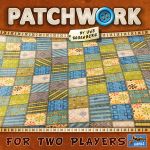
And the aesthetics of the casual market have also degraded something more subtle, the design culture around restraint. Some of the best games ever made are small. Hive fits in a cloth bag and has been in print for over two decades because it's a perfect system. Patchwork is two players, a shared board, and a handful of components, and it delivers more genuine tension per component than games that cost five times as much. But try selling restraint to someone scrolling through Kickstarter looking for something that will impress people when they walk into a room. Right. Now, I want to acknowledge the other side because this is where we have to be careful. The hardcore hobby community has not always been welcoming to newcomers, and that's a real problem. The kind of community toxicity where new players get mocked for liking Catan, or where someone on Reddit is dismissed as not a real gamer for enjoying a game that scores low on BGG's complexity ratings, that actively harms the hobby's future. A bigger community means more money in the market, more experimental games getting funded, more people at local game nights, more conventions with more programming. Gatekeeping new players out of the hobby is self-defeating. Everyone loses. But there's a difference between gatekeeping people and gatekeeping ideas. Welcoming a new player who loves Ticket to Ride is not the same thing as pretending Ticket to Ride represents the summit of what this hobby can do. Introducing someone to Pandemic Legacy is a wonderful on-ramp. Letting Pandemic Legacy define
the conversation about what sophisticated board gaming looks like is a different matter entirely. And that's the nuance that keeps getting lost. Casual gamers aren't malicious. They aren't sitting in rooms plotting to water down the hobby. They're people who enjoy games, who have limited time, who want accessible fun without a rulebook that reads like a legal contract. There's nothing wrong with that. Those people are valid members of the gaming world. The problem is structural. It's what happens when an industry responds to the presence of casual buyers by making the casual buyer the primary audience for everything. It's the publisher who looks at sales data and decides complexity is a liability. It's the Kickstarter algorithm that rewards visually spectacular campaigns over mechanically rigorous ones. It's the review ecosystem where a game that makes someone feel bad gets punished, while a smooth, frictionless, interaction-free engine builder gets praised for being fun for everyone. The casual gamer did not ask for all of that. The industry delivered it because the industry follows money, and the money, increasingly, is games the hobby's founders would find almost unrecognizable. Okay, let me tell you the Blood Rage moment because I think it captures what's actually at stake here.
Blood Rage, drafting and area control, Norse mythology, one of the most deliberately joyfully aggressive games in the modern hobby. You draft cards, you invade provinces, you pillage villages, and critically, you scheme. The game rewards losing battles strategically. There's a card called Doom that makes you stronger when your units die. Knowing that, every player has to second-guess every aggressive move. Am I doing exactly what they want me to do? And in the final round that night, I launched a massive assault on your province, outnumbered you completely, and won the battle. What I did not know was that you were sitting on three cards specifically designed to maximize your benefit from losing a fight. I lost the battle, I scored 11 points. The swing was decisive.
The table erupted for 20 minutes of post-game analysis. You cannot have that moment in a game where nobody's reaching across the table. That moment required conflict. It required you to set up a trap and wait. It required me to make a reasonable decision you had deliberately made look attractive. It required everyone else at the table to be watching, invested, aware of what was happening. That's not just a mechanic. That is a social experience that is almost impossible to replicate outside of that specific context. That is what board gaming at its best actually is. And when we sand down that conflict to make games more palatable to casual buyers, we're not just making them less interesting mechanically, we're making them less human. All right, but I want to end on something less apocalyptic because I don't actually think it's over. There's cautious optimism available if you look for it. The industry in 2025 started showing signs of fatigue with the miniature-heavy, bloated box model that casual aesthetics helped create. Critically celebrated titles trended smaller and tighter.
Skyteam won Spiel des Jahres in 2024. Two players, cooperative, minimal components, devastating tension. That's a touchstone example for what accessible but not shallow design can look like. And Arcs, punishing and demanding and deeply reliant on human interaction, built a devoted following that is growing. The market for oversized Kickstarter spectacle has softened. Casual buyers themselves have hit decision fatigue and started sticking with what they own rather than buying the latest crowdfunded behemoth. Publishers who focused on polish, re-playability, and genuine design depth are outperforming those who bet everything on component counts and IP. The correction was always going to come. You cannot fill a market with mediocre, middle-of-the-road product forever without the whole thing quietly deflating. So, no, the hobby is not ruined, but it is under genuine pressure from a commercial logic that treats mechanical depth as an obstacle and player conflict as a liability.
The games that made this hobby worth talking about, Cosmic Encounter, Twilight Imperium, Arcs, Blood Rage, Ennis, Root, they did not succeed by removing the tension of human conflict. They succeeded by engineering it brilliantly. They built systems that forced players to engage with each other, to scheme, to negotiate, to take risks that affected the people across the table. The drama was the point.
If we let the casual dollar reshape this hobby into a collection of parallel solitaire engines dressed up with beautiful art and licensed IP, we'll have a larger market and a lesser experience. And on some future Friday night, six people will sit around a table, each tending their own engine, never once making eye contact across a meaningful decision, and they'll say they played a board game together. And they'll be wrong about the together part. The confrontation is not the problem. It never was. It was always the point. That's our take for this week. We'd love to hear yours because I know at least half of you are furious with me right now. Tell us in the comments which games you think still deliver the real thing, and which ones you think have been quietly declawed. We'll catch you next episode.
Play mean games with nice people. See you soon.