/pic6544250.png)
/pic839808.jpg)
/pic6544250.png)
/pic134384.jpg)
/pic303773.jpg)
/pic5606668.png)
/pic587442.jpg)
/pic629745.jpg)
/pic1671067.jpg)
/pic1917224.jpg)
/pic2227130.png)
/pic2602614.jpg)
/pic2729521.png)
/pic3147391.png)
/pic4307408.png)
/pic7336367.jpg)


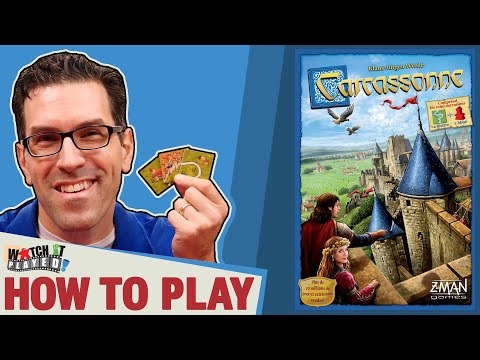





































Carcassonne Deep Dive
What the Community Thinks About Carcassonne
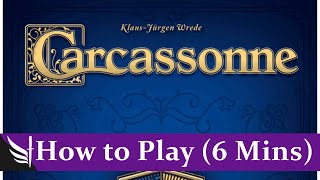
Carcassonne occupies a unique space in modern board gaming as both a beloved classic and a divisive title among dedicated players. The game designed by Klaus-Jurgen Wrede and published by Hans im Gluck remains widely recognized and respected as a foundational gateway experience that introduced many people to hobby board gaming. Reviewers acknowledge its elegance and simplicity while offering diverse takes on its strategic depth and long-term appeal. For some, it represents a perfect distillation of tile placement mechanics, while others find it lacks the decision space and control they seek in more complex designs. The consensus leans toward appreciation for what Carcassonne achieves within its modest scope, even among those who have moved on to other games in their collections.
Core Mechanics That Define Carcassonne
Tile Placement
At its heart, Carcassonne is a tile placement game where players draw tiles and add them to a shared map, fitting them adjacent to existing tiles so that matching features connect. Each tile represents part of the landscape of medieval France, featuring roads, cities, monasteries (cloisters), and fields. The physical act of placing tiles and building outward from a single starting tile creates a tangible sense of progression and map growth. Reviewers note that this mechanic remains satisfying because it offers immediate visual feedback; players can see the landscape take shape turn by turn. The constraint that tiles must fit and connect properly creates a puzzle-like quality to placement decisions, though as reviewers point out, some turns offer limited options depending on what tile you draw.
Area Majority
Once a tile is placed, a player may claim a feature on it by placing one of their meeples (small wooden followers) as a knight on a city, a robber on a road, a monk on a cloister, or a farmer in a field. When a feature is completed, whoever has the most meeples on it scores points based on its size or type. This area majority system creates the game's main source of tension and strategic decision-making. Reviewers highlight how this mechanic enables subtle interplay between players, as you watch opponents expand features you have invested in, trying to block their progress or integrate yourself into scoring opportunities. The system naturally scales with player count because features remain independent territories rather than becoming crowded or devalued by too many participants.
The Carcassonne Experience
Accessible and Welcoming
The defining characteristic of Carcassonne's experience is how quickly new players can grasp and play the game. Reviewers repeatedly celebrate that the rulebook spans a mere four pages, covering setup, turn structure, feature completion, and final scoring without overwhelming complexity. Because turns proceed rapidly and simultaneously (or nearly so), downtime is minimal. Players remain engaged throughout because they must watch the shared map evolve and react to tile draws. The game's lack of hidden information beyond meeple placement means there are no complex tracking requirements. Reviewers note this makes Carcassonne ideal for mixed groups where some players are newcomers and others are experienced, as everyone operates from the same level of information.
Tactical and Moment-to-Moment
Reviewers describe Carcassonne as a highly tactical game where decisions emerge from the tile you draw on your current turn rather than from long-term planning. Because you have limited control over what tile arrives, you must adapt your strategy based on what is available. This creates a reactive experience where clever placement in response to random draws matters more than a predetermined master plan. Some view this as a strength, praising the game's emphasis on thinking on your feet and finding creative solutions within constraints. Others see it as a limitation, noting that strategic planning is difficult when the tile draw has such a large influence on viable moves. The hidden scoring system, where meeples on incomplete features remain unscored until completion, adds suspense and keeps the outcome uncertain until the final tile is placed.
What Makes Carcassonne Stand Out
Elegant Simplicity with Surprising Depth
Carcassonne demonstrates how elegant rule design can coexist with meaningful decision-making. The game's mechanical foundation is spare and easy to communicate, yet experienced players recognize subtle layers of spatial reasoning and positional tactics. The tile placement puzzle grows more complex as the map expands and more features compete for meeples. Reviewers appreciate that the game never requires consultation of the rulebook after the first few turns; the rules quickly become intuitive. This combination of accessibility and depth makes Carcassonne memorable as a design achievement. It proves that a game does not require extensive rulebooks, asymmetric powers, or catch-up mechanics to create engaging play.
Remarkable Versatility Across Player Counts
An underrated strength of Carcassonne is how well it scales from two to six players without significant rule changes or balance issues. The core experience remains intact whether you are playing a head-to-head duel or a chaotic six-player game. Reviewers note that the game plays equally well at all player counts because the map is shared and meeple placement works the same way regardless of the number of competitors. This versatility makes Carcassonne a reliable choice for gatherings of unpredictable size and is a major reason it remains popular at casual tables and family game nights after more than two decades.
Potential Drawbacks
Luck of the Tile Draw
Reviewers identify the randomness of tile draws as both a feature and a limitation, depending on your preference for games. On difficult turns, you may draw a tile that connects nowhere useful or forces you to help an opponent instead of advancing your own position. Experienced players recognize that knowing all the tiles in the deck and anticipating draws becomes important at higher levels of play, but this requires extensive memorization. Some reviewers note they would welcome variants like drawing from a small pool of tiles before committing to placement, which would preserve some randomness while expanding decision space. The randomness also means that kingmaking can occur, where a player's unfortunate draw or poor placement inadvertently helps one opponent and harms another.
Limited Strategic Depth for Competitive Play
Reviewers who approach board games as strategic exercises note that Carcassonne may feel thin once they have internalized all tile combinations and optimal placements. Some describe it as a game that does not reward planning multiple turns ahead, since your tile draw often dictates your options. While this makes it great for casual play and newer players, more experienced or competitive players sometimes find themselves seeking games with larger decision spaces, more player interaction through trading or negotiation, or the ability to build a long-term engine toward victory. The expansion sets, while adding variety, can also extend play time significantly, which reviewers note changes the game's character and pacing.
If You Enjoy Carcassonne
Players drawn to Carcassonne's tile placement and spatial puzzle will find similar satisfaction in Cascadia, a cozy tile-drafting game that shares the competitive tile-placement experience while introducing hand-drafting. For those who appreciate the gateway accessibility and quick play, Ticket to Ride offers a similar ease of learning and family-friendly experience with routes instead of features. If you want to stay in the Carcassonne family but experience different themes, the Carcassonne spin-off series includes Carcassonne Safari, which transposes the mechanics to an African savanna setting. For players ready to explore Uwe Rosenberg's signature Euro designs, Agricola and Glass Road preserve careful tile and card placement with deeper strategic branching. Dominoes and Scrabble offer similar tile-based play but with different competitive structures. Those seeking a quick, accessible tile game with stunning visuals might explore Settlers of Catan, which shares Carcassonne's blend of simplicity and engagement.
What Reviewers Are Saying
"It's easy to learn, it's easy to teach, and it's easy to set up. You just shuffle a big stack of tiles, give everyone their meeples, and you're off to the races."
— Nights Around a Table
"The beauty of Carcassonne is in its simplicity, and the simplicity comes with some immense depth and interesting moments that happen throughout the game."
— Board Game Sanctuary
"It plays quickly, it is easy to play if you're familiar with the multiplayer rules, and even if not, it's a quick one to learn. It's a nice little puzzle."
— Gaming with Edo & Jessica