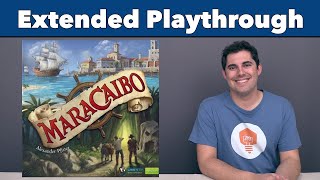
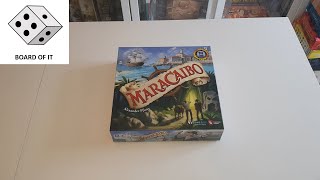
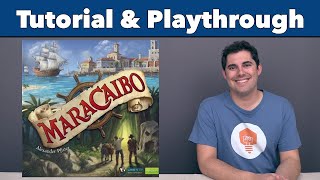
Maracaibo box art

Maracaibo

Game ID: GID0201547
Game Info
Year
2019
Players
1-4
Age
12+
Playtime
120 min
Collection
Ratings
Expansions & Family
Pirates of Maracaibo
Mechanic profile
Percentile rank vs. all games
Vibe profile
How this game feels to play
Description

Maracaibo, a strategy game for 1-4 players by Alexander Pfister, is set in the Caribbean during the 17th century. The players try to increase their influence in three nations in four rounds with a play time of 40 minutes per player.

The players sail on a round course through the Caribbean, e.g., you have city tiles where you are able to perform various actions or deliver goods to. One special feature is an implemented quest mode over more and various tiles, which tells the player, who chase after it, a little story.

As a player, you move with your ship around the course, managing it by using cards like in other games from Alexander Pfister.

NOTE: The Spanish and Portuguese editions of Maracaibo contain La Armada mini-expansion packaged inside the base game's box.

Description

Maracaibo, a strategy game for 1-4 players by Alexander Pfister, is set in the Caribbean during the 17th century. The players try to increase their influence in three nations in four rounds with a play time of 40 minutes per player.

The players sail on a round course through the Caribbean, e.g., you have city tiles where you are able to perform various actions or deliver goods to. One special feature is an implemented quest mode over more and various tiles, which tells the player, who chase after it, a little story.

As a player, you move with your ship around the course, managing it by using cards like in other games from Alexander Pfister.

NOTE: The Spanish and Portuguese editions of Maracaibo contain La Armada mini-expansion packaged inside the base game's box.

Ask a Rules Question
All mentions
Browse transcript mentions, sentiments, pros/cons, mechanics, topics, quotes, and references.
Total mentions: 93
This page: 43
Sentiment: pos 40 · mix 2 · neu 1 · neg 0
Mentions per page
Showing 51–93 of 93
Video YJqiNnqJnpk Top List at 23:51 sentiment: positive
video_pk 78287 · mention_pk 190717
Maracaibo video thumbnail
Click to watch at 23:51 · YouTube ↗
Overall sentiment (raw)
Highly Positive
Pros
  • Love the card play
  • Variety of cards offers different play avenues
  • Variable game length based on player movement
  • Engaging puzzle of unlocking board and actions
  • Easier to understand strategically than Great Western Trail
Cons
none
Thematic elements
Comparison games
  • Mombasa
  • Great Western Trail
Mechanics (from transcript analysis)
  • action selection — based off of the cards that you have and what other players are doing, you can kind of pursue a certain strategy
  • Card Play — I love the card play in this game.
  • Rondel — the rondel nature of the board and how far you can go
  • Worker Placement — unlocking your own board and unlocking different actions.
Video topics + discussion points
No key topics recorded for this video.
Quotes (from this video)
  • I really liked how uh bombastic the cards get in allowing you to do, you know, things on your own board and how to explore it.
  • Uh especially with the military aspect and, you know, creating or increasing the military might that you have to um impose on other opponents and when these battles really made our games uh come down to these in addition to uh the just straight-up deck building and um you know, playing cards from your hands and worker placement aspects that has a lot of good mechanisms that I enjoy.
  • This game I really enjoyed for the theme. I like the the thematic story and the arc of this game where the plague gets pretty bad uh during the game, uh but then slowly as you start to unders- or, you know, uh combat the disease, you start to uh rely less and less on taking out the plague and more and more coming back to repopulate Messina.
  • it's still a game that is is tough for me to play sometimes just because um you know, I if I think I know what is going on with the strategy of this game and and and you know, the the more that I have to learn from it and so it kind of deterred me from playing it more
  • But yeah, uh as as bland as it looks, it's actually really fun order fulfillment game.
  • Um it's not as deep or complex as Magic or Hearthstone or some of the other card games are, but it probably will get to that point at some at some point.
  • I wish that the meta game was more diverse. It hasn't been so since the start of the game.
  • And Wingspan for me, while it's a masterpiece of of a design um in my opinion, I really was really drawn to all of the birds and the individuality of these cards.
  • It does take a while to play, I think if you're playing with new people, which was kind of a deterrent for me for bringing this game out more often.
  • So, this is one of the latest Uwe Rosenberg games back in 2022, one of my favorite games. One for the solo version of this game. I think that is the peak way to play this game.
  • And so I I hold it in high esteem.
References (from this video)
No references stored for this video.
Video XOV-3-6MYSU john gets games Analysis at 45:02 sentiment: positive
video_pk 66413 · mention_pk 161719
john gets games - Maracaibo video thumbnail
Click to watch at 45:02 · YouTube ↗
Overall sentiment (raw)
positive
Pros
  • endgame tension depends on group pacing and speed
  • dynamic branching path adds replayability
Cons
  • endgame timing can create pressure and potential regret if others end the game early
Thematic elements
Comparison games
  • Heaven and Ale
Mechanics (from transcript analysis)
  • Big rondelle with branching paths — Travel around a large rondelle; distance traveled dictates action potency; players can branch left or right in certain spots.
  • Branching route for actions — Left/right paths change the available actions and their outcomes.
  • Modular tile setup — Tiles and routes can be shuffled to vary options each game.
Video topics + discussion points
No key topics recorded for this video.
Quotes (from this video)
  • I'm using pretty loose definitions of rondelle
  • I cluster New York Zoo, Murano, and Scorpius Freighter because all of these have neutral pawns
  • this is a mancala style game
  • there are modular boards and looping action tracks
References (from this video)
No references stored for this video.
Video GfbxL5R6yw4 Meeple University Review at 0:04 sentiment: positive
video_pk 64861 · mention_pk 158443
Meeple University - Maracaibo video thumbnail
Click to watch at 0:04 · YouTube ↗
Overall sentiment (raw)
positive
Pros
  • rich experience
  • a lot of options
  • campaign mode should leave you with different experience each time you play
Cons
  • the rulebook doesn't mention in specific how you get most of your points
Thematic elements
  • fame and fortune
  • the Caribbean in the 17th century
Comparison games
  • Freight
  • Lesson Trail
  • Black Hat
  • Hong Kong
Mechanics (from transcript analysis)
  • action selection — Performing actions on locations after moving your ship.
  • Card Drafting — Playing project cards to activate their powers.
  • Hand Management — Using cards to activate powers or fulfill quests.
  • point-to-point movement — Moving your ship on the map.
  • Resource Management — Needing money to buy or play project cards.
  • Set Collection
  • Worker Placement — Using assistance that you previously placed to activate benefits.
Video topics + discussion points
No key topics recorded for this video.
Quotes (from this video)
  • The game is designed by one of our favorite designers Alexander Pfister.
  • The rulebook it doesn't mention in specific how you get most of your points so I would recommend to look at the project cards to give you some ideas before playing.
References (from this video)
No references stored for this video.
Video eAw_u-Bm1hA Meeple University Discussion at 0:35 sentiment: positive
video_pk 64158 · mention_pk 157642
Meeple University - Maracaibo video thumbnail
Click to watch at 0:35 · YouTube ↗
Overall sentiment (raw)
positive
Pros
none
Cons
none
Thematic elements
Comparison games
  • Great Western Trail
Mechanics (from transcript analysis)
Mechanics unknown.
Video topics + discussion points
No key topics recorded for this video.
Quotes (from this video)
  • Australian stereotype of New Zealand
  • sheep instead of cows
References (from this video)
No references stored for this video.
Video CfYgcdkgCZQ Meeple University Playthrough at 0:00 sentiment: positive
video_pk 64094 · mention_pk 157579
Meeple University - Maracaibo video thumbnail
Click to watch at 0:00 · YouTube ↗
Overall sentiment (raw)
positive
Pros
  • Standalone version is easier than the original Maracaibo
  • Three-round structure keeps game time reasonable
  • High variability via black markets, residences, and modules
  • Replayability from multiple setups and modular components
  • Exploration and upgrade paths create fulfilling strategic depth
  • Counters can be used in classroom settings
Cons
  • Colors can be mixed up during setup
  • Initial upgrade path and rule set can be heavy for new players
Thematic elements
  • piracy, treasure hunting, ship upgrades, exploration
  • Caribbean archipelago map with islands around Maracaibo
Comparison games
  • Maracaibo (original)
  • Great Western Trail
  • Puerto Rico
  • Rowan adaptation of Grand Austria Hotel
  • Boon Lake
  • Great Western Trail (expansions like New Zealand)
Mechanics (from transcript analysis)
  • Black market — A market mechanic with tiles that grant points per river crossed and can be activated during turns.
  • Card purchasing and effects — You can buy equipment cards that grant ongoing effects or income; cards have costs and provide benefits.
  • End Game Bonuses — Quest cards provide end-game scoring objectives; starting cards and additional ones appear during the game.
  • End-of-round and end-of-game conditions — The game lasts three rounds; the round ends when a player reaches Maracaibo; winner is the player with the most points.
  • Location actions — Landing on a location allows interaction with the card at that space, including purchases and immediate effects.
  • Movement — On your turn you may move up to three spaces; you must move at least one space forward each round.
  • quests — Quest cards provide end-game scoring objectives; starting cards and additional ones appear during the game.
  • Resource Management — Players manage coins/doubloons to finance actions and upgrades.
  • River crossing scoring — End-round scoring includes points for rivers crossed; residences can boost river-related scores.
  • ship upgrades — Upgrading ships increases capabilities and unlocks new actions or movement boosts.
  • Treasure burying — Treasures collected can be buried for end-of-game points and bonuses.
Video topics + discussion points
No key topics recorded for this video.
Quotes (from this video)
  • "it's a standalone game"
  • "it is going to be released at Essence spill 2023"
  • "I can't wait to have my hands on the actual physical copy"
  • "it's a fast game it doesn't take too long"
  • "this is like the original Marathon"
  • "it's a puzzle and you just put them near next to yourself look really nice"
  • "there are many factors you can take into account"
  • "it's great idea for teachers"
References (from this video)
No references stored for this video.
Video 4O5V5Kz4yjY All You Can Board Review at 0:43 sentiment: mixed
video_pk 63708 · mention_pk 157191
All You Can Board - Maracaibo video thumbnail
Click to watch at 0:43 · YouTube ↗
Overall sentiment (raw)
mixed
Pros
  • the dice-splitting decision is the main enjoyment
  • two-player roll-and-write hybrid in a compact package
  • good value for price and size
  • rewards understanding of the board state
  • interactive at the board level
  • compact components with minimal waste
Cons
  • component quality issues (peeling) on some copies
  • the initial dice-drafting high is followed by waning engagement
  • theme is abstract and not engrossing for some players
  • two-player mode can feel less engaging than solo or four-player
  • price around $100; perceived value concerns
  • color markers can blend into the board
Thematic elements
  • ants and insect army
Comparison games
  • Glass Road
  • Ora et Labora
  • Black Forest
  • Nusfjord
  • Fields of Arle
  • Through the Desert
  • Kingdom Builder
  • Atiwa
  • Captain Sonar
  • Next Station
Mechanics (from transcript analysis)

  • dice-drafting / split-and-choose — Roll dice, split them into two piles, the opponent chooses first, and you take the remaining pile.
  • territory scoring driven by dice values and incentive tiles — Dice values (colored by territory) are written into color-coded territories; each territory has its own scoring area and bonuses from tiles can affect values; end game is accelerated by a final tile after a stack of tiles is used.
Video topics + discussion points
No key topics recorded for this video.
Quotes (from this video)
  • This is a play it for me.
  • the main enjoyment I get out of this game is that dice splitting decision
  • Fromage is a simultaneous worker placement game.
  • this is one of the better Rosenberg games I've played in the last 5-10 years
References (from this video)
No references stored for this video.
Video M8tnrqfBaYI Getting Games Playthrough at 0:01 sentiment: positive
video_pk 63479 · mention_pk 156891
Getting Games - Maracaibo video thumbnail
Click to watch at 0:01 · YouTube ↗
Overall sentiment (raw)
positive
Pros
  • Deep strategic interaction across exploration, combat, and economic engine.
  • High card variety supports multiple viable strategies and replayability.
  • Endgame prestige buildings create meaningful late-game decisions and scoring tension.
Cons
none
Thematic elements
  • exploration, trade, and conquest
  • Caribbean
Comparison games
none
Mechanics (from transcript analysis)
  • Card market / deck drawing / reserves — Draw from face-up cards or top of deck, reserve cards, and purchase cards with money/strength.
  • Combat — Engage in combat by choosing a nation to fight for, spending combat and strength, gaining influence and victory points.
  • End Game Bonuses — Endgame scoring buildings with costs and special effects that grant points or ongoing benefits.
  • Explorer / exploration actions — Move an explorer to explore and generate money and pursue quest-related rewards.
  • Influence Points — Track influence for multiple nations; endgame scoring involves multipliers based on ranks on these tracks.
  • Influence tracks / endgame scoring — Track influence for multiple nations; endgame scoring involves multipliers based on ranks on these tracks.
  • Prestige buildings — Endgame scoring buildings with costs and special effects that grant points or ongoing benefits.
  • Quests / maps — Complete quest objectives via actions and maps; rewards include money, points, and influence.
  • Synergy tokens — Tokens (e.g., anchor) modify incomes and card interactions; used to unlock bonuses.
  • Token Pairing — Tokens (e.g., anchor) modify incomes and card interactions; used to unlock bonuses.
  • village actions — Take village actions to gain money, strength, or workers, and to buy/build cards; can chain actions.
Video topics + discussion points
No key topics recorded for this video.
Quotes (from this video)
  • I hope you enjoyed this playthrough
  • that was a very potent turn for the yellow player
  • this card is a very lucrative card
  • there are 56 of those dark bordered cards that are always in there
  • this was obviously the standalone version of the game
References (from this video)
No references stored for this video.
Video LdWNtdsItS8 Getting Games Interview at 7:21 sentiment: positive
video_pk 63364 · mention_pk 156741
Getting Games - Maracaibo video thumbnail
Click to watch at 7:21 · YouTube ↗
Overall sentiment (raw)
positive
Pros
none
Cons
none
Thematic elements
  • strategy, exploration, competitive euro
Comparison games
none
Mechanics (from transcript analysis)
Mechanics unknown.
Video topics + discussion points
No key topics recorded for this video.
Quotes (from this video)
  • priority number one is to have fun
  • priority number two is to make sure everyone else is having fun
  • priority number three is to try to win
  • board games are human compiled
  • the rule book is code the human brain is the compiler
  • there's no scriptwriting that happens over here
References (from this video)
No references stored for this video.
Video swQ5oZs81kI Board Gaymes James Playthrough at 0:00 sentiment: positive
video_pk 62071 · mention_pk 154659
Board Gaymes James - Maracaibo video thumbnail
Click to watch at 0:00 · YouTube ↗
Overall sentiment (raw)
positive
Pros
  • Varied and modular board setup with many strategies
  • Engaging engine-building through upgrades and questing
  • Thematic and flavorful components like figure heads
  • Playable solo mode with a dedicated solo deck
Cons
  • Rulebook and iconography are dense and complex
  • Difficult to track rounds; no obvious round counter
  • Rule sheet could be more accessible; learning curve high
  • Icon clutter and board warping can be confusing during play
Thematic elements
  • commerce, exploration, raiding, and ship-based empire-building
  • Caribbean region including the Gulf of Mexico and Maracaibo area
  • tutorial playthrough with live commentary; heavy iconography
Comparison games
  • Maracaibo
Mechanics (from transcript analysis)
  • black market tiles — Place black market tiles on locations to gain points or other benefits.
  • burying/unburying treasure — Manage markers to bury or unbury treasure on treasure islands for points.
  • End Game Bonuses — Draw quest cards to earn endgame points; some quests reward endgame bonuses.
  • Endgame scoring — Scoring based on rivers crossed, treasures buried, quests, improvements, and conditional bonuses on gray scrolls.
  • exploration — Move explorers along the board to reach locations and gain effects or movement bonuses.
  • figure heads and upgrades — Acquire figure heads with bonuses; upgrades grant immediate or ongoing benefits.
  • gaining quests — Draw quest cards to earn endgame points; some quests reward endgame bonuses.
  • location actions and cards — Each location offers actions in any order; combining them via slash logic (or) for complex sequences.
  • Raiding — Raid spaces to gain treasures, upgrade ships, or activate other effects, using raiding power.
  • Resource Management — Use currency to perform actions and upgrade; resources are unlimited on board for exchange.
  • resource management (dloons) — Use currency to perform actions and upgrade; resources are unlimited on board for exchange.
  • upgrading ships — Place upgrade markers to unlock immediate and ongoing benefits for the ship and actions.
Video topics + discussion points
No key topics recorded for this video.
Quotes (from this video)
  • This board is completely variably set up.
  • I am really liking this.
  • I like the flow of this.
  • The rule book sucks.
  • This does play very smooth once you understand what the rules are.
  • I wish there was like a quick reference action sheet here because this is just too much all at once.
References (from this video)
No references stored for this video.
Video Rp8vOUPx-7k Allies or Enemies Top List at 6:19 sentiment: positive
video_pk 61186 · mention_pk 153814
Allies or Enemies - Maracaibo video thumbnail
Click to watch at 6:19 · YouTube ↗
Overall sentiment (raw)
positive
Pros
  • Mechanical depth with thematic flavor
  • Great integration of card actions and movement
Cons
  • Campaign text is often criticized for quality (not central to play) — may affect immersion
Thematic elements
  • Crewed ships, campaigning narrative
  • Caribbean trade and exploration on a voyage
Comparison games
  • Great Western Trail
Mechanics (from transcript analysis)
  • Campaign/board changes — Campaign mode reshapes the board and challenges over time.
  • Card Drafting — Acquire crew/agents and utilize them for action choices.
  • Card drafting and crew management — Acquire crew/agents and utilize them for action choices.
  • Rondel — Move a ship along a river/sea track to activate actions.
  • Rondelle movement — Move a ship along a river/sea track to activate actions.
Video topics + discussion points
No key topics recorded for this video.
Quotes (from this video)
  • it's gorgeous
  • everything about this game is gorgeous
  • it's jazz chess with insects
  • it's a combat game that I really like
  • don't be turned off by it being too pretty
References (from this video)
No references stored for this video.
Video 1RcXw6gbP18 Allies or Enemies Top List at 23:31 sentiment: positive
video_pk 61082 · mention_pk 153522
Allies or Enemies - Maracaibo video thumbnail
Click to watch at 23:31 · YouTube ↗
Overall sentiment (raw)
positive
Pros
  • clever pace control and strategic depth
  • rich thematic feel and interactions between players
Cons
  • can be dense for newcomers
  • requires careful planning to avoid overload
Thematic elements
  • ship navigation, route planning, and resource management
  • Caribbean trading voyages under the banner of a cruise-era exploration
  • pacing-driven rondel movement with card-driven actions
Comparison games
none
Mechanics (from transcript analysis)
  • Multi-Use Cards — cards can be used for resources or ongoing benefits
  • pace control — the distance you move limits or enables actions, shaping endgame timing
  • Rondel — players move around a circular track to determine actions
  • rondel movement — players move around a circular track to determine actions
Video topics + discussion points
No key topics recorded for this video.
Quotes (from this video)
  • it's ugly as is a game comes
  • Prelude expansion which I'm going to say is the only expansion you need for this game
  • it's the chess of racing games
  • it's a game of inches
  • the Wind Waker-esque board game that is out there
  • the campaign element really nicely and I like that they group The like the each play is three chapters in a setting
  • you can play a game of this in an hour and a half with two players
  • you are building that Tableau and your Tableau gets outrageous
References (from this video)
No references stored for this video.
Video P4eHtwCKkko Board of It Top List at 1:07 sentiment: positive
video_pk 42357 · mention_pk 128532
Board of It - Maracaibo video thumbnail
Click to watch at 1:07 · YouTube ↗
Overall sentiment (raw)
positive
Pros
  • Solid euro design with a strong engine
  • Thematic integration and high replay value
  • Elegant action economy once learned
Cons
  • Steep learning curve
  • Potential downtime during others' turns
Thematic elements
  • mercenary crews, competing colonial nations, fame and wealth
  • Caribbean trading and piracy during the colonial era
  • system-driven with thematic flavor and exploration
Comparison games
none
Mechanics (from transcript analysis)
  • Crew recruitment and fleet management — Hiring crewmates and coordinating fleets to optimize actions and scoring.
  • Economic engine and area development — Trade routes, ship/crew management, and rapid expansion to gain income and influence.
  • Rondel — Players move around a fixed action ring to select actions in a strategic order.
  • Rondel action selection — Players move around a fixed action ring to select actions in a strategic order.
Video topics + discussion points
No key topics recorded for this video.
Quotes (from this video)
  • this is a really solid euro game by one of our favorite designers Alexander Pfister and one of our favorite publishers Capstone Games
  • the reason we're not drinking this right now is because this is actually a friend's bottle
  • it's elevated if you have a glass of wine to go with it
  • it's an excellent euro game and alexander definitely has a very distinct style
  • it's a very very funny game and also the RPG elements
  • this is a really great game to play and you should check it out
  • it's a lovely little cocktail try it out
  • it's a very popular game
References (from this video)
No references stored for this video.
Video uacc39cBrx0 The Board Game Garden Discussion at 21:19 sentiment: positive
video_pk 40667 · mention_pk 123291
The Board Game Garden - Maracaibo video thumbnail
Click to watch at 21:19 · YouTube ↗
Overall sentiment (raw)
positive
Pros
  • Rich thematic feel
  • Excellent table presence and depth
Cons
  • Steep learning curve
  • Can run long at higher player counts
Thematic elements
  • Campaign-style engine-building with route planning
  • Caribbean piracy and trading routes
  • Story-like exploration of seas and decisions
Comparison games
none
Mechanics (from transcript analysis)
  • Engine Building — develop routes and ships to optimize actions
  • engine-building — develop routes and ships to optimize actions
  • route planning / dice-driven actions — plan voyages with dice mechanics to fulfill objectives
  • Set Collection — collect goods to gain points and special abilities
Video topics + discussion points
No key topics recorded for this video.
Quotes (from this video)
  • My heart is set on Miyabi it's happening
  • Paint the Roses is gonna win
  • Seize the Bean that's the winner
  • I think I'm going with Katan y'all
  • I think Cascadia is still going to be my choice
References (from this video)
No references stored for this video.
Video wI66Qx6GpT8 Board Of It Discussion at 17:42 sentiment: positive
video_pk 40569 · mention_pk 122979
Board Of It - Maracaibo video thumbnail
Click to watch at 17:42 · YouTube ↗
Overall sentiment (raw)
positive
Pros
  • Rich maritime theming
  • Solid engine for longer plays
Cons
  • Rule complexity may deter casual players
Thematic elements
  • Shipping routes, crew management, and conflicts
  • Caribbean port and trade networks during the colonial era
  • Adventure-driven, explorer vibe
Comparison games
none
Mechanics (from transcript analysis)
  • crew and ship management — Assemble crews and optimize ship actions.
  • Trading and route planning — Move between ports to maximize income.
Video topics + discussion points
No key topics recorded for this video.
Quotes (from this video)
  • it's ambient it's really cool
  • really ambient it's really nice to have on in the background
  • we saved the best for last
References (from this video)
No references stored for this video.
Video A-Q-W_UyvIc Board Game Code Top 10 List at 57:28 sentiment: positive
video_pk 40412 · mention_pk 161823
Board Game Code - Maracaibo video thumbnail
Click to watch at 57:28 · YouTube ↗
Overall sentiment (raw)
positive
Pros
  • highly thematic and fun
  • varied paths to victory
Cons
  • expansion-driven variability can complicate balance
Thematic elements
  • build a powerful engine and pirate crew
  • pirate-flavored deck-building adventure
  • flourish and whimsy
Comparison games
none
Mechanics (from transcript analysis)
  • deck-building + engine optimization — acquire cards to drive engine, managing gems/resources for scoring.
Video topics + discussion points
No key topics recorded for this video.
Quotes (from this video)
  • It's 9:57 p.m. But it's also time for the top 10.
  • My number one is going to be Castles of Burgundy.
  • Top 100 games of all time as of 2025.
  • Concordia Deluxe is as deluxe as it gets.
References (from this video)
No references stored for this video.
Video 3PnMFnUUl6w Board Gaming Ramblings Discussion at 17:20 sentiment: positive
video_pk 39609 · mention_pk 119642
Board Gaming Ramblings - Maracaibo video thumbnail
Click to watch at 17:20 · YouTube ↗
Overall sentiment (raw)
positive
Pros
  • fast play with strong flow
  • easier to get to the table than the heavier original it's echoing
  • engaging pirate theming and accessible entry point
Cons
  • may feel lighter than the progenitor for some players
  • requires a group to unlock deeper strategic nuances
Thematic elements
  • piracy, exploration, dynamic map interaction
  • high-seas pirate setting with map-driven action and campaign-like feel
  • reimagination of a familiar pirate/nautical theme with streamlined play
Comparison games
  • Maracaibo
Mechanics (from transcript analysis)
  • card-driven control with reduced luck — deck management and card play shape outcomes to minimize randomness relative to the original game.
  • Deck Manipulation — deck management and card play shape outcomes to minimize randomness relative to the original game.
  • map-action resolution — players interact with a shared map, selecting actions that influence future turns and outcomes.
Video topics + discussion points
No key topics recorded for this video.
Quotes (from this video)
  • it's Christmas for board gamers this time of year
  • we're going to cover as many games as possible after we play them
  • it's a gem of a game
  • it's fantastic, just buy it
  • it's a perfect mix between Codenames and Similo
  • come sail away which we only played once ... it was giving me those jiggly feelings of fun
References (from this video)
No references stored for this video.
Video rfS4w4KK4CY Totally Tabled Top 10 List at 3:46 sentiment: positive
video_pk 38493 · mention_pk 115857
Totally Tabled - Maracaibo video thumbnail
Click to watch at 3:46 · YouTube ↗
Overall sentiment (raw)
positive
Pros
none
Cons
none
Thematic elements
Comparison games
none
Mechanics (from transcript analysis)
Mechanics unknown.
Video topics + discussion points
No key topics recorded for this video.
Quotes (from this video)
  • 2023 was an insane year for solo gaming
  • the Golden Age of solo board games is right here and right now
  • the last eight years of solo gaming have been the best eight years
  • what a year for solo gaming
  • this is a follow-up or companion video to a few previous lists on the channel
References (from this video)
No references stored for this video.
Video Y5OoE4e6TPE ON TABLE Board Games Top List at 14:06 sentiment: positive
video_pk 37556 · mention_pk 112825
ON TABLE Board Games - Maracaibo video thumbnail
Click to watch at 14:06 · YouTube ↗
Overall sentiment (raw)
positive
Pros
  • strong thematic flavor and engine-building
  • great for fans of Pfister's designs
Cons
  • heavy and long, requires planning
Thematic elements
  • dynamic engine-building and voyage quests
  • Caribbean trade and exploration with a historical-flair
  • adventurous, seafaring
Comparison games
  • Great Western Trail
  • Lorenzo il Magnifico
Mechanics (from transcript analysis)
  • card/character combos — cards grant varied abilities and strategies
  • engine-building and event-driven actions — players develop a fleet and trading network
Video topics + discussion points
No key topics recorded for this video.
Quotes (from this video)
  • today the first place or actually the last place in my ranking is smallworld
  • we will fight for control over the areas
  • it's a wonderful world really great game
  • I really like to play this board game and definitely recommend it if you don't know it yet
  • screens are a lovely mechanic for hiding your money during bidding
  • the decisions of how to allocate the dice and the results behind the screens are the best moment
References (from this video)
No references stored for this video.
Video l9q_wprMUzw Board Of It Review at 0:00 sentiment: positive
video_pk 36534 · mention_pk 109632
Board Of It - Maracaibo video thumbnail
Click to watch at 0:00 · YouTube ↗
Overall sentiment (raw)
positive
Pros
  • Rich Caribbean theme
  • High production quality with many components
  • Legacy-like storytelling aspect across sessions
Cons
  • Complex rules may be intimidating for new players
  • Setup time with numerous components and pop-outs
Thematic elements
  • merchant empire building, exploration, and conflict
  • Caribbean, 18th century trade and piracy
  • legacy-style storytelling across play sessions
Comparison games
  • Great Western Trail
Mechanics (from transcript analysis)
  • Engine-building / route optimization — Players optimize routes and action sequences to maximize points and scoring opportunities.
  • Event/legacy-style progression — Across sessions, cards introduce evolving scenarios or narrative elements.
  • Resource Management — Cargo, money, and influence must be managed to complete contracts and advance voyages.
  • Rondel action selection — Players choose actions from a circular track to plan routes, influence, and engine growth.
Video topics + discussion points
No key topics recorded for this video.
Quotes (from this video)
  • so just going to do a little unboxing of
  • maracaibo
  • going to keep this pretty short so
  • obviously got the caribbean theme here
  • nice little
  • artwork got the
  • box size rulebook which i'm sure will be terrifying to read
  • terrifying to read
  • and you've got lots and lots of
  • components
  • so lots of colorful cubes essential for
  • any board game
  • although slightly bigger than normal
  • then
  • you've got colored meatballs obviously
  • also essential for any board game
  • you've got all these assumed tokens for
  • each player just like in great western
  • that you're going to be putting all over
  • your board
  • uh you've got some hefty decks of cards
  • a little pirate guy there then
  • what do we have here oh got a doctor
  • this time
  • so i assume these are going to be used
  • in the gameplay
  • and then we've got this uh kind of
  • legacy cards here
  • uh i hear that game to game you know you
  • kind of put this in and it's going to
  • tell a little story as you play
  • so what else do we have we've got some
  • special colored baggie
  • not sure what that's for yet and we've
  • got a bag of bags
  • always useful uh
  • so then we've got some i think player
  • guides a couple more
  • then you've obviously got all of the
  • pop-outs
  • hundreds and hundreds of pop-outs yep
  • although it doesn't look too bad to be
  • fair i've had worse games
  • and then finally the board
  • so let's see what this looks like
  • and it's got a little symbol on the back
  • a little compass
  • and there we go no no i have a mistake
  • wrong way around
  • so yeah you've got the
  • board here very
  • green very blue
  • little caribbean theme so yeah we're
  • going to be doing a review of this
  • so check back in a couple of days
  • and we will tell you what we think
  • you
References (from this video)
No references stored for this video.
Video pqnjMEhvvzY Board Of It Review at 0:00 sentiment: positive
video_pk 34613 · mention_pk 103098
Board Of It - Maracaibo video thumbnail
Click to watch at 0:00 · YouTube ↗
Overall sentiment (raw)
positive
Pros
  • Interlocking mechanics feel cohesive and well balanced when combined
  • Legacy elements add a meaningful, story-driven layer without being mandatory
  • Accessible learning curve: the loop is repetitive but varied enough to stay engaging
  • The theme and nautical flavor are strong and immersive
Cons
  • Component aesthetics are functionally solid but visually underwhelming; tokens and color choices feel muddy
  • Cube placement on villages can create tracking clutter and counting headaches
  • Potential analysis paralysis in card choices due to many similar but distinct options
  • Ship upgrade stacking can be fiddly and risks accidental knock-overs if not on a stable surface
Thematic elements
  • swashbuckling exploration, ship enhancement, influence across nations
  • Caribbean mercenary trade during the Age of Sail
  • dynamic, evolving through legacy-style choices
Comparison games
  • Great Western Trail
Mechanics (from transcript analysis)
  • Card-driven actions and ship upgrades — cards provide either upgrades by discarding or playing with immediate effects; some require managing a two-disk system
  • City and village actions — stops in cities unlock upgrades and one-time bonuses; villages grant money, card plays, or quest progress
  • Combat points and nations interaction — points are spent to gain influence or place influence cubes, affecting endgame scoring
  • Explorer track — replaces trains from Great Western Trail; rewards advance as you move along and unlocks bonuses
  • Influence Points — combat and influence points move nations on a track, affecting endgame scoring and strategy
  • Influence tracker — combat and influence points move nations on a track, affecting endgame scoring and strategy
  • Legacy elements (optional) — story tiles and cards alter the board and game state across sessions; optional to enable
  • Legacy Game — story tiles and cards alter the board and game state across sessions; optional to enable
  • quests — quest tiles require certain resources to gain rewards and victory points
  • Rondel — players move their ship around a board loop and trigger city or village actions at each stop
  • Rondel/ship movement loop — players move their ship around a board loop and trigger city or village actions at each stop
  • Track Advancement — replaces trains from Great Western Trail; rewards advance as you move along and unlocks bonuses
Video topics + discussion points
No key topics recorded for this video.
Quotes (from this video)
  • this is one of our personal favorites
  • it's just a really fun game
  • this is definitely a must own
  • all these mechanisms link into each other really well
  • it's just fun to sail around the map
  • the legacy elements elevate the gameplay
References (from this video)
No references stored for this video.
Video flS0zGlE6xY No Pun Included Review at 0:00 sentiment: mixed
video_pk 34097 · mention_pk 101520
No Pun Included - Maracaibo video thumbnail
Click to watch at 0:00 · YouTube ↗
Overall sentiment (raw)
mixed
Pros
  • Highly interlocking mechanisms with emergent strategies
  • Rich campaign structure with evolving Caribbean map
  • Deep card selection and building choices that reward planning
Cons
  • Heavy rules overhead and dense setup
  • Tone-deaf portrayal of colonial era; white-centric characters
  • Rulebook readability and narrative text criticized as poor
Thematic elements
  • privateering, trade, exploration
  • Caribbean during the 17th century, colonial trade era
  • campaign-driven narrative with evolving locations and chapters
Comparison games
  • Great Western Trail
  • Mombasa
  • Blackout Hong Kong
Mechanics (from transcript analysis)
  • campaign progression with chapters and evolving map — 11 chapters; evolving Caribbean setting; non-linear progression.
  • combat system using country cubes and influence — combat value to increase influence or place cubes for rewards.
  • deck-building and card management — cards provide actions, resources, and permanent abilities when built.
  • quest/mission system and location-based rewards — special locations and quests give unique rewards, often bypassing standard actions.
  • Rondel — movement on a central track where each space offers different actions depending on city/village and paid costs.
  • rondel-like modular action selection — movement on a central track where each space offers different actions depending on city/village and paid costs.
  • Set Collection — gather goods, coins, and disks to perform actions and fulfill quests.
  • Set collection and resource management — gather goods, coins, and disks to perform actions and fulfill quests.
  • variable card effects and chain interactions — cards interact to unlock future bonuses and persistence across rounds.
Video topics + discussion points
No key topics recorded for this video.
Quotes (from this video)
  • Maracaibo is the new heavy euro game from Alexander Pfister
  • it's a campaign game which takes you through 11 chapters of a narrative
  • these cards have three functions you can spend it as a good when arriving at cities you can spend it as an object when arriving at special locations which have been designated as quests which lets you forego a city or village action or you can build the card and unlock whatever ability it provides
  • the master builder is amazing
  • Maracaibo somehow remains not annoying
  • there's hundreds and hundreds of cards with multitudes of different characters and all of them are indeed very white
  • the open nature of the campaign mode makes it irrelevant whether you played from start or finish or you played with the same people or constantly revolving cast
  • this is scarcely an opportunity to explore on this board
  • the waves will sweep you aside on to expensive side tracks
References (from this video)
No references stored for this video.
Video XJHk7GOCnIM Board Gaming Ramblings Top 100 List at 20:28 sentiment: positive
video_pk 32152 · mention_pk 94930
Board Gaming Ramblings - Maracaibo video thumbnail
Click to watch at 20:28 · YouTube ↗
Overall sentiment (raw)
positive
Pros
  • Campaign variation adds replayability
  • Solid mechanistic core with accessible complexity
Cons
  • Story elements can feel secondary
Thematic elements
Comparison games
none
Mechanics (from transcript analysis)
  • Multi-Use Cards — Campaign-style play with changing board layout and content.
  • multi-use cards / rondelle — Campaign-style play with changing board layout and content.
Video topics + discussion points
No key topics recorded for this video.
Quotes (from this video)
  • this is heavy and tight euro game design, it crushes my brain
  • we will not play it again but frost haven is a better game
  • the rulebook is hard to get through but the gameplay is pretty good
  • it's a one-way street game and the campaign keeps things fresh
References (from this video)
No references stored for this video.
Video K0kv6HoLxU4 The Board Gaming Doctor Top 10 List at 7:32 sentiment: positive
video_pk 30580 · mention_pk 90039
The Board Gaming Doctor - Maracaibo video thumbnail
Click to watch at 7:32 · YouTube ↗
Overall sentiment (raw)
positive
Pros
  • streamlined version of Maraio
  • engaging interaction based on relative speed and competition for islands
Cons
  • not as heavy or long-form as Maraio
  • may be less appealing to players who want deeper engine-building
Thematic elements
Comparison games
  • Maraio / Mara Kai
Mechanics (from transcript analysis)
  • card-driven action and movement — players use a card-driven system to determine actions and how they move along a card-constructed map of seas and islands.
  • territory exploration and island control — players vie for islands or islands-adjacent spots to gain resources and points.
Video topics + discussion points
No key topics recorded for this video.
Quotes (from this video)
  • these were the games that I was able to play at the time this time last year and rank accordingly
  • I really bounced off of hard out of Disney and keeping with the latest releases and sets
  • Earth is a staple in my collection
  • Orani and Burger Canal… one of my favorite games to play of all time
References (from this video)
No references stored for this video.
Video cXetwjwpo7w Board Gaming Ramblings Discussion at 10:16 sentiment: positive
video_pk 29992 · mention_pk 88038
Board Gaming Ramblings - Maracaibo video thumbnail
Click to watch at 10:16 · YouTube ↗
Overall sentiment (raw)
positive
Pros
  • deep tactical depth
  • engaging when played with focus
Cons
  • can be heavy
  • not played very often
Thematic elements
  • logistics and exploration
  • Caribbean/ocean trading
Comparison games
none
Mechanics (from transcript analysis)
  • dice-rolling / route optimization — dice-based actions with route planning and movement
  • Hand Management — select actions from a deck to progress
  • hand management / action selection — select actions from a deck to progress
Video topics + discussion points
No key topics recorded for this video.
Quotes (from this video)
  • I love cats
  • let's get down to business
  • it's a neat design
  • nostalgia reasons
  • we're gonna keep it
References (from this video)
No references stored for this video.
Video leM4unzWvyc Fabulous Games Discussion at 16:11 sentiment: neutral
video_pk 13741 · mention_pk 105331
Fabulous Games - Maracaibo video thumbnail
Click to watch at 16:11 · YouTube ↗
Overall sentiment (raw)
neutral
Pros
  • Recognition of a favorite designer; interest in exploring their work
Cons
  • No concrete details discussed in the clip
Thematic elements
  • Unknown
  • Unknown
  • Unknown
Comparison games
none
Mechanics (from transcript analysis)
  • unknown — Unknown
Video topics + discussion points
No key topics recorded for this video.
Quotes (from this video)
  • every game deserves a second chance
  • it's a good game, it's a middleweight game
  • the components are cheap
  • we're not fans of real time games though but you know what we're going to try it
  • we always have fun and try to play with family
References (from this video)
No references stored for this video.
Video sz5Dmz7xpbw Chairman of the Board Discussion at 7:32 sentiment: positive
video_pk 13314 · mention_pk 39047
Chairman of the Board - Maracaibo video thumbnail
Click to watch at 7:32 · YouTube ↗
Overall sentiment (raw)
positive
Pros
  • great stock/investment-like mechanism
  • engaging and varied play
Cons
  • can be punishing if misplayed
Thematic elements
  • deck-driven action selection with tension
  • Caribbean exploration
  • thematic euro with systems-driven play
Comparison games
  • Pulsar 2849
  • Luxor
Mechanics (from transcript analysis)
  • Dice Drafting — dice-derived actions with variable effects
  • dice_drafting — dice-derived actions with variable effects
  • Engine Building — cards and actions build up efficiency
  • engine_building — cards and actions build up efficiency
Video topics + discussion points
No key topics recorded for this video.
Quotes (from this video)
  • probably my favorite tire placement game of all time
  • this one is like a companion game to el grande
  • Arc Nova certainly the hotness at the moment
References (from this video)
No references stored for this video.
Video mKyUOX-fKJc Chairman of the Board Top List at 25:56 sentiment: positive
video_pk 12377 · mention_pk 36148
Chairman of the Board - Maracaibo video thumbnail
Click to watch at 25:56 · YouTube ↗
Overall sentiment (raw)
positive
Pros
  • deep integration of multiple design influences
  • campaign-like with strong thematic hooks
Cons
  • can be dense and heavy for two players
Thematic elements
  • influence with nations and quest completion
  • Caribbean sea exploration and quest-based play
  • story-driven with helper recruitment
Comparison games
none
Mechanics (from transcript analysis)
  • area control / quest completion — player moves through a map completing quests with helper recruitment and influence mechanics
  • multi-use card system — cards have multiple uses; choosing one sacrifices another
Video topics + discussion points
No key topics recorded for this video.
Quotes (from this video)
  • I think Concordia is one of the best games ever made, full stop
  • two players it works extremely well because the downtime is gone
  • it's a brain burner game
  • the tension in the two-player game is great
  • loads of content to explore, tons of replayability
References (from this video)
No references stored for this video.
Video thllkDb_HJI Before You Play Discussion at 4:37 sentiment: positive
video_pk 10228 · mention_pk 30200
Before You Play - Maracaibo video thumbnail
Click to watch at 4:37 · YouTube ↗
Overall sentiment (raw)
positive
Pros
  • deep strategic options
  • strong thematic resonance
Cons
  • steep learning curve
Thematic elements
  • ship routes and campaign-style engine-building
  • Caribbean trade and piracy era exploration
  • n/a
Comparison games
none
Mechanics (from transcript analysis)
  • engine-building / area movement — players build engines of their shipyard and travel to different regions with varying effects
Video topics + discussion points
No key topics recorded for this video.
Quotes (from this video)
  • representation is really really important you know like this is speaking from experience growing up as a people of color
  • we are curious to know what your experience was like with spiel digital and online conventions
  • calico, i really enjoyed learning and playing calico
  • we would like to know what your thoughts are on Patreon and what you would like to see
  • this month you'll probably see beyond the sun and at least on two Fridays we're going to be live streaming
References (from this video)
No references stored for this video.
Video dei9vCA83ys Beyond Solitaire Top List at 0:32 sentiment: positive
video_pk 10024 · mention_pk 29534
Beyond Solitaire - Maracaibo video thumbnail
Click to watch at 0:32 · YouTube ↗
Overall sentiment (raw)
positive
Pros
  • rich engine-building with a flavorful theme
  • strong timing and resource management
  • engaging route planning
Cons
  • steep learning curve for new players
  • rule depth can be intimidating
Thematic elements
  • commerce, risk management, and strategy over sea routes
  • Caribbean trading and exploration during the era of sailing ships
  • procedural, event-driven engine building
Comparison games
none
Mechanics (from transcript analysis)
  • Deck Building — cards fuel actions, movement, and resource generation
  • deck-building — cards fuel actions, movement, and resource generation
  • Engine Building: Efficiency — timed actions and sequence planning influence engine efficiency
  • Resource Management — managing goods, routes, and ships to maximize profit
  • resource management and route planning — managing goods, routes, and ships to maximize profit
  • timing/round strategy — timed actions and sequence planning influence engine efficiency
Video topics + discussion points
No key topics recorded for this video.
Quotes (from this video)
  • it's basically a euro game set in the Caribbean where you are sailing around
  • I really like legendary encounters alien it's one of my absolute favorite deck builders
  • Time of Crisis with the iron and rust expansion
  • I'm a Roman history enthusiast
  • that's my personal Christmas wish list for this year
References (from this video)
No references stored for this video.
Video GHDui2jydwY Gaming Rules! Top List at 2:06:25 sentiment: positive
video_pk 9630 · mention_pk 110798
Gaming Rules! - Maracaibo video thumbnail
Click to watch at 2:06:25 · YouTube ↗
Overall sentiment (raw)
positive
Pros
none
Cons
none
Thematic elements
Comparison games
none
Mechanics (from transcript analysis)
Mechanics unknown.
Video topics + discussion points
No key topics recorded for this video.
Quotes (from this video)
  • Void Fall is my number one game of 2023.
  • I will be donating all ad revenue to charity; it’s a long-running commitment of mine.
  • Kickstarter print runs can be problematic when issues are discovered after release.
References (from this video)
No references stored for this video.
Video bfIqxWCAhDk Getting Games Analysis at 0:00 sentiment: positive
video_pk 9177 · mention_pk 120499
Getting Games - Maracaibo video thumbnail
Click to watch at 0:00 · YouTube ↗
Overall sentiment (raw)
positive
Pros
  • Innovative cooperative variant that reimagines Maracaibo without losing its core feel
  • Encourages discussion and collaboration at the table, enhancing social interaction
  • New asymmetries, tiles, and cards add fresh variability and discovery
  • Vibe and pacing during cooperative play feel rewarding and satisfying
  • All-inclusive and other modules provide multiple flavors and long-term replayability
Cons
  • Omission of influence tracks in the cooperative uprising can feel like missing a core mechanic to some players
  • All-inclusive mode introduces heavier bookkeeping and a denser decision tree that some will find taxing
  • Modular design can create compatibility friction; some cards or upgrades don’t translate cleanly between modes
  • A tendency toward analysis paralysis due to many options and potential combos, especially in competitive modes
  • Navigation overhead for module variants can complicate setup and rule references
Thematic elements
  • regional independence and resistance within a Maracaibo trading/oceanic theater
  • Caribbean during the colonial era, with an uprising against European powers
  • scenario-driven modular narrative with cooperative and competitive forks, plus asymmetrical setup
Comparison games
  • Concordia Venus
  • Feast for Odin: Norwegians expansion
  • Maracaibo (base game)
Mechanics (from transcript analysis)
  • asymmetrical player powers — Base maracaibo includes asymmetries between players; the expansion adds modules with individual advantages and starting traits.
  • Card-driven action selection — Players use action cards to drive engine-building, scoping where to invest actions, and triggering various engine effects.
  • Cooperative AI and boss-like antagonists — Jacques (the AI) provides a lightweight, predictable opposition in the cooperative module, giving a shared objective against a common foe.
  • deck-building / hand management — The deck and starting hands shape action options and timing, creating a strategic hand-management layer.
  • Exploration and quest/treasure mechanics — New tiles and quests expand exploration and diversify routes through the Caribbean loop.
  • Influence tracks (Spain, England, France) and scoring multipliers — In the base game these tracks drive influence and multipliers; the cooperative uprising variant omits these for a different endgame dynamic.
  • Modular scenario design (four modules in the expansion) — Two modules are cooperative; two are competitive, offering distinct paths and asymmetries and increasing replayability.
Video topics + discussion points
No key topics recorded for this video.
Quotes (from this video)
  • the cooperative is actually your favorite right john
  • this expansion brings in four different modules that you can play
  • i didn't think co-op maracaibo would be fun
  • breathes new life into the game
  • i'm going to do something else and then it's like... and we still had a great time
References (from this video)
No references stored for this video.
Video hfP2PJYR3r0 The Broken Meeple Top List at 1:32:13 sentiment: positive
video_pk 9127 · mention_pk 26918
The Broken Meeple - Maracaibo video thumbnail
Click to watch at 1:32:13 · YouTube ↗
Overall sentiment (raw)
positive
Pros
  • innovative campaign structure with story decks
  • great thematic immersion and flavor
  • elegant card-driven progression that stays fresh across games
Cons
  • some scenarios can be highly luck-driven
  • learning curve for the card interactions can be steep
Thematic elements
  • exploration, piracy, and opportunistic quests
  • Caribbean mercenary exploits in a sea-trade-pirate backdrop
  • campaign-style with a chain of story-driven story decks
Comparison games
  • Oath: Chronicles of Empire and Exile
  • Eldritch Horror
  • Mage Knight
Mechanics (from transcript analysis)
  • campaign deck/story deck integration — story cards provide ongoing quests and add new board elements.
  • multiflow route progression — story strands and side-quests dynamically alter scoring and routes.
  • open-world island exploration — you visit islands, discover quests, and manage resources.
Video topics + discussion points
No key topics recorded for this video.
Quotes (from this video)
  • easy to set up and it's short
  • the new modules that you get in this really cool they change up the game for the better
  • this is the open-ended thing open-ended so the story you tell in between you kind of make up as you go along
  • the campaign system is tiny all you're going to be doing is adding a card
  • it's a one-and-done game so you open this one up you throw it away
  • the dream world or real world
  • the story deck add new cards to the deck and narrative arcs on the board
References (from this video)
No references stored for this video.
Video iL-EIDzsrc0 Before You Play Review at 32:24 sentiment: positive
video_pk 8007 · mention_pk 111449
Before You Play - Maracaibo video thumbnail
Click to watch at 32:24 · YouTube ↗
Overall sentiment (raw)
positive
Pros
  • Simplified version of Marrabo
  • Easy to learn
  • Multiple scoring opportunities
Cons
  • Potentially long at higher player counts
  • Complex final scoring
Thematic elements
  • Resource management and exploration
  • Pirate exploration
  • Strategic card movement
Comparison games
  • Marrabo
Mechanics (from transcript analysis)
  • Card movement — Move 1-3 cards towards Marrabo
  • resource collection — Collect and bury treasures
  • ship upgrades — Improve ship capabilities
Video topics + discussion points
No key topics recorded for this video.
Quotes (from this video)
  • We are trying to get through as many of the games released in 2024 that we have as possible
  • We're trying to do a better job at playing more games this year
References (from this video)
No references stored for this video.
Video TS5odCxnOJw The Brothers Murf Top 10 List at 12:17 sentiment: positive
video_pk 7722 · mention_pk 129502
The Brothers Murf - Maracaibo video thumbnail
Click to watch at 12:17 · YouTube ↗
Overall sentiment (raw)
positive
Pros
  • Keeps the best parts of original (card play and exploration)
  • Three rounds keep game to under one hour
  • Better thematic focus as pirates
  • Really fun and engaging
  • Great looking production
Cons
  • Removes multi-use cards from original
Thematic elements
  • Sailing and raiding as pirates
  • Pirate adventure on the ocean
  • Card-driven exploration and treasure hunting
Comparison games
  • Maraco
Mechanics (from transcript analysis)
  • Card play engine building — Building engines with cards and red banner permanent discounts
  • Dice-based raiding — Rolling dice to steal treasure at various islands
  • Island exploration — Moving explorer around islands to stop and perform actions
  • Tableau Building — Moving ship through tableau of cards with changing options
  • Tableau management — Moving ship through tableau of cards with changing options
Video topics + discussion points
No key topics recorded for this video.
Quotes (from this video)
  • Look, we're not size queens. No, you know, sometimes smaller is better.
  • This is something that happens a lot in board games where there will be a game and then there it's kind of like a spin-off, like a TV show
  • Combo Womos. Love the wombo combo.
  • I will always basically just play Trails
  • Fleet the Dice game is so successful that there's now been a bunch of games that are like 80% the same
  • It's honestly better than the original
  • I would never suggest anyone start anywhere in this universe other than Jaws of the Lion
  • This is the poster child for these kinds of games
  • I never need to play Maraco again
  • Sometimes when you're a trendsetter, you got to get the love and get the number one spot
References (from this video)
No references stored for this video.
Video DyhgWCUdKoY Getting Games Discussion at 2:20 sentiment: positive
video_pk 7467 · mention_pk 22117
Getting Games - Maracaibo video thumbnail
Click to watch at 2:20 · YouTube ↗
Overall sentiment (raw)
positive
Pros
  • Rich comparison with other Alexander Pfister titles
  • strong thematic flavor and interactive play
Cons
  • not as varied as some rivals; could be dense for new players
Thematic elements
  • commerce, exploration, and voyage logistics
  • caribbean-scale maritime trading and exploration setting
  • multi-path scenario-driven play with evolving states
Comparison games
  • Boone Lake
  • Nova Luna
  • Terraforming Mars
Mechanics (from transcript analysis)
  • deck-building with action cards — cards provide actions and bonuses; players manage timing and combos
  • story-driven scheduling — timed events and decisions influence sequence and scoring
Video topics + discussion points
No key topics recorded for this video.
Quotes (from this video)
  • "I think this is my favorite Alexander Fisher game"
  • "it's just it just works for me like it just clicks with my brain"
  • "I adore teach you it's one of my favorite games"
  • "terraforming mars is one of my favorite games"
  • "you can gain hopefully some insight from that"
References (from this video)
No references stored for this video.
Video KuLkjIXXIxY BoardGameCo Top List at 16:30 sentiment: positive
video_pk 6826 · mention_pk 108763
BoardGameCo - Maracaibo video thumbnail
Click to watch at 16:30 · YouTube ↗
Overall sentiment (raw)
positive
Pros
  • Top-tier within the collection; highly enjoyable
Cons
none
Thematic elements
Comparison games
none
Mechanics (from transcript analysis)
Mechanics unknown.
Video topics + discussion points
No key topics recorded for this video.
Quotes (from this video)
  • I gave it a 4.5 out of five. I think I would bump it to a five out of five.
  • Massive Darkness 2 is still here. I just think it's an excellent game system.
  • Cascadia Alpine Lakes was the second time I gave a five out of five to a Cascadia game.
References (from this video)
No references stored for this video.
Video h-yy4z6P0ow Meeple University Rules Teach at 0:41 sentiment: positive
video_pk 5538 · mention_pk 16471
Meeple University - Maracaibo video thumbnail
Click to watch at 0:41 · YouTube ↗
Overall sentiment (raw)
positive
Pros
  • Deep, multi-layered economy with upgrades, quests, and city actions
  • Campaign/story content variability through legacy/story cards
  • Tight integration of exploration, combat, and trade mechanics
  • Rich thematic flavor with multiple scoring paths
  • Clear, modular component design and visual cues
Cons
  • Steep learning curve and rule depth for new players
  • Potential for longer play sessions due to four-round structure
  • Component management and tracking can become fiddly during heavy action turns
Thematic elements
  • trade, exploration, naval power, empire-building
  • Caribbean, 17th-century colonial era
  • campaign/legacy-driven with evolving map and quests
Comparison games
none
Mechanics (from transcript analysis)
  • Assistants — Blue scrolls create optional main actions; assistants cost figures and may be activated once per visit.
  • Campaign/Legacy Integration — Standalone campaigns with evolving content stored in a special bag to separate legacy materials.
  • Combat System and Influence — Engage combat to gain nation-specific benefits, using combat value and spending points/figures to activate actions.
  • End-Game Scoring and Prestige — Points come from tracks, completed quests, prestige buildings, and nation-based scoring with nobility adjustments.
  • Main Actions and Destination Abilities — On your turn, perform a main action at your destination; options depend on where you finished.
  • Movement and Sailing — Move 1–7 spaces clockwise around the board; you may share spaces with opponents.
  • Quests, Story Cards, and Legacy — Story cards drive quest tile placement and can alter map state; campaigns yield variability and legacy changes.
  • Resource Management — Three resources—balloons, combat points, and figures—are earned, spent, and tracked to drive actions and scoring.
  • Upgrade system — Player boards offer 12 upgrade slots; you unlock them by clearing discs and acquire upgrades throughout the game.
  • Village Actions and City Actions — Visit villages and cities to gain upgrades, money, goods, or to buy cards; the number of village actions scales with movement.
Video topics + discussion points
No key topics recorded for this video.
Quotes (from this video)
  • In Maraco, players are seafaring merchants in the colonial era of the Caribbean.
  • The game plays in four rounds and each round plays in turns round and round the table until one player has completed a lap of the board.
  • There are three main resources: the balloons, combat points, and figures.
  • On your turn, you can move a card from your hand to one of these three planning spaces.
  • The most important village action is to buy a card from your hand or planning area.
  • There is a special blue colored bag with the game, letting you keep your active legacy content separate from the rest.
References (from this video)
No references stored for this video.
Video BOLWdOBW9pQ Before You Play Top List at 18:30 sentiment: positive
video_pk 3426 · mention_pk 90226
Before You Play - Maracaibo video thumbnail
Click to watch at 18:30 · YouTube ↗
Overall sentiment (raw)
positive
Pros
  • standalone but in the Mar Kaio universe family, which entices existing fans
  • described as more accessible to learn than some related titles
  • strong campaign potential and robust card-driven play
Cons
none
Thematic elements
  • piracy and adventure on the high seas
  • Seafaring pirate world; campaign and naval exploration
  • campaign-driven, card-driven progression with modular play
Comparison games
  • Mar Kaio
Mechanics (from transcript analysis)
  • campaign mode — an integrated progression that supports a campaign experience across scenarios
  • card-based action selection — cards drive actions and serve as the primary driver of gameplay with multi-use cards
  • tableau-like card play — hands and cards feed into a larger decision framework with evolving goals
Video topics + discussion points
No key topics recorded for this video.
Quotes (from this video)
  • we did not include any games on our list that are demo only
  • this time we have four honorable mentions because they are mainly games that were on our previous list
  • it's a standalone game in the same franchise as Mar Kaio but apparently it's a lot more accessible to learn
  • the game seems like it's Snappy quick
  • two-player only trick-taking game
  • it's an asymmetric deduction card game
  • we are going to be discussing 10 games that we are ENT anticipating
  • we're in the business of crafting and selling dreams
  • this is a Tablo building kind of engine building game
References (from this video)
No references stored for this video.
Video Bb2ztfTE_FM Good Time Society Playthrough at 0:04 sentiment: positive
video_pk 2976 · mention_pk 8676
Good Time Society - Maracaibo video thumbnail
Click to watch at 0:04 · YouTube ↗
Overall sentiment (raw)
positive
Pros
  • Complex interconnected mechanics
  • Multiple strategic paths
  • High replayability
  • Interesting theme
Cons
  • Steep learning curve
  • Long play time
  • Many interlocking rules
Thematic elements
  • Kingdom building and resource management
  • Medieval Western Europe
  • Players as head paladins managing a kingdom
Comparison games
  • Architects of the West Kingdom
Mechanics (from transcript analysis)
  • action selection — Choosing from multiple action types each turn
  • Resource Management — Managing silver, provisions, and other resources
  • Worker Placement — Players assign workers to different action spaces
Video topics + discussion points
No key topics recorded for this video.
Quotes (from this video)
  • I don't even own this game and I know how to play it.
  • We are all paladins managing our work.
  • This game's crazy.
References (from this video)
No references stored for this video.
Video ZOGmcdM3JEI Rahdo Runs Through Top List at 30:19 sentiment: positive
video_pk 2276 · mention_pk 6619
Rahdo Runs Through - Maracaibo video thumbnail
Click to watch at 30:19 · YouTube ↗
Overall sentiment (raw)
very_positive
Pros
  • Transforming a competitive design into a cooperative experience with Marrabo/Uprising
  • Strong integration of narrative and theme with gameplay mechanics
  • Innovative deck-building that remains punishing yet fair
Cons
  • Rule explanations can be lengthy due to campaign complexity
  • The merged cooperative variant requires players to align values and strategy
Thematic elements
  • Cooperative (in uprising variant) and epic campaign storytelling
  • Caribbean privateering era with colonial and indigenous dynamics
  • Narrative-driven, with an emphasis on empowerment of indigenous populations
Comparison games
none
Mechanics (from transcript analysis)
  • Deck-building with campaign progression — Characters and cards unlock through a campaign, with optional standalone or narrative-linked play
  • Multi-Use Cards — Cards function as crew, goods, or events; some are used for trading and others for actions
  • Rondel — Movement around a large circular track to reach ports and manage actions
  • Rondelle movement — Movement around a large circular track to reach ports and manage actions
Video topics + discussion points
No key topics recorded for this video.
Quotes (from this video)
  • It's the castles of Burgundy. Oh my gosh, this is Euro perfection.
  • Everything about Tiny Towns is fantastic. It's phenomenal.
  • The Loop is a very pandemic inspired style game.
  • This is the greatest cooperative fantasy deck building game of all time.
  • The most powerful things we can do in this game is call a meeting between department heads.
  • Earth is a masterpiece of positive player interaction. Really fun, tight, constrained tableau building and one of the best engine builders ever.
References (from this video)
No references stored for this video.
Video 7NXLNADQTtY Before You Play Discussion at 7:07 sentiment: positive
video_pk 526 · mention_pk 1596
Before You Play - Maracaibo video thumbnail
Click to watch at 7:07 · YouTube ↗
Overall sentiment (raw)
positive
Pros
  • immersive theme and Pfister signature engine work
  • varied routes and decision-rich play
  • great for fans of Pfister-style euros
Cons
  • complex to teach
  • can be lengthy and heavy for some groups
Thematic elements
  • commercial empire building, risk management, engine-driven play
  • Caribbean trade routes, piracy era, voyage-driven exploration
  • story-like progression through voyages and decisions
Comparison games
none
Mechanics (from transcript analysis)
  • Deck Building — Build an engine through card play and actions.
  • deck-building / hand management — Build an engine through card play and actions.
  • Modular Board — Different ship routes and event triggers shape each session.
  • Resource Management — Manage ships, resources, and effects across voyages.
  • Resource/crew management — Manage ships, resources, and effects across voyages.
  • Variable board / modular structure — Different ship routes and event triggers shape each session.
Video topics + discussion points
No key topics recorded for this video.
Quotes (from this video)
  • it's a very difficult game
  • a fully cooperative game where you are trying to protect this island from invaders essentially
  • each player plays as a different spirit who is protecting the island
  • each spirit has their own thematic asymmetric card
  • we vow to do more play-throughs of because we really enjoyed it
  • it's a dry euro
  • this is a big combo-tastic game
  • chronicle Darwin's journeys throughout the Galapagos Islands
  • it's a party style game where you're going to be drawing
  • it's hilarious
  • I'm terrible at it
  • we played with the sisters and everybody had a really good time
  • we definitely want to do another top 10 this month
  • maracaibo this week
  • we're going to release maracaibo this week
  • we think cloud age is on its way
References (from this video)
No references stored for this video.
Video PMCCyLW2NjU Getting Games Playthrough at 0:00 sentiment: positive
video_pk 286 · mention_pk 886
Getting Games - Maracaibo video thumbnail
Click to watch at 0:00 · YouTube ↗
Overall sentiment (raw)
positive
Pros
  • Deep, interlocking systems that rewards players who invest across multiple tracks (influence, money, quest progression, and combat).
  • Strong thematic integration where naval combat, exploration, and mercenary diplomacy feel cohesive and meaningful.
  • Flexible pathways to victory; no single dominant strategy, encouraging diverse play styles and adaptive decision-making.
  • Clear, visually legible incentives for continuing to invest in cards, upgrades, and synergies.
  • Harbor and prestige-building options add meaningful long-term payoff and late-game swing potential.
  • Tutorial structure provides a thorough, accessible entry point that demonstrates core mechanics clearly.
  • Engagement remains high as players balance immediate gains with long-term positioning and end-game scoring.
  • Nice balance of luck (combat draws) with strategic skill (token management, track advancement, and timing).
Cons
  • Rule density can be intimidating for new players; the number of interacting systems may overwhelm beginners without the tutorial.
  • Late-game complexity can become heavy, especially with prestige buildings and multiple synergy interactions.
  • Token clearance requirements can slow early gameplay and occasionally stall momentum if opponents monopolize delivery options.
  • High money requirements for some cards and buildings can create a resource bottleneck in the mid game.
  • The standalone easy mode mitigates some story-driven complexity, but players who want full depth may wish for more expanded scenarios.
Thematic elements
  • mercantile expansion, exploration, and political influence; balancing risk and reward through a mix of combat, commerce, and exploration
  • Caribbean trading theatre during the colonial era; competing powers contend for influence while mercenary crews pursue wealth, prestige, and control of key locations
  • tutorial-playthrough with explicit demonstrations of core mechanics and strategic decision points; a guided walk-through rather than a narrative fiction
Comparison games
none
Mechanics (from transcript analysis)
  • Area Movement — Players control a single mercenary ship and move it around a stylized Caribbean map. Movement is measured in spaces, with a typical turn allowing movement from one to seven spaces in a clockwise pattern. The act of moving serves not only to position for future actions but also to unlock different types of actions depending on where the ship ends its move. Location types include cities, villages, and exploration spots, each offering distinct main actions (city, village, or exploration-related) that drive economy, acquisition of cards, and progression toward victory points. The movement system creates a dynamic where position affects access to benefits and competition for limited tokens on the board. Strategic decisions include whether to race ahead for immediate bonuses or slow-roll to optimize longer-term income and power, as well as considering how proximity to opponents might influence the timing and value of encounters.
  • City actions and the delivery/upgrade economy — When a ship lands on a city, players may take a city main action which typically includes delivering goods (using cards that match a city’s required goods), acquiring workers, and purchasing or reserving new cards. The delivery mechanic requires discarding a card with a matching good and moving a token from your board onto the map, thereby blocking one of the city’s delivery options until that effect is cleared. The consequence is twofold: you gain a tangible reward (money and/or tokens) and you unlock potential ongoing or one-time benefits by triggering the city’s reward track. The city actions interlock with card management (buying, reserving, and building) and interact with other tracks on the board, reinforcing the sense that a single city excursion can ripple across several score-chasing avenues.
  • Combat and influence across three nations — Combat is conducted by selecting a nation (France, Spain, or England) to fight for during a combat action. The nation choice determines both the strength you gain during that combat and the influence you receive within that nation’s sphere. The combat system is modular: you draw a combat tile, allocate strength to pay for rows of effects, and resolve gained influence and city captures by placing nation-specific cubes on the board. You can capture cities, displace other nations’ cubes, and gain money, influence, and victory points. The system also uses a dynamic where the strongest nation on the map confers a tactical advantage and where the third-place nation can provide bonus strength if you choose it—adding a layer of strategic misdirection and risk management.
  • End Game Bonuses — Prestige buildings are rare, expensive, and powerful end-game assets. They appear in a reserve deck and require substantial money and, in some cases, workers or specific synergy tokens to acquire. Owning prestige buildings grants fixed end-game points and triggers conditional bonuses that scale with your synergies and quest completion. The decision to pursue prestige buildings is a high-stakes strategic choice: it can yield the most substantial end-game payoff but demands significant resources and forethought about card timing and tempo. The inclusion of prestige buildings injects a long-term planning dimension into Maracaibo that rewards players who can maintain economy stability while pursuing a costly, high-reward objective.
  • Goods, tokens, and map-based unlocks — Delivering goods and placing tokens on the map is central to unlocking one-shot or ongoing bonuses. The tokens are placed at various map locations and are locked behind clearance conditions (i.e., you must remove a number of tokens before a given ability becomes available). This creates a controlled push-your-luck dynamic: early token extraction grants quick cash and temporary leverage but also reduces future opportunities by opening or closing different boosters. The tokens also visually demonstrate the tension between immediate monetary gain and long-term strategic positioning, as removing tokens can unlock advantages that persist for the rest of the game and influence end-game scoring, particularly via the noble rank mechanic and influence multipliers.
  • Hand Management — Cards in hand are multi-use: they can be played for their primary function, used to deliver goods, or spent to move to a different location and unlock associated rewards. Each card features a goods icon and sometimes an object or worker icon. You must balance spending cards to achieve immediate actions against preserving cards to fuel future rounds. The reserve can hold cards as possible projects that you might build later, and you can still buy from the reserve as a payment, with discounts and synergies sometimes altering the cost. This creates a layered decision tree: what to play now, what to reserve, and what to acquire to set up future round leverage.
  • Hand management and card usage — Cards in hand are multi-use: they can be played for their primary function, used to deliver goods, or spent to move to a different location and unlock associated rewards. Each card features a goods icon and sometimes an object or worker icon. You must balance spending cards to achieve immediate actions against preserving cards to fuel future rounds. The reserve can hold cards as possible projects that you might build later, and you can still buy from the reserve as a payment, with discounts and synergies sometimes altering the cost. This creates a layered decision tree: what to play now, what to reserve, and what to acquire to set up future round leverage.
  • Increase Value of Unchosen Resources — Delivering goods and placing tokens on the map is central to unlocking one-shot or ongoing bonuses. The tokens are placed at various map locations and are locked behind clearance conditions (i.e., you must remove a number of tokens before a given ability becomes available). This creates a controlled push-your-luck dynamic: early token extraction grants quick cash and temporary leverage but also reduces future opportunities by opening or closing different boosters. The tokens also visually demonstrate the tension between immediate monetary gain and long-term strategic positioning, as removing tokens can unlock advantages that persist for the rest of the game and influence end-game scoring, particularly via the noble rank mechanic and influence multipliers.
  • Influence Points — Influence tokens are advanced by placing cubes on nation rows through combat and card-driven actions. The influence tracks culminate in end-game scoring where noble ranks multiply the points you’ve earned via the cubes displaced or removed. The noble rank system introduces a long-term scoring ladder: the higher you climb the influence tracks, the greater the multiplier at the end of the game. End-game scoring is a composite of money income, victory-point income, the number of completed quests, and the crown synergy benefits (e.g., tokens that boost end-game scoring via house or anchor synergies). Interacting with this mechanic requires balancing early aggression with late-game consolidation to maximize your rank multipliers.
  • Influence tracks and noble ranks — Influence tokens are advanced by placing cubes on nation rows through combat and card-driven actions. The influence tracks culminate in end-game scoring where noble ranks multiply the points you’ve earned via the cubes displaced or removed. The noble rank system introduces a long-term scoring ladder: the higher you climb the influence tracks, the greater the multiplier at the end of the game. End-game scoring is a composite of money income, victory-point income, the number of completed quests, and the crown synergy benefits (e.g., tokens that boost end-game scoring via house or anchor synergies). Interacting with this mechanic requires balancing early aggression with late-game consolidation to maximize your rank multipliers.
  • Movement and range on a shared map — Players control a single mercenary ship and move it around a stylized Caribbean map. Movement is measured in spaces, with a typical turn allowing movement from one to seven spaces in a clockwise pattern. The act of moving serves not only to position for future actions but also to unlock different types of actions depending on where the ship ends its move. Location types include cities, villages, and exploration spots, each offering distinct main actions (city, village, or exploration-related) that drive economy, acquisition of cards, and progression toward victory points. The movement system creates a dynamic where position affects access to benefits and competition for limited tokens on the board. Strategic decisions include whether to race ahead for immediate bonuses or slow-roll to optimize longer-term income and power, as well as considering how proximity to opponents might influence the timing and value of encounters.
  • Prestige buildings and late-game bonuses — Prestige buildings are rare, expensive, and powerful end-game assets. They appear in a reserve deck and require substantial money and, in some cases, workers or specific synergy tokens to acquire. Owning prestige buildings grants fixed end-game points and triggers conditional bonuses that scale with your synergies and quest completion. The decision to pursue prestige buildings is a high-stakes strategic choice: it can yield the most substantial end-game payoff but demands significant resources and forethought about card timing and tempo. The inclusion of prestige buildings injects a long-term planning dimension into Maracaibo that rewards players who can maintain economy stability while pursuing a costly, high-reward objective.
  • Quests, exploration, and quest tokens — Quests are paired with exploration moves and require discarding certain cards or paying other costs to gain rewards. Quests provide a flexible pathway to end-game scoring that scales with the number of completed tasks and the number of compasses you accumulate throughout the game. The exploration track gives access to higher rewards as you advance, but advancing also carries a risk: you may race to the end of the track to maximize quest and influence benefits while exposing yourself to higher opportunity costs earlier in the game. The interplay between quest completion, exploration milestones, and compass-based rewards creates a large network of strategic options that reward careful planning and dynamic adaptation to how opponents are competing in influence and territory.
  • Synergy tokens and card-building bonuses — Synergy tokens are earned by purchasing certain cards and building a harbor or other buildings; these tokens unlock additional benefits and generally shape long-term strategy. Each synergy token is tied to a color symbol that corresponds to a particular category of bonuses on your board and in your cards. You cannot collect multiple copies of the same synergy symbol, so the strategic objective is to diversify token collection to unlock a broad range of benefits rather than stockpiling a single symbol. Tokens improve your income, victory points, and sometimes unlock special actions when certain conditions are met, creating a feedback loop between card acquisition and long-term resource generation.
  • Worker Placement — Workers are a limited resource that can be spent to activate or augment abilities tied to buildings and cards. In many city actions you can gain a worker or other resources, and one of the core decisions is weighing whether to expand your workforce now or wait for stronger synergies later. Free actions include starting or advancing on career tracks, which can yield ongoing bonuses or end-game rewards. The worker economy interacts with the cost curves for cards in hand, as some powerful cards require spending workers to activate their special benefits. The strategic calculus involves prioritizing actions that unlock long-term value such as career progress, harbor boosts, or prestige-buildings, while maintaining enough cash to sustain immediate needs.
  • Workers, actions, and free actions — Workers are a limited resource that can be spent to activate or augment abilities tied to buildings and cards. In many city actions you can gain a worker or other resources, and one of the core decisions is weighing whether to expand your workforce now or wait for stronger synergies later. Free actions include starting or advancing on career tracks, which can yield ongoing bonuses or end-game rewards. The worker economy interacts with the cost curves for cards in hand, as some powerful cards require spending workers to activate their special benefits. The strategic calculus involves prioritizing actions that unlock long-term value such as career progress, harbor boosts, or prestige-buildings, while maintaining enough cash to sustain immediate needs.
Video topics + discussion points
No key topics recorded for this video.
Quotes (from this video)
  • each player is in charge of a single mercenary ship
  • the round ends once one player gets to the very end of this track
  • you are mercenaries so you decide who you fight for each time you fight
  • we're going to pull these tokens off which immediately gets them five money
References (from this video)
No references stored for this video.
Video VesQWO7zfKM Board With Steve Top List at 6:35 sentiment: positive
video_pk 167 · mention_pk 471
Board With Steve - Maracaibo video thumbnail
Click to watch at 6:35 · YouTube ↗
Overall sentiment (raw)
positive
Pros
  • Fast-playing for a Pfister design
  • Balanced engine-building with accessible rules
Cons
  • Not as long as some Pfister games; may feel lighter to heavy gamers
Thematic elements
  • engine-building, route planning, jewel collection and scoring
  • Caribbean, engine-building piracy era
  • thematic, strategy-forward
Comparison games
  • Maracaibo
  • Great Western Trail
Mechanics (from transcript analysis)
  • engine-building — Build a productive engine to gather jewels and score.
  • Route/ movement around Caribbean — Navigate a board to optimize actions and locale effects.
  • Set collection / scoring from multiple sources — Score from various directions (left, right, center).
Video topics + discussion points
No key topics recorded for this video.
Quotes (from this video)
  • It's super easy to teach and learn and it just always feels good to play.
  • Harmonies is one of my favorite cozy puzzler games.
  • The island map (mean version) is the harder, more interactive option.
  • A Jest of Robin Hood is a stroke of genius.
  • This game is dripping in the theme of the comic book itself.
  • Seven Wonders Duel... but my gosh, is this an satisfying, beautifully wonderful two-player game.
References (from this video)
No references stored for this video.
Transcript Navigation
Showing 51–93 of 93
Game Deep Dive