/pic8211747.png)


/pic8211747.png)




































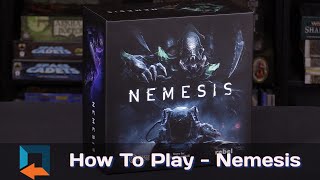










Nemesis Deep Dive
What the Community Thinks About Nemesis
Nemesis occupies a unique position in the board gaming landscape. Reviewers widely praise it as a game that authentically captures the horror and paranoia of the Alien franchise better than most other thematic games. The consensus emphasizes the game's cinematic quality and its ability to create emergent narratives at the table. However, this acclaim comes with recognition of its drawbacks: high cost, long play time, and the role that randomness plays in determining outcomes. The game inspires passionate opinions on both ends. Some see it as an essential experience for fans of sci-fi horror and semi-cooperative gameplay. Others view its ambitious scope and random elements as obstacles that undermine the tension it attempts to build.
Core Mechanics That Define Nemesis
Semi-Cooperative Play with Hidden Objectives
Nemesis, designed by Adam Kwapinski and published by Awaken Realms in 2018, distinguishes itself through a carefully tuned semi-cooperative structure. All players share a common goal of survival and escaping the ship, yet each character also holds secret objectives that can directly conflict with teammates' goals. A player might need to be the only survivor, or sabotage an escape pod, or detonate the ship's self-destruct sequence. This creates constant tension between cooperation and competition. Players must work together to survive the alien threats, but trust becomes a precious commodity when someone's personal victory condition might require betrayal. The mechanic forces difficult decisions: do you trust that your crewmate is telling you the truth about a room's contents, or are they misleading you for their own gain? This structure generates paranoia and accusation that mirrors the psychological horror of the source material.
Noise and Exploration
The noise system forms the backbone of moment-to-moment gameplay. As players explore the ship by flipping face-down room tiles, they roll dice to determine if they create noise. Successful rolls generate silence, but rolling crits adds noise to a track. The more noise accumulates, the more dangerous the situation becomes: aliens spawn and the board escalates toward a self-destruct sequence. Every action is a risk calculation. Moving through the ship is necessary for victory, but every step increases danger. This creates a rhythmic tension between exploration and caution that propels the game's narrative arc. Players must manage the noise level while simultaneously pursuing their secret objectives and dealing with the growing alien threats.
The Nemesis Experience
Claustrophobic Dread
Nemesis evokes sustained fear through its setting and mechanics. The ship is a confined space where escape feels impossibly far away. Players begin in the cryo chamber and must navigate through unknown corridors, discovering rooms one at a time. Early in the game, uncertainty dominates: you do not know where vital rooms are or what dangers lurk behind each door. The modular board design means the ship's layout is never the same twice, forcing players to adapt rather than memorize. Combined with the alien encounters that escalate throughout the game, this creates a growing sense of being hunted in an inescapable environment.
Cinematic Narrative Emergence
Reviewers consistently note that Nemesis feels less like a traditional board game and more like an engine for storytelling. The game unfolds in three acts: orientation, confrontation, and climax. Early turns involve exploration and teamwork. When the first alien appears, the tone shifts dramatically. Suddenly, players are making frantic decisions, accusing teammates of sabotage, and performing acts of heroism or selfishness. The game's chaos and randomness, which might otherwise frustrate, instead fuel memorable moments that feel earned and dramatic. A successful defense against a xenomorph, a last-minute escape, or a shocking betrayal becomes part of the shared story that players recount long after the box is closed.
What Makes Nemesis Stand Out
Production Quality and Visual Presentation
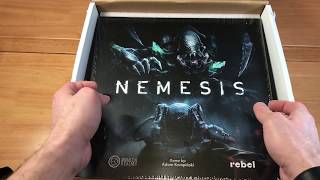
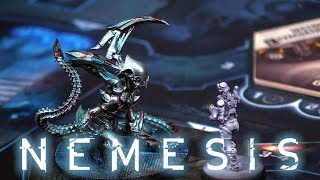
Nemesis is celebrated for its exceptional miniatures and component quality. The alien xenomorphs are rendered with detail and terrifying presence. Character miniatures are well-crafted and painted in the deluxe versions. The card art reinforces the sci-fi horror theme throughout. This level of production does more than look impressive; it heightens immersion. When an alien miniature appears on the board, it feels threatening. The physical components sell the theme and create a palpable sense of dread that abstract games struggle to achieve. The mod- ular board construction also deserves mention: flipping tiles to reveal new rooms is a simple mechanic that maintains mystery and keeps exploration engaging across multiple plays.
Thematic Alignment Between Mechanics and Setting
Few games achieve the level of coherence between their rules and their thematic premise that Nemesis manages. The noise system embodies the central tension of the Alien films: survival requires action, but action creates danger. Hidden objectives mirror the paranoia in the movies where no one can be fully trusted. The escalating alien threats and self-destruct countdown create mechanical pressure that mirrors the characters' emotional state. The design choices consistently reinforce the theme without feeling bolted on. Character abilities, the modular ship layout, the bag-pull mechanic for alien encounters, card effects, and environmental hazards all work together to communicate "you are trapped on a dying ship with monsters." This coherence is what allows the game to generate memorable stories rather than simply playing out a series of randomized encounters.
Potential Drawbacks
Randomness and Swinginess
Nemesis places significant control in the hands of chance. Dice rolls determine whether actions succeed. Bag pulls determine what aliens appear and when. Card draws determine encounter outcomes. While this randomness creates moments of tension and surprise, it can also feel unfair. A player can die early in the game through a string of unlucky rolls, then watch others play for the remaining three hours. Encounters that seem manageable can escalate suddenly when the drawn cards are particularly brutal. Some reviewers noted that randomness dominates outcomes more than player skill or strategy, meaning victory can feel unearned and defeat can feel arbitrary.
Complexity and Playtime Investment
Nemesis demands significant time and table management. Setup and teardown are lengthy due to the component count. A full game typically runs three to four hours, with some sessions extending longer depending on player count and decision speed. The rulebook contains edge cases and interactions that require consultation mid-game. This overhead limits accessibility. The game is not the kind of experience you play casually between other activities; it requires full commitment and mental energy from everyone at the table. For groups with limited time or players who prefer faster games, these demands can be prohibitive.
If You Enjoy Nemesis
Players drawn to Nemesis's blend of social deduction and sci-fi horror should explore related titles. Those who love the traitor mechanic and paranoia should consider Nemesis: Lockdown, the standalone follow-up that moves the same hidden-objective paranoia to a Martian base, or Coup for bluffing in a tighter package. For players seeking more control over outcomes than Nemesis typically allows, Station Fall delivers similar semi-cooperative space themes with reduced randomness and no player elimination. Fans of the claustrophobic atmosphere might appreciate Alien: Fate of the Nostromo for a more streamlined Aliens experience, or look into This War of Mine for similar narrative-driven survival themes. Those enamored with the cinematic horror elements should explore Gloomhaven for dungeon-delving narrative or Tainted Grail for a darker, more intimate story-driven experience.
What Reviewers Are Saying
"I think that the horror element is best shown in Nemesis. Just like Alien, I feel, is a horror movie. Aliens, I feel like, is an action movie, okay? I'm not saying one is better than the other. They're both great. I prefer Alien."
— The Dice Tower
"No board game evokes its source material better than Nemesis. Each turn, you dive deep into the cinematic narrative of the experience, feeling like an unlucky soul trapped within an Aliens film."
— Tabletop Turtle
"Nemesis is Alien the board game as a pitch. Semi-cooperative tension, hidden objectives, dangerous creatures, a ship that might blow up with you on it. It's a concept that sounds perfect and visually it delivers."
— Board Game Critique