



























Cascadia: Alpine Lakes Deep Dive
What the Community Thinks About Cascadia: Alpine Lakes
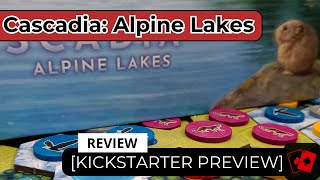
Cascadia: Alpine Lakes draws consistent admiration from board game reviewers as a thoughtful evolution of the original Cascadia. While it shares the accessible puzzle-building foundation of its predecessor, this standalone game shifts focus toward elevation and terrain strategy. Board Game Critique praised it as a game that delivers "better agency, cooler boards, and a satisfying strategic bite without scaring away new players." Reviewers across channels including The Brothers Murph, Where There's A Wilz There's a Play, and Banter and Boards highlight how the new elevation mechanic fundamentally changes what makes the game tick, creating a distinct experience even for those deeply familiar with the original.
Core Mechanics That Define Cascadia: Alpine Lakes
Double Hexagons and Vertical Stacking
The most striking departure from original Cascadia is the introduction of double hexagonal tiles that can stack vertically. Players place these paired hex tiles on their individual boards, and crucially, can build upward onto previously placed tiles. This creates a three-dimensional puzzle that immediately demands different spatial reasoning. According to The Brothers Murph's detailed gameplay, this stacking is constrained by elegant rules: each new tile must be supported by at least one adjacent tile at a lower level, and players cannot jump more than one level higher than their neighbors. This prevents chaotic tower-building and keeps the puzzle grounded in topology. The rule set remains accessible, but the stacking aspect does introduce what Board Game Critique calls a "3D thinking" hurdle that newer players encounter during their first games, even if it clicks quickly after initial plays.
Elevation-Based Scoring and Habitat Tiers
Scoring in Alpine Lakes spreads across multiple dimensions. Alpine lakes themselves score points equal to their elevation level, doubled if fully surrounded by tiles, creating immediate incentives to think vertically. Animals placed on higher elevations (level three or above) earn bonus points, and players compete for majority bonuses by placing the tallest specimen of each animal type. The three biome types each reward different spatial arrangements: forests reward diversity of animal types across the terrain, meadows reward clustering contiguous groups of the same animal, and glaciers reward having paired animals adjacent to each other within glacier corridors. This multifaceted scoring system means players juggle competing objectives, a design choice Board Game Critique appreciates for its flexibility: "If your forest plan crumbles, you can pivot. Build a glacier ridge, boost animals to level three, or drop a lake for guaranteed points."
The Cascadia: Alpine Lakes Experience
Satisfying Spatial Puzzle Feel
What reviewers consistently emphasize is how the physical act of building becomes engaging. The table presence is visually striking, with Beth Sobel's art "popping even more when elevated," according to Board Game Critique. The experience transforms the play area into what feels like a diorama or miniature landscape. The Brothers Murph's extended gameplay reveals how satisfying it is simply to construct and place tiles, even as they admit their playstyle leans toward building for aesthetics rather than pure optimization. This zen-like puzzle satisfaction appears across reviewer responses: the decisions are weighty enough to matter but not so complex that they paralyze new players. Games flow at a comfortable pace for most groups, though outliers with optimization-focused players can extend playtime significantly.
Strategic Flexibility and Pivoting
A defining aspect of Alpine Lakes is that poor luck or suboptimal tile draws do not trap players into a single strategy. The market mechanism using nature tokens lets players clear undesirable offerings and reset their options. This flexibility creates what Board Game Critique calls a "delicious" central tension: you must choose between spreading your animals horizontally for space or stacking for elevation bonuses, but this choice is never final. The game rewards opportunism and adaptation, which reviewers across channels note makes it feel less frustrating than its predecessor. Where There's A Wilz, There's a Play emphasizes how this added complexity and new scoring pathways keep the game fresh, while The Brothers Murph appreciates the ability to "undo" or restructure parts of your board by covering animals with new tiles, provided the animal symbols match.
What Makes Cascadia: Alpine Lakes Stand Out
A Distinct Identity While Honoring Its Lineage
Alpine Lakes maintains the quick-teach, elegant core that made original Cascadia accessible, but the elevation mechanic genuinely transforms the puzzle. Banter and Boards noted this at PAX Unplugged, describing it as "the same Cascadia, however, with a lot more complexity and new terrain, as well as new animals." The Brothers Murph's mid-year assessment places it high on their list because, while it shares Cascadia DNA, it "feels like a completely different game" due to tile placement becoming the central focus rather than animal placement. This is a true sequel in mechanical philosophy, not merely an expansion. Reviewers appreciate that even fans of original Cascadia now have a distinct choice between the lighter, thematic experience and this deeper, more puzzle-centric alternative.
Beautiful Components and Thoughtful Art Direction
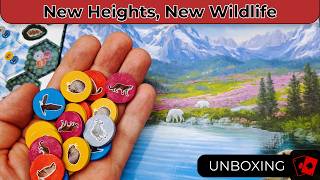
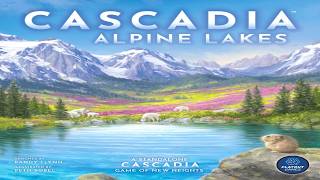
Board Game Critique's review emphasizes the production quality: "Components and production, 9 out of 10. The art and tiles are lovely." Beth Sobel's illustrations of the new alpine fauna (cougar, bald eagle, marmot, mountain goat, pika) are praised for their visual appeal, even as reviewers note these animals lack the quirky behavioral scoring rules that gave original Cascadia character. The physical elevation creates natural drama at the table, with players' miniature landscapes competing for visual dominance. This visual appeal translates into engagement, particularly for players who value the aesthetic and table presence alongside mechanical depth.
Potential Drawbacks
Loss of Thematic Animal Personality
The most consistent criticism from reviewers is that Alpine Lakes trades thematic charm for mechanical clarity. Board Game Critique bluntly states: "The animals lost personality. In original Cascadia, bears flirting in pears and salmon conga lines felt thematic. Here, cougars and marmots are just tokens." In the original, each animal had specific adjacency rules based on ecological authenticity. Alpine Lakes removes these behavioral quirks entirely, simplifying the animal mechanic to pure point-scoring based on height and majority. For players drawn to Cascadia specifically for its wildlife theme and ecological flavor, this stripped-down approach feels like a loss. Reviewers see this trade-off as intentional and worth it for the strategic depth, but it's a real concession for thematically-driven audiences.
Setup Complexity and Variable Playtime
Alpine Lakes introduces logistical demands absent from the original. Sorting double hex tiles, explaining the stacking rules, managing the larger footprint on the table: these create noticeable overhead. Board Game Critique notes that in four-player games, players may need to rotate boards to prevent stacks from toppling into snack bowls. Playtime variability is more pronounced than in original Cascadia: games range from fast 35-minute plays to extended 75-minute sessions if players get caught calculating elevation chains and optimal placements. Players prone to analysis paralysis can slow the game significantly. The rule learning curve, while still shallow compared to heavier games, is steeper than the original due to the 3D spatial reasoning required. Board Game Critique recommends managing expectations with optimization-prone groups, while new players generally click into the rules by the second or third round of play.
If You Enjoy Cascadia: Alpine Lakes
For original Cascadia fans seeking more depth, Alpine Lakes is a natural next step that keeps the accessibility while adding layers. If you love Azul, you'll appreciate the puzzle rigor, though Azul hits harder on direct player interaction and punishment. Calico offers similar puzzle brainstorming but is more unforgiving and lacks the flexible scoring options. Wingspan shares the beautiful art and nature theme, though its card-driven engine-building plays quite differently. For players who want to watch beautiful, evolving landscapes emerge across the table while making meaningful decisions without excessive downtime, Alpine Lakes delivers that experience in a tidy package that respects player time.
What Reviewers Are Saying
"This is a thoughtful evolution. It gave us better agency, cooler boards, and a satisfying strategic bite without scaring away new players."
— Board Game Critique
"I really enjoyed the puzzle of kind of building it up. And again, you can cover up an animal as long as that same animal is on the tile you're covering up. So you can kind of go boop and pop it up and stuff. It was just really really fun."
— The Brothers Murph
"If you need the animals to feel alive, this will ding your heart. If you want an elegant puzzle that looks incredible and plays smoothly, Alpine Lakes is almost a must."
— Board Game Critique