OFPG - Interview With Austin Harrison of IV Studio (Realm of Reckoning, Future of IV Games)
Games in This Video
13 games are featured in this video — they unlock as you watch.








Transcript
Realm of Reckoning is a card drafting game for two to five players set in a dark, vivid afterlife torn apart by civil war and forgotten glory. Players lead rival factions striving to rebuild ancient monuments and seize control of five powerful relics that once bound the realm together. With each shifting objective and everchanging strategies, no two plays are the same. In the end, only one ruler will reclaim the realm. You can find Realm of Reckoning on Kickstarter. Check out the links below for more info.
Yay!
Everybody, we are back. Yes,
we are back and we are ready to interview I mean grill I mean sorry interview
interview
Austin Harrison IV studios
and like I was just telling them back in the back we met him in 2021 at PAX Unplugged and like I said we haven't shook him off yet.
He's been around that feels like forever. He's been very supportive of us and we do love him for that. Yes. Now, Austin, we're going to kick this off. First thing we want to know is a little bit about you.
Yes,
sure.
Did you think that when you grew up that you were going to have a company like Ivy Studio?
No, not at all.
What What were your goals when you were when you were younger? What were your goals?
So, I grew up in a a construction worker family. My dad was a construction worker. Yeah.
He he used uh diamond blade saws to cut concrete. So, was a technical construction worker and I think maybe when I was like 10, he started his own company. He left where he was at and he started his own company. And so, I thought I was going to do kind of that kind of work when I got older. And then, um, in high school, one of my buddies was trying out for a soccer team at a college and he was like, "Hey man, we get off school for a few days to try out colleges. Do you just want to come with me?" And so, I was like, "Sure." Like, I'm not planning on going to college, but would love to get off school. So I went and I fell in love with the college and decided you know getting a management degree business management degree that might be cool uh for and help me you know run a company someday and I ended up going into marketing instead and have never looked back.
Wow.
Okay.
So how did you come up with Ivy Studio though? So, Zach and Sam were two of my best friends at college, and Zach was just this really creative guy, an incredible guy to know. And then I was the dorm, I was the RA, and Zach lived in my dorm, and Sam would sneak in at night and play video games with Zack. And so, that's how I knew Sam. Anyway, so Zack and Sam right out of college moved to Nashville and they started Ivy Studio and I was living away and when I I chased a girl to Nashville and I needed a place to live, I ended up living with Sam and I ended up joining with them shortly after that. So I've been there I think I missed the first six months of the company, but I've been there since then. Um, and so
now we've seen Zach a whole bunch. I feel Zach is almost in my house sometimes with as much content that y'all put out. I see Zack. I'm like, Lord, why he here he always in my feed all the time?
Hey, you know, he just loves you.
And that's where my question comes from now. Y'all, you have your animation company, right?
Yeah. So, actually Huh? It actually is all board games now. So, the animation studio closed a couple right at the end of the pandemic. the animation studio didn't close and we switched to focus fulltime on board game
really cuz that's what I gonna ask you know you you were doing animation you were successful at that then all of a sudden you guys decided to flip the switch and just not only just design games but publish them have these wild crazy kick you know Kickstarter game found campaigns which are which are beautiful and then also all the exclusive content that you put out you know around Why'd y'all do that?
Yeah. So, I have a few good stories for this. So, me and Zach,
since we were kids separately, we didn't know each other then. Had been making games. I loved Star Wars games. I had a bunch of Star Wars ships, and you know, you had an economy where you could buy more Star Wars ships, but they were just for me and my friends. They were never going anywhere.
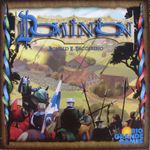
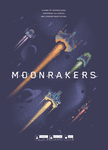
Zach, on the other hand, was trying to design a game and send it to Hasbro. He wanted to he wanted to make a game. Uh Hasbro said no, apparently, cuz that never happened. But uh in college we played games all the time. When I moved to Nashville, we played games all the time. And we were playing, you know, Dominion and Cosmic Encounter and Galaxy Trucker and all these games. And one night we were playing with a big group uh like the week before or something and they were taking so long to play Dominion. So long to play Dominion. And my favorite part is playing deck building games. My least favorite part is watching other people play deck building games, right? Uh, and so Zach was like, "Dude, can we come up with a game, a deck building game where you play on other people's turns?" And me, I'm thinking, "We're just making this for ourselves." Zach is thinking, "We're making this for other people." And so we I went over to his house, we worked on it for a little while, and that Jan that was over Christmas that January, you know, 4th or 5th or whatever, and I came back into the office, uh, I thought I was talking about the animation studio cuz I was traveling to ad agencies and selling the animation. And instead, Zach and Sam are like, "Hey, Austin, we want you to start a board game division of the company. Can you run a board game division?" I said, "I don't know the first thing about a board game division." Uh, and they're like, "Well, we'll figure it out together. It'll be fine." And so, for the next 6 months, I was working on Moonrakers and Zach and Max were helping and and trying to figure out what does it take to make this, what does it take to, you know, get it produced and shipped and everything. And after 6 months, my professional opinion was we should stop.
This isn't working. Uh, I have no idea what I'm doing. The game is not fun. uh if the game was fun, I wouldn't know how to make it. So, basically, we're just we're no nothing's going well. And Zach and Sam said, "No, stick with it. We'll figure the game out. We'll figure everything else out." And thankfully did because that's been six, seven years now.
Yeah.
Um and it's just been absolutely incredible to
to have that side of my brain be activated cuz I was on the other side for the most part.
Mhm.
And Zach was already on that, you know, the creative side of the brain. Um, but Zach was working for Nike and J.J. Abrams and Amazon and these huge brands doing animation, but he'd spend three or four months working on this project that he poured his heart and soul into. And then, you know, Nike would run it as an ad for 2 weeks on Instagram and then it was gone. They would never use it again. It was gone forever.
Yeah.
And Zach was like, I worked so hard on that and now it's just gone. I don't want to make the stuff advertising what someone else is doing. I want to make the stuff that people want.
And that that was like a big change for our company, a big shift for our company.
Um, and and Zach and Sam still do creative film stuff. I mean, they were they were filming a music video, a very large music video last week. So, like they still direct, they still do art, they still do animation, but most of our focus is now completely on board games. The company hires are all focused on board games. Um, and it's it's been really really cool to have that support and the hires and stuff because for a while I was a oneman show and it was just way too much wearing all those different hats from logistics to production, all of that. Um, and and not to say that I designed they were I was getting help from design and animation and like illustration and all that, but like the logistics and the customer service side of things I was doing by myself and that was really hard. So,
but you know, I like something you said about, you know, they were getting frustrated about making these ads that last for a few seconds and go away and they want to make something a little more longlasting. And that's something we talk about about how board games are an investment in your family. So, you've made something that people will buy and they will play it over and over. 10 years from now, they're going to pull out Moon Rakers or the new game Realm of Reckoning. They'll pull it out 10 years later and that's something you created that's still in somebody's life and that they make memories from.
Yeah. It's so true and it's it's such a ex we didn't understand it because we made games during the pandemic. We knew people were playing them and having fun, but when people come up to you at their con, they're like, "My family plays this every weekend and I have a tattoo right here of Moon Raiders." You're like, "Holy crap."
You got scared. You're probably like, "Oh, okay. We didn't know it was that deep.
We didn't know."
Security security.
But you know, boy gamers are are loyal. Yeah, they are.
You know, the hobby is loyal and there's so many people that love this hobby. So yeah, that was a good shift and it was just very very, you know, intuitive to think, okay, I want to make something that last.
But I do want to say something though.
Yeah.
They talking about they did a vid, you know, a music video. Uh Austin, tell y'all can't do no more rap videos now. No more rap videos, y'all.
Are you talking about Carly's uh rap video?
The rapid. Don't do it no more, y'all. Stop. Stop with the rap video.
That was Carly's idea. That was Carly's idea. I had nothing to do with that. I was just a bystander that happened to be on film.
Don't do it.
Yeah,
don't do it. So, what music video were we doing? Like a country music video?
Uh, no. We're not big fans of country music here. Uh, is a a friend of theirs named Cody Fry who's a brilliant musician. He's I mean nominated. He's he's fantastic.
Oh, they in Nashville, Tennessee and don't like country music.
Well, yeah. But see, Beyonce changed us though. Beyonce changed us.
Well, but she changed when we were in Nebraska. That is true. So, I have another question about back.
I actually have some questions from the chat.
Okay. Well, I'm not ready for those.
Not ready. Not ready. Hold on. These are kind of these are pretty good.
Okay. Let's Let's hit it. Let's see.
Well, I got one more.
We'll come back to that. Go ahead.
I'm just going to interplice some things with the chat. So, Rolling Reggie said, "My one question is, why isn't every publisher willing to or able to have IV Studios high level of production? Genuinely curious. Is it a money thing or a skill thing?" He said,
"Oh, this is this is a good question." And and I'm going to I'm going to try to answer it as tech tactically as I can. So the the going for high level of production is a huge risk because if you go for that high level of production and you say this is what it's going to be and you don't fund very well, you will lose your shirt because it is very expensive and that gets that get that cost gets more and more affordable the more of the thing you make. Right? So if I make 10,000 of something I can afford to put metal coins in it from the beginning like moon raers that always had metal coins in it. Had I sold 2,000 something, I would have lost everything. And so investing, the Ivy Studio was able to start from that because we started from another company. So Ivy Studio was say able to say, "We're going to invest in quality from the get-go because we have the security of another company and we can take that big risk to always be quality all the time." Most publishers, they can't say, "I'm going to have metal miniatures. I'm going to have this. I'm going to have this. I'm going to have this." because if they only fund for $200,000, which sounds like a lot before you start looking at how much it cost to make all this stuff, they'll they'll just not exist as a company. And so Ivy Studio was able to start the production here. And because of that, everyone just equalized our name with that level of production. And we were able to continue that and people would buy it because they could trust us from the beginning.
It's really hard to ramp up to that because when you start with okay production, it's hard to grow it each step because there's not necessarily that built-in trust from the very first production you ever made. I think that's probably why it's hard to get there.
In addition to that, IV is a has been a visual company for oh gosh 15 14 years now.
Yeah.
Uh we have a creative director who is one of the best in the industry. Uh, he came from one of the best animation studios in the industry for commercial animation. I mean, Zach is just a really talented dude with a really, really good eye. He picks very good artists. We have really good artists on staff. So, our stuff has a leg up because of our experience and our past work. So, um, I would say that's why to answer the question, exactly. There are companies out there that don't have that experience that are making things just as beautiful as ours. Um, one company that we absolutely adore is um, The Old King's Crown. I don't know if you guys have seen this game.
The art in Old King's Crown is is almost bar none. I love that art style. It's incredible. So, uh that's one to look at. Um yeah. So, that's
that was a good question.
Yeah, cuz I mean you guys, you know, just components and everything is just like out of this world cuz you when you see an IV game, you know it's going to be just crazy. Even an IV prototype.
Just a prototype. Family, they send us prototypes. It's already ready. Looks like it's ready to go on the shelf already.
I'm like, what? A prototype?
Yeah. Yeah.
I'm like, it's it's beautiful.
But in essence, to boil down Austin's answer, it's money, Reggie.
Yeah.
They they they had the backup where a lot of people don't. They had that backup so that they could go ahead and invest and make those games great. But I I have a question about the current uh game that's out.
I got a question. So the your new game out is Realm of Reckoning.
Yes.
So tell us a little bit about that game.
Yeah. So this game, man, I Okay, we we always start with the prototype. Obviously, we're on TTS. We're iterating from there. This one went through something like 36 different games by the time it finished. And the funny thing is on version one, I thought it was 90% of the way there, but getting that last 10% took forever. And the magical part of what unlocked this one was that you don't know what is going to score at the beginning of the game. There's nothing scoring and the players through winning bids get to decide something on the map that is now scoring points. And so you're gaining resources while you're playing, but those resources could end up scoring points or you could spend those resources to get to decide what scores points. And so you end up deciding, okay, am I going to invest in this one thing for the hopes of making it score points later in the game, or am I just going to sit back and watch what everybody else makes score points and follow on their coattails in order to make that score points for me? And so there's this tension of how much am I going to bid in order to control what's scoring versus how much am I going to just invest in what's already scoring.
Now, is this the dynamic core that you're talking about? That is the dynamic core. It's It's kind of interesting because I heard Zach talking about it where you have 19 different scoring opportunities at the beginning of the game and you have to narrow it down as a group intension and competition down to just nine, you know, uh, scoring opportunities. So, tell us a little bit about this dynamic core.
Yeah, so that core is is what I was describing, but I can go deeper into it. Whereas each game it's going to feel really different based on what the players decide is important. One game area control on the five regions of the board might be super important and then the next game you play there won't be a monument there. It doesn't matter at all. One game coins could just be used for voting and the next game people are hoarding them like little dragons because if they have the most they score 12 points every round. So you're playing across three rounds and so sometimes something is just not important at all and sometimes it's like the only thing that you care about. And so I I love that every game feels replayable, not because of an arbitrary setup of like there's a different card, a different objective, but every game feels different because of the player's decisions when you're always starting from the same place.
Interesting. Now, this game has more than exceeded its goal.
You more than exceeded. Congratulations.
Congratulations. It is funded. It is out there. So, now that this project is a success,
are you guys already thinking about the next project?
Yeah. So, we have hired a bunch of people and a bunch of people. We're still a small company. We're eight people, so we're not huge. But because of that, we had to start making more games. And because we work on every game for year or years sometimes, uh we have four games actually already in
everybody.
Four.
We have um a a end of the year campaign that is going to be a co-op deck builder. We have two expansion uh two expansions for past games that are in the works for next year.
Can you tell us what they are?
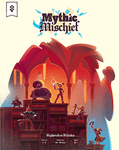
Uh I could say that uh we're always looking to return to Mythic Mischief eventually. I think the Mythic Mischief volume
Okay.
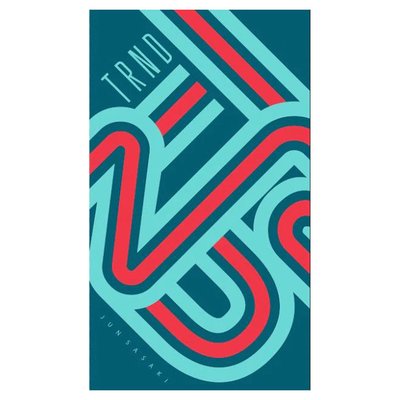
And then Fractured Sky got a small expansion that may get more expansions coming soon. We'll see. I'm not I'm not positive at what order or what timing things are going to happen. So, um, and then we have one more game that our friend, one of my friends is making that we may end up licensing. And then, um, we have a couple of prototypes that are very, very early. I really love Rondles. I want to make a Rondell game. And I have not cracked the code yet, but I think I finally had the right idea. So, I'm about to start running with that. But, one thing that actually is really perfect cuz you guys are talking about travel games today. We have three games launching at Gen Con that I want to give y'all, which are three small box games. We have a co-op um a co-op game where you're trying to reorder the timeline. It's gotten jumbled and we're trying to fix time. Okay. We have a uh a tend game that is uh you're basically um trying to do card drafting, but it's also push your luck. And then we have a lane battler that you may have seen with Scales of Fate. It was a Pillars of Fate build lane battler. So, those are three smallox games coming out.
Now, those three were kind of like the tariff, you know, fighters, you know, the tariff crazy fighters. Yeah. Yeah. So, that's cool. Yeah,
that's cool.
That's one of the ways we're trying to manage the tariff by raising cash ahead of time. They were not supposed to launch until Gen Con. We ended up launching them after the tariffs were announced uh just to offset the importing of Brink, which is almost here.
Yes. Yes, it is.
All right, Gra, we got more questions from the audience.
Yes, we do.
All right, we got some audience questions.
Let's see. So, Michelle Rose said, "Iive is doing a ton of in-person demos here in Denver. What inspired you to incorporate that approach in your testing/marketing?
Yeah, so I think last year we incorporated a new thing called city captains and um we were planning on taking it to 10 US cities. We got really busy and and things kind of went wild. So we only did four. I think we're in Denver, Chicago. O I can't remember where the other two are right now, but um this is Lily's uh Lily's preview. So but basically these city captains get early versions of our games. Um, and then they can run events where people can come out and play those games with them. Okay. At local coffee shops, like uh board game cafes and breweries and things like that. And it's a way to get some grassroots level exposure to the games.
Um, when Ivy launches a game, it's it's done for the most part. We might do a small expansion or fix some card balancing or things like that, but the games are done. And so because of that, one of the best ways we can market it is to get people to play them. Um cuz you know we we obviously believe in what we're making and think the games are great when we're done with them. Um and so the one the number one thing I can do to get people to back it is to play it, which is why our TTS mods are so nice and also why we do things like City Captains cuz we want the exposure. We want people to play it.
Oh, that's cool. So, what do we got? Anything else, Grant?
All righty. Let me check really fast. Uh let's see. Oh, Monica and Mimi were also wondering if any of these upcoming games had a solo mode. So, yes. Um, the Time to Panic is the name of the one where you're reordering the timeline has a really great solo mode. It's a little puzzle game.
It plays basically the same as the core game, which I always love that in a solo mode where I'm not having to learn a whole new thing. Um,
the Graph does not. It's a card drafting game. It's not really built to be a solo game. And then, um, the lane battler is not as well. That's Pillars of Fate. It's not. But Time to Panic and Tend are two best solo games that are unreleased right now that are coming out. Tend later this year. I love that solo and then um uh Time to Panic is is a solo game.
Yeah, I see Tend as a real good solo, you know, with the dice and everything. And I mean, the production value on the dice. Come on, Austin. Y'all lost your mind.
No, not just the dice. The markers. The markers. Markers. Oh my god. We said Austin and all of them have lost their minds. That is just That's Yeah, y'all. That's cool. It was cool. It was cool.
It felt It felt like we lost our minds cuz the day before the campaign we were like, we know people are going to ask how long these markers last.
And so we had four people just sitting around a table just stamping repeatedly to try to run these markers out of ink. And they did it for two hours and the markers didn't run out of ink. So we're like, "Okay, we're stopping." That that's a lot of time. Didn't you guys didn't you like bet like had some money bets on the markers or something? I saw that.
Oh, I I think I bet them 20 or $40 that it wouldn't run out in an hour. I think that was the bet and and someone took me on it and they sat there for an hour and it did not run out.
All right, so you won that one.
You won that one. That's cool. That's cool.
All right, we got any more questions?
Yes. Let me read this one. So, No Drama Games asked, "What are your two biggest lessons learned from your Kickstarter campaigns that you wish you knew beforehand?"
Mhm. Oh man. Uh, I've I've run 13 I think 13 maybe 12 campaigns now. So,
okay.
I've run a lot. Uh, shoot. Two biggest lessons I've learned from the campaigns. That's hard. Um, I used to run a show where I gave advice on crowdfunding campaigns and and how to how to run them. Um, it was called Ivy Backed. Um, and so you can go there and I'm sure I talk about some of those. I haven't run that show since the pandemic. Um, but during that I got to get a lot of um, just perspective on how our campaigns went and you know micro analyze those. I think one of the biggest mistakes we've ever made on a campaign was on Mythic Mischief Volume 2. We did a 48 hour reward that was too big. Sometimes you you overdo the 48 hour reward and because of that you get a huge funding in the first 48 hours, but after that it's just not really as worth it to the people that knew about that 48 hour reward. And so you have this great spike and then this huge drop off cuz it was a prepainted mini fig that was like an alternative keeper for for Mythic Mischief and it it would have been like $20 or $15 as an add-on. And so giving it away for free and then having that huge day we were like oh my gosh this campaign's going to go bonkers and then after the first two days there was almost no funding.
Okay. Okay.
Like after the first two days I was like this is a million dollar campaign. And I think it ended at 650k. Like it it just was it was the flat the biggest flatline we've ever had on a campaign.
Yeah.
Um and so that was that was one thing. Um
Veiled Fate this is another good one. Veiled Fate was too complex.
Mhm. There were too many pledge levels. And if you look at Realm, Realm is the lessons learned from Veil Fate. Realm doesn't have a bunch of pledge levels. It has one version and one all-in pledge because Vailed Fate had by the time we were done with languages had 18 different boxes. And that was just stupid. We should never have done that. Uh and and it was just really complex at manufacturing. It was really complex for fulfillment. And so you'll see us moving toward things that are like, hey, this is a Kickstarter edition that's nicer than the retail edition and you can only buy the Kickstarter edition of the campaign and then there's ways to upgrade it from there. And that's one of the ways we're trying to to balance it out. Also making quality things without making them be uh how much is that Lord of the Rings thing that's uh on sale right now on Game Found like $2,300 or something like that. Yeah.
You know, how do we make something that's quality and approachable at the same time? Cuz that's that's really hard. Uh, yeah.
And so getting Realm of Reckoning under $100 as the the Kickstarter Deluxe Edition was something we're really proud of.
I mean, it's beautiful though. I mean, all wood and it's you don't have to put no stickers on it, you know. Come on now, publisher. You don't have to put no stickers on it. But I mean, and you know, you know, just it's just beautiful. It is so beautiful. So, it's really cool.
All right, let's take one more question.
All righty. Let's see. Let me read this real quick. Oh, and also shout out to someone who came from the IV Games Discord. Uh Nick,
hey, what's up?
What's up?
What's up?
Thanks for being here.
Yeah, welcome.
Thank you.
All right,
this is the year of wood. Yes, we've done a lot of good this year.
So,
as far as components,
yeah, Monica asks, "Do you have any contact with other companies that run kind of like you to have some exchange of experiences?"
Yes. Um, we're good friends with people at Chip Theory. We're good friends with people that does quality.
Yes. Another one that does a lot of good quality.
Orange Nebula are friends, too. Oh, yeah.
Um, and then, um,
oh, no, Key Master. Couldn't blanked on Keymaster's name for a while. We're good friends with some people at Key Master. We're good friends with some people at Van Rider.
Yeah.
Um,
I'm definitely forgetting some people and I'm going to regret it, but we're friends with people at All Play.
Yeah. Um, yeah. So, we have we have friends through the industry. It's always comparing. I mean, some companies are very very different than us. Like, all play and us have almost opposite uh totally opposite products and and strategies. They're really strong on retail. We're not really strong on retail. We're really strong on Kickstarter. They're actually getting stronger on Kickstarter. So, they might catch us eventually there. Uh, but then like people like Chip Theory and Orange Nebula and these companies, they do big Kickstarters and they do things pretty similar to us.
Yeah. Yeah. That is so cool.
All right. I want to wrap this up and I want to say thank you Austin so much for being on the show, being our first live interview on the show
and I want to say thank you so much for working with us. You guys always send us your stuff and you allow us to work on your campaigns and you're letting us do the promotion for Realm of Reckoning. Uh we appreciate that so much. We appreciate your support and we wish you guys the best and again congratulations on the success of this campaign, Realm of Reckoning. Now, I do want to ask, uh, where are you guys going to be at, you know, at at local cons or big cons or where you guys going to be at?
Yeah. So, we'll be at Gen Con and we have one of the side rooms at Gen Con this year, which I'm really excited. Never done that before. And then we'll be at PAXU. And then there's a local con in Tennessee if any of your viewers are in Tennessee, uh, called Tennessee Game Days. We love that con and we're there every time. There's two a year. Uh, and so we we'd love to see you there.
Thanks again.
Oh, I do have some other comments. I want
some more comments. Okay.
Um, just real quick before you head off, um, where was it? Michelle Rose said, "Thanks for supporting small local businesses with the city captain's program cuz she said it made a huge difference for a local brewery there."
Oh, okay.
Oh, that's awesome. That's awesome. I'm really happy to hear that. Yeah, the city captains program Lily did has been incredible. Hopefully, we'll get to expand that in the next few years.
Please do. Cuz Omaha, we got a board game cafe cafe and we're a city.
Yeah, we're a city. We're small, but we're a city though. We're a city. We're small. But Austin, we love you, man. And you know, like I was saying, we we saw you first. You know, I kind of bumped into you at your booth at Pack Show 2021 and we talked and that's when you gave us Moon Rakers and we now have the big Moon Rakers. We love I love Moon Rakers. So, that's where we started. So, I appreciate you. So,
Oh, but we appreciate you guys, too. Thank you so much for the great content and for always supporting us and for for playing great games and and being able to show them off in a great way to your audience. Thank you so much. Thank you again. Have a great day and we really appreciate you being here. Thank you.
Thank you. Bye everyone. Thanks for watching.
Heat.
Hey, heat. Hey, heat.