Board Game Hype Is MANUFACTURED (they are lying to you..)
Games in This Video
15 games are featured in this video — they unlock as you watch.





Transcript
You know what has been bugging me for months now, like really getting under my skin? It is that feeling you get when a game absolutely explodes onto your radar. It is everywhere. BGG hotness, every podcast we listen to, every YouTube channel, our Discord servers, and then you finally play it and it is just fine, just totally average. And you sit there wondering how something with that much noise around it ended up so unremarkable. Oh, I know exactly what you were talking about. And I think a lot of people in our group have felt this and just could not put it into words. Because the noise feels organic, right? It feels like the entire community discovered something incredible at exactly the same time. But here is the thing we have come to realize, and it is not a comfortable thing to sit with. The noise is not organic. It's built. Not always cynically, not always maliciously, but engineered nonetheless. And the hobby has developed this hype machine that is sophisticated, mostly invisible to consumers, and deeply embedded in how games get funded, marketed, reviewed, and ranked. We want to be careful here.
This is not a rant. We are not saying every publisher is a crook or every reviewer is on the take. What we are saying is that the information environment around a game's launch is structurally compromised in ways most hobbyists have absolutely no idea about. And if you want to spend your money wisely in this hobby, you need to understand how the machine works. Right. And let us start with BoardGameGeek because that is where most of us go to take the temperature of the hobby. The hotness list especially. It feels like a real-time pulse of community excitement. It feels democratic. It feels like a genuine signal. It's not. The hotness does not measure quality. It does not measure how many people are enjoying a game. It measures activity, page views and forum thread activity. Though BGG has never publicly disclosed its full formula.
What we know for certain is that this activity can be manufactured. And once you understand that, the problem becomes obvious. Activity can be manufactured. We watched this happen in real time with the Godot Games situation in early 2025. They're the publisher behind social deduction titles including Human Punishment. Members of the Godot Games team got caught flooding BGG forums with threads specifically to push their upcoming crowdfunding campaign onto the hotness list. It was not a community organically buzzing about a game. It was a publisher using BGG's own algorithm against its users. The threads were marketing tactics dressed up as community engagement. And honestly, the thing that worries me most about that case is we would be naive to think it's isolated. The mechanics of how the hotness works are not secret. Any publisher with enough staff or a devoted enough fan community can coordinate activity to game the list. It might be brazen like Godot. It might be much more subtle. A coordinated wave of forum posts. A push to get fans to post in threads. A well-timed announcement that generates clicks. The end result is the same. You look at the hotness, you see a game at the top, you assume it got there because people love it. Often, it got there because someone made sure it got there. And the deeper issue, which I think gets lost, is that BGG's rating system is also vulnerable at launch.
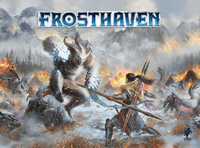
Early ratings on crowdfunded games are almost never a neutral sample. They come predominantly from backers who have already committed financially. Which is huge, right? These are people who consciously or not have a psychological investment in the game being good. They want to have made a smart purchase. The result is that a BGG rating in the first few months almost always skews artificially high. And that inflated rating then feeds into the next wave of hype for the next wave of buyers. It's a feedback loop. And once you see it, you can't unsee it. Look at Frosthaven. It launched with massive anticipation, raised an extraordinary amount of money, climbed into the BGG top 20 quickly. A significant portion of those early high ratings came from people who had backed it and needed it to be worth what they paid. That's not a community verdict.
That's backer sentiment masquerading as community consensus. And once you see that pattern, you start seeing it everywhere. So, let's talk about the preview pipeline because this is where the manipulation is most invisible to consumers. Here's how a major launch works in 2025. The publisher identifies a list of content creators. Sometimes it doesn't, sometimes several hundred. They send free copies, sometimes prototypes, sometimes finals, weeks or months before retail availability. And then those creators make videos. The videos go live around the same time, usually timed to the campaign launch or the retail street date. The algorithm rewards that coordinated spike. The game trends and consumers see what looks like an explosion of independent enthusiasm, and they read it as validation. Independent.
That's the word that does the most work there. I want to be careful about the word review here because it really matters. The vast majority of content that drops at a game's launch is not a review. It's a preview. And a preview is explicitly not a full assessment. It's based on limited plays, often with prototype components, with rules that may still be in flux. Previews are universally positive in tone because the entire purpose of a preview from the publisher's perspective is to generate excitement. There is no obligation to balance. There is no responsibility to the consumer to say whether the game is actually worth buying. A preview is an advertisement that does not always announce itself as one. And by the time actual reviews start appearing based on final components and multiple plays with different groups, the campaign has already closed. The hype has done its job. Backers have already committed thousands of dollars collectively. The review arrives too late to matter for the purchasing decision it was supposed to inform. Awaken Realms in particular have mastered this machine. Nemesis, Tainted Grail, ISS Vanguard, every one of those launches followed the same pattern. Coordinated wave of preview content from a large selection of creators timed to the campaign, uniformly enthusiastic. And look, Awaken Realms make legitimately impressive production games. We are not trying to take that away. But the size and coordination of their preview machine means by the time any measured critical voice gets heard, you have already seen 60 YouTube thumbnails of
people losing their minds over the miniatures. The reception is locked in before the game has even been properly played by anyone independent. Okay, this next part is the one that makes me genuinely uncomfortable because it involves people in the community we both respect. The board game content creator ecosystem runs almost entirely on free review copies from publishers. That part is not secret. Most creators disclose it, at least in passing. What is less discussed is the structural pressure that creates on the honesty of reviews. Think it through from a creator's perspective. You receive free games. You make content. If a publisher sends you a game and you tear it apart, there is a real risk that publisher stops sending you games. In a hobby where new releases run $50 to $100 and reviewing properly requires multiple plays, which requires owning the game, losing access to a publisher's review copies is a real economic problem for a small creator.
You are not just losing a free game, you are losing content and you are losing the ability to cover the new releases that drive traffic. And the incentive to be positive is not always conscious. It rarely manifests as someone deciding to lie. It shows up in softer ways. Criticism gets buried at the end of a video. Significant problems get framed as matters of personal taste. A genuinely mediocre game gets described as not for everyone, rather than not very good. The language softens, the qualifications multiply, the score stays higher than it should be, and there is an even subtler filter that operates before a word is written or spoken. Publishers are not stupid. When they choose which creators to send games to, they tend to gravitate toward people who covered their previous games positively.
Which gets framed as sending games to people likely to enjoy them, which sounds reasonable on the surface, but the effect is that the pool of voices covering any given publisher's games is pre-filtered for enthusiasm. Critical voices fall off the list. Over time, the entire reviewing ecosystem around a particular publisher trends toward positivity, not cuz anyone is paying for praise, but because the structural incentives have quietly sorted out anyone likely to say something unwelcome. Kingdom Death Monster is a perfect case study. Possibly the most hyped game in recent hobby history. The coverage around its massive crowdfunding campaigns was overwhelmingly rapturous. Critical perspectives were rare, and when they did appear, they got drowned out or dismissed as missing the point.
Some of that was genuine community enthusiasm because KDM does genuinely do things no other game does. We are not pretending otherwise. But some of it was the echo chamber created by a reviewing ecosystem that had organically sorted itself toward positivity over years of free copies and early access. Both things can be true at the same time. Now, crowdfunding campaigns, that's where I think the machine is most deliberately constructed. Kickstarter and Gamefound campaigns are not just fundraising tools, they're psychological environments specifically designed to manufacture urgency and suppress rational decision-making. The limited time window is the foundational pressure tactic. You have until the campaign ends to back. After that, the opportunity is gone, or at least you're told it is.
That It a deadline that overrides the very reasonable instinct to wait and see. Rational consumer behavior says wait for reviews, wait for other people to receive the game and share their experiences, then decide. The campaign window makes that literally impossible. By the time any of that information exists, the window is closed, and then you stack stretch goals on top. The stretch goal structure is elegant manipulation. Every new threshold unlocked adds more content, more miniatures, more scenarios, more components. It creates the impression the game is constantly growing in value, that backing now means getting more than backing later. And the social pressure aspect is so good. The community collectively unlocking goals feels like a shared achievement. The natural human desire to be part of that achievement pulls people in, even when their rational mind is saying they should wait. It's behavioral economics weaponized against your wallet, and it works on us, too. We are not above it.
The CMON model is the most aggressive version of this. Blood Rage, Onitama, the various Zombicide entries, their campaigns are designed to maximize the gap between the crowdfunding edition and whatever eventually reaches retail. Kickstarter exclusives, characters, scenarios, gameplay components, they all mean the retail version is deliberately incomplete. The message, sometimes stated openly, is that if you want the full experience, you should have backed. That is not a reward for early supporters. That is a threat to everyone who waits. And what gets lost in all this excitement is the most basic consumer question. Is this game actually good? The campaign page is a masterwork of presentation, professional photography, dramatic trailers, art that makes every game look like the most epic experience of your life. What you almost never get on a campaign page is an honest accounting of the game's weaknesses. You are being sold a dream, and the entire architecture of the campaign is designed to make sure you commit your money before you can wake up from it. And the FTC has actually noticed all of this, by the way. In 2023, they updated their guidelines on endorsements and testimonials. They made it explicitly clear those rules apply to online content creators, including board game reviewers. The rules are not complicated. If you receive a free product, you must disclose it clearly in any content featuring that product, not buried in a description, not in a tiny disclaimer at the end, clearly. The board game content space has been slow to comply. Disclosure practices vary
wildly. Some creators are scrupulous about it. Others mention it so briefly that viewers miss it entirely. Others do not mention it at all. And even among creators who do disclose, there is a wide range in how prominently they flag the relationship. A 2-second verbal mention in a 40-minute video is technically disclosure. It is not meaningfully informative. And the more troubling side of this is the pressure that exists around negative coverage. There are documented cases of publishers going after creators who gave their game a negative review, including approaching the creator's sponsors to pressure them into removing content. This is not rumor. It has happened. The message it sends to the broader creator community is clear. There are consequences for honesty. Even if most publishers would never go that far, the fact that it happens at all casts a shadow over the independence of every review in the space. And there's another practice in this hobby that exists in almost no other consumer category. The review copy is a permanent gift. Yeah, this one is wild when you actually think about it.
In most media, review copies are either loans that must be returned, or they are explicitly valued as part of disclosed compensation. In board gaming, it is standard practice for publishers to send a permanent copy of a game worth 50 or $100, and for this to be treated as entirely normal and unproblematic. The creator keeps the game. They can sell it, trade it, add it to their collection, and yet the expectation is this arrangement does not influence their assessment. I'm not saying it always does. I am saying the incentive structure is obvious, and pretending it is irrelevant is naive. Let us talk about the games that actually got buried by their own hype, because this is where you can see the machine's failure most clearly. The Old King's Crown is a game we both looked into closely. It was positioned as a standout release, covered extensively before launch, talked about in superlatives by a lot of prominent creators. When it actually reached players, the reception was considerably more mixed. The game has legitimate problems that were either not mentioned or actively minimized in the preview coverage. People who backed or bought on the strength of that coverage felt misled, not because they were lied to in the crude sense, but because the information environment around the launch was shaped to produce enthusiasm rather than honest assessment. Tainted Grail: The Fall of Avalon is another example worth examining. The Awaken Realms campaign was enormous. The preview content was rapturous, and the production quality was genuinely exceptional. But the game also had
significant pacing issues and a story structure that not every player found satisfying. Those criticisms existed. They just didn't have space to breathe in the launch environment where the signal-to-noise ratio was overwhelmingly positive. Backers who discovered those issues after committing felt the gap between expectation and reality very sharply. But the example that hits closest to home for me, and I want to be honest about this, is Wrath by Chip Theory Games, because I backed it. When I committed during the Gamefound campaign, the BGG rating was sitting around 8.4. The conversation around it was electric. This was being positioned openly and repeatedly as the game that was finally going to challenge Root's dominance in the asymmetric area control space. Root killer was a phrase being thrown around with real confidence. Chip Theory has a strong track record. The production looks stunning. Preview content from multiple creators was almost uniformly glowing. It had every hallmark of a game about to become a hobby staple. And now it's at retail.
The dust has settled and the rating has dropped noticeably. More importantly, nobody is talking about it. The forums have gone quiet. The content has dried up. It's not on anyone's most anticipated list. It's not appearing in games you should be playing recommendations. It's just faded into the background of the hobby the way games do when the hype cycle has finished with them. And here's the thing I want to be really clear about. Oath is a good game, genuinely. The production is excellent. The area control mechanics are tight and well executed, but it's not a Root killer. It's not even close to being a Root killer. Root has asymmetry so deep that each faction plays like a fundamentally different game. Oath has factions that steer your strategic approach within a shared framework, which is a completely different and less radical design proposition. The comparison was never accurate, but it was enormously useful for generating hype and so it was made repeatedly by creators and in community discussions until it became the lens through which everyone approached the game. When the game inevitably failed to deliver on a comparison it was never really built to win, the disappointment was baked in.
The game did not fail. The hype around it failed the game and this pattern repeats across the hobby with enough regularity that it should make everyone more cautious. Big campaign, coordinated preview wave, BGG hotness spike, strong early ratings from backers, quiet reassessment six months later when the broader player base has actually played the game. By then the publisher has moved on to the next campaign and the cycle begins again. But, I want to flip this around, because none of this means popular games are bad. None of it means every piece of enthusiastic content is manufactured. There are games that generated genuine, organic, community-driven excitement, and you can see it in how that excitement behaves over time. Gloomhaven is the obvious example. It used Kickstarter, too, but as a small indie operation with no coordinated preview machine. The second printing raised nearly $4 million, but that was because actual players had already fallen in love with the game, and word had spread. The rise to BGG number one was driven by people having experiences they wanted to talk about.
It built gradually. It held that top spot for 5 years before eventually being overtaken. The hype was a product of the game, not the other way around.
Spirit Island is another. Greater Than Games ran a Kickstarter for the original release that raised just over $80,000 with no coordinated preview machine and no launch week content. The game found its audience through genuine play, genuine love, and genuine recommendation. It climbed BGG over years, not weeks. That kind of trajectory is what real community enthusiasm actually looks like. It does not spike dramatically at launch and then quietly flatten. It builds. And honestly, you can use this as a rough diagnostic. If a game's BGG activity looks like a sharp spike followed by a cliff, that is a strong signal that the activity was manufactured, or at least artificially amplified. If it builds gradually and maintains, that suggests real engagement. It is not a perfect signal, but it is a useful one. So, what do you actually do with all of this?
Because we are not telling people to stop enjoying the hobby, or to become cynically suspicious of everything. We are telling them to adjust how they use the information the hype machine produces. First thing, treat all launch window content as marketing. That is not an insult to the creators making it. It's just an accurate description of what it functionally is. Preview content, launch week reviews, crowdfunding campaign pages, all of it is produced in conditions that systematically favor positive presentation. Consume it for what it tells you about the game's concept and aesthetic. Do not let it be the basis of a purchasing decision. Second, wait. I know this is the hardest advice to follow in a hobby built around FOMO, but the games that are actually worth your money will be available after the campaign ends. Most crowdfunded games reach retail. The ones that do not are telling you something important. If a game genuinely cannot sustain any form of retail release and only exists as a crowdfunded limited run, ask yourself why. Why is the publisher so confident it won't sell at retail? Why are they so determined to get your money before you can talk to anyone who has played it?
Third, actively seek out critical voices. They are rarer than they should be in this hobby for all the structural reasons we just talked about, but they exist. There are reviewers and content creators who prioritize honesty over access, who will give a game a low score and accept the consequences. Find those people and weight their opinions accordingly. They are doing something genuinely difficult in an environment that discourages it. Fourth, read BGG forums rather than just looking at the rating. The forums, particularly the rules questions and session reports sections, tell you things the rating does not. If a game has a lot of rules questions about fundamental mechanics, that tells you the design may be unclear. If session reports are uniformly enthusiastic, but oddly brief, that tells you something about the depth of the game. The rating is a number that can be manipulated. The forum discussions are where actual players reveal what they actually experienced.
Fifth, pay attention to what happens to a game 6 months after launch. Look at the rating trajectory. Look at whether forum activity is genuine ongoing engagement or dead silence. Look at whether people are still buying and playing or whether it's been quietly shelved while everyone talks about the next campaign. The hype machine only operates at launch. Six months later, you get something much closer to reality. And I want to land somewhere honest here because I love this hobby. I have spent more time and money on board games than I will comfortably admit. And the best games in this space offer experiences nothing else can replicate. That's precisely why the hype machine bothers me as much as it does. It's not an abstract problem. Every time someone backs a mediocre game on the strength of manufactured excitement, that's real money gone and real trust eroded.
The publishers who rely most heavily on these tactics are not creating the hobbies best games. They're creating the hobbies most marketed games. And those are not the same thing. The games we keep coming back to, the ones that actually matter to our group and to the way we play, are almost never the ones that dominated the hotness at launch. They're the ones that quietly earn their reputation through actual play. The hype machine is not going away. The economic incentives that drive it are too strong. The structural features of BGG and crowdfunding platforms that enable it are too deeply embedded to change quickly. But you don't have to be a victim of it. You just have to understand how it works. Once you can see the machinery behind the curtain, the magic stops working. And once the magic stops working, you start making much better decisions about where your money goes. So next time a game explodes onto your radar and you feel that pull, that feeling that you need to back it now before the campaign closes, that everyone is talking about it and you're going to miss out, stop. Ask yourself who's talking about it. Ask when they got their copy. Ask what they have to gain from your enthusiasm. Ask what the game looks like six months from now when the campaign is closed, the previews have been forgotten, and actual players have had time to tell you what they honestly think. The games that are worth your money will still be worth your money when you've done that. The ones that weren't cannot survive the wait, and that distinction is the most honest signal in this entire hobby. We'll catch you on the next one.