Do Phones Kill the Vibe? | Your Board Game Design Questions Answered
Games in This Video
14 games are featured in this video — they unlock as you watch.






Transcript
I'm creating a game about sports, but I can't find enough playtesters. I'm working on a card game and I don't know how to score best. I'm trying to design a party game, but I'm wondering if being on a phone kills the vibe. I'm Adam Porter and this is another one of those conversational videos where I go through YouTubers comments and I'll try and give you my thoughts maybe in a little bit more detail than I'm able to when I'm typing them out on the computer.
So, we've got a number of questions today as always and the first one comes from the video filtering playtester feedback which was one of my YouTube shorts. So, the comment is I'm creating a game about sports, but my problem is I can't find enough playtesters. So, let's have a think about this one. Firstly, let's deal with the playtester issue, right? Where do you find your playtesters? Forget about the sports side of things. If you're going to seriously playtest your game, you're going to need to find a group. Um and and and that can be tricky. So, you can utilize your a local group of just board gamers, right? Nothing to do with design, just people who get together every week and play games. And I I would say don't go in there week one, you know, turn up on week one with your prototype game. Go along, play other people's games. Do that for a few weeks, get to know a few people, see who you think might be suitable playtesters and then reach out to them and ask them, you know, would they mind playing your game one afternoon
one evening, you know? Look after them as well. Buy them some cake, buy them some pizza, buy them a beer. Whatever you need to do to make them feel comfortable playing your game. Don't ask the same people to play it over and over again because playing prototypes can often be a bit of a chore. But if you're with a gaming group, often there are large numbers of people coming through that group and you've got multiple different groups who might actually be willing to try your prototype. And this will get you so far. Next stage is really to try and find a playtesting design group and that might mean traveling. And it may be that actually the country that you're in or the area that you're in, there is nothing local, in which case you might need to move online for some of this sort of play testing. Do searches. You know, if you search for game design groups on Facebook or or or various different forums, whichever forum you're on, you're going to find them, right? There's lots of people online talking about board game design.
And again, if you get in there, get to know a few people, they will point you in the direction of online play testing groups where you can try out your game. In Cardiff, in Wales, where I I live, we have a weekly game design group that I've been running um for a long time alongside my collaborator Rob Fisher way back as far as um 2014. Currently, I'm running it with a different collaborator Mark Holmes, who owns a board game bar in the center of town called BrewDog, which is a fantastic Belgian beer and Belgian waffles bar with loads of board games and a whole dungeon underneath for playing games in. It's incredible. So, if you haven't tried out BrewDog in Cardiff, it's it's well worth a look. Um but I'm going off on a tangent. That play testing group is fantastic because people bring along all sorts of games, and I wouldn't care if your game was sports or I'd give it a go at a session like that. Whereas I may not be willing to give it a go if I was somewhere for my regular weekly gaming meetup where I wanted to play the latest game from the BGG hot list, right? Cuz frankly, a sports game is not all that appealing to me. But in my game design meetings, yes, I'd be willing to give it a go cuz I want to find out what you've done with it, how you've made the mechanisms work, what advice I can offer, what I like, what I don't like, and so on.
Now, sports are challenging. Really challenging in board games. Um but I don't know whether I would find it that challenging from a play testing perspective. Often play testers are much more willing to give things a go than publishers are. A publisher might look at a sports game and think that doesn't work. Why do they think that? I don't know. I've been wrestling with this for quite a long time now. I think there's an element of group think in it, right? For a long time publishers would tell me you couldn't make a a space-themed Eurogame. And now we have games like Terraforming Mars and and and since then a whole slew of of similar games. So I think there is group think in the industry, but there's also you know, people who have tried and and have had difficulty with these games. They just haven't sold as well as they might. I wonder whether our industry, whether our market isn't as big as well as certainly isn't as big as the video game industry, for example, where sports-themed game sport-themed games are really really common. The other thing, of course, is that video games can do sports just much better than we can. Things are are faster. They're much better at doing things that are action-based than our slow methodical games. So a sports game would probably need to be about you know, tactics and management and strategizing at a broader level rather than the ins and outs. In I think in a few Imagine a game about soccer in a board game about soccer.
Unless it's a flicking game like Subbuteo, you're probably going to be looking at the sport from the level of a coach or a manager, you know, laying out where your team's going to be, who you're going to substitute, who you're going to put on, who you're going to take off, rather than you representing the player. Okay? It's hard to experience the game as a player, but it's not too difficult to experience it as a manager looking at a whole season or even just the strategies for an individual game. But you've designed the game that you've designed and you know, the question really is what you want to do with it. Do you want to get it published? You might struggle, but still if you've It depends what type of game it is, frankly. If you designed a really good Eurogame and it happens to have the theme of I don't know, American football or or or baseball or basketball or whatever. There may be a publisher for that because there are publishers looking out for really good Eurogames and unusual themes. Yeah, that that that might work for them. Other publishers will dismiss it outright. If you've designed a game for children, then, you know, sporting theme, you put the right presentation on it, you keep the game nice and accessible, maybe maybe it would work with the right publisher.
I don't know. If it's an action game, a dexterity game, there you go again, you've got a way in. If publishers are being turned off by the real-life sports, then, you know, putting a bit of fantasy in there, a bit of magic in there, some monsters, some beasts, changing up the sport, maybe that will work. This idea of of of creating a fantasy world with its own fantasy sport, yeah, that's that's something which you could potentially run with. The other thing with a sport game is, you know, if you can't find playtesters, could you make it solo? Why not? Let's adapt your game into a solo game, and then you can playtest it against yourself as much as you like, right? Get it really really good, and then hopefully you can find a small number of players to play it at a later point, and even potentially release it as a print and play or something like that.
Now, these are very off-the-cuff thoughts. These are just the approaches that I might take if I wanted to make a sports game, and I have dabbled with it a bit in the past. I have made my own little print and play sports games before. Um not very successful, not very good ones, but I've tried. Um but it's a challenge, right? So, best of luck, that's all I can say. So, the next comment was on my video how to design a racing board game. So, let's have a little look at that one. The family of racing board games is diverse. There are, of course, many different things which can race, basically anything that moves, and different animals, vehicles, and human characters have their own individual characteristics which tabletop games attempt to simulate, giving each racing game its own unique flavor. Racing from point A to point B has been a consistent staple of the hobby for thousands of years from the earliest known games pulled out of ancient tombs through traditional children's favorites like Snakes and Ladders and Ludo to modern classics like Heat: Pedal to the Metal. The fact that we're still finding new ways to utilize this mechanism 5,000 years after it first emerged with the Royal Game of Ur is a testament to its versatility and how well it engages an audience. And the comment said, "Not my fave. Majority of them don't feel fast. One exception is Thunder Road Vendetta."
Now, this is a related point to the previous conversation about sports. Board games are not very good at doing fast unless they are a a dexterity game, a flicking game, something like that. So, an example of a racing game that does do fast very well is Pitchcar because we're flicking the pieces around a track in order to get ahead of the other players. That is a very literal interpretation of a very action-based sport, racing. Similar with Subbuteo where we're flicking players to play football or Game Set and Match is it called or just Set and Match, I think it's called, the tennis flicking game, which is also really good. But, the majority of racing games, obviously, are not using this approach. We're rolling dice or we're playing cards to slowly move around the game and we're really focusing on the strategy and tactics of racing rather than the speed. And I appreciate that that can be a little bit of a turn-off for some people. It is a little bit for me. I really want to be immersed in the action that's going on. So, why do we get so many racing games and why are they so popular? Heat: Pedal to the Metal is immensely popular and it's not because of the speed of play. There is a long history. I mean, we're talking the earliest games that ever existed were racing games in the sense of you were moving around a score track and you wanted to be higher than the other players, you know, get ahead of them on that track. That is essentially racing, whether we're playing precursors to snakes and ladders or the oldest games like Senet, Royal Game of Ur, and so on.
A lot of these were roll and move racing games. And now, of course, we have Formula D, which is a roll and move racing game, and a very good one, frankly. So, part of the reason that racing games stick around in a way that sports games don't is that they've always been there. They're just a very familiar um entity in the market. And we've had enough hits that publishers don't bulk at them, you know, a Formula 1 game in the same way that they would a game about baseball. So, I think a lot of it is the context of what's gone before and what's been proven to work in the past and what potentially has failed. But it is odd that we have so many of these racing games and so few games about the vast majority of other sports. I I I totally agree. Thunder Road Vendetta, yeah, it's not really about racing, is it? That's why that one works so well. And it is It is fast. It feels fast. That In In Thunder Road Vendetta, you you you take one section of the board. When all your cars move off the board, you take the back section and you move it to the front. So, you feel like you're constantly advancing up a an evolving track. It's not a case of just going around a static track that we can all see from a bird's-eye view. So, that adds to some of the excitement and that feeling of forward momentum. But largely, the game is about shooting the other cars off the track, ramming them.
And And that's just exciting. So, we're kind of replacing the speed with an element of of combat and conflict, which is just enjoyable, frankly. So, the next question is from my video,
how to design a party game. It's hard to draw an accurate history of party games. They've evolved organically over centuries, passed from one culture to another by travelers, and endlessly reworked and adapted to suit the needs of a group. The earliest and simplest games played by the human race would fall into our party game category. Minimal rules, easily learned, endlessly adapted, and accessible to all ages. Components are minimal, and player counts can be much more flexible than our standard boxed games. And the comment says, "How do you feel about digital tabletop hybrid games? I'm trying to design a party game, and I think adding a digital component on top of the physical tabletop component would work, but I'm wondering if being on phones kills the party game vibes."
Um well, the answer is for me, it does, but I'm not the whole market. In fact, I'm a very I'm representative of a very small I've I've realized this about myself. I represent a real niche, right? There's not that many people who have exactly the same taste as me. I don't particularly enjoy phones, iPads, tablets in a tabletop game. I find it Yeah, I just find it jarring. I One of the things I really enjoy about these games is that nostalgic feeling, the cardboard, the piece the escaping from screens. I love all of that. So, for me, it wouldn't be hugely appealing. I'd play them. I'd play them, but it wouldn't be hugely appealing. But, I should stop talking about me because what's more important is is there a market for it because you're thinking about adding a digital component on top of your physical toy component. Um I shouldn't say toy. I often think about these games as toys. You're thinking about it as a digital component on top of your physical tabletop component. And that's fine. This has been proven time and time again uh in the tabletop industry. I mean, initially, we had games like um Alchemists and XCOM, perhaps even more um influential in that space. And then moving on to massive games like um Mansions of Madness and Imperial Assault using apps to drive the enemy players and things like this. So, apps in games totally accepted. And frankly, you know, before that, we had VHS games and DVD games, games like Atmosphere and Scene It, which were really, really popular. So, I think the market has proven that this is
fine. This is fine. And I think it's fine in a party game. In fact, it's probably better in a party game than it is in those big strategy games. So, yeah, there's no issue with it, is there really? It's just that you're not going to get someone that there's going to be naysayers. There's going to be dinosaurs like me who are just going to say, "Oh, no, I don't really fancy that." But, it doesn't matter cuz we're massively outnumbered by the people who who are up for it. Okay, so, yeah, I'd say go for it. I'd say go for it. Could even be a selling point if you've got a really good app. Next comment comes from my video, "The 10 real skills you need as a board game designer." Number seven, "Organization." Hopefully, you've started to gather that successful game designers treat this like a business. I log everything. Data from each play test is recorded. Who played, which version of the rules were used, who scored what, what were the dominant strategies, how long it took, what feedback I received.
At conventions, I gather business cards. When I receive an email from a publisher from a new email address or with an unfamiliar colleague copied in, I record the addresses. I maintain a log of publisher contacts. And when an email bounces back, that email address no longer exists, I update my contact list. And the comment is, "You obsessively collect data about everything." And then, what do you do with it? Have you got examples of how these things helped you?" And this one really got me thinking because, frankly, no, I don't have that many examples. I've got a lot of data, play test data, I've got a lot of data about all the different meetings that I've had with publishers. Can I give you a a firm example of where that's helped? Not really. Designing Ember Heart, which was my biggest strategic game and one which took many, many years, you know, 10 years, we would frequently stop designing that for as much as a year, maybe. We would just leave it alone uh because there was some some problem in it. We'd have other things going on, other things that were interesting. I thought other designs we were looking at. Then we'd come back to it. Coming back to it after a long break like that, it was really useful to have a log of every playtest we'd done previously and be able to pick it up exactly where we were. And then you'd hit little problems and you'd go, "Why did I design it that way? Why doesn't it work this other way?" And I could flip back through my previous playtest notes and go, "Oh, yeah, we did try that. And there's a reason why it works this way and not a different way." There's always a justification and if that justification is written down, it also helps me later when the publisher asks
me, "Why is it this way and not something else?" In fact, I had this recently with an upcoming design. I've got a game coming out next year and the publisher was asking me, "Oh, have you thought about changing this element of the game? That seems a bit more intuitive." To which the answer was, "Yes, it is a bit more intuitive, but it doesn't work. And let me tell you why." And I was able to tell them why because I could look back into my playtest notes and I could see exactly when I tested it and why I decided it wasn't the right option for the game. So, that's where it's useful. Now, it's more useful in big strategy games than it is in simple games with very few mechanisms and I can't honestly say that I always am that organized, right? It's best when I am. It works best when I am. Um, but there's plenty of games, old prototypes that I have in my closet that I look at them and I think I don't even know where to start with revisiting this game, okay? I may not even have the rules written down, let alone a bunch of playtest notes. And that's a bit of a shame because those games are then ultimately lost or those ideas are ultimately lost when, you know, in theory I could recycle those into a future project. In terms of the other side of things, data that I keep, I do keep notes on every meeting that I've ever had with a publisher. So, I know exactly who I've met both in terms of the the person as well as the the the the organization I've met with.
I know what they were like. I know whether I enjoyed meeting with them or whether I didn't. Um, I know what we discussed. I know what they told me about their own preferences, their plans for the company. Um, I know what they thought about the game. I've got all of that written down because that's one thing I do after every single meeting is I always write myself a few short notes. And I tend to cover those same basic things. Um, you know, was the meeting good? Did I like the person?
Were they enjoyable to work Do I want to work with them? Um, did What did they think of the game? What feedback did they give me? Do I think they might take it forward? And that stood me in good stead stead many, many times. In fact, there are times where I'll go back through it and I'll go, "Okay, I was planning to contact this publisher, but actually, let's have a look back. I met them 4 or 5 years ago. And you know what? I didn't have a great experience. So, let's maybe let's maybe put them down the list a little bit. And I'll come back to them later if I need to, but they're not high priority for me to meet again." So, that sort of data really, really useful as well. Okay, and the final comment comes from my video Trends in the board game industry and the comment says, "I'm working on a card game and I don't know how to keep score best. Do I use provided paper or tokens or something else? Prototyping-wise, they're a pest. Please help." So, for this one, I think it really depends on what you're making. You say you're making a little card game. It doesn't say little. I'm assuming a little card game.
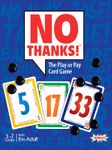
These things are fairly forgiving. If you're making something like Sushi Go or No Thanks or something along those sorts of lines, generally, players won't mind at all providing their own pencil and paper. You don't need to give them a pencil. You don't need to give them the paper. Um, I've been surprised actually by some of the comments that I've seen around Flip Pick Towers, my recent um, release, which is a a flip and write game. We've provided six pencils. You could, you know, play with many, many more players than that. You could play with as many players as you like, frankly, but we've provided six pencils and so we said it's a six-player game. Could go much, much higher. Um, and we've provided you to draw on, of course, because you wouldn't be able to play without that. Um, but there's quite a few comments saying, "God, I wish they'd provided a an eraser."
Which just surprises me. I mean, it's true. You you do sometimes need an eraser in the game. I mean, you don't need it, but if you've made a mistake, you might want to rub something out just to just to make your sheet look a little bit neater. It's not exactly required. So, yeah, players will often expect more than you're offering. But, that doesn't mean you have to provide it. You've got to look after the costs, as well. They're not going to be happy if the product costs a lot more and needs a bigger box just because you're including this stuff that they've got lying around the house anyway. So, little card game, don't worry too much about it, right? Pen and pencil and paper is fine. Where that gets tricky is if you need to keep score throughout the game. It's fine if you're doing end game scoring, but if you're constantly changing your score, adjusting your score as you play, pencil and paper's not going to work. So, that's where you might need to use either tokens or a score track.
Now, tokens are pretty common in these little games. If you look at games from Amigo Spiela or from um Oink Games or from NSV, these little tiny games, they often have cards and a number of tokens. So, don't worry too much about that as long as your tokens aren't spilling everywhere. You haven't got absolute loads of them. It's pretty normal to include tokens in these games. Score track, bit more tricky because these games tend to be very small and you don't want to have a big board. I mentioned earlier Sushi Go and actually the very first edition of Sushi Go did include some little cards. This was a a a self-published version by the designer Phil Walker Harding. And it had these little cards. One of them One side of them had like units of 10s and the other side had individual units, like 1 2 3 4 5. So, you could position the cards in such a way that you could show what your score was. So, if I put a 10 and a 6 together, I've got 16 points. If I put, you know, if I overlap them so that the 20 and the three are together, I've got 23, and so on. And this was great. I thought it was really novel. I really liked it at the time. It wasn't incorporated into later versions like the Game Wright edition of Sushi Go or even the Zoch Verlag edition of Sushi Go in Germany. Um and I suspect this is because it was quite easy to knock those cards and then you lose track of your score.
So, brilliant um idea, but ultimately, I I guess because of the user experience, it was it was abandoned in later editions. So, you've got options open to you, and I think those little card games are quite forgiving. Where it becomes a bit of a problem is games like Fantasy Realms where the scoring is extremely complex. So, Fantasy Realms has a massive number of different things that you need to score different categories, and so it really needs its own dedicated score sheet that needs to go in the box. And that's going to add considerably to the costs of producing your game. So, you really need to factor that in when you're thinking about who you're marketing it to, how it's going to be marketed, how it's going to be packaged, and so on.
This has been fun. I There's another What's that? Five questions that we've ticked off the list. Um I'm on a bit of a run with my uh YouTube videos at the moment, so I'm trying to keep these videos coming. I don't think I'll be able to sustain this pace in the long run, but for now, it's been great. So, I will see you on the next video, hopefully. And if you've enjoyed this video, why not check out some of my previous more conversational videos where I'm looking at your questions and giving my answers or opinions. And don't forget to check out my books on Amazon. The Adam in Wales board game design series covers all manner of different topics about design from uh playtesting to personal development as a designer to the history of games and lessons that we can draw from them. All manner of topics in there. How to get published, a step-to-step step by step guide, you know, so go and have a look at that. There's links in the description below. So, till next time, all the best.