































Dungeon Lords Deep Dive
What the Community Thinks About Dungeon Lords
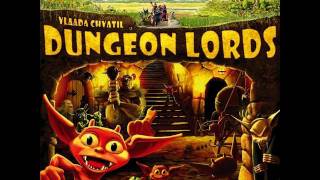
Dungeon Lords, designed by Vlaada Chvátil and published by Czech Games Edition (CGE) in 2009, is remembered by reviewers as an ambitious, rules-heavy game with a strong theme and a steep price of entry. Reviewers agree on the core idea. You play an evil dungeon lord building a lair, hiring monsters, and defending against adventurers who arrive at the end of each year. They disagree on whether the effort pays off. Board to Death TV calls it a game "intended for gamers," worth the investment for players willing to own the rulebook. The Broken Meeple reaches the opposite conclusion, finding the design clunky and the teach punishing. Tabletop Turtle sits in the middle, arguing the game is not complicated but has a lot of parts, and that its age shows. Reviewers also tend to frame Dungeon Lords as a game they admire more for its ambition than for how often it reaches the table.
Core Mechanics That Define Dungeon Lords
Dungeon Crawl
Dungeon Lords reverses the usual crawl. Instead of guiding heroes through a labyrinth, the player builds the labyrinth and waits for the adventurers. Board to Death TV describes the year-end combat phase in detail. Adventurers attack the tiles closest to the entrance, and the dungeon owner chooses which traps and monsters to place on each tile. Combat resolves in a fixed order: traps fire first, then monsters engage, followed by spells, healing from any priests, and fatigue damage. Combat lasts at most four rounds, and it ends early if every adventurer is imprisoned or the party runs out of rooms to conquer. The reviewers also highlight the Paladin, who counts as every class and is worth more points if captured. The traps-first, monsters-next sequence is what makes a well-built dungeon feel like a gauntlet, and Board to Death TV notes that "without strong management abilities your dungeon will be a cakewalk for the adventurers."
Worker Placement
The second core system is the worker placement that drives the building and preparation phases. Each order card is revealed in turn, and players place minions on its actions in turn order. As Board to Death TV explains, a second minion on an occupied action steps down one position, and each action holds only three minions. A fourth minion stays on the order card and cannot execute that order, although its owner can later take the order card back. Actions resolve from top left (getting food) to bottom right (building rooms), and the first minion does not always gain the advantage. Reviewers stress that being second can be more valuable, so timing matters. Chvátil's design asks players to balance food for monsters, gold for payday, and enough money to avoid the tax collector's black mark, which Board to Death TV describes as a lot to think about. Tabletop Turtle refers to the system simply as a worker placement game, and the designer's reputation for demanding design comes up repeatedly in the discussion.
The Dungeon Lords Experience
Tense, Punishing Pressure
Dungeon Lords feels tight and unforgiving. Reviewers describe a game where small early mistakes compound. The Broken Meeple argues that "if you start off badly in Dungeon Lords good luck trying to do well," because the limited number of actions leaves little room to recover. Board to Death TV describes the tension rising sharply in the second year, when "the adventurers get more buffed, the monsters get more beefed," and the Paladin becomes a serious threat. That escalation gives the second year a sense of climax, which reviewers who enjoy the game point to as its strongest structural moment.
Campy, Gleefully Villainous Humor
The game is also reviewed as a campy, tongue-in-cheek experience. Board to Death TV opens its review by framing the player as a villain who wants "the biggest, baddest, sickest, and most torturous dungeon," and praises the rulebook for its "humor" as well as its examples. Board Games UnLocked connects the tone to CGE's broader house style, describing its components as "campy" and saying the company's games "still feel like they came out in 2009." Reviewers who enjoy the theme treat the dark comedy as the main reason to keep the box on the shelf, even when the rules weigh on them.
What Makes Dungeon Lords Stand Out
Abundant Components and Distinctive Art
Reviewers consistently praise the physical production. Board to Death TV walks through the box and describes multiple boards, minions, trolls, imps, tokens, and card decks for battles, orders, titles, and traps, concluding that the components are impressive enough to make it hard to list them all. The Secret Cabal Gaming Podcast singles out the artist behind the Dungeon Lords series for hiding small, quirky details across the board, a habit that rewards players who look closely at the scene. The Broken Meeple agrees that the game "can be a bit of a looker" even while criticizing its play.
A Rulebook That Teaches Through Example
Several reviewers single out the instructional design. Board to Death TV calls the rulebook "spot on" with clear examples and says the combat training scenario is "very well written and concise," adding that it answers most questions a new player will have. That praise is notable because the same reviewers acknowledge the game is large. The rulebook is the main reason they recommend committing to the full experience rather than skimming the simplified version.
Potential Drawbacks
A Heavy Rules Load and a Hard Teach
The most common criticism is the cost of learning and explaining the game. Tabletop Turtle notes that the difficulty is not complexity so much as volume: "it's not complicated but there's just a lot of stuff." The Broken Meeple complains of "a huge rules teach" that does not match the short resolution of adventurer arrivals, and adds that players must spend a long stretch preparing components before the game's main events happen. Reviewers who recommend the game usually pair that recommendation with a warning that the group needs patience for the teach and a commitment to the full rules.
Similar Dungeons and Limited Recovery
The second concern is sameness and the game's unforgiving catch-up. The Broken Meeple observes that most players end up building similar dungeons, which weakens the sense that each lair is unique, and that the theme "seems to be lost in all of its rules learning curve." Tabletop Turtle adds that the game has aged, with the reviewer feeling "it's showing its wear or its age" compared with newer designs. Reviewers who weigh these points argue that a player who falls behind has few tools to recover, which can make the late game feel decided before the adventurers arrive.
If You Enjoy Dungeon Lords
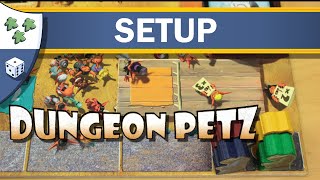
Players who enjoy Dungeon Lords for its theme and tone are most likely to enjoy Dungeon Pets, the sibling CGE game that shares the same worker-placement lineage and quirky artwork. The Broken Meeple considers Dungeon Pets the better game for enjoyment, praising its "cutesy funny theme," while Board Games UnLocked pairs the two games in its discussion of the same publisher's library. Reviewers who value the designer's approach often point to Mage Knight Board Game, which Board Game Hangover cites as an example of why the designer's games feel so different from one another. For players who like the idea of Dungeon Lords more than its rules, The Broken Meeple frames Dungeon Keeper, the video game, as the thematic ancestor, with the board game offering a more tangled version of that fantasy. Finally, Through the Ages: A New Story of Civilization is recommended by The Broken Meeple for players who want a deep, systems-driven CGE experience, particularly in its app form.
What Reviewers Are Saying
"I think one of the reasons it didn't get a lot of plays is it's really tough to explain to new players. It's not complicated, but there's just a lot of stuff. It's a little old now, I feel like it's showing its wear or its age."
— Mike, Tabletop Turtle
"This game is intended for gamers, and we just roughly scratched the surface of the rules. For those gamers who want something different than most games they've played, who aren't afraid to take the rule book and own it, the time you put in is well worth it."
— Board to Death TV
"Dungeon Lords really didn't work for me. I mean, the components are not bad, and it certainly can be a bit of a looker, but this one just felt very clunky. I mean, you got a lot to learn ahead of time, and then you spend a fair whack of the game preparing all these bits and bobs."
— Luke Hector, The Broken Meeple