Richard Garfield Interview - Revitalizing Older Games & Reprint Announcement!


Transcript
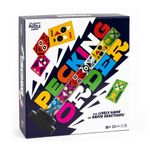
Miniature Market has thousands of board games at discounted prices. Click the direct link below to see all those discounted games. Hello my friends, the Game Boy Geek here. Back in 1998, Richard Garfield designed Pecking Order. It's a two-player game. It's a lot of fun. Well, last year, uh, it got reprinted as Monsters. It was cuz Monstrolicious by Repost Production. and I recently bought it and I last week I just did a review of the game and a little bit of comparison and Richard Garfield had done a designer diary. Now Richard Garfield if you don't know if there was ever a Mount Rushmore of game designers he'd be on it right like Magic the Gathering King of Tokyo he has done so much Mindbug. He's even done party games with like Ken Jennings the biggest winner in in uh you know one of the biggest winners in Jeopardy history. uh to be able to do party games and then do some of these very strategic card games is quite a a different thing there. But he did a designer diary which I thought was really interesting of some of the inspiration for the game. But then you know uh what made it different. But then I also thought it'd be kind of fun to talk to Richard. I had talked to him since Key Forge came out uh in a public setting like this and kind of interview him about reprints and revitalizing old games and what do you do? What don't you do? How does that work with the publishers? What are you thinking? Do you have any that are going to be coming out new uh soon? Um what types of things are you thinking uh for when you're re-implementing a new game? How much of it is on the publishers plate? How much of it is on your plate? And what do you think about when you revitalize a game?
So, we're going to talk to him about this today. I'm going to bring him some some some trends that have been going on the industry of of different games that did good things and bad things with reprints and how how he thinks about it. So, it's be really interesting. So, it's going to be a great treat. So, here we go. All right, everyone. The man who needs no introduction, but I'm gonna introduce him anyway. The man that brought us Magic the Gathering, King of Tokyo, and a million other games that are amazing that a lot of people should play, like Mindbug was my card game of the year, and some treasures uh of uh Treasure Hunter. It's one of the older games. Some other games maybe many people don't know about yet. Spyet, another great card game that he's done. And he doesn't just do strategy games, he does party games, too. He's done. He's done uh Half-Truuth, uh which he co-designed with the Jeopardy star Ken Jennings.
Everybody, please help me welcome in the one, the only. If there was a Mount Rushmore of game designers, he'd be on it, Mr. Richard Garfield. Hi. It's It's great to be here. Always love talking about games. Fantastic. So, I already let everybody know, you know, that uh about pecking order, and that's kind of what we're talking about here. Um, you know, I I I love the game so much that I got my cousin to like it, but unfortunately, it was out of print. And so, I helped him find like a used copy many years ago on uh on eBay and and I just love Pecking Order. Uh I I you know, it's a game that was back in the 1998, I believe, is when it came out. and I recently read your designer diary and it really started sparking some interest and some questions and just, you know, you and I have talked publicly a few times. We we've talked many times offline on different things and I thought it'd be great to bring you back on to talk about this and revitalizing an old game and making it new again and seeing what what your thoughts are on this. So, um, help us understand as you wrote your your designer diary about the the the original inspiration for pecking order.
Well, the uh the original inspiration I was walking uh around Portland and saw some birds uh seagulls jockeying for posts and uh I began to um fantasize that uh that the birds were choosing the better posts and uh acquiring them based on the pecking order because one would fly up and either be pushed off or manage to take the post they were trying to land on. And so they were shifting back and forth and uh and I decided to try to make a game that modeled that that uh that interpretation of things. And u one of the things I don't know if I put this I probably did put it in the designer notes. I haven't read them in a long time. I had been thinking at the time about how uh Strateggo uh one of the games I really liked growing up uh how you didn't actually need both players to show their pieces when when they were revealed. And I thought it might be an interesting opportunity to make a game like Strateggo, but only one person showed uh showed their piece and the other one said who won, thereby keeping some of the the mystery in the game and uh that's what I applied to this idea of pecking order. Yeah, I thought that was really interesting, too, because I grew up playing
Strateggo, you know, I loved it as a kid and and the fact that you're drawing inspiration from these old classic games and and putting bits and pieces of that into more modern designs is just a really cool thing. But another thing I want to pick your brain about about that the designer diary is is you had a really interesting concept which is counterintuitive to the way most people think about game design. You kind of like take something that's typically done and you completely turn it on its head. And the way you kind of wrote about this was like, you know, you've played a number of games where you had a set of resources and you used them to bid on randomly revealed prizes, but you thought it would be fun to reverse that formula and randomly get your resources and use them to bid on an set of always available prizes. How do these ideas come through that are just opposite or backwards or whatever you want to say, creative that that flips things on their head? And how many of these do you try before they actually work as good as these things?
I try a lot and uh and uh many many don't make it past uh casual play. Uh but uh the thing is that they're always interested to play interesting to play with. Uh um even even ideas that don't pan out, they're fun to play once or twice. And uh I always encourage people who are interested in this process to tweak the games they're playing. And uh even that even though they may not make the new the new classic uh variation uh almost always uh their experience with that modification will be good for one or two plays and teach them something about uh game mechanics and game tinkering. Um and I think this uh viewing um switching around this uh this this uh paradigm that I had been exposed to a lot fixed resources uh bidding on fixed tools bidding on randomly available goals. Uh switching that that's something which uh when you tinker with games enough sort of becomes uh second nature and uh and so it's it's a really valuable tool a lot of fun. I encourage everybody who's interested in games, game design, gameplay to uh to to try it. Tinkering is fun. Yeah. But I mean, you're not just tinkering. You're like completely like, hey, let's take this at exactly 180 degrees of what typically works and see what happens.
And I think that that level of curiosity is amazing. And it's like, you know, younger designers or less experienced designers, I think this is such a great tip because I think I responded to your designer diagram. Like see this is what happens when great designers like yourself and Freedom and Freeze is another one that does this where in Findorf he flipped something on his head where people are are always okay with paying the same resources and getting a different a better reward if you get there fast. But he flipped that over where you're like now everyone's using uh you know different resources but the the you know the what you're getting is the same. And people were like why are you doing this? This is stupid. He's like well no one has a problem the other way. Why? This is the same thing. It's just flipped. And it just goes to show you that when you get to the level of design where yourself and Freedom and Freeze are, these types of thought processes I think are counterintuitive and I think it's just I wanted to bring that out for other designers. I'm not a game designer. Of course, I've got a million designs floating in my head, but who has time to design games when you're covering them all day, right? So, um, so I I we're here to talk about pecking order and the the the revitalization of it in Mon Monster Monstrolicious, as I mentioned in the intro, but I thought it'd be interesting to talk a little bit about some trends we're seeing. I don't want to just call it reprints, but it's probably the quickest and easiest way to say a revitalization. You know, there's, in my opinion, there's been some recent good examples of what to do with the reprint. Typically, it's people that there it's a loved game that's gone out of print, whatever, maybe changed publishers hands, and it needs to be rebrought and re-entered into the industry in a different time, almost like a time warp. There's been some good examples like lately, Manhattan was in
was a design from 1994. It it there it was a Spielar's winner uh in in uh and it was reprinted in 2018. And that was a great one because what they did is they refreshed the art. They put in an an advanced variant that you might want to use, which I actually do like, but it was it looked good. It was modernized. They didn't mess with the mechanisms too much. They added an optional variant and it went over well. It was it had the very It made it look nice and new, but it was still the same great game, right? Another one, Thinka, 2009, Spiel Desar's nominee. It lost at Dominion, uh, but it was reprinted also in 2018. But what they did is they took a game that was perpetually out of print, uh, and took a $60 game, put it in a smaller box. It's now a $30 game. So now you have a game that's brought back into the market and it's in a smaller package, a smaller footprint that's more affordable and that more people can get. And I'm like, okay, great. You brought this game back.
You did some things to make it better in some ways. But then there's bad ways and horrible ways in my opinion, others opinions to do this, right? Ethnos was a game that came out from Sean in uh, you know, a handful of years ago. It was critically acclaimed. I love the game. It's a sort of area control game with generic fantasy. I'm going to be putting images up here on the screen for for people to see. And it went out of print for a long time. And they and another publisher brought it back as a different game called Archao Society. And they completely redesigned the game. It no longer was an area control game. It was it was moving up Euro Tracks, which made the game incredibly boring. It took all of the teeth out of the game. And I gave it I don't typically do a lot of negative reviews. That game got a negative review for me. I'm like, why don't you just listen to what the people want? You've had seven years of people telling you exactly what they want and what they would like different. It wasn't the gameplay. It was the art and such, right? So then this year they brought Ethnos back as second edition.
And sure, they made the art new, which is what people wanted, but they messed with the production to the point where there were playability issues. The cards no longer had text. The all the images were confusing. It was hard to see which faction things were from. And they they fixed some things, but they they broke other things. And I get, you know, having having uh, you know, uh, a language independent game is better for pricing and selling around the world, but it's horrible for the players. And they made the game a step back. And and the last one I want to mention is uh, Bruge was a very popular game from Stefenfeld that was brought back as Hamburgg. And again, they made many design changes, all of which, to my opinion, ruined the game. And I don't do a lot of negative reviews, but when people are excited about an old game and you bring it back and you you drop the ball, when you have all this time, I feel like publishers try to do too much.
I feel like they don't listen to what the people actually want. Now, an exception to that rule is Libertalia that was recently brought back. They Stonemire Dame Games did a great job of changing many of the mechanisms and the abilities in the game and changing the whole tiebreaker system. And you look and you read about it before it came and I'm like, "Oh no, here we go again. someone trying to do too much. They nailed everything everything they did. So there can be times where you actually do improve a game, but it's it's an exception, not the rule. So with that being said, I kind of want to bring us back to pecking order. Please let us know like how in your experience, how do you go about revitalizing an old game, bringing it back? How much do you want to change? How much do you even think about changing? And how much of that is up to you versus like say the publisher? Uh well, there is a lot to talk about there. Um I I I want to preface this with saying that uh that this idea of bringing back old games is awesome. Um and the reason for that is because uh old games uh games in general when they reach a certain quality level just stand up to a lifetime of replay and they there's no logical reason why they should expire.
and uh many I mean which is like classic literature. You don't uh expect a great book or a great movie uh to go out of print and nobody ever sees it again. And when you find that's happened, you're kind of a little upset. Uh you you you think it ought to be available. And there's the same thing with games. games just stand up to uh the test of time uh in a way which movies and books often don't because uh the same person can play them forever. Uh so it's more like music. Uh so I in general I'm very much in favor of these games being brought back because uh anybody in the industry knows that oftentimes they didn't uh that that whatever put them out of print wasn't a reflection of the game necessarily. There might have been some something about it which uh which stalled it. It didn't. But for whatever reason maybe it didn't find its right its correct audience. So for me recently uh pecking order has been uh um reprinted as uh Monstrolicious and uh Spyet uh as uh Shadow Blades. I think Shadow Blades um both realize that was reprinted. That's that's great. Yeah.
And I was very very happy with that. And and both those games fall into that category where there was uh where the people who were doing the republishing recognized uh the game underneath despite whatever problems were there with its original publishing with uh Pecking Order. The game the game worked really well, but it was positioned as sort of a heavier game than it should have been. It came in a in a bigger box than it needed to. was put in a line with some serious games. And you know, I I don't blame that on on where it went, but uh but that was seen to be one of the factors. And so when you reprint these games uh and u uh you you're you're tasked with sort of trying to figure out how things will be different this time. Was it was it simply a game that uh that ran its course but was loved and would be loved today? you don't have to do much. Was it a game that you recognize as being uh a good game, but for whatever reason failed to find the right audience? You might do things a little bit different. Uh that could be on the marketing end. Uh um but it it it it could be on the design end or the way it's presented or uh you know any of a number of other things. Um so you asked about me in particular. Uh I usually have a very uh close relationship with what goes on with these reprints. Um and uh so with
Monstericious it was clear that Repost wanted to do the uh game as it was originally was. They wanted to change the flavor and uh so there was some discussion about the flavor which they came up with and I gave feedback on. Um, and we did talk about some variations in the rules, but but none of them seemed worth uh worth worth putting in. They they thought that it stood well on its own. So, with the with the with the monstericious aspect of it, like you just talked about how heavy the theme was into this game. So when they bring you these ideas on how to change it, how are you able since that was such a an experience that really breath life into the original aspect? How hard is it for you to be like, ah, okay, I get, you know, let's try something different. I that was the theme. It inspired the game, but I'm okay with going a different way. Is that hard to do? Oh, no. It depends. It depends. Sometimes sometimes it feels very uh like changes to theme attack the heart of things. Um, but but uh I I feel like the game pecking order stands really independent of its uh of its inspiration. So uh I didn't have any problem with that. And generally I'm pretty flexible on themes.
Uh I it's not that I don't care about themes. I do. Um I I don't uh but but I I I want them to resonate with whatever the mechanics are. And uh pecking order is close enough to an abstract game. it it uh it was going to resonate with a wide range of different interpretations. Um, with uh Spyet, I actually presented they they said they wanted to uh with Shadow Blades, they wanted to change the flavor to being um instead of spies sort of set in a modern context, they changed it to uh Asian warriors uh Korean Asian warriors. And I I actually redesigned the entire game based on that. But uh when we when we took measure of everything we decided to go with the original mechanic so it's very much it's very close to what the original was. Okay. Is there still the team variant for four or there is and that that was one of the uh one of the things which uh there were many re things there many reasons why we thought spyet didn't reach its uh proper audience and u and one of them was I think we emphasized the team play too much. uh when people saw the game, they thought that it really needed to be played with four because that's how it was presented, but the game was actually designed for two. We just like the four-person version so much that we we decided to emphasize it. Uh um and uh and we think that limited it in some
ways. I I agree. It is an excellent two-player game. The way that you do the was it the Winston draft that the the way that you kind of like you go through the cards is so good. You know what you're giving up. you know what you're giving your opponent. Folks, if you haven't played Spinet or Shadow Blades, Shadow Shadow Blades, Shadow Blades. Yeah, definitely another one to check out. That's that's in my opinion underrated, underappreciated. You talk about the the rules of pecking order. As far as I could tell when I went through all the rules, the only difference was one of the special spots, you now flipped over the opponent's uh tile as opposed to I think in the original it told you just to peek at it and then put it back face down. Is that It seemed like they just kind of took that memory element a little bit out of that. Uh I I I did not remember that the original did that differently. That that was certainly always the intent that uh it was uh so so it might have been put in the original. Uh but but if if somebody back in the day had said uh should this be flip or peak, I would have said flip. But uh Okay. Maybe it just hadn't occurred to me then. I don't know. Okay. Okay. Okay. I thought it said peak when I was looking through the book rule book, but who knows? But in general, I do try to remove memory elements when when it's not the focus of the game. So, so that brought up another question I had for you. I agree. I I typically don't like memory elements in games. Uh, but pecking order is so short. It's, you know, 10 15 minute game, right? So, it doesn't it doesn't bother me as much when when when you when you place a in this case now a tile down and it and it flips over the other per, you know, when
it flips over when you're basically trying to win the the dessert there. When the losing player, it tells you to take them and put them in your discard pile. If it was face up, it stays face up. It was face down, stays face down. Have you ever completely tried to remove the memory element where when something gets defeated, it doesn't actually go completely off the table in the discard pile. It just kind of slides back a slot closer to the player. So, you always have perfect information on what was there at what point. How that way you don't have to remember, oh, I beat the six over there. You know, I know it was there. And then that allows me to do more deductive reasoning than memory element. So, do you ever think about completely removing memory from the game? because it was something that occurred to me. I'm like, I know it's the dumbest thing ever to suggest a mechanism to one of the greatest designers ever, but I thought I would throw that to you. No. Uh uh very very much. That's actually the way I play. Um and is was it in pecking order? Was it that way or did you have to discover that yourself? No, that it's it as far as I know you it it you put them the defeated ones go into your discard pile. So I I think um I I know that I had discussions with the publishers on this uh and uh I I think uh that what the h that it that when you began to write these rules, they just became too opaque and and they felt like uh like if they go to the discard pile, that's what everybody does. Everybody understands that. Um, and really I think there
should have been a variation or something there which says if you want to reduce the memory or something like that, you can uh you can slide these pieces. But but I think it was a matter of trying to make the rules as concise as possible. But I totally approve of that as a as as a way to play. That's the way I play. I find it very enjoyable to have those deductions on the table rather than to have to memorize them. Okay. Wow. Okay. That's awesome. Yeah. So I agree. I think especially for this smaller footprint. By the way, when you said they made the box smaller, when it showed up, I was surprised at how much smaller that box was. Oh my goodness gracious. Like, but uh it it so I I was curious with with the with this reprint. Um right now, Repost put it out. It's in I had to get it from Canada because I I contacted Asthma North America and it was not they were not bringing it to to to the United States. So, if you want the game, you're going to have to get it. I think if you're in North America from Canada is the closest place to get it from. When you talk to a publisher about this, first of all, typically who starts the conversation? Is it you or the publisher? And then secondly, how much do you talk about?
Okay. Well, which which regions are you going to sell this in? And and if you're not selling it in the region I really want to be sold in, can do I have the rights to go find someone else there or would you like to work with a partner there? How does that aspect of the business work? It it it works both ways. I have approached publishers with uh games in need of a reprint. Uh and publishers have approached me with uh pecking order in particular. Repost approached me. Um and with uh Shadow Blades, I approached uh the the publisher. Um the as far as uh where it's going to be sold u I I don't there are probably designers which get involved with that. I very rarely do. Uh the only time I can remember uh getting interested in that was with uh Half-Truuth uh which I felt um getting getting a a localized versions in different regions would be something really good to pursue. And so I I did look into that some but but usually I let the publishers uh manage all that. Okay. So, like in a case like this where they brought it to Canada but not not in the United States. Do you ever feel like saying, "Hey, you know, they probably tell you why they don't bring it there, right? I guess it's a decision that they have to make and you have to either be okay with it or not."
Right. Well, they Yeah. In fact, uh uh when you brought that up, I I asked them about it and they said that uh um that they're hopeful about getting it in the United States. They just they can't uh promise anything yet. They have to get a partner to to pick it up. Okay. Well, I hope it does. I mean, in the intro of this video, the interview that you didn't see, Richard, I did mention that I did just recently review the new version and showed it compared to the pecking quarter. Uh, so if you want to learn even more about the game, you can go back. It just launched uh this past week uh on Monday, so you can go watch that. Now, I've mentioned a couple of your games that I liked. One of them, Treasure Hunters, another undervalued, underappreciated game in industry. Now, are there any talks of possibly reprinting this or any of the other games that you've are in talks with that is that is to the point where you could actually say anything about I've been uh I've been thinking about Treasure Hunter a bunch. Uh I have to talk to Queen about that. Um I I there's nothing nothing in the works right now. Um and I don't think there's any games uh being republished uh right now. Um I I will will say sort of a a a project of of reprints which is not mine but I am the lead designer on is uh reprinting magical athlete. Uh what are you serious? That's amazing. I that is the the craziest most fun convention game ever. How are you involved in this?
Well, um, I tried to track down the original designer because I found the game so good for kids that I wanted to know if they wanted to make a version for kids. Um, and it took me a long time, but I did track down the designer and the designer wasn't interested in pursuing the game anymore, but uh, a publisher picked it up and with the designer's permission, um, I was, uh, put in as a, uh, lead designer in the new version. And this will actually, uh, uh, hope be this will be a reprint that's uh, uh, different than the original. So hopefully it breaks your standard rule that uh touching the game too much uh uh hurts it. But uh my um I tried to be as respectful as I could to the original design, but uh um there were a lot of uh rules things and uh uh lots of different uh types of racers that we had been playing with over the years that we really thought were good. We thought like the opportunity to have different more interesting maps was there. And so uh you'll get u I think we're we're aiming for hopefully the fans of uh Magical Athlete will like what we've done and uh and that it'll find more of an audience because I I adore that game. I am honored to be able to work on it and uh it's a it's a fun project. So when they asked the original designer, "Hey, guess
what? We kind of have Richard Garfield that wants to work on this. Are you okay with it? First of all, who in their right mind would say no? But second of all, what is he saying yes to just generally that you're working on it? Or is he actually a part when you start said you're making some some bigger changes here? Does that designer need to be involved in that or is he just says yes and he trusts everything with you or are actually some of these changes run by? I he if if he were interested uh in the changes, I would be uh listening and working with him because uh because it's his uh his baby and uh I want to do it right. As it stands right now, um there's there's very little uh communication with him. Um and and I hope he approves of what we end up doing. But uh but uh uh yeah, it's an unusual situation. Um I would expect to have more of a collaboration or one where I am uh answering to them rather than leading the project as heavily as I have been. And we're actually planning to do u two projects. Uh the first one will be closer to the original. We internally we call it uh um uh classic magical athlete because we're trying to make it as close as possible to original while having different powers and different uh race boards and uh cleaning up uh some of the rules. Um uh but then there's one that's a little bit more uh
you got got more stuff going on. Okay. Well, other than uh the reprints, do you have any other non-reprints? So, some newer titles coming out or in the works that you want to let people know about that uh you can publicly talk about? Well, I've got uh two uh digital games, if it's okay for me to mention them, here on the analog channel. Um I'm a of course I'm a I'm a a big fan of uh auto battlers. Uh, I've tried to take the mechanical essence of auto battles and put them into digital game into into analog games and been disappointed with all my design efforts along those lines. Although it was recently pointed out that uh that that uh magical athlete itself is very much like an auto battler. Um and uh u but uh instead what I'm taking doing is taking the board game sensibility and trying to put them on the these uh these digital games. So there's Vanguard Exiles which is on Steam in early release right now. And in that you sort of have your army as you do with most digital uh with most auto battlers. And uh the big change here is that uh there's this uh um growing and changing and always random dungeon you're deploying your guys in and then they wander around the dungeon and compete for victory points and gold and such. Um and uh so that feels really fresh to me and it's been a lot of fun
to work on. And then the other one is uh Chaos Agents. Um, and this one uh is a uh it's an auto battler, but it's also where you've got a large number of people uh uh battling at the same time in one arena. And um and so uh this this plays into this idea that uh as I said, I really love auto battlers, but almost all of them have been concentrating entirely on one v one, even even though it seems like it would lend itself to many playing at the same time. But uh um but uh so that that's what we're doing with Chaos Agents. Okay. And both of those have avail like when are they available now? Are they going to be soon or with uh Vanguard Exiles? It's on Steam with uh as in early release, so there's a long way to go, but uh but you can play head-to-head. There's some solo content and uh uh you can sort of see how the mechanics work. And there's a demo version, too. I certainly uh if you're not not sure about auto battles in general, try the demo. And uh even if that's all that you do, I think you'll enjoy that. Um, and uh with uh with Chaos Agents, it's available with Populararium. Um, it's not published yet, but it's in it's in alpha. Okay.
And it's not too hard to get involved, though. So, okay. Now, speaking of auto battlers, I mean, since Challengers uh was in the Spielus and such, it has that you've been seeing more and more auto battler physical board games coming out. Did you ever have a chance to play Challengers? Oh, I did. Uh I um it was, as I said, I I've tried to make auto battlers myself. Uh and uh they always felt when when I was working on them, they always felt like uh I I I they always stalled at this point where I said, "Oh, this is kind of fun, but you know what? It would be better on computer. And if that's the case, I'm not interested in uh sort of pursuing it." Um, and so Challengers uh got, you know, it it it managed to make it so that it was uh worth playing on paper and didn't feel like uh uh it required a computer to play. Um, and so I I hope I I think it's a really wonderful uh wonderful uh genre and I would love to see more games like it in uh in paper.
Yes. Yeah. I Yeah, I like challengers. Uh I've I've had some experience with a not it's not a it's not publicly known so I can't talk too much about it but there is a well-known designer that has been working on auto battal game around baseball and I'm a big baseball fan so I've been part of the development of that game and it's man it's you're right though auto battlers just by the nature tend to be like hey let's just make that an electronic game but like there's got to be some reason why it exists in the physical game. So maybe that's the challenge, right, that that that keeps people away from doing it. Yeah. Well, I'm I wouldn't be surprised if a lot of people had my experience where they play auto battlers uh are really blown away by how wonderfully they work as a hybrid digital uh p uh table game. Uh and then they try to take it and they realize that the computer's really doing some good lifting here. And so it takes some real skill, experience, uh some insights to be able to decouple it so it doesn't put too much burden on the player.
Okay, last question, Richard. Uh what's a recent game that you've played that's really stood out to you? I'm sure you play a lot of games these days, probably mostly your own, but uh Well, um actually I I play very few of my own games uh unless they're in design. Um, I play a lot of them in design. The reason is is because, um, uh, when they've been published and I play them, I get in I I start I don't have as good a time as with somebody else's game because I'm uh, with somebody else's game, I'm learning interesting things and being shown their insights and their their ideas. with my own games. Uh I can only see the problems and uh and it's too late to do anything about them. So uh much um but but what usually when I'm convinced to play I usually do enjoy it, but uh but it is more stressful than I'd like. Um recently I played uh zombie kids with uh with my seven-year-old twins. Uh one of who you've seen plenty of times on the camera during this talk.
And and this worked this worked really well is getting a legacy experience which was a you know which which worked for that age was marvelous. So uh so yeah, Zombie Kids was was was great. That's great. That's fantastic. Well, Richard, I want to thank you so much for giving us so much of your time today. It was great to hear all of your insights. Uh please let us know. Let me know next time you have something coming up. We probably should have done this about HalfTruth and about some of the mindbog things. So, uh, we got to do better about, uh, I mean, it's been since Key Forge the last time we've had one of these discussions in a public forum. So, next time you've got something coming down the pike. Hit me up and we'll, uh, we'll do this again. Oh, yeah. Uh, anytime. Always fun. Thanks, Richard. Well, I hope you enjoyed this format with Richard Garfield. Again, I did an interview with him on KeyForge a few years ago. You can go back and look for that uh, on the interviews uh, playlist on my channel. If you like this format, let me know in the comments. Uh, let me know who you'd like me to interview. Let me know what you what topics you'd like me to interview people about and I will try to do more of these. This has been the game boy geek breaking down barriers growing relationship to board games by helping you find that fun. Game Toppers upgrades every game you play and they just launched their 4.5 Kickstarter which will introduce the new Galactic Microoft and Watson game toppers with interchangeable rail inlays as well as new game mats, miniature gaming terrain packs, leg kit options, dining covers, accessories, and amazing package deals.
Search for Game Toppers on Kickstarter or go to gamettopperslc.com.