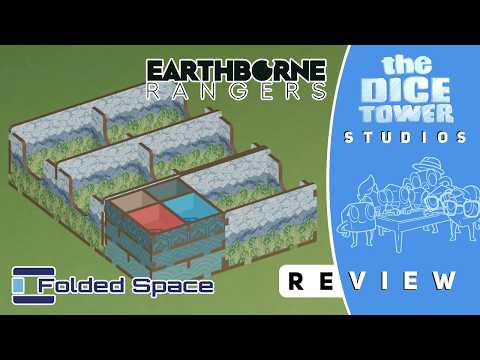










Earthborne Rangers box art

Earthborne Rangers

Game Info
Year
2023
Players
1-4
Age
12+
Playtime
90 min
Publisher
Earthborne Games
Collection
Ratings
Creator Score
Expansions & Family
EARTHBORNE RANGERS: CARD DOUBLER EXPANSION Earthborne Rangers: Legacy of the Ancestors
Mechanic profile
Percentile rank vs. all games
Vibe profile
How this game feels to play
Description

Earthborne Rangers is a customizable, co-operative card game set in the wilderness of the far future. You take on the role of a Ranger, a protector of the mountain valley you call home: a vast wilderness transformed by monumental feats of science and technology devised to save the Earth from destruction long ago.

You begin by building a deck that reflects your Ranger's interests, personal history, and personality. Then, as you explore the open world and your story takes shape, you augment your deck with improved equipment, refined skills, and the memories of your journey.

The story of Earthborne Rangers is presented as a branching narrative campaign consisting of a main storyline and a multitude of side stories. In it, you can choose to follow the critical path or to strike off on your own to discover the Valley's many engaging characters, mysterious ruins, and beings both familiar and strange.

Each game session represents one day in the Valley, and you'll pick up in the same location on the map where you rested the night before. Your goal is to either complete one of your available missions or to explore the open world. The session ends when you're either forced to rest (through either fatigue or injury), or you choose to rest for the night.

An individual game session is played in rounds, and those rounds consist of turns. On your turn, you perform one action: either play a card from your hand, or choose an action from a card on the table. Each action allows you to interact thematically and narratively with the world, and each time you take an action, the world comes to life around you. Predators stalk their prey, rain pours from the sky, rocks tumble down the mountain to block your path, and much more.

—description from the publisher

Ask a Rules Question
All mentions
Browse transcript mentions, sentiments, pros/cons, mechanics, topics, quotes, and references.
Total mentions: 119
This page: 19
Sentiment: pos 13 · mix 6 · neu 0 · neg 0
Mentions per page
Showing 101–119 of 119
Video exjfs17Rxoc No Pun Included Review at 1:24 sentiment: mixed
No Pun Included - Earthborne Rangers video thumbnail
Click to watch at 1:24 · YouTube ↗
Overall sentiment (raw)
mixed
Pros
  • Uniquely cohesive world that blends exploration, environmental storytelling, and a cooperative CCG-like feel
  • Deliberate, nature-forward aesthetic and thematic execution that encourages thoughtful play
  • Open-ended pacing with a compelling 'day' mechanic that supports multiple missions in a session
  • Rich art and card flavor that reinforce atmosphere and theme
  • Encourages collaboration across diverse player roles and acknowledges varied strengths
Cons
  • Rulebook and prologue can be misaligned, creating a steep learning curve
  • Deck customization is constrained; swapping cards is limited and can hinder early synergy
  • Scout mechanic can feel punishing or overly consequential if not planned for
  • Complexity scales poorly for solo or crowded games; two players feel ideal, four can be busy
  • Occasional rule vagaries require external references or house-rule clarifications
Thematic elements
  • Coexistence with nature, exploration, ecological stewardship, and a measured, patient approach to discovery
  • A post-apocalyptic, environmentally mindful valley-world with diverse terrains and sentient flora/fauna
  • Campaign-driven, branching passages tied to card interactions; slow-burn worldbuilding with environmental storytelling
Comparison games
Mechanics (from transcript analysis)
  • Day-based progression — Play sessions progress in discrete 'days' with flexible length; end-of-day triggers can occur based on in-game events, injuries, or fatigue, shaping pacing and long-term strategy.
  • Deck Building — Character personality cards influence starting options; deck customization occurs primarily through mission rewards and unlocks, with limited swaps.
  • Deck-building within a campaign identity — Character personality cards influence starting options; deck customization occurs primarily through mission rewards and unlocks, with limited swaps.
  • Encounter-driven narrative passages — Some encounters trigger passages in a campaign book, delivering new missions or shifting future interactions with characters and locations.
  • Narrative Choice — Some encounters trigger passages in a campaign book, delivering new missions or shifting future interactions with characters and locations.
  • Path deck and terrain interactions — A shared path deck provides obstacles and opportunities; terrain cards carry thematic effects that can trigger globally or per-player based on symbols.
  • Progress vs Harm resolution — Clearing a card is achieved by placing progress or harming it; this reveals narrative passages and advances missions in the campaign book.
  • Symbol-based trigger system — Challenge and terrain cards carry symbols (mountain, sun, bird) that activate related cards on the table, tying narrative threads to game state.
  • Test actions (Traverse, Avoid, Connect, Remember) — Player agency comes from performing tests that consume energy types and may be boosted by discarding cards; outcomes depend on path and terrain cards plus challenge modifiers.
Video topics + discussion points
No key topics recorded for this video.
Quotes (from this video)
  • Earthborne Rangers is, and I don't say this word lightly, unique.
  • The day mechanism feels like such a natural advancement on adventure board games that you will find yourself asking: 'Why haven’t board games been doing this forever?'
  • A clockwork of cards.
  • It is just Earthborne Rangers.
  • In Earthborne Rangers your play session could have no missions, five missions, anywhere in between!
  • The only way you can learn how to navigate all of that is to watch the game play out.
  • Scout is pivotal... you might as well pack it in if one of your characters isn’t supremely good at it.
  • Death Stranding has nothing on Earthborne Rangers in terms of deliberate, singular vision, but Earthborne Rangers remains earnest and adventurous.
References (from this video)
No references stored for this video.
Video bv7fiVFEwdQ PlayingBoardGames Review at 0:16 sentiment: mixed
PlayingBoardGames - Earthborne Rangers video thumbnail
Click to watch at 0:16 · YouTube ↗
Overall sentiment (raw)
mixed
Pros
  • Highly flavorful world with memorable locations
  • Elegant reaction/trigger system enabling dynamic turns without heavy bookkeeping
  • Reward cards effectively tie progression to objectives
  • Deep deck-building interactions with flavor and flavor-icons
  • Open-ended exploration encouraging multiple playthroughs
Cons
  • Campaign too long and pacing can feel deliberate/dragging
  • Deck progression can be slow; starting decks can feel weak
  • Encounter/biome variety can feel repetitive across sessions
  • Heavy reliance on reading/story elements may deter some players
  • Steep learning curve for new players; few reset options mid-campaign
Thematic elements
  • Ecology, survival, community resilience in a living world
  • A magical, perilous valley with distinct biomes and environmental hazards.
  • Story-driven campaign with evolving narrative and quests
Comparison games
Mechanics (from transcript analysis)
  • Attribute-based action system — Character attributes (Awareness, Spirit, Might, Focus) determine actions and influence card draw and outcomes.
  • Campaign-based progression — Long-form campaign with mission-specific objectives and location interactions that shape the story.
  • Deck Building — Your deck is your life: actions fuel the campaign; upgrading decks is central to progression, but can be slow and fragile.
  • deck-building — Your deck is your life: actions fuel the campaign; upgrading decks is central to progression, but can be slow and fragile.
  • Events — Zones trigger effects and required actions; responses depend on card symbols and player choices.
  • Location and event cards with triggers — Zones trigger effects and required actions; responses depend on card symbols and player choices.
  • Resource/hand management and risk — Manage a finite resource pool; spending resources triggers consequences and potential setbacks.
  • Reward/discovery system — Rewards are earned by completing objectives; they modify and upgrade decks.
Video topics + discussion points
No key topics recorded for this video.
Quotes (from this video)
  • Oh my god, I would happily play this game. If they released an expansion that was like, we're dropping the main campaign, your goal is to visit every location and complete something there.
  • The world is open enough that they could release a campaign that uses the exact same map but just comes in with a pack of new cards.
  • My general thought on Earthorne Rangers? My general thought on this is good, occasionally great.
  • I think it's a very hard thing for me to answer, right?
References (from this video)
No references stored for this video.
Video buMmKWgolxQ The Cardboard Herald Interview at 0:37 sentiment: positive
The Cardboard Herald - Earthborne Rangers video thumbnail
Click to watch at 0:37 · YouTube ↗
Overall sentiment (raw)
positive
Pros
  • Strong open-world design with a believable, hopeful future setting
  • Tutorial/prologue approach to onboarding—engaging and accessible
  • Sustainable production: recyclable components and no plastic
  • Depth and strategic choices within a cooperative card framework
  • Clear passion and artistic direction from the Earthborne team
Cons
  • High price point / perceived cost for a boxed game
  • Complexity may be daunting for new players without strong onboarding
  • Punchboard printing error required a reprint, highlighting production risk
  • Open-world pacing can be challenging to balance across long campaigns
  • Some tester feedback indicated the prologue/tutorial isn’t prescriptive enough
Thematic elements
  • Cooperation, rebuilding, and community service; prioritizing helping others over personal gain
  • Post-apocalyptic valley in a distant future where Earthborn Rangers help communities and navigate a reformed world
  • Open-world, living world with journal-entry storytelling and open-ended exploration
Comparison games
Mechanics (from transcript analysis)
  • Campaign expansions and content growth (print-and-play/digital future content) — Long-term campaign plans with additional ranger cards and expansions.
  • cooperative card-driven play — Players work together to overcome challenges and aid the Valley.
  • Cooperative Game — Players work together to overcome challenges and aid the Valley.
  • Modular deck-building with background, specialty, and personality components — Players customize their decks using modular elements to shape unique abilities.
  • Narrative Choice — A living world where exploration unlocks events and journal entries drive the story.
  • Open-world exploration with narrative prompts — A living world where exploration unlocks events and journal entries drive the story.
  • Skill checks resolved via card outcomes — Outcomes depend on drawn cards and narrative context rather than fixed dice rolls.
  • Weather and event-driven triggers — Environmental conditions influence outcomes and narrative beats.
Video topics + discussion points
No key topics recorded for this video.
Quotes (from this video)
  • Earthborne Rangers is beautiful, it's lush.
  • The tutorial/prologue is not a tutorial—it's a prologue, designed to ease players into the rules.
  • The world feels alive; things happen independent of player actions.
  • We wanted to create a world that felt good to be in and accessible to families.
  • The sustainable production side of it is foundational to the company.
  • I want to make games that we feel passionate about, not just what sells.
References (from this video)
No references stored for this video.
Video vNhhufynk-8 Gaming Rules! Playthrough at 0:00 sentiment: positive
Gaming Rules! - Earthborne Rangers video thumbnail
Click to watch at 0:00 · YouTube ↗
Overall sentiment (raw)
positive
Pros
  • Rich, evolving narrative with campaign feel
  • Strong integration of deck-building with exploration and movement
  • Tension from predators and obstacles creates memorable moments
  • Robust ally and mentor interactions add depth to the story
Cons
  • Rules are complex and require careful clarification during play
  • Some narrative/setup text can be dense and potentially confusing for new players
  • Pacing can slow during long session days and big campaigns
Thematic elements
  • Exploration, alliance-building, and conflict with sentient threats in a stylized fantasy/sci-fi wilderness
  • A valley landscape featuring terraore phenomena and a campaign-driven exploration with allies, beacons, and behemoths.
  • Campaign-driven narrative with day-by-day progression, mentor encounters, and linked side quests
Comparison games
none
Mechanics (from transcript analysis)
  • Cooperative Game — Two players collaborate to traverse locations, manage fatigue, and advance the campaign arc.
  • cooperative play — Two players collaborate to traverse locations, manage fatigue, and advance the campaign arc.
  • Deck Building — Moments, path cards, mentors, and obstacles shape each session and drive narrative outcomes.
  • Deck-building and encounter cards — Moments, path cards, mentors, and obstacles shape each session and drive narrative outcomes.
  • Narrative Choice — Side quests (deeper motives, Tala, Calypso, Tala's exile, etc.) affect progression and morale.
  • Narrative quests and allies — Side quests (deeper motives, Tala, Calypso, Tala's exile, etc.) affect progression and morale.
  • Obstacles and predators — Locations can contain obstacles or predators that must be dealt with to progress.
  • Resource Management — Rangers soothe fatigue, rest, and manage energy; fatigue and injuries influence actions.
  • Resource management and fatigue — Rangers soothe fatigue, rest, and manage energy; fatigue and injuries influence actions.
  • Track Advancement — Characters perform tests (spirit, presence, hearts, etc.) and use abilities to modify outcomes and advance on the map.
  • Traverse, tests, and path traversal — Characters perform tests (spirit, presence, hearts, etc.) and use abilities to modify outcomes and advance on the map.
Video topics + discussion points
No key topics recorded for this video.
Quotes (from this video)
  • That was one of the best days we've played.
  • What could possibly go wrong?
  • Search the path deck and discard for a human.
  • Quizzy is persistent.
  • What is the worst that could happen?
References (from this video)
No references stored for this video.
Video CUHQPBIo8Ww Rob's Gaming Table Playthrough at 4:53 sentiment: mixed
Rob's Gaming Table - Earthborne Rangers video thumbnail
Click to watch at 4:53 · YouTube ↗
Overall sentiment (raw)
mixed
Pros
  • Thematic depth and integration of nature spirits and environmental storytelling
  • Cooperative play that rewards planning and coordination
  • Powerful Spirit-based options that become more effective as the game progresses
Cons
  • High early difficulty due to a punishing deck and frequent predator encounters
  • Steep learning curve and complex rule interactions for new players
  • Pacing can be slow as players accumulate resources and resolve multiple tests per turn
Thematic elements
  • Survival, exploration, nature-bound spirits, cooperative problem-solving within a narrative-driven expedition
  • A wilderness expedition along a river canyon surrounding Headwater Station, with sapphire pools, waterfalls, and shifting weather. The journey features rapids, predators, and spiritual ecosystems.
  • Campaign-like, episodic progression driven by mission cards and location-based encounters, with reader-led worldbuilding through deck interactions
Comparison games
none
Mechanics (from transcript analysis)
  • Campfire and embers management — Campfire mechanics and ember tokens provide healing or other effects, but maintaining embers and triggering fire effects adds tension and pacing decisions.
  • Cooperative deck-building and resource management — Players manage decks of gear, pockets, path cards, and energy/ink-based resources to influence actions, tests, and movement during a shared expedition.
  • Energy, ink, and sketches system — Tokens such as energy/ink and tools like sketches power actions (traversal, tests, card draws) and some gear interactions; there are limits and trade-offs.
  • Fatigue and injuries system — Rangers accumulate fatigue and may suffer injuries; resting and healing opportunities exist, but these come with strategic costs and potential penalties.
  • Obstacle and feature interaction — Rangers interact with obstacles and features along the path; decisions about testing, exploiting abilities, or bypassing are central to progress.
  • Predator and wildlife encounters — Encounters with predators (e.g., bears, Ursus) drive tension and require card-driven responses to mitigate harm or reposition threats.
  • skill tests and checks — A suite of tests (focus, awaken, fitness, climb, commune) whose results determine outcomes and trigger abilities or hazards, with consequences on fatigue and injuries.
  • Spirit-based special abilities — Spirits and related abilities (e.g., Spirit Speaker) provide unique interactions that alter tests, movement, and fatigue management, often at a resource cost.
  • Weather and environment effects — Weather cards and environmental features (rain, sun, wind, water features) influence fatigue, travel costs, and actions available on a given turn.
Video topics + discussion points
No key topics recorded for this video.
Quotes (from this video)
  • This deck is tough.
  • Spirit stuff is slow. But it's powerful once it gets going.
  • We looked at Headwater Station.
  • The bears are brutal; the path cards pile up quickly.
  • I don't know how we're doing this.
  • Perfect day... maybe not as punishing as early days.
References (from this video)
No references stored for this video.
Video GHDui2jydwY Gaming Rules! Top List at 2:06:05 sentiment: positive
Gaming Rules! - Earthborne Rangers video thumbnail
Click to watch at 2:06:05 · YouTube ↗
Overall sentiment (raw)
positive
Pros
none
Cons
none
Thematic elements
none
Comparison games
none
Mechanics (from transcript analysis)
Mechanics unknown.
Video topics + discussion points
No key topics recorded for this video.
Quotes (from this video)
  • Void Fall is my number one game of 2023.
  • I will be donating all ad revenue to charity; it’s a long-running commitment of mine.
  • Kickstarter print runs can be problematic when issues are discovered after release.
References (from this video)
No references stored for this video.
Video y2BOlQmTrmY The Broken Meeple Top List at 5:42 sentiment: positive
The Broken Meeple - Earthborne Rangers video thumbnail
Click to watch at 5:42 · YouTube ↗
Overall sentiment (raw)
positive
Pros
  • strong solo potential
  • engaging theme and flexible exploration
Cons
  • rulebook not always beginner-friendly
  • board setup can be fiddly
Thematic elements
  • nature preservation and environmental storytelling
  • alternate-future exploration with park/conservation themes
  • open-ended, sandbox-style exploration
Comparison games
  • Earthborn Rangers vs Linchpin sandbox titles
Mechanics (from transcript analysis)
  • branching encounters — choices branch based on terrain and events
  • deck-building with encounter cards — customize a deck to navigate encounters
Video topics + discussion points
No key topics recorded for this video.
Quotes (from this video)
  • the daddy of the sandbox genre
  • you basically drop into the middle of this Galaxy with a ship and go do what you like
  • it's a sandbox Euro that a lot of people are aware of
References (from this video)
No references stored for this video.
Video NitC6ukS1GU The Broken Meeple Discussion at 18:07 sentiment: positive
The Broken Meeple - Earthborne Rangers video thumbnail
Click to watch at 18:07 · YouTube ↗
Overall sentiment (raw)
positive
Pros
  • Beautiful artwork
  • Clear graphic design
  • Open-world gameplay with freedom
  • Drop-in/drop-out cooperative play
  • Solo and cooperative modes
  • Can play with single deck
  • Relatable nature-based theme
  • Well-designed demo with excellent teaching
  • Approachable theme compared to dungeon crawlers
Cons
none
Thematic elements
  • Rangers protecting wilderness 2000 years after civilization reset
  • Post-apocalyptic nature/wilderness
  • Open-world card game with mission-based gameplay
Comparison games
Mechanics (from transcript analysis)
  • Character specialization — Different rangers with unique abilities (Engineer, Magic user, Scout)
  • Cooperative card game — Players use personal decks to overcome challenges
  • Drop-in/drop-out coop — Players can join and leave campaigns flexibly
  • Open world — Players navigate freely with mission guidance
  • Skill check system — Players commit tokens to tests with modifier deck results
Video topics + discussion points
No key topics recorded for this video.
Quotes (from this video)
  • I really enjoyed it clean you just take the cards you move up the prices
  • I didn't really know much about this game because I missed a Kickstarter
  • I am hyped for this game hegemony has probably been my best game I've played of the year so far
  • You need to temper your expectations a bit for this game
  • trade show it's just it's kind of irresponsible really
  • I'm getting sick of it
References (from this video)
No references stored for this video.
Video WzMZj2vsYGM Meet Me at the Table Playthrough at 0:00 sentiment: positive
Meet Me at the Table - Earthborne Rangers video thumbnail
Click to watch at 0:00 · YouTube ↗
Overall sentiment (raw)
positive
Pros
  • Strong narrative focus with exploration at the core
  • Vibrant art and evocative setting
  • Campaign-driven play with meaningful character interactions
  • Solos and small-player configurations feel supported
Cons
  • High complexity and lengthy setup can overwhelm new players
  • Prologue can be confusing without guidance
  • Pacing can be slow for players seeking quick wins or combat-centric play
Thematic elements
  • Exploration, ecological balance, and cooperative problem-solving with a focus on healing and helping others in a living world
  • The Esan Valley; Lone Tree station; archologies; Unseen World; a frontier with valley wildlife and diverse communities
  • Campaign-driven, narrative-forward exploration with branching events and character interactions
Comparison games
Mechanics (from transcript analysis)
  • Deck Building — Players assemble a personal deck from backgrounds, personalities, and gear to shape their Ranger's abilities.
  • deck-building — Players assemble a personal deck from backgrounds, personalities, and gear to shape their Ranger's abilities.
  • exploration-based tests — Tests use resources (Fitness, Awareness, Spirit, Focus) and a challenge deck to determine success and consequences.
  • fatigue and injuries — A fatigue/injury system tracks exhaustion; fatigue can be soothed, injuries can end a day.
  • path decks and pivotal locations — Movement is driven by path cards, with pivotal locations offering deeper encounters and potential shortcuts.
  • prey/lure mechanics — Accumulate prey presence to lure predators, triggering broader story progress and rewards.
  • weather and day cycle — Weather cards (Perfect Day, Sun, Cloud) modify tests and cloud counts; weather can flip to enhance or hinder actions.
  • Within Reach / Along the Way — Location proximity mechanics determine what you can interact with and what obstacles impede progress.
Video topics + discussion points
No key topics recorded for this video.
Quotes (from this video)
  • it's really interesting
  • this game is doing something somewhat unique
  • the art of this game I love
  • Arkham Horror LCG feel but more narrative emphasis
  • I love nature and hiking; a game focused on preserving the valley
  • this is about preserving nature and exploring together
References (from this video)
No references stored for this video.
Video UFqEpkNNnYo Foster the Meeple Top List at 13:58 sentiment: positive
Foster the Meeple - Earthborne Rangers video thumbnail
Click to watch at 13:58 · YouTube ↗
Overall sentiment (raw)
positive
Pros
  • strong campaign feel
  • potential for extended play sessions
Cons
  • campaign fatigue risk if not played consistently
Thematic elements
  • campaign progression and exploration
  • Campaign-esque fantasy/adventure world
  • story-driven, ongoing campaign
Comparison games
none
Mechanics (from transcript analysis)
  • Campaign progression — long-running series of games with ongoing character/story development
Video topics + discussion points
No key topics recorded for this video.
Quotes (from this video)
  • 1,198 games it's too many
  • 768 that's I don't care what people say that's really good
  • we have 394
  • we're still playing games and taking names
References (from this video)
No references stored for this video.
Video Bt8FgvZmt6U Rob's Gaming Table Playthrough at 0:00 sentiment: mixed
Rob's Gaming Table - Earthborne Rangers video thumbnail
Click to watch at 0:00 · YouTube ↗
Overall sentiment (raw)
mixed
Pros
  • Rich, atmospheric exploration with meaningful tactical decisions
  • Strong replayability through modular paths, rewards, and campaign choices
  • Dynamic map-style elements (cryptic wayfinder) that reveal different possibilities
Cons
  • Complex and dense rule set; can be hard to learn and track during play
  • RNG and timing can slow progress or create frustrating dead-ends
  • Campaign maintenance (tracking fatigue, rewards, and routes) can be tedious
Thematic elements
  • Exploration, discovery, and survival in a subterranean environment with evolving narrative elements.
  • Underground arcology exploration, chimneys, and ruins within a vast valley.
  • Campaign-driven, modular scenarios with location-driven storytelling and reward progression.
Comparison games
Mechanics (from transcript analysis)
  • campaign rewards and deck customization — Rewards unlock new cards; players adapt decks between sessions, balancing permanence and choice.
  • illumination — Light sources (Lamb Rig, gear) and weather/runoff conditions affect visibility, movement, and test outcomes.
  • path cards and attachments — Path cards introduce new locations and mechanics; attachments attach to cards and move with them, altering rules.
  • scouting and location navigation — Rangers can scout or draw map-related cards to reveal routes, encounters, and objectives.
  • tests and fatigue — Awareness, stamina tests, and fatigue mechanics drive danger and long-term resource management.
  • weather and runoff — Weather cards introduce ambient conditions; runoff tokens impact fatigue, timing, and terrain effects.
Video topics + discussion points
No key topics recorded for this video.
Quotes (from this video)
  • The map is a live representation of the archology.
  • Lamb Rig is gear tech that takes one slot and uses illumination to light a path card.
  • Everything is illuminated.
  • If the chimney is settled, it gains awareness and you read map details.
  • The weather should have been glitter rain and it is today.
References (from this video)
No references stored for this video.
Video rxotTzLgN0Y Beyond Solitaire Top List at 8:45 sentiment: positive
Beyond Solitaire - Earthborne Rangers video thumbnail
Click to watch at 8:45 · YouTube ↗
Overall sentiment (raw)
positive
Pros
  • Open-world feel
  • Solar punk vibe
  • Accessible thematic direction
Cons
  • Limited published data at the time of the discussion
Thematic elements
  • exploration, hopeful future, planetary stewardship
  • Open-world, solar punk future with optimistic themes
Comparison games
Mechanics (from transcript analysis)
  • Open-world exploration — Non-linear exploration with thematic goals in a solar punk setting.
Video topics + discussion points
No key topics recorded for this video.
Quotes (from this video)
  • the solo Gaming Community is the best community in gaming
  • this is the forever list for many players, a place where certain games become 'forever' for some people
  • the art on Kilforth is the most beautiful art I've ever seen
  • it's my number one
  • theme hooks me, and if that can hook me, I keep digging into the mechanics
  • the audience is changing and that's driving which games end up on the list
  • we need fresh voices to keep the list dynamic
References (from this video)
No references stored for this video.
Video qVEwuNosr2c No Pun Included Top List at 16:45 sentiment: positive
No Pun Included - Earthborne Rangers video thumbnail
Click to watch at 16:45 · YouTube ↗
Overall sentiment (raw)
positive
Pros
  • promising world-building and narrative potential
  • rich thematic exploration of environment and humanity
Cons
  • some players find it opaque early on
  • campaign mode may be long and demanding
Thematic elements
  • cooperative deck-building, exploration
  • Post-apocalyptic, nature-forward environment
  • slow-burn, provocative ecosystem inquiry
Comparison games
Mechanics (from transcript analysis)
  • Cooperative campaign with deck construction — Build a deck to progress through adventures and quests.
  • Post-apocalyptic setting integration — Environment interacts with card plays; outcomes adapt to play session.
Video topics + discussion points
No key topics recorded for this video.
Quotes (from this video)
  • Be excellent to each other.
  • Sidereal Confluence is grand. It is so grand it will not be contained by such trivialities as a table.
References (from this video)
No references stored for this video.
Video SrTvdhhcDec The Cardboard Herald Top List at 16:29 sentiment: positive
The Cardboard Herald - Earthborne Rangers video thumbnail
Click to watch at 16:29 · YouTube ↗
Overall sentiment (raw)
positive
Pros
  • innovative open-world system
  • emergent moments with strong thematic depth
  • feels like an old-school JRPG in board game form
Cons
  • component complexity could overwhelm casual players
Thematic elements
  • emergent, open-world with camp save mechanics
  • investigative, story-driven open-world adventure
  • JRPG-inspired storytelling with choices
Mechanics (from transcript analysis)
  • deck-driven world-building — decks shuffle to form terrain, events, and encounters
  • one-handed play — play with one hand while managing open-world goals
  • open-world save/continue — session can be paused with consequences
Video topics + discussion points
No key topics recorded for this video.
Quotes (from this video)
  • it's going to be our individual top 10s that may have overlap
  • Spirit Island is the best solo game there is
  • one class two characters combine it all into one deck
  • the solo mode is neat
References (from this video)
No references stored for this video.
Video HNQDJcL3WgA Rahdo Runs Through Top List at 0:02 sentiment: positive
Rahdo Runs Through - Earthborne Rangers video thumbnail
Click to watch at 0:02 · YouTube ↗
Overall sentiment (raw)
positive
Pros
  • Won Dice Tower award for game of the year
  • Won Golden Geek award for game of the year
Cons
  • Supplanted by Daybreak at number 1
Thematic elements
none
Comparison games
none
Mechanics (from transcript analysis)
Mechanics unknown.
Video topics + discussion points
No key topics recorded for this video.
Quotes (from this video)
  • 2023 was the greatest year in board game history for my tastes
  • Conveyor belts are my favorite board game mechanism period
  • This is a technological breakthrough for Games
  • The greatest bag building game of all time
  • Ode to the power and resiliency of Science and cooperation
  • Wall-to-wall optimism and an Ode to the power and resiliency of Science and cooperation
References (from this video)
No references stored for this video.
Video 5nIdQHK5OvE Gaming Rules! Discussion at 29:19 sentiment: positive
Gaming Rules! - Earthborne Rangers video thumbnail
Click to watch at 29:19 · YouTube ↗
Overall sentiment (raw)
positive
Pros
  • Interest in Earthborne Rangers being demoed at the event
  • Collaborative play with Steven
Cons
  • Derives from a separate publisher/edition context
Thematic elements
  • Heroic exploration
  • Fantasy adventure with a campaign structure
  • Ongoing campaign with narrative arcs
Comparison games
none
Mechanics (from transcript analysis)
  • campaign-based play — Story-driven sessions across multiple plays
Video topics + discussion points
No key topics recorded for this video.
Quotes (from this video)
  • I have used Uber for the first time.
  • The highlight of the show, as I mentioned, is just the time spent with people.
  • Talisman Nemesis turns the game into a one versus many game.
  • World Order is a pre-production copy; I'm excited to see where it goes.
  • I’m going to be putting that Patreon poll up tonight.
  • GridCon is sold out.
References (from this video)
No references stored for this video.
Video xbRfb465clc The Dice Tower Discussion at 22:38 sentiment: positive
The Dice Tower - Earthborne Rangers video thumbnail
Click to watch at 22:38 · YouTube ↗
Overall sentiment (raw)
positive
Pros
  • Solid solo play potential
  • Beautiful presentation
Cons
  • Thematic scope may feel tight for some players
  • Limited simultaneous player interaction
Thematic elements
  • solo-friendly survival/adventure
  • Expeditionary wilderness exploration
  • campaign-lite with modular content
Comparison games
Mechanics (from transcript analysis)
  • Modular Board — Content is modular and can be assembled differently between plays.
  • Set Collection — Assemble appropriate elements to complete missions.
Video topics + discussion points
No key topics recorded for this video.
Quotes (from this video)
  • This is top tier. Top tier.
  • The amount of effort that goes into some of these displays is great.
  • It's the end of the day, thanks for hanging out with us today.
References (from this video)
No references stored for this video.
Video pWLM2kQVvc0 Gaming Rules! Playthrough at 0:00 sentiment: mixed
Gaming Rules! - Earthborne Rangers video thumbnail
Click to watch at 0:00 · YouTube ↗
Overall sentiment (raw)
mixed
Pros
  • Engaging, cooperative problem-solving with a strong thematic vibe
  • Rich, persistent world with multiple environments and NPCs
  • Dynamic flood/weather system that creates tense pacing and strategic depth
  • Narrative entries provide flavor and sense of progression
Cons
  • Rule complexity and fatigue/interaction rules can be confusing in the moment
  • Reliance on online rule references can slow gameplay and cause pauses
  • Session-long fatigue management can be draining and may demand careful planning
Thematic elements
  • Cooperative exploration and survival amid flood events, wildlife predators, and wandering beings
  • Verdessa valley: Mount Nim, White Sky, Coobo's Market, Boulderfield, White Sky Lake, various river and flood-affected locations
  • Campaign-style storytelling with story entries, characters and quests guiding progression
Comparison games
none
Mechanics (from transcript analysis)
  • Beings, aids and companions — Characters like Picodo, Auru, Pakodo, Uravos, Vera, etc., provide actions to move progress or interact with beings.
  • Cooperative exploration and travelling — Players collaborate to travel between locations, clear obstacles, and manage fatigue and equipment.
  • Moment cards and special abilities — Moments allow special actions that can influence fatigue, weather, or testing outcomes.
  • Narrative Choice — Story entries and path/valley cards drive narrative choices and mission outcomes (e.g., Rising Waters, White Sky floods).
  • Obstacle and flood management — Flood cards attach to beings or features and influence travel, fatigue, and progression; weather tokens modify dynamics.
  • Story-driven progression — Story entries and path/valley cards drive narrative choices and mission outcomes (e.g., Rising Waters, White Sky floods).
  • Tests and risk — Traverse, connect, and other tests involve effort, presence, compasses, or other icons with injury risk on failures.
Video topics + discussion points
No key topics recorded for this video.
Quotes (from this video)
  • My name's Ura. I'm looking for my daughter. Have you seen her?
  • You cannot interact with a card if a ready card with the obstacle keyword is between you and that card.
  • This deck is very much focused on connecting with beings and clearing them that way.
  • If there are four or more rain tokens, a peel of thunder fills the air and a heavy rain begins.
  • That's it for part six. We will be back with part six.
References (from this video)
No references stored for this video.
Video 2TtHq9gUu_w Rob's Gaming Table Playthrough at 3:33 sentiment: mixed
Rob's Gaming Table - Earthborne Rangers video thumbnail
Click to watch at 3:33 · YouTube ↗
Overall sentiment (raw)
mixed
Pros
  • Cooperative problem-solving and team coordination shine in challenging scenarios.
  • Rich world-building with lore and flavor that enhances immersion.
  • Narrative-driven rewards and unlocks (e.g., Gratitude of the Valley) add sense of progress.
  • Vent/maze-inspired travel options add strategic depth and pacing variation.
  • Thematic artwork and components support mood and storytelling.
Cons
  • Steep learning curve and fiddly rule interactions can slow initial play.
  • Random card draws create swingy outcomes and potential downtime between actions.
  • Fatigue and spirit management can be punishing, especially in long campaigns.
  • Campaign progression requires multiple sessions; can be time-intensive.
Thematic elements
  • Exploration, survival, puzzle-solving, teamwork, and discovery of ancient artifacts and map lore.
  • Underground archology and vast caverns of Estian ruins, with expeditions exploring sealed doors, artery systems, and ancient technology.
  • story-driven, campaign-like delivery with evolving objectives and in-game discoveries.
Comparison games
  • Arc Raiders
Mechanics (from transcript analysis)
  • Campaign progression and unlocks — Story rewards such as Gratitude of the Valley and gear upgrades are earned through play sessions.
  • card-driven action system — Ranger cards, path cards, and artery cards drive actions, with energy and fatigue mechanics shaping decisions.
  • Combat against predators and enemies — Tests, damage, and fighting through card-powered encounters with consequences and ambush mechanics.
  • cooperative play — Players collaborate to manage resources, test skills, and read map cues to progress through locations.
  • Energy and fatigue management — Tokens of varying colors grant actions while fatigue tests and rest phases govern endurance.
  • Exploration via path/artery cards — Locations, obstacles, and encounters are revealed as you draw and place path and artery cards.
  • Travel and camping phase — Movement between locations and camp sessions allow card cycling, draws, and planning for the next round.
Video topics + discussion points
No key topics recorded for this video.
Quotes (from this video)
  • This is a map scroll. See, I just trace my route with this fancy stick, and it remembers it.
  • Gratitude of the Valley reward card.
  • Friendly prayer service aspiration complete. A stilt horse courier arrives, hails you, and delivers you an ornately marked letter to our most resourceful ranger.
  • The longer we stay here, the more you can find other things from the artery set.
  • one-of-a-kind artal door opener
  • We might not play Earthborn Rangers as much. We'll see.
References (from this video)
No references stored for this video.
Transcript Navigation
Showing 101–119 of 119
Game Deep Dive