Top 10 Favorite Games with Two Halves
Games in This Video
15 games are featured in this video — they unlock as you watch.




Transcript
Hey, I'm Jamie from Stonemire Games and today I'm going to talk about my favorite games that have two distinct halves to them. Not necessarily exactly 50/50, but games where you're doing one thing for most of the game or part of the game, all players are doing the same thing and then something changes. up. There's a switch and for the rest of the game, players are doing something distinctly different than what they were doing in the first half or first part of the game. Um, this is something that came to mind a long time ago when I played a game called Forale, which I'll talk about a little bit later, but in Forale, you are uh acquiring properties in the first half of the game and then you are auctioning off those properties in the second half of the game. And I thought that was really interesting, both from a uh teaching perspective and a learning perspective, how you're kind of teaching two games in one, but how they're so closely connected that it makes for a somewhat seamless experience. I think it's a really interesting design challenge to try to make a game like this. Um, our ambassador picks for this video were Betrayal at House on the Hill, Biblios, Blue Lagoon, Brass Birmingham, Claim, Dabawala, Downfall of Pompei, For Sale, Galaxy Trucker, So Clover, ISS Vanguard, Jaws. Let's go to Japan. Rumble Nation, Wonderland's War, and Skate Summer. Few of these I have not played and so I couldn't comment on them. Um, but let's jump into the top 10. Starting with two panelist picks.
Here is the first panelist pick Galaxy Trucker. So, this is Skyler, our family gamer panelist picked Galaxy Trucker for number 10. Galaxy Trucker is a great game to play as a family, says Skylar. The first half is simultaneous chaos as you assemble your absurdly shaped ship that in the second half of the game goes on a voyage through a series of adventure cards that test the ship you build in the first half of the game. This game is a delight as you get to build a shared narrative and often spectacular failure is even more fun than winning. This game is great for families as the ships are easy to build and the real-time building is especially appealing to kids. No waiting for one player's turn over another. Um, Skyler recommends this for ages six plus. I have played SC Galaxy Trucker. It's just been a really really long time since I played it. Um, and so I don't I don't have much to say about it, but I did have a good time building my ship and then seeing what happened with that ship. In fact, now where I am as a gamer now, I think I would enjoy it even more than I did back then. The next pick is from Dylan, our heavy gamer panelist.
And Dylan picked Cthulhu: Death May Die. Dylan says, "I like cooperative games where your ultimate task is to defeat a boss or a looming threat. But in order to do that, you first need to make them vulnerable or lure them out. A lot of cooperative games work like this, but Cthulhu Death May Die does it especially well. The game can often feel hopeless, and you can sometimes find a way to overcome it. I think it also shines in that you normally lose if a player is defeated, but that loss condition is waved after the ritual is disrupted and you've become begun the phase to simply defeat the monster. This is the two halves of the game that that Dylan is talking about. It can lead to some really tense moments and allows you to think differently about risks toward the end of the game. And of course, the madness system in this game is really is also really interesting that in that getting closer to being defeated by madness will actually make your character uh stronger. So yeah, the two halves or or two distinct halves in death may die through death may die is when a player is defeated and that loss condition uh but the loss condition is waved after after the ritual is disrupted and you've begun the phase to simply defeat the monster. Similar to Galaxy Trucker, I've only played Cthulhu Death May Die once. But um but I need to dive deeper into it because it's come up on several v videos recently, including one about modular games and one here about games with two distinct halves.
Let's take a quick break for my honorable mentions, which include another game that I played a long time ago that made me think of this topic, but I haven't played it since for no good reason. Amen Raw, uh, which is an auction themed game where, if I remember correctly, most of the things that you build in the first half of the game are just wiped away. Uh, which kind of gives you a nice fresh start in Aman Raw. Betrayal at House on the Hill is a game of very two distinct halves where you're working together in the first half of the game and then there is the betrayal and that changes the shape of the rest of the game. the ma a Magic the Gathering draft. Uh the two halves of the game, one half of the game is the draft itself where you're drafting cards around the table and then you're building a a deck of cards, which is kind of like a a middle phase or a middle section of the game, and then you're actually playing with that deck of cards. Brass Birmingham, another game that I haven't played in a long time, but has two distinct halves related to the first half of the game being where you can use the canals, the second half of the game being where you can use the railroads and that really changes the shape of the game based on the route building that you're doing and that how you move around resources in Brass Birmingham. And then last really, this is one of my favorite games and so um I I wanted to pick it up for this list.
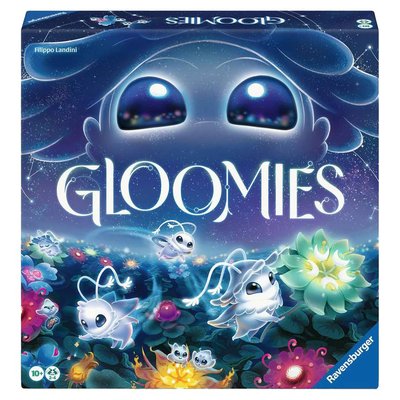
Rumble Nation. I love Rumble Nation. This is a game about essentially putting units on a map rel relatively quickly in about 105 minutes and then seeing the battles play out in the second half of the game. The only reason I felt a little weird picking up for this list is that you don't actually do anything. There's no actions that you take in the second half of the game when the rumble actually happens. Um, so if the game included some way for players to influence that rumble, I would see that as a legit second half of the game. Um, but the game kind of ends in Rumble Nation when you've stopped making decisions and then that rumble happens. So, it's really borderline there, but I still do love the game and wanted to give it a shout out here. That is Rumble Nation. Let's start with number eight here. This is Glooies, a relatively new game to me. Uh, an abstract gardening game where you are selecting cards to pluck flowers from this garden.
And in the first half of the game, you're plucking card. You're gaining cards and plucking flowers in the first half of the game. And then you shuffle up in the second half of the game after you've plucked all the flowers or plucked a certain number of flowers. You uh yeah, not all the flowers, just some of them. Second half of the game, you shuffle all the cards that you've gained and a little bit feeling like deck building. Then you play out those cards uh from your deck to plant flowers um back on on the board based on the cards that you play. I found this really interesting. like I it's a game of two distinct halves where those two halves are very connected based on uh the cards that you're playing and how you are changing the shape of the garden. That's this garden is shared by all players. So you're there's a lot of interaction in terms of which flowers you're picking picking and which flowers you're putting back in the garden you're planting. Um but I really enjoyed my first play of it. I only played it one once so far, but it is a game of two distinct halves where I thought those two halves were connected in a really interesting way.
That is Glooies at number eight. Another game that see a pattern that I'm seeing here are these mo most of these games are games that I've played exactly once which may be a sign that there's something about this type of game including Last Friday which I'm showing on on the screen here. Maybe there's some sort of pattern among these games where um I enjoy the experience of playing them once, but I'm hesitant to play them again. I don't entirely know why. I I'll need to explore that person a little a little bit more. But in Last Friday, this is a hidden movement game themed around uh slasher films basically where and this is a game that technically is more than two halves. It's technically four different sections that follow different uh genre tropes of slasher movies. But the main two halves that I remember about that one play, the two most distinct halves is in the first half or first part of the game, the uh the villain, one player is hunting all the other characters. And the characters don't know where the villain is. They are hidden. And so the the survivors, people who are trying to survive are visible. The the the slasher knows where they are, but you don't know where the hunter is. However, at a certain point in the game, there is a turning point like in many of these movies where uh the the survivors decide that they they can fight back and they are suddenly hunting the uh the the [snorts] slasher instead. So, the tables turn and the hunter becomes the hunted. And I thought that was really clever in a hidden movement game that it kind of flips it on the head where in one part of the game the um the hunter knows exactly
where are where the uh where the prey are and then on the and you flip it around and the hunters don't know where the prey is because the slasher becomes the one that you're hunting but you don't know where they are. I thought that was a really interesting twist in Last Friday and I do want to play this one again. Um, this is last Friday at number seven on this list of games with two distinct halves. Next up, we have Far Away. Far Away, oh, I did pick a photo for Far Away. Far Away is a game that looks a little bit like this, where in the first half of Far Away, you are drafting these cards. You are not quite drafted actually. You are auctioning for these cards to add to your tableau. You're building a journey that you will go on from left to right. Journey of eight different cards. You're you're going on this journey. And then in the second half of the game, you have gone on this journey and you are repeat you're kind of going you're returning from the journey from right to left. And so you're scoring each card based on the icons that you have available at that time because you haven't earned a lot of you haven't like earned the icons on the far left yet. You've only earned the icons on the far right. And then when I get to uh say this card, if I get to card number 59 right here, it says for every yellow and red card, you'll score three points. And you're only looking at the yellow and red cards that you've already passed. Um so you score them back to front like that. Very interesting scoring method, but the game is a game of two halves where you're building this journey in the first half and the second half of the game you are going on the journey from right to left
in Far Away. That is Far Away at number six. At number five, this is a game that is this is Hadara. And Hard Hardara is maybe only slightly on this list, but I I wanted to put it on here because it is an interesting uh light civ building game about advancing on these different tracks. And in Hadara, you are drafting cards um and the cards that you don't play. So, in the first part of the game, the first big chunk of the game, you are drafting cards and you're gaining those cards. You're playing those cards. But as you do that, you are also discarding cards that you are not playing into the middle of the table. And in the last half of the game or the last third of the game, you pick up all those cards and those are the cards that you had to choose from instead. So, I really liked that. Um, this was a drafting game where you know or you are hoping to see certain cards again. Maybe they weren't the right fit for your strategy in the first half or third of the game, but later on you might you have this information. Okay, I know this card's out there. I know I might have a chance to get in it later. I would discard it now and hope to get it later. I think that is a really interesting element of Hadara um at number five on this list.
And number six is a fairly hard to find game. I think this was a really excellent game in the one or two times that I played it. This is Nirvana. And each player gets a piece of paper that looks like this. Um and Nirvana plays out as a uh as kind of a you're designing cards based on a dice draft. Um, and along so you're you're putting numbers on these cards based on the dice that you draft. And in doing so, there's a little miniame of completing these little areas that have uh the same color of them uh within them. Um, so you're creating all these cards based on the numbers that you draft. Then in the second half of the game, you use these cards. So if I wrote 555 on these three cards, three of these cards are fives and the other ones are are other numbers that I've drafted. Um, in the second half of the game, you play a shedding game using these kind of hypothetical cards that you've created.
You shed those cards to get points in the second half of the game. Um, I thought this was really clever where you are act so you're creating cards and then shedding those cards in a game that is very different than the first game that you're playing. Um, because this drafting spatial game is completely different than the shedding card game that you're playing in the second half of the game. But I enjoy both phases of the game and I really like that one thing is leading to another. And actually, as I'm saying this, I need to add another game to this list and I'm not going to be able to do so. Um, because Apistocracy, so I'll add this as a bonus. Apistocracy is another game that does this. Uh, Apostocracy is a game where you play the full game of Apostocracy and then over the course of the game you are accumulating playing cards and in the last not half of the game but the last 10 minute five minutes of the game you're playing a game of wis using those cards that you've accumulated over the course of the game. Totally forgot about that for the list but I do want to give episcy a little bonus shout out here. At number three I have the game that started me thinking about this and um this is for sale. Forale looks like this. Here's forale. Forale is uh it it is a game of very two two very distinct halves. The first game half of the game where you are bidding to gain certain properties and oftentimes bidding to not gain weaker properties. So in a six player game, you put out all six of these cards and you'd bid to kind of stay in the auction. And as people drop out of the auction, they take the lowest value card. And so then you have this
hand of property cards. And in the second half of the game, you see cards that show values instead of properties. And you are um simultaneously playing properties to try to win those uh those those bids. I essentially the game is giving you the bids and you're you're giving the properties to try to win those bids. Um so the higher property wins the highest bid in that section of the game. two distinct halves, both very connected, very, very closely connected to one another. And both are kind of two different takes on an auction game, which I thought was interesting, especially since they use the same component, the these uh these uh property cards that you're gaining. But one of the things that I think is really special about Forale as a game of two halves is that it's fast. And so it means that even though players may not may not fully understand what they're doing in the first half of the game um or in the first play of the game because they don't fully understand how the choices they make in half one will impact half two. The game is short enough that you could play again right afterwards. So the first game is a little bit like a teaching game. And I think that's something to keep in mind in these games if they are longer that you might give players a taste of what the second half of the game looks like um early on in the game so they know what they are building towards they know what they are preparing for that is for sale at number three. So Clover is a game that I debated to put it on the list but I love the game so much and I think it is a game of two halves of cleverness that I thought I'd put it on here. So, in this game, you are given
five uh you're given four cards that you randomly put on this uh this plastic component here, the the the clover, and you write down one-word clues on each section of the clover to help players in the second half of the game guess um the two words that are here. And so, they are they don't have to entirely guess the two words. They just have to correctly orient these cards. So the first half of the game is you being trying to be clever by writing clues um based on the random arrangement of these cards. The in the second half of the game in this cooperative game, you reveal one by one the clues that you've written and these four cards shuffled into one or two other cards depending on how hard you want it to be. So you shuffle those together and all the other players get together and they try to figure out where exactly and how to orient the cards on this on this clover.
So, those are the two halves of the game, giving clues versus working together to solve the clues. There are other games like this, too, that I could have included on the list, but I really like how it does feel like two distinct halves of the game here. One where you're working privately to be clever, the other half where you're trying to be clever together with other players cooperatively. And so, So, Clover is my number two pick for this list of games with two distinct halves. My number one is one that I keep getting back to the table. This is Let's Go to Japan. And this is one where it's a little twist on Rumble Nation. I mentioned in Rumble Nation where you aren't actually making decisions in the second half of the game. And let's go to Japan. The first half is a drafting game where you are planning a trip to Japan. You're drafting cards and you are putting them onto six days of the week uh in any order that you want because you're planning. You're not actually doing anything yet. Time doesn't matter yet.
You are just planning what your trip will look like to Japan. And in the second half of the game, day by day, players show what they have chosen to do for that day. So there's no choices exactly there. You you are executing the day as you go. But there are little choices along the way. One of them is that there are wild tokens that you can spend at this time of the games to to uh to help you reach goals for the highlight of the day because the card that's fully exposed at the end of the day is the card that you will potentially score. So you might use wild tokens. Also, a number of the things that you might do as you go on this trip or that you might think about as you go on this trip is that instead of actually playing a card face up and defining saying like, "Hey, yes, I'm going to the Maji Jingu Shrine." Or, "Yes, I'm going to the Arashiyama Bamboo Grove." Instead of fully defining that up front, you could play a card face down for to go on a walk. That means you just are going on a walk, you might discover something. And so as you're executing that day, you pick up those go for a walk cards and you decide if it was just a walk or if it becomes the thing on the other side of the card. So this is a key choice that you're making on many days. As I think as you get more experience in let's go to Japan, you will go on walks more often. Um you won't just go you won't just put card space up throughout your entire trip. You'll go on some walks and have a little bit of randomness. And also, there's another way to go. I won't go into how to do it, but there's another way to get bonus cards on each day that are defined as walks until you actually execute that day. So, there are important decisions that you're making in the second half of Let's Go to Japan as you actually go on
the trip. Um, and so I love the game for this reason. I I love the planning, but I also love the executing and the storytelling that emerges as you are going through these days one by one because one player is going through their Monday, and the next player will go through their Monday and so on around the table. that is Let's Go to Japan at number one on this game on this list of games with two distinct halves. I'd love to hear your thoughts on these types of games. If this if any of these are are games that you love and why you like that they are two distinct games in one. Um, and any design challenges that you can think of. The number one challenge I I I mentioned in regards to for sale and other games like it is that players don't fully understand the consequences of their decisions in the first half of the game if they're playing for the first time. And so I think if in in a longer version of these games or longer games like this uh you have to give players a little bit of a taste of what is to come so they understand what they are building towards. I think that is a great way to do it or just make it a really short game like for for sale and then you don't need to fully understand.
you just have time to play again after that first game for sale. Let me know your thoughts in the comments below. I really look forward to hearing your thoughts on games with two distinct halves. Thanks.