9 Board Games That Got Directly Replaced (Buy These Instead)
Games in This Video
16 games are featured in this video — they unlock as you watch.




Transcript
Hey everyone. Nine games that got directly replaced by better games, at least for me. This is just my taste. I'm only about two years seriously into the hobby and still learning. My filter is simple. The newer game does the same core job, but better. Formula D was the racing game I reached for when I wanted cars and corners. You roll those big dice, manage wear points so you do not spin out, and try not to overshoot the corners. It can feel dramatic when the dice cooperate and the whole table is leaning in. Heat: Pedal to the Metal replaced it for me because the control is just better, and the table energy stays higher the whole way through. In Heat, you work with a personal deck of cards instead of pure output randomness. Your gear decides how many cards you can play each round. You can shift up or down one gear for free, or pay heat to jump two gears at once. Speed cards move you that many spaces. Stress cards force you to keep drawing from the top of your deck until you reveal a real speed number. Heat cards clog your hand and do nothing at all until you cool them down by sitting in lower gears. What I am trying to do every round is keep my heat under control while still moving fast enough to matter against the pack.
Corners have clear speed limits printed on them. If you exceed the limit, you pay heat equal to the difference. If you cannot pay the full amount, you spin out, drop straight to first gear, take stress cards, and move back behind the corner. Slipstreaming gives you free extra spaces when you land near or on another car, but those free spaces do not count toward the corner speed check, which creates this nice little risk decision. I love how Heat makes pushing hard feel like a real decision I am making instead of a pure dice gamble that can ruin my night. The simultaneous card choice means everyone is choosing and involved at the same time, instead of sitting through long sequential turns while one person resolves their dice. Recovery from a bad moment feels fairer because I still have tools left in my deck, and I can cool heat later. It also sits much better at two or three players and even solo for me, which the older game never really did. The older game could strand me on one bad roll and force down time while everyone else kept going. Heat keeps the tension of the race and the feeling of cars and corners without that same luck spike that can just end your involvement. For the race experience with decisions I actually want to make and a table that stays talking, this is the one I keep reaching for now. Next is the mythos investigation one. Arkham Horror is enormous. Investigators running around the city, fighting monsters, closing gates, and managing a pile of components and tokens while the doom track ticks upward. It can be atmospheric when
everything clicks and the group is willing to sink the whole evening into it. Eldritch Horror is the one that replaced it for me. It keeps the same global scale and the same sense of researching clues and fighting threats while the world falls apart, but the rules are cleaner and the focus is tighter. You still travel between locations on the map, still fight monsters, still try to solve the current crisis or research the mystery before the doom track ends the game. The difference for me is that the component management and the upkeep do not eat the night the way the older one often did. Each turn I am still trying to balance research, combat, and travel while the shared threat escalates and the table has to decide where to focus. I love how Eldritch makes that loop feel more like the adventure and less like admin work.
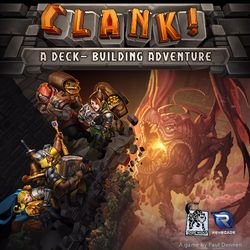
The focus on the current mystery and the cleaner travel system keeps the table talking and planning together instead of everyone buried in their own upkeep and component piles. The pacing actually lets me enjoy the story and the rising tension instead of fighting the rules. I still respect what Arkham was doing and what it meant for the hobby, but when I want that mythos investigation feeling now, Eldritch is the box that comes out because the session stays fun instead of turning into a logistics exercise. Original Clank! is the one where you build a deck of skills, swords, and boots, make noise that wakes the dragon, grab treasure from the dungeon, and try to escape before you get caught. It is fun the first few times, and the noise bag creates real tension. Clank! Catacombs is the version that replaced it for me, and it already sits high on my personal deck-builder ranking. The big shift is the modular tiles. There is no fixed board at all. You draw and place tiles as you explore. So, the dungeon builds itself every single game, and the layout is never the same twice.
You still start with a small deck, still generate the same skill, swords, and boots, still manage Clank! cubes in the bag that can bring the dragon after you, still race to grab an artifact and get out before the dragon finishes you off. What I'm trying to achieve is still the same push and pull of building a strong deck while not making too much noise too early so you can go deep and still escape. I love how the layout never repeats, so the routes and the risks stay fresh without a big rules jump that would scare people away. The exploration actually feels new each time, instead of learning one fixed board and then optimizing the same paths over and over. The lockpicks and the new tile effects give more little decisions about when to push deeper for better rewards or when to grab what you can and run for the exit. The variety keeps it interesting across more plays, and the table still has that shared tension of the dragon bag. For the exploration and deck-building feeling I wanted from the original, Catacombs is simply the one I prefer now because it does not get solved the way a fixed board can. Dune Imperium is excellent. You place workers on the board, build a tight deck of cards, and fight over the conflict for points and resources. Uprising is the one that replaced it for me. It is already my personal number one deck-builder of all time. You still begin with two agents and work toward unlocking the third. You still race to 10 points at the end of a round or empty the conflict deck to end the game. The
worker placement spaces, the intrigue cards you can play, and the combat for the conflict all sit in the same tight tension between your board position and your hand. What I'm trying to do each round is still balance my board actions against the cards I can play from my hand and the conflict I can influence with my strength. I love how Uprising tightens the pacing and makes the theme land cleaner for me. The conflict feels more meaningful because the timing and the rewards push harder decisions. The deck interactions reward the choices I make earlier in the game instead of letting the session drift into the same patterns. The original is good and I still respect it, but this one is the one I actually want to play because every turn feels like it matters more and the session ends while I am still excited instead of ready for it to stop.
The interaction through the conflict and the board spaces is exactly the kind of real player pressure I want from a deck builder. Wingspan is beautiful. You draft birds, build a tableau across habitats, and chain activations to generate resources and points. Fin Span is the one that replaced it for me. It is tighter and faster. The decisions stay interesting and the building something alive feeling is still there, but the fiddliness and the analysis paralysis drop in a way that matters to me. Each turn I am still trying to set up strong future turns while managing resources and scoring across the board. I love how Fin Span does it with less overhead, which means mixed groups stay engaged longer and the game does not drag the way the longer chain turns sometimes can. The spatial placement and the combo elements feel more immediate, so everyone can see what is happening. The scoring keeps the table looking at the same things instead of disappearing into their own private boards for minutes at a time.
When I want that engine building satisfaction without the extra friction and the downtime, this is the box I pull because the fun arrives faster and stays consistent across the whole session. King of Tokyo is the classic. You are a monster, you roll six dice up to three times like Yahtzee, you smash other monsters or score points, and you try to be the last one standing or hit 20 points. It is loud and simple and the table gets rowdy. Final Titan is the one that replaced it for me, especially at two to four players. You draft a team of champions first from an open display. Each champion has its own life total, speed for initiative, attack chart that tells you what each die face does, and an ultimate ability. Then you send them into short one-on-one dice tools in the arena. You can choose to fight or skip your turn, and skipping costs you an upgrade card that goes into the pot in the middle. The person who decides to enter takes all the upgrades in the pot and fights with them. What I am trying to do is build a team whose matchups and timing create big moments while still managing the chaos of the single die rolls. I love how Final Titan puts the interesting abilities in my hands from the very start instead of waiting for power cards to appear later. The fight or pass choice gives me real decisions about when to spend my upgrade resources and when to force someone else to commit. The draft itself creates table talk and denial because you are taking champions away from other people. The upgrades let me swing a fight that looked lost or protect a champion I want
to keep for later. King of Tokyo often felt like pure luck once the power cards finally showed up and the early game was just rolling. This one keeps the energy and the monster fighting feel without the same pure output swing and makes every champion feel like it has a moment that matters. Zombicide is big and loud. You clear waves of minis, manage noise so you do not attract more, and hope the dice are kind while the board fills up with threats. Cthulhu: Death May Die is the one that replaced it for me. You still roll dice to fight and manage risk on the board, but the ritual and the final stage give the whole table a shared escalating crisis that everyone is working toward. The sanity track creates those moments where the panic itself becomes useful because it unlocks bonus dice or special effects. Each turn, I am trying to push the ritual forward while deciding how hard to fight the monsters and when the insanity bonuses are worth the risk of losing control. I love how Death May Die keeps the dice combat, but makes the story and the rising panic the actual engine of the game.
The shared crisis means everyone is talking about the same threat and the same ritual progress, instead of just clearing their own corner of the board and hoping the dice work. Zombicide could turn into pure attrition for me, where we are just surviving longer without a clear rising arc. This one gives the dice combat a reason that feels like it is building towards something dramatic and the table stays focused on the same goal. Secret Hitler is tight. You vote on governments, pass policies, and try to figure out who is who before the wrong side takes over and ends the game. Feed the Kraken is the one that replaced it for me. There are three factions instead of two. Sailors want the Eastern Bay, pirates want the Western Cove, and the cult wants to reach the Kraken or sacrifice the cult leader to win.
Every round, the captain picks a lieutenant and a navigator. The rest of the crew can mutiny by secretly putting some of their limited guns into a fist and revealing them at the same time on a count. If enough guns appear based on the player count, the person who showed the most becomes the new captain and the process starts over. What I'm trying to do is still steer the ship toward my secret destination while reading the table and deciding who to trust with the navigation roles. I love how the limited guns mean you cannot just spam mutinies forever the way a simple vote can get meted. The third faction, plus the character abilities that everyone has, create more fuzzy information and more reasons for everyone to stay engaged instead of the good team just waiting. The mutiny phase gives the whole table a physical moment of tension with the fists over the table instead of just flipping a yes or no card. Secret Hitler can get fully solved after enough plays for me and the conversations shrink.
Feed the Kraken keeps the paranoia but gives more levers so the good players do not check out as fast and the conversations stay interesting and loud for longer. Last one is the tactical card battle. Summoner Wars is a strong grid dueler. You summon units onto a larger board, move them around, roll dice to attack and try to kill the opposing summoner to win. Gloomhaven is the one that replaced it for me. You build a 20 card deck of fighters and tactics from your faction then fight on a tight 3 by 3 grid. Your deck sits on your stronghold and acts as your health pool. If an enemy fighter is on your gate space at the start of your turn, you discard a card from your deck instead of drawing one. When the deck is gone and you are sieged again, you lose the game. Turns are simple and fast. You draw a card or discard if you are sieged then take two actions. You can deploy a fighter to your back row, move one space orthogonally, attack an adjacent enemy by comparing power numbers, defend by discarding cards equal to the attacker's power or play a tactic card. Matching traits let you stack fighters so only the top one is active for abilities in combat but the whole stack moves together as one unit. What I'm trying to achieve each turn is position and tempo with only two actions on a board small enough that every placement matters.
I love how Gloomhaven keeps the tactical fight but makes the loop snappier and more consistent because you see every card in your deck and the grid is small enough that there is no hiding. Stacking creates these little resource puzzles about when to pile up for power or spread out for board control. The deterministic power comparison removes some of the dice swing that could frustrate me. Summoner Wars can stretch longer and feel more random with the dice for me. This one ends while the decisions still feel sharp and I immediately want to play again because the session never overstays its welcome.