Please stop recommending Catan (Use this FLOWCHART instead)
Games in This Video
16 games are featured in this video — they unlock as you watch.




Transcript
What's the best entry-level board game? Wrong question. There is no best entry-level board game. There's only the chart. Two players or 10. Can you handle losing? Do you like words? A few weeks ago, a friend wanted to know, "What's a good entry-level game?" And I started rattling off games like an unhinged maniac. After spitting some lines, I realized every single recommendation was conditional. So, I did what any sane person would do. I made a giant flowchart. And now I'm going to walk you through every single pathway. This is the So you want to play board games with someone who has minimal board game experience and are now looking for entry-level games. Well, this is the chart chart. Now, not every entry-level game is equal. So, you'll see three bonus stats under each game box. How easy it is to learn. One cube means teach in 2 minutes. Five cubes means that you need an experienced teacher. learn in helpfulness, aka gateway usefulness, which is how well does the specific game prepare you for heavier games. Table hassle, which is the setup time, the tear down, and all the fiddly organizational stuff to operate the game. In general, you want a low barrier to entry, high helpfulness for future games, and low table hassle. That said, don't optimize too hard. We aren't playing scythe right now.
Sometimes wrestling with a tougher rule set or a bigger hassle is the learning experience. Building your tolerance for complexity is valuable. Just know your group's threshold. Lastly, keep in mind this scale is relative to entrylevel games. On Mars would break this scale entirely. So a five cube learning curve just means it's the hardest in this chart, not the hardest game ever. Okay, rule set. Let's go. Player count is where everything starts. and where most people mess up. Katan for two, miserable. Patchwork for four, unplayable. You need to know your player count before anything else matters. And here's my breakdown. More than five, exactly five, three to four, or just two. Let's start at the top. More than five. But like, how many more? Six people crammed around a coffee table or 12 relatives at your Thanksgiving meal and your cousin is talking about the turkeyy's aura. Let's say it's the full crew. 11, 12, maybe more. But a quick question. Are you experienced with games? Not your group, but you specifically because you're about to do some heavy lifting. Blood on the clock tower is almost entirely your problem. You're the storyteller, the person running the show, and you'll need to learn a complex rule set. You'll watch tutorials, read supplementary materials, do online quizzes. But for everyone else, it's incredibly intuitive. They'll figure it out as they play. And new players are often even better than
experienced ones because they haven't learned the meta yet. They just tend to make stuff up and get to play with the mechanics. Being in the dark and trying to solve the puzzle is the fun. And asking why or how or what is the game at its purest. Now, Blood on the Clock Tower is social deduction at its finest. hidden roles, layered information, misdirection, the kind of game where someone's getting accused of being the demon while frantically trying to prove they've been drunk the whole time. One rule for me though, if you go down this path, play Trouble Breuin exclusively. Don't get cute with the advanced scripts until everyone is ready. Just trust me on this. Now, not everyone wants to be the storyteller, though. It's a lot of work, and that's fair enough.
Blood in the Clock Tower is just a lot of responsibility for that one player. So, here's my follow-up question. Taxes or screaming? If you pick taxes, we're talking about welcome to a flipping right that plays one to 100 people. Everyone gets the same three cards flipped each round and fills out their own little sheet, strategizing to build the best little neighborhood. Each micro decision is weighty and leads you down a unique puzzle to your own board. Plus, it's completely simultaneous play. It's really fast to learn and there's very little downtime. There is a weakness though. Scoring feels like filling out your taxes. Your tallying pools, your counting blocks of houses, checking how many times you've messed up, it's really a diet point salad. But if your group can handle basic arithmetic without tears, it's a pretty solid choice for large crowds. Okay, but what about screaming?
Well, we got monikers. This is charades meets telephone meets passionate yelling. Three rounds with the same set of cards, but the rules get progressively tighter and tighter. In round one, you can say whatever you want to get your team to guess the right word. Round two, only one word can be said. Round three, no words at all, just muffled grunts and frantic gestures. The magic is that everyone is seeing the same cards cycle through all three rounds. So, by round three, when someone honks and drops on all fours, half of the room is screaming a horse-sized duck because they remember that card from round one and two. Monikurs is all about fulfilling the promise of creating inside jokes in real time, and it plays a massive group. So, split into teams, pass the deck, and watch articulate people crumble into panic m plus there's multiple versions, and I think they're just about to release a 2025 familyfriendly version. So, a lot of those old internet relics and memes from 2015 won't need to be explained to your Gen Z brethren. Now, let's go to 6 to 10 players, which opens up brainier team games. Three versus three, four versus four, the kind where you're coordinating strategies and immediately blaming your teammates when things go wrong. Now, a question for you. Word games? If yes, are you a Wordle or crosswords kind of guy? Wordle means code names.
Give a brief clue and then watch your team guess multiple words on the board while racing against the other team. When you're the spy master and your clue metal three perfectly connects blacksmith, penny, and music, you're a genius. When your team guesses safe instead and hits the assassin, well, that just sucks, man. It's been the default party game for over a decade because it works. Simple to teach, crazy high rate playability, and every round gives that potential perfect mindmeld high when you crack all of those obscure words in your spy master's clue. It's a genuine sense of brilliance in a small little box. Now, if Wortle's too casual for you and you're more of a crosswords kind of guy, that leads us to decrypto. Your team has four secret words that never change and each round you get a three number code and you give three clues pointing to those words. Your teammates need to decode it, but the other team also hears everything. They're listening to every single clue, trying to deduce your four words. The more rounds you play, the more information they get.
So, you're stuck. Be too obvious and your enemies figure out what words you have. but be too vague and your own team will fail. It's this escalating tension where every clue is a tight rope walk between clarity and obscurity. To me, the crypto it's definitely more brain burning than code names. It's like when I do the crossword versus walle. But what if you're too cool for word games, too literary for cheap parlor tricks? Fine. Poetry for neanderals. One syllable words only. Elevator becomes up down box. Your friend has to grunt me dig rock dark for coal miner. Get it wrong and you get bonked by an inflatable club. It forces articulate people to communicate like aggressive toddlers with immensely important things to say. It's always fun watching someone try to struggle to solve a difficult word like muscle head. But if you think that's too undignified, let's go back to the crypto with you. It offers that word play with your sense of worth intact.
Okay, let's say you hate words. Fair enough. Words aren't always playful. So, let's go in a different direction entirely. What's your spice tolerance? If you want something gentle, think milk and cookies. We have the classic Dixit. You give a vague clue about your dreamlike card. Something like childhood memories. Everyone else plays a card that also fits and then you all guess which was the original. But every great game has to have a twist. In Dixit, you want some people to guess your card, but not everyone. Too obvious and you score nothing. Too cryptic and you also score nothing. You're aiming for that sweet spot of just vague enough. It's a cozy, creative, and perfect game for people who want something gentle without much cutthroat energy. But let's say you want something a little bit tangier. You want some Miracle Whip. Now, we're talking about wavelength. You get a spectrum from something like smelly in a good way to smelly in a bad way. And you got to help your team guess where cheese wiz lands on it. The magic is that everyone interprets things differently.
Is cheese wiz moderately good smelling or is it sludge? You're debating your beliefs and attitudes, but it's all disguised as a party game. Yeah, I admit there's words involved, but this is really about vibes on the same wavelength as your teammates. But what if you want confrontation instead? You want some drama? You want more spice? Let's take down the line to Jalapeno Lane to Avalon. Avalon is another social deduction game with hidden roles, secret evil, tons of lying to your friends faces, but it plays very differently than something like Blood on the Clock Tower. You're trying to complete these quests as the good guys, but there's evil among you actively sabotaging these missions. The game creates a steady stream of information that lets you piece together who's good and who's evil, or you can just helplessly watch as Merlin stress spirals into silence. I find Avalon as one of the most pure, most distilled social deduction games.
It's tense. It's accusatory, and someone might leave the table a little bit salty, which is perfect for a memorable game night. But what if Jalapeno isn't enough? What if you want something with a real kick? Well, there's Quest. It's an unfortunate name for search engine optimization, but it's a great puzzle. It's essentially Avalon with a few twists, but it has that same backstabbing energy, and it's all just remixed. The game culminates with this wonderful blind guess in fingerpointing finale that gets absolutely chaotic, but it's a tiny bit more confusing than Avalon, and you'll want to play the director's cut for the best experience. For most groups, Avalon is the better entry point and is the more flexible game. But if your crew thrives on a spicier puzzle, Quest can deliver some extra kick within the same framework. Let's shift to exactly five players. Why five exactly? Most board games max out at four players, and games that usually go beyond five are kind of party game focused. So five player games occupy this weird sweet spot. Sure, you can play most of these games with more or less than five people, but these specific games play fantastically at five specifically. Now, first question.
What's your opinion on watching things go fast? If you like speed, let's go to the races. But first, do you want to drive or do you want to bet? If you're a driver, we've got the modern classic Heat pedal to the metal. Heat is a racing game where you imagine your car, not just rolling a dice and moving. You've got cards representing speed and some unique abilities if you use the extra modules. And you're trying to go as fast as possible without overheating or spinning out on corners. Play it safe and you'll limp to the finish in last place. It's this perfect balance of risk and reward where every corner is a gamble. Every gear shift is a calculation. The simultaneous reveals means that there's little waiting and it's intuitive to use heat as a resource which all creates this great little puzzle. Plus, there's some decent comeback mechanics. So, yeah, it's a pretty great game. But if you don't want to drive, let's bet instead. Camel up.
If you've seen my channel before, you already know my love for this game. The premise is dead simple. Make bets, roll some dice, watch camel chaos unfold. The real selling point is those sweet, chunky, ridiculous stacking camels. When one camel lands on another, they move together, which turns your sure thing bet into a towering disaster. The math is just vague enough that you can calculate probabilities, but never fully predict an outcome. Great times, and someone always loses their mind when the wrong dice comes out and ruins all of their plans. All right, what if speed isn't your thing? What if you'd rather play some mind games? In that case, got a poker face. Coup is perfect for you. It's a nearperfect introduction to character specific abilities while being a deceptively nuanced bluffing machine.
You've got two hidden roll cards and on your turn you can claim to be any role, even ones you don't have. But if someone can call your bluff and if they're right, you lose a card. If they're wrong, they lose a card. It always feels possible to claw your way back from a bad situation. And if you can convince everyone you got something they're afraid of, it really works out in your favor. Of course, everyone always claims to have the Duke. But what's that other card you're hiding? That's something people are swaying over. Now, if you can't bluff to save your life, in that case, do auctions thrill you? If they do, we have the auction classic, modern art. This is Reiner Kitia at his most confident. You're buying and selling paintings that have no inherent value, but the value is entirely what you and other players make it through through those auctions. You run five different types of auctions, and while bidding and manipulating the market, you're pumping up artists you you own and tanking the ones you don't. The most popular artists become incredibly valuable commodities, and the competition can become immense. Modern art is really economic warfare disguised as an art gallery.
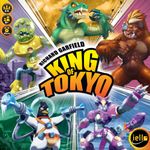
Newcomers can grasp it while pros can express subtle strategic nuance. And everyone gets to experience the joy of accidentally funding their opponent's victory. Now, if auctions make you nervous, then it's simple. Build or destroy. If you decide to build, we have seven wonders. This is a card drafting classic where you're building a civilization over three different ages. You're passing cards around the table and picking what you need to best optimize your tableau. Everyone plays simultaneously, so there's practically zero downtime. And you can grab a card, pass the rest, keep moving. The strategy comes from watching your neighbors and drafting cards to block them, but also piecing together your own engine. It teaches card drafting fundamentals better than almost anything else. And it plays fast and cool once you get all the iconography down. Plus, you get to build a nice little efficient civilization and it's tower and wonder, which is always really hip. But what if you'd rather destroy? In that case, we have King of Tokyo. Your giant monsters being the kaiju juices out of each other while vying for that control of Tokyo. It's kind of like yatsi with kaiju. Roll dice, reroll what you want, and then pummel your opponents or heal or buy powerups with the energy. The dilemma itself is Tokyo. Occupy the city for bonus points, but then you absorb punishment from everyone else without being able to really heal yourself. So, you're weighing perpetually whether to abandon your crumbling position on Tokyo or to stubbornly cling for it for
victory points. The dice are satisfyingly chunky, and the kaiju are gloriously absurd. And witnessing someone get obliterated moments before triumph never loses its luster. All right, that's it for five players. Let's move on to the meat and potatoes of board gaming. Three to four players. This is the golden range where a ton of games are designed to shine. First thing first, can you tolerate one another? This is critical because at three to four players, you'll either interact heavily with opponents or you can play something where everyone practically ignores each other. And let's start off. Being in the room with these people is slowly ruining you right now. In that case, there's a follow-up question. 70% skill, 30% luck, or 30% skill, 70% luck.
Let's lean towards luck for a moment, and that takes us to Quax. Quax is a game all about pulling ingredients from your bag and hoping you don't explode. You're brewing potions by blindly drawing these tokens, which will advance your potions potency, which gives you more points and buying power. But if you draw too many boomberries, your cauldron will detonate. In Quax, the push your luck element is intoxicating. Every draw is risky, but stopping early means watching everyone else zoom past you. Plus, there's a good element of power progression as you buy better ingredients and make a more harmonious set of ingredients. Ever inch into maximizing your potion score. It's accessible, tactile, and manages to make everyone invested in their own little disaster without much player interaction. But what if you want a bit more skill in your solitire? In that case, I present you with the toughest choice of all. Birds or fish. Wingspan and finpan are fundamentally the same game. You're collecting cards, building a scoring engine, watching it snowball into this tableau of maximum efficiency.
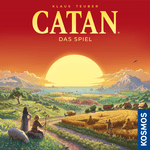
Each card makes future action stronger, turning early game decisions into long-term payoffs. There's a catch, though. It's a race against your opponents, but both of these games feel isolated in a very peaceful way. You're cultivating your own little point machine while your opponents do the exact same 2 ft away. It's meditative multiplayer solitaire. And if that sounds appealing, you can't go wrong with either. A very small asterisk, though. Wingspan is slightly more complex than finpan, but we're talking about 5 to 10% more stuff. The real difference is on that birds or fish. Choose based off which animal makes you feel more alive while optimizing your engine. Okay, let's rewind a bit. What if you actually like the people you're playing with? In that case, you can handle games with real player interaction. This leads us to a choice. Do you care about gaming history? Katan is the game that launched the modern board gaming industry as we know it. It's the gateway game that opened the floodgates. But if I'm being honest, most people should skip it right now. It's historically important, but it's been surpassed and improved upon.
But if you're drawn to experience and where it all started, Katan is the answer. If you want a great game, just keep moving down this chart. Now, Katan is a game about settling an island, rolling dice, and praying to the statistical gods that your numbers will come up. You're gathering resources, wheat, sheep, wood, and building settlements and roads while racing to 10 victory points. A key innovation of Katan is this modular hex board that created the island itself. It's revolutionized the game and world, but to me, I think tradein is where the soul of Katan lives. You're perpetually negotiating with opponents, trying to convince someone to give you that one brick you desperately need while trying to hide the fact that that would win you the game. And yes, it suffers from runaway leader problems, and it can really drag on with the wrong group, but it is undeniably the gateway game that opened the floodgates to the modern industry. But if gaming history doesn't really matter that much to you, let's skip ahead a few years. These are the modern classics games that took advantage of the large new market from Katan and forged their own path. Each one taps into a specific vice. Starting with passive aggressiveness. Ticket to ride. You're collecting colored train cards and claiming routes across a map. Racing to complete secret destination tickets for points. The rules are absurdly simple.
Collect cards. Play matching sets to claim routes. Connect your cities. But the passive aggression is sublime. Someone claims that route you desperately needed. Well, now you're taking a scenic detour through half the continent, seething quietly while maintaining a pleasant smile. There's a tension that builds up beautifully as the game progresses and routes become scarce, forcing players into increasingly desperate decisions about whether to go for that long, risky route or to play it safe. Ticket to Ride has replaced Katana as the default gateway game for good reason. It's cleaner, it's faster, and has that perfect balance of accessibility and legitimate strategic depth. Plus, there's like 15 different map versions. So, if you somehow don't like the base game, you can try another one. Okay, but what if your issue is FOMO? Raw is RER Canitia once again at his strongest, creating an agonizing decision space with deceptively simple rules. You're bidden on tiles that represent different aspects of ancient Egyptian civilization. Pharaohs, monuments, the Nile River. The tiles get revealed one by one on the central track. And if someone evokes raw, they force an auction for the whole lot. The FOMO is excruciating. Do you bid now for this mediocre collection because you desperately need the flood for your Nile tiles? Or do you hold on to your high value sundisk for a better opportunity, risking that someone else snipes what you need? The sundisks themselves are brilliant as they move around
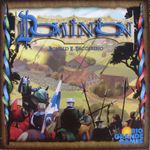
between players and create a fluid close economy. It creates this crunchy decision space where every auction is this painful calculation of current values versus future opportunity cost. It's aged magnificently, teaches auction games better than almost anything else, and also manages to feel simultaneously elegant and ruthless. And if you can't choose a game yet, well, don't worry. I got you. You suffer from choice paralysis. In this case, we have the classic deck builder, The Minion. The Minion is the purest distillation of deck building. You start with a pathetic deck of coppers and estates, and each turn you're buying better cards to shuffle into your deck, making future turns stronger and stronger. The cards you can buy change every game, and you're trying to figure out which combinations will create the most efficient point scoring machine. The choice paralysis hits immediately. Do you go heavy on actions and go chain combos? Are you going to go big money and rush provinces? Are you going to pivot midway to counter someone else's strategy? Each decision branches into more decisions, and watching your deck transform from garbage to a welloiled combo machine is deeply satisfying. Now, player interaction can be low to medium depending on what cards are available, but turns go lightning fast, and the modular setup creates approximately infinite replay-ability. It's the gateway to an entire genre. And finally, if you still can't decide, we got you a savior complex with Pandemic.
Pandemic is all about saving the world from diseases spreading across the globe. And it's stressful in the best possible way. You're working as a team of specialists flying between cities, treating outbreaks, and sharing knowledge to discover cures before everything collapses. The tension is palpable. Every turn, more cities get infected. But the true brilliance of Pandemic is all about how the infection deck shuffles its discard pile back in. So cities that just got infected, they're coming back up again, creating these escalating hotspots that spiral out of control into outbreaks. You're constantly triaging and making decisions about which imminent crisis to address first. Pandemic has legitimate sense of cooperation which glues its mechanics into a great little puzzle.
The only thing is you have to sometimes watch out for players who just take charge of the whole game. So, it's generally best to be played if everyone's approximately the same skill level. Now, these four games, that's your board game 101 right there. Take a ride, Raw, Dominion, Pandemic. Play those and you'll understand the DNA of modern gaming. But the hobby didn't stop at 2008. Let's take a look at what came after. At this junction, we have another choice, competitive or cooperative. Let's start with competitive. First up, we have Scout. Scout is a masterclass in simple mechanics lead into brutal decision points. You're dealt a hand of cards that you cannot rearrange and your job is to either play the set from your hand that beats what's currently on the table or scout by taking a card from the table and placing it in your hand.
You're constantly scanning your frozen hand for these runs or sets that are actually playable. Every card you scout gets inserted wherever you want, slowly giving you more options. But you're also giving up tempo. It's this tense calculation of whether to play aggressively now or build a devastating combo later. It plays quickly, the rule teaches in 30 seconds, and has that perfect one more game quality that hooks new players instantly. Admittedly, Scout is a fairly simple game from a conceptual standpoint. So, what if you want something a bit meteor for your game night? This leads me to Clank. Clank is a deck building dungeon crawler where your thieves raid in a castle or a dungeon. Ever fearful of that dragon lurking? You're building your deck while moving through a dungeon board, grabbing artifacts. It's similar to Dominion in that you're always strengthened in your deck and gathering points. But to me, the genius is the Clank mechanic itself.
Certain points of the game and certain cards will make Clank. Eventually adding these tiny cubes to a bag. When the dragon attacks, cubes get drawn. If yours comes out, you take damage. Push too deep for valuable artifacts and you might not make it out alive. Its deck building meets dungeon crawling with escalating danger and adds just enough novelty to keep players engaged throughout. Clink is very solid, but what if you're feeling brave? What's the most complex entrylevel game can get before people are overwhelmed? Fair warned, this next recommendation is at the absolute peak upper limit of entry level. You'll need someone experienced to guide you through your first games, and everyone needs to be willing to engage with something heavy. With that said, I've introduced Dune Imperium to dozens of people, non-gamers included, and with an experienced guide, it's been a fantastic entry point. Dune Imperium is a worker placement deck builder set in the Dune universe, and it's remarkably elegant despite its complexity. You're playing cards from your hand to send agents to different board locations, recruiting troops, gaining influence, acquiring resources, all that good Dune stuff. The card itself restricts where you can go, which makes teaching the game easier. Play a card, see where it lets you go. On a reveal turn, it's also easy enough just to say, "Buy the most expensive card you can," and see what happens. But Dune Imperium weaves together multiple mechanics, deck building, worker placement, auction mechanics into this cohesive hole that feels like spinning plates. The decision space is rich
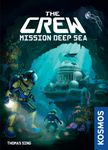
without being paralyzing. And watching your deck evolve alongside your board position is incredibly rewarding. Yes, it's the upper limit of entry-level complexity, but with someone experience guiding the first couple games, it can click beautifully. But let's go down the other horn of this chart. What if you want a cooperative game? In this case, the entry point would be So Clover. So Clover is a cooperative ward association game that is deceptively tricky. Everyone gets a Clover-shaped board with a random ward on each side. Your job is to write clues in the spaces between the words, and each clue needs to connect the two words it touches. So if you have beach and ship on adjacent sides, maybe you write the word wreck between them. Then everything gets scrambled and the rest of the group has to figure out which words go where based solely on your clues. The brilliance is in crafting clues that are obvious enough for your team, but specific enough to only work with one pairing. You'll watch people agonize whether your clues point to this combination or to that one. And when they finally crack it, it feels triumphant. It's quick, portable, and has that perfect cooperative energy where everyone's working together without any real quarterbacking. Now, so Clover, that's an easy game to learn and play. What if you want something a tad more complex? That leads me to the Crew series of games. I'd recommend the newer release, The Crew Mission Deep Sea, for its variable mission structure, but it doesn't really matter which one you pick. The Crew is a cooperative trick taken game, which sounds like an oxymoron until you play it.
Trick Taken is this whole thing with suits and high-v value cards and random hands, but now you've got this whole missionbased structure where certain players need to win specific cards or win a certain trick. But what makes this series tick is its restriction on communication. That limitation means you're trying to coordinate an intricate dance with very little ability to strategize. Sure, there are little communication tokens, but those hints are just that, hints. The game ramps up as you go through each mission with everinccreasing difficulty, which means it leads to teaching trick- taken fundamentals while building up to being a genuine collaborative puzzle solving game. So yeah, the crew series is a great little collaborative game. But what if you want a great big collaborative game? Well, I've been playing a lot of the new Fate of the Fellowship game, which is the latest implementation from the mechanics of Pandemic, and it's been a blast. Now, fair warning, just like Dune Imperium, this is very much a hobbyist mid-level game.
You will need to have at least one person who is very familiar with the game to lead it and operate the mechanics. That said, just like with Dune Imperium, if you have that teacher who prioritizes the experience and clearly explains the game, it can be done. Fate of the Fellowship is a game that recreates the story of Lord of the Rings through a series of whatifs. You're moving the fellowship across Middle Earth, managing crisises, completing objectives, and trying to reach Mount Doom before everything falls apart. It's Pandemic's DNA through and through. Actions, unique player abilities, escalating threats, but themed brilliantly around the game's story. The game's greatest strength is that it allows a unique narrative to be created, which is absolutely captivating and engaging for gamers who might have never experienced a strong emerging story before. That said, it is definitely more complex of a game. So, you need to make sure people are down for this before you bring it to the table. And you really need that person to manage all the fussiness. Okay, so this is the co-op versus competitive section. And what it really was meant to show was like a 1 2 3 complexity level.
Scout or So, Clover, perfect for complete beginners with zero gaming experience. Dune Imperium or Fate of the Fellowship. These are for enthusiastic players willing to dive deep right away. It's not like I would play fate of the fellowship with my grandma, but I could absolutely bring so clover and have a good time. So, use your judgment on where your group lands. So, now we're on to the final branch. The branch where it's just you and one other person. Games for two, as they say. First question. Is this for your GF, BF partner? Not that it matters too much. I just think it's cute that you're considering it. Let's say it is. In that case, can you both handle failure? Because if you can handle it, there's a practically perfect game for you. Sky Team is a cooperative dice game where your pilots land in a plane together. It's relationship testing in the best way. One person is the pilot, the other's a co-pilot, but you can't talk during the round, and you're both rolling these dice and assigning them to different aircraft systems. You're adjusting the speed, you're managing the altitude, you're deploying the flaps, but the restriction on the communication is at core tension. You need to coordinate these intricate maneuvers through pure intuition and reading each other's intentions. Land too fast, crash. Forget to deploy landing gear, crash. Not enough caffeine, definitely crash. When you finally nail a perfect landing after three failed attempts, it feels like you've genuinely accomplished something together. Plus, there's this campaign that escalates the difficulty beautifully with new airports and complications. It's a tense, intimate, and it ramps up perfectly,
which makes a great game. Okay, but what if you want a game that has to have a winner? In that case, let's head to the head-to-head competition. Let's start with a simple question. Kind of abstract or themed? If you're down for some light, abstract theming, well, I have the puzzle game for you. Azul is a tiled drafting game disguised as decorated Portuguese palace walls, and it's all abstract goodness. You're taking turns drafting these colored tiles from circular factory displays trying to complete rows and columns and sets on your player boards to score points. Now, when you take tiles from a factory, you only take the tiles of the same type. So, any tiles you don't take go to the center pile, giving your opponents more options. And any tiles you draft but can't place, negative points. It's this elegant draft in puzzle where you're simultaneously building your own pattern, but also keeping a watchful eye on your opponent's plans. There's this tactile satisfaction of the tiles themselves because they're chunky, they're beautiful, and they also make the satisfying click. Games are quick and the rule teaches 5 minutes.
The strategic depth, though, reveals itself gradually. It's become the modern abstract classic for good reason, and at two players, it's at its absolute best. Okay, but what if you want some seasoning on your two-player salad? In that case, the question is Lord of the Rings. If yes, Lord of the Rings Duel is all you need for hours of tense strategic draft and combat. This is a game about pulling multiple threads while your opponent tries to pull those same threads. Forge alliances with Middleear's races, push for military dominance, or rush the ring to Mount Doom while the other player hunts Froto and Sam. There's a pull and push that escalates as each stage completes, creating this tense strategic dance of making progress on one string but losing grip on the other. I actually think the core design is fairly simple and it streamlines from its predecessor Seven Wonders Duel by removing the endgame pointalion. So yeah, it's a great game perfect for strategically minded couples. And if you're not into hobbits, then I would suggest Radlands. This battler is endlessly replayable, deeper than your love for your partner, and easy enough to teach in 3 minutes. The beauty of Radlands is that it's a game that's quick to learn, but the decision space and variables at play keep the game's core engaging. Each game is dramatically different because each of those camp cards have wildly different strategies. And the games are quick enough that losing just makes you want to run it back immediately. Now, it's a brutal, elegant game that has that one
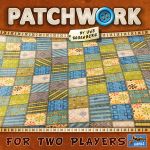
more game quality that will keep you up until 2:00 a.m. Okay, now let's look at this from the other arm. This is not your partner. In that case, have you ever met this person before? If your answer is nope, then oh boy, do I have the game for you. Patchwork is a two-player puzzle about quilting that's deceptively strategic. You're both building quilts on personal boards by purchasing these Tetris-like fabric pieces with buttons. The hidden ingenuity is the time track. When you buy a piece of fabric, you move forward based on its time cost. And whoever is behind on the track goes next. So sometimes you'll take multiple turns in a row while your opponent watches helplessly, fully becoming hatedrafted into oblivion. You're trying to fill your board efficiently for bonus points while also sabotaging your opponent's draft. So, there's this constant back and forth tension of finding the most efficient way to solve your board while denying key pieces. Patchwork again is quick to teach. It has zero randomness after that initial setup. And the satisfying spatial puzzle of fitting pieces together makes it perfect for a first game meet. Plus, the Quilton theme, it's rather pleasant, which can disarm people from the rather cutthroat competition of Quilton. Then again, you do have to commit a cardinal sin of board gamers, removing the shrink wrap off. Now, for the rest of the two-player side, is it different if you're playing with a friend versus a partner? Not really. The core recommendations are the same.
Sky Team, Azul, Radlands, and Lord of the Rings Duel works beautifully in either scenario. Use your theme and buy preference to make the call. And look, these are all just suggestions. There are dozens of great two-player entry-level board games out there. This is my chart with my picks based on what I've seen work. All right, that's it for the chart almost because we're not just yet done. I want to touch on one more thing called the baits. There are really three categories of baits that can lure unsuspecting fresh gamers into a pit of misery and confusion. First, deceptively complex games. These games look so cool and so fresh and market themselves as more approachable than they are. The problem is you can't guide players through them the way you could with Blood on the Clock Tower or Dune Imperium or Fate of the Fellowship.
Those are the three most complex games in this chart. But all three can be led by a skilled teacher. Players don't really need to pre-learn anything. Route is different. You're doomed unless everyone is willing to do the homework and navigate their unique asymmetric rules. I know it looks cute and approachable, but it's a painful lesson to teach this one on the fly. Second bait is extremely punishing games. These are games where early mistakes have devastating, often unreoverable consequences. The good entry-level games build in enough of a buffer that you can pivot after an error. You're still behind, but you're still in it. Punishing games don't give you that grace. Games like Food Chain Magnet or the original Dune will put you so far behind from a single early misstep that continuing just feels pointless. You'll end up just watching everyone else play as you limp along hopelessly. And loss of engagement is the worst thing a new gamer can experience. If someone's first board game leaves them feeling dumb and defeated, they're not going to come back. Third, bloat. Some games, especially mini heavy dungeon crawlers, are so full of components and rules and subsystems that just figuring out what matters becomes exhausting.
They look super hype in photos with boxes full of miniatures and boards and tokens, and that's the bait. But for new gamers, more stuff means more confusion and friction. I learned this the hard way. My friends and I set up Gloom Haven, but just setting up each scenario was frustrating and tedious. By the time we actually started playing, the setup had drained our enthusiasm. The game itself was okay, but the hassle and administrative work wasn't worth it. For entry-level gamers, you want to have that fun to admin ratio heavily tilted towards fun. Bloated games tend to flip that equation. Now, there's a grand exception, genuine enthusiasm. If someone has real enthusiasm for a game, just play it.
I've had friends who wanted to try something complicated despite being unfamiliar with the mechanics, and there's always something magical about letting their enthusiasm carry the experience. Twilight Imperium 4 is the perfect example. It's a legendary game and if someone is willing to watch an hour of tutorials and stay fully engaged for 10 hours, just go for it. Their passion will get them through. I've seen it done and it can be a great time for everyone involved. And look, this flowchart is not a rule book. Trust on your group, trust on your instinct, you know. So, that's it. My entire entry-level flowchart. So, what games have suckered you into spending hundreds of dollars on cardboard? Let me know in the comments. And as always, thanks for watching and bye.