My Top 13 Favorite Dice-Driven Games
Games in This Video
16 games are featured in this video — they unlock as you watch.









Transcript
Hey, I'm Jamie from Stonemaier Games and today I'm going to talk about my top 13. I couldn't quite narrow it down to 10. My top 13 favorite dice driven games. These are games, when I say dice driven, I consider these games where if you remove the dice, you no longer have a game. Uh, the the dice are inherent to how the game works. They are really, really important to the game. Maybe in some cases you could replace them with a deck of cards that have numbers on them or icons on them, but for the most part, these are games that are heavily driven by dice, heavily reliant on dice, and the dice really elevate the experience of these games. So, I'm going to start off with a few Stonemaier picks. Um, just to to highlight, I would say we have three games at Stonemaier Games that are dice driven. Viticulture being the third, it's right on the edge, so I'll focus on Euphoria. This is Euphoria Essential Edition here. This is a game, it's a dice worker placement game where you're rolling dice and then on your turn you are placing the dice that you've already rolled. So, you know the numbers on those dice. You have that certainty of what is on your die.
Uh, and so you can place it and know the outcome based on where you place in the die. And there's a few different places where you can put it or types of places where you can place it on the board. Sometimes the numbers on the dice add up to with all the other dice that are placed in a certain area, like on the commodity areas, to give you a different benefit. Um, sometimes the numbers on the dice don't matter specifically to an action, but they might matter to your asymmetric recruit card. Um, and importantly in Euphoria, this is a game about a dystopia, when you retrieve dice or when your dice are bumped off the board, you roll them and you look at the sum of all dice that are off the board at that time. You don't look at the dice that are on the board, you look at the dice that are off the board, all your unplaced workers, and you add up all those sums and you add up the sum of your knowledge track as well in addition to those numbers. And if that number is too high, it's as if your worker, your smartest worker, the worker with the highest number, realizes that they're in a in a dystopia and they run away. So, this is a game where you are frequently rolling the dice and then using that information to decide where to put the workers and you're always kind of keeping an eye on what is my knowledge level because I don't want to lose a worker if I can help it. That's Euphoria, our first heavily dice driven game.
Our other one is is a game called Rolling Realms. Rolling Realms and Rolling Realms Redux, its sequel. Same game, just different realms in this in this game. In this game of mini games, really. Whenever you play Rolling Realms, all players have the same three mini games, the three same three realms, and then any player is going to roll these two dice, these two big chunky dice, and they will determine which numbers on those dice that all players are going to write down and use to activate their realms. So, this is a heavily dice driven game. You're rolling the dice throughout the game, throughout every round, multiple times, nine times per round. You're rolling both dice and then using those numbers consistently throughout the game. The game is all about using these numbers to activate the realms and to gain resources so you can activate the realms or use them even more to your benefit to earn the most stars. That's Euphoria and Rolling Realms as the two games at Stonemaier Games, the two most dice driven games at Stonemaier Games. There's also Vantage, which is dice driven as well, but Vantage is driven by many other things beyond the dice as well. So, I didn't want to highlight that in particular.
Our ambassador picks for this category were 20 Strong, Can't Stop, The Castles of Burgundy, that was the the one that the most ambassadors selected, Dice Throne, Grand Austria Hotel, Roll Player, Too Many Bones, and The White Castle. And now, before I get to my top 13, I'm going to share some ambassador or some panelists picks here. The first panelists pick comes from Dylan, our heavy gamer panelists. This is Black Angel. I have not played Black Angel. Dylan says, "Heavy games can use dice really well without feeling too random. And Black Angel, which plays similarly to Tzolkin, is a good example of this. Having lower dice doesn't necessarily feel bad because your opponents are less likely to take them from you. And there are multiple ways to use each color of die. It's also a great example of a game where obtaining access to more dice doesn't always help you as much as it seems like it would, either because the supply of dice is limited or because it may be it may just be easier to purchase dice uses from your opponents."
I personally I don't know much about how this game plays, but I do have played Tzolkin, so I have some context for it. And I love number parity in games. I love when lower numbers are good at certain times and higher numbers are good at certain times, so so you have uh reasons to either draft dice of of different numbers or to use dice of different numbers. It sounds like Black Angel does that. Next up we have uh our family gamer panelist. This is Skyler. Skyler picked Brew, which has some beautiful custom dice. I have played Brew. Skyler says, "A couple years ago it was my daughter's favorite game and constantly occupied our table. In Brew you are rolling a handful of element and forge dice. You must choose to either add them to the forest cards to gather ingredients or train animals or to send them to the local village to to procure goods or replacement style. We love the art in this whimsical world of charming creatures and magical woodland ch- charming characters and magical woodland creatures.
One thing that makes it top the list for a dice game is the ability to mitigate some of the dice randomness." Another thing I love about games dice games where you can mitigate that randomness. "You can brew potions and train animal companions that grant you rerolls as well as to set a die to the exact face that you need. So satisfying. It allows for some wonderful engine building. Recommended for ages 10 plus." Thank you, Skyler, for that pick. Next up we have Too Many Bones. Our solo gamer Aaron picked this as their selection for uh their favorite dice-driven games. Aaron says, "You want dice? Do you really want dice? Well, Too Many Bones is eager to please. You have dice for your stats, dice for your abilities, dice for basic attacks, and dice for defense. Each time you engage an enemy, you will choose which attack dice, defense dice, and ability dice, up to your dice limit that you will use.
Roll them and see what happens. Should you roll any misses, in this case bones, they're called bones, you just slot them into your bones meter, which you can utilize to pull off unique abilities later. I think this is so clever." This is Jamie speaking. "That your misses in this game add up to something more meaningful later on. I think that's really key that you don't just have a wasted turn or a complete miss. It could actually feel good in this game when you get add up enough bones." Uh back to Aaron. Aaron says, "Each character has their own dice set, and with four characters in just the base game, you're looking at a lot of dice. When you add expansion characters, each with their own dice set, you'll be looking at even more dice. Is it too many? Well, the game is called Too Many Bones for a reason. So, let's roll some bones, shall we?" And finally, our digital gamer panelist, Garrett, picked the game Citizen Sleeper here.
Garrett says, "Citizen Sleeper puts you in the shoes of an escaped sleeper, a digitized human consciousness trapped in a decaying synthetic body on the run from corporate servitude. Every quote cycle on a ruined space station begins by rolling a pool of standard six-sided dice that are assignable to your direct actions for the day." You can kind of see them up here. These are the six-sided dice. Um while high numbers guarantee success during risky hacking or engineering rolls, low rolls can easily trigger nasty complications. Thankfully, low numbers don't just mean flat failures. You can cleverly budget these bad rolls towards safe everyday survival chores, while hoarding your good dice for major progression. This creates a brilliant and deeply poignant narrative gameplay loop where you are constantly negotiating with your own luck just to survive another day. I think this game, as a game that you're playing solo digitally, it kind of gets away with not having dice parity because you were just dealing with your own dice and your own luck and using those dice, like Garrett said, to to either progress or to use with more mundane tasks that have less risk associated with them. The one thing I'll add about this as a digital game, I'll pop back up here, is that um you you at the tricky thing I think about a digital game with dice is that you lose that tactical tactile sensation of actually rolling the dice. That is I think really key, that sensation of what it feels like to roll a die or roll multiple dice in your hands. Um and you lose that in digital game. But I think digital games do some things to make you to make that moment a little more fun.
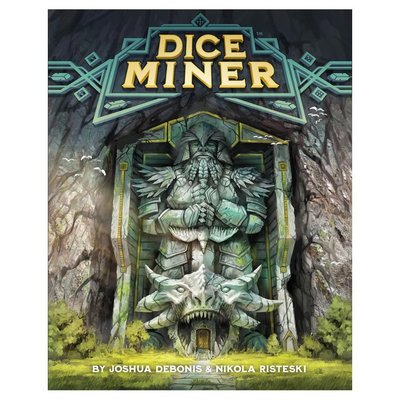
Um and I'm not sure if Citizens of the Earth does that, but I I I know some digital games do that. So, some honorable mentions before I get into my top 13. Uh some games that I could have probably made a top 17 here cuz they very closely didn't make the list. Dice Forge, Dice Throne, Sagrada, and Voyages of Marco Polo. Didn't quite make the top 13, but at number 13 I have Dice Miner. This game is still in my collection. I don't play it all that often, but whenever I play it, I'm delighted by it. Partially because there are so many custom dice in this game uh that you are drafting over three rounds from this mountain. But also partially because as you draft dice in this game, you permanently have those dice and you get to roll them at the beginning or at the at the beginning of the round end of each round. Um one of the two. Uh you are rolling all dice that you've accumulated so far. So, by the end by the beginning of the third round, you are rolling a giant handful of dice.
This is it feels really good. It has a strong sense of progression. And also, it just accentuates this idea that in dice-driven games I love the opportunity to frequently roll dice, even big handfuls of dice if the game pre- presents that opportunity. So, I really like that Dice Miner leans into this idea of how fun it is to roll a big handful of dice. That's Dice Miner at number 13. At number 12, we have the White Castle. Perhaps the one game on this list where you are actually rarely rolling the dice, but it is the actual system is so cleverly driven by dice that I think it's worth mentioning. It is a really good game uh that I enjoy and that at the beginning of each round you're going to roll all of these dice, red, black, and white dice. I think the expansion adds a few more dice.
Um and you're going to rank them in numbers uh with the highest number on the right, the lowest number on the left over here. And uh as you do that, you're doing that because if during the round you draft a high number, oh, I'm going to mess this up cuz I haven't played in a while, but uh the the higher the number, if you if you place a lower number, you have to pay the difference between the uh the the lower number and the actual cost of the action. So, there's going to be a cost associated with it. Oh, man, I'm going to forget it right now cuz there's a key thing about I don't want to get this wrong. I'm going to pause the video real quick cuz I want to say this correctly. Okay, I'm back having refreshed myself on the White Castle. So, when you place the when you choose the highest dice or when you when you place any die that is higher than the number you're placing it on, you gain the difference in coins.
When you place the a lower number, you have to pay the difference in coins. However, if you choose the lowest available die on one of these bridges, um you actually get to activate your lanterns. That's the key. So, there's this engine building thing that you're doing off your player mat where you're you have these engine you have these lantern cards and you get to activate them only if you place the uh if you choose and place the lowest number on one of the bridges. So, it really is a good choice there. Again, number parity in a pretty unique way where it's a little bit less about the number and more about its relative value to the other dice that are available. That is the White Castle at number 12. At number 11, we have Sushi Roll. Sushi Roll, another game. Many of these games you'll see have custom dice and Sushi Roll is full of these big, chunky, beautiful custom dice. You are uh rolling these dice in Sushi Roll and putting them on little conveyor belts.
This is a conveyor belt Sushi game and you're passing the conveyor belt belts around the table. You're choosing a die from your current conveyor belt and then passing all remaining dice to the next player. Um so, you're doing this over and over again until over I believe three rounds until you're out of the dice. You're just trying to score, similar to Sushi Go, based on the dice that you drafted. I really like this idea of dice drafting where you're where you can see which dice are coming to you from the next player. Um that's that it gives you some some nice information about what you might be receiving or what you are receiving in the near future based on what the opponent chooses. And the dice look great. I love the set collection. Sushi Roll is uh one of my favorites. At number 11, that's Sushi Roll. Okay, there aren't enough photos of Crits and Hits on on BoardGameGeek yet, but here is the cover of Crits and Hits.
Um I played the prototype on this. I'm I'm friends with the designer who also co-designed Origin Story with me, Pete. And I played this final version for the first time uh just the other day, so it's fresh on my mind. This is a trick-taking game where you have an array of dice that are pretty much the same dice that you would have for a Dungeons & Dragons role-playing game. They range from a D4 all the way up to a D20. Each player has those dice. And in this trick-taking game, the cards themselves don't have numbers. So, whenever I play a card into a trick, I get to choose one of the dice from behind my shield. They're unknown to the other players. I've rolled all the dice at the beginning of the round. I choose one of these dice that I've already rolled and I place it on the card to define its number. So, I could place a D4 with a two on it and it would be a two-value card. Or I could use my D20 then on which I rolled an 18. I put that 18 on the card to make it an 18. Uh generally you want the higher numbers, but there are some suits some lead suits that want you to have let you win with a lower number.
But the key here, I think the most fun thing about this game is that at the moment when you place your die on the card, if you want to, you can roll the die and use that outcome instead. And so if I'm going for the highest number and I have a D20, but I only rolled like a six on my D20, instead of using that six on the D20 as my my card number, I can roll that D20 and hope to get a higher number. And sometimes I do, and sometimes I somehow get a even lower number than before, and that still leads to a memorable moment in Crypts and Tricks. So you're kind of opting into randomness in this game if you so choose, but you can also just use the numbers that you know for sure you've already rolled on those dice. So that is Crypts and Tricks at number 10. At number nine, we have the first of several push your luck games. I think dice are really good for push your luck.
This is Meowlem, a game about cats in space. I'm wearing a bees in space shirt right now. Related, but not quite the same. So this is a game where you are boarding a ship with the other players to head in outer space, and you're trying to basically get as deep into space as possible. The captain of the ship or the current captain of the ship is rolling all dice that they have available. You're losing dice along the way. And they're choosing one set of numbers that they rolled to uh to advance to that many spaces along the track. So if I it if I'm on um I'm I'm on this space I'm on the eight space, and I roll the dice, I'm trying the game is saying telling me that I can only advance with a one or a three. And so I'm trying to either roll ones or threes, and then I advance that many spaces along forward along the track.
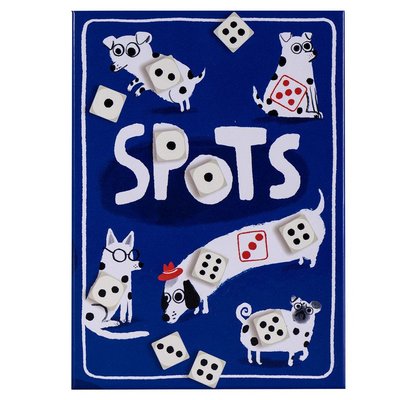
Uh but there are these other special spaces uh special dice numbers over here that persist. And so if you roll them and you use that Oh, and the key here is if if I use like one two ones here, I lose those dice. But I can use the numbers on this special icon and I don't have to lose the die. The thing is called like afterburners or something like that. So I like that there's a special icon on the die that you don't have to lose and you're all kind of pushing your luck together and really paying attention to the dice roll by roll in this game. There's a there's a lot of attention on the dice as you are competitively working together to get deeper and deeper into space in Mole Lem at number nine. Ooh. Uh at number eight, we have another push your luck game, Spots. I am endlessly delighted by Spots.
Uh this is a game about putting dice on dogs. Uh the dogs have spots on them. Here's an example right here. So I'm trying to complete this dog by putting a two die on it on him or her Bristles and also putting a one die on Bristles. Once I've done that, I can potentially use my turn to to complete Bristles, welcome them welcome them permanently into my home, and then Bristles is part of the family. It's a race to get six complete uh six complete dogs in my in my home. You're doing this through uh these action selection tiles. So on your turn you're choosing one of these tiles that's available. You can see currently there are two face up tiles. So I'm choosing either howl or roll over and each of them has instructions as to what you can do. Like one of them might say roll roll two dice. And then if you want, roll another die, uh but that die has to has to match one of the numbers that you've already rolled, something like that. So there's a push your luck element to many of the specific actions that you can choose in the game. It's a neat action selection system because you there's a certain amount of interaction in that. The actions that I The action that I choose is is is flipped over and is not available for the next player. In fact, it's not available until all but one of these tiles is flipped over and then they all get flipped face up again, making the actions available. But the idea of rolling these dice, pushing your pushing your luck, and placing them on these beautifully illustrated uh dogs, I just have a blast whenever I play uh Spots at number eight.
Here is Fantastic Factories, a game that I don't get to the table nearly as much as I want because I really do love the simultaneous play, the engine building, the dice rolling in this game. You are on your Well, I I say your your turn, but you are doing this simultaneously with all other players. You're rolling your dice and placing them either on these default actions to get resources or more cards, or you're using the resources you have to play cards, and many of the cards have ways to use your dice. Like this nuclear plant says, "If you place a six here, then you get a cube and you get an energy token." Um the cubes are are points. They're they're moving you towards the end of the game. So, uh there's there's lots of ways to kind of combo these things together, and I really like how the game shows you very clearly the economy of the game through the basic uh actions over here. So, like 1 6 equals 1 um one ore.
Uh 1 5 or 1 4 5 or 6 equals 1 ore. But over here I could use a six to gain a point and an energy, and I can't usually use uh sixes for energy. So, very clear economy over here, giving the designers lots of ways to make the cards better than the default uh actions in the in the game. It moves quickly partially because of the simultaneous play and partially because it just uh the game starts kind of slow, you don't have a lot of things to do, and it ramps up quickly as you're learning the actions, as you're learning the combinations that you can take. That is Fantastic Factories at number seven. At number six, we have The Castles of Burgundy. This was the ambassador's top choice. This game uses dice in so many clever ways. Like you are all players are rolling two dice. You have these two dice that you're rolling.
And you're using those dice for a variety of different things. Sometimes you're using them to gain tiles. Sometimes you're using them to place tiles. So if I have a tile and I want to place it on a four, I would use a four die to place it on a four slot on my mat. Um there some of them involve uh completing orders. Like there's a lot of different things that you can do with the dice on any given turn. A lot of flexibility, meaning that the numbers on the dice that you roll are meaningful, but they give you a lot of flexibility. And you there are ways to manipulate those dice as well if you need to. So I really like the dual use of the dice in general. Like overarching overall, I like that you can use the dice to gain more tiles or you're using those dice to place the tiles on your board. Even just about that by itself feels really good in this game in The Castles of Burgundy. So a very different game here. Going from a pretty heavy game to a very light game. I think Jingle Bell Roll has become my favorite push your luck game with dice at the very least.
It is so simple to play, so quick and easy to play, and it is a lot of fun to roll the dice in Jingle Bell Roll. On your turn, you're rolling a big handful of dice. You're rolling all seven dice. You can roll roll them up to three times on your turn, so you get two rerolls essentially. And you are placing them on this mat. I think this mat is actually a really clever component because you on your turn the next the previous player will pass this entire mat to you. And so instead of having to kind of remember what the different dice add up to, you just place them on this mat, locking them in as you roll them. So if I roll the gingerbread man and I want to use it instead of rerolling it, I put it on this mat and I can then see how many points I'm getting from the gingerbread man if I if I have it. Gingerbread man by itself doesn't equal anything, but if you have it with a glass of milk, then it's worth I believe this is four points, eight points, 12 points.
Um so I think that's a really clever that there's using of map to place the dice. Also, in a fun way, fun catch-up mechanism, this game has an instant win condition. So, if the the die that you the die face that you generally don't want to roll is a bell, bells don't give you much at all. They give you a small resource that you can spend, but they don't give you points. Um, but if you happen to roll seven bells, which is unlikely, but it does happen, then you just instantly win the game. Such a clever game, Jingle Bell Roll. I've really enjoyed it and look forward to playing it again. That's Jingle Bell Roll at number five. At number four, we have Space Base. Space Base is a game that I continually get back to the table. I really really like playing Space Base. Um, this is a game where one player is rolling uh, two dice. More if you're playing with expansions, but you're rolling two dice and all players get to use those dice. Even when it's not your turn, they're using those numbers to activate uh, different things on their on their one-to-six numerical chart. So, if a 12 is rolled, two sixes are rolled, I could activate my 12 slot here if I have an ability that activates when it's not my turn, or I could use the six and a six to activate my six slot twice. Um, so you have some choices there as to how you're going to actually use those dice.
The game lets you wonder, okay, should I build up something in every slot? Should I make every slot better? Should I focus on certain numbers? How do I uh, which types of cards do I slot into my board here to to make my my engine better? Do I focus on upgrading my currency um, or on on my income? Do I just focus on the race to points? All different things that you can do in Space Base with a wide variety of cards. Uh, yeah, just a delightful dice rolling game that I continually come back to. That's number four, Space Base. And number three is Rumble Nation, which I feel like I've talked about in a few videos lately. In this game, you're rolling three dice on your turn and then pairing two of those dice together. The two dice that you pair together equal the number on which you are placing uh the territory with territory on which you're placing uh units. Each territory is randomly numbered at the beginning of the game. And then the other die, the remaining die, is representative of how many units you're going to place there.
So, with a one or two, I'm going to place one unit. Three or four, two unit two units. Five or six, three units. I won't go into how this fully how this game works, but the the reason the numbers are so relevant is that at the end of the game in the in the last third of the game, you activate each territory starting with the lowest number and see who wins that territory. So, we start with a two and see who has the most units here. So, here yeah the yellow player has the most units in the two territory. So, the yellow player would win that territory. They would gain two points, which isn't a lot of points compared to like 12 points which you can get later in the game. However, because the yellow player won here, for every adjacent territory where yellow has presence, they have at least one unit, they for winning this low number territory, they get to add two units to each of those adjacent territories where they have at least one unit. So, they get stronger. They have this momentum that they carry forth from this low number victory. And then you move on to the number three, number four. So, the game is giving you the choice constantly. Do you go after lower numbers which you know are worth a fewer points, but that could lead to more momentum when you enter the war phase of the game? Or do you just focus on the higher numbers and kind of put a bunch of units there so no one else tries to get into the higher number territories and win the game that way. Uh you also there's a second place winner for each territory, which actually really does help with the scoring here. Really great game, Rumble Nation at number three.
At number two, we have Roll Player, a game about creating a D&D style character with a bunch of little dice mini games. So, um there's dice you there's these six characteristics that you're trying to build out in your character, each of which can hold three dice and you have goals about which color dice you want in certain slots, the sum of each row, you have goals there. You have abilities that you use in these row whenever you place a die there and you also have this little reputation track. I forgot forgot the exact name of this alignment track that you're manipulating throughout the game. As you select dice from a common row and use those dice to place them in your chart. Role player starts with players actually rolling a fair number of dice and deciding where exactly in their chart they want to put it to build maybe the first third of their character before playing the rest of the game.
Feels like you have a lot of I talked about this in in a video about endowed progress. You start off with a lot of progress in the in the game and then you build out from there. I love this game. I think it is even though it looks very thematic, it's actually fairly abstract game that does a good job of building in theme through specific cards, but I actually love the abstract nature of the game. I love this abstract puzzle of trying to figure out exactly how to put the dice and which dice to gain and which cards to buy to score more more points or gain certain abilities. Really really fantastic dice driven game, heavily dice driven game, Role Player at number two. [clears throat] And then finally number one I picked Creature Caravan. Another simultaneous game. A bunch of these games are actually simultaneous where you are moving a caravan of creatures across this broad land created by Ryan Laukat to try to get to the end.
Not necessarily in a race to get to the end, you just do get some extra points if you get to the end. And along the way you're you're stopping at different places along the way to gather resources to to to refresh different things and every turn you're rolling dice and then using those dice on either your core mat, a little bit similar to Fantastic Factories, maybe that's why I like this so much. You have a core mat of core ways to use the dice, but you can also hire crew and add creatures to your Caravan where you can use dice for more powerful abilities. Um so throughout the game you're getting more and more powerful very quickly really based on which creatures you're adding and how you're using the the dice that you have on those different creatures. Uh yeah it just I I love the sense of progression in it. I love the uh the the economy of the game and I love that it's simultaneous but you're still kind of still interacting with other players. It's very light interaction but there are some traps like these uh these amber zombies that you're fighting, the uh the trade track, and also just the different spaces that you're putting camps on. Um there's there's some mild interaction with other players so you're you're caring about what other players are doing but you are really focused on building your creatures and having them combo together which I have a ton of fun doing in Creature Caravan.
So I do have another video about this topic from 6 years ago so if you want to revisit Jamie from 6 years ago to see what he thought about his favorite dice driven games at the time you can see that perspective. I'll put that link in the video and I'd love to hear your thoughts. What is What is your favorite game that I've mentioned today and what is your favorite dice driven game in general and why do you love the presence of dice in that game? I look forward to hearing your thoughts in the comments below. Thanks.