10 Great Non-TCG Games for Magic Players
Games in This Video
18 games are featured in this video — they unlock as you watch.




Transcript
Hey, I'm Jamie from Stonemer Games and I have been playing board games and tabletop games and Magic the Gathering since as early as probably 1993, if not earlier for board games. But 1993 is when I started playing Magic and I played on and off for the last what is that 33 years. Um, and I still play Magic the Gathering. I still draft a few times a year. I don't play competitively, but I primarily play non-colctible, non-trading card games. And uh today I thought I would talk about games that Magic players might enjoy and Magic and other trading card game players might enjoy on the tabletop that aren't Magic the Gathering.
This was partially inspired because I was watching a video of an excellent YouTube channel called LC. It's El Ce. Elsie talks about a variety of trading card games and I noticed on the on the shelf behind Elsie that he had some Stonemire games. He had Wingspan back there, the whole Wingspan series. And I thought it was really neat that Elsie hadn't wasn't limiting himself even as someone who has a YouTube channel about trading card games that he didn't limit himself to only trading card games that he also found some board games, some tabletop games that resonated with him. And I thought that was really cool. So I thought, okay, I'll talk about this just in case it might be useful for those of you who are entrenched in trading card games. but maybe every now and then want something that isn't a trading card game to play. I also might talk a little bit about things that trading card games rarely do that are very common in the tabletop space. Um, and I also might we'll see I might dig into a little bit of the idea of why why does a game need to be a trading card game when you could just give players all those components and have them play around with them. Uh, we'll see if I dig into that. I know that's a that's a big topic. So, I asked Stonemire ambassadors [clears throat] if they had any picks for this topic, and here's a brief list of games that they picked more than once. Aon's End, Ascension, Ashes Reborn, Clank, Compile, Dice Throne, Dominion, Dune Imperium, Hero Realms, Mage Wars, Marvel Champions, Mystic Veil, Radlands, Res Arcana, Slay the Spire, Star Realms, Unmatched, The Veil of Eternity, and Vantage. And you might notice in some of
those games, some of those games that they are dueling games. They are head-to-head dueling games, but they don't involve a collectible or trading element to them. That is, when you buy the game, you get uh whatever you buy is exactly what you were getting. You're not getting a randomized set of things that might have different values or um or rarities. Um, so that is maybe the main differentiator here between these games that I'll discuss and trading card games and collectible card games. So I asked our panelist what they thought and the first one up is Aaron, our solo panelists. Uh, and this I think it was a unique pick because many trading card games cannot be played solo or they aren't at least out of the box playable solo. might be variants where you can do that, but it is very common in uh tabletop games, non-trading card games, that games have robust solo modes. And Aaron picked Star Trek Captain's Chair.
Aaron says this, "Quite possibly the best choice for a Magic the Gathering player. Star Trek Captain's Chair has six decks, each of which change how you approach the game, just like the different colors of Magic the Gathering. It has a ton of keywords to learn, just like Magic, and Magic players will finally know how their loved ones felt when they taught them how to play Magic the Gathering." because this is a very complex game. A brilliant game, Star Trek Captain's Chair. And I should note, even though this game is, I would say, is mo more often played solo than not. It you can play it two players at two players, too. It's a one to two player game. So, there is kind of a dueling way to play, but you can also play it solo, and a lot of people do. Next up on the list, we have a digital game from our from our digital game panelist. And there is a whole genre of collectible digital card games.
Garrett picked this as our digital gamer panelist. He picked up Legends of Rune Terra, which I've played a few times. Garrett says, "Lends of Rune Terra would be my recommendation for Magic players because it shares many of the things that make Magic compelling, including deck construction, resource management, combat decisions, and reactive spellplay. Its fast, slow, and burst spell system creates opportunities to respond to your opponents in ways that will feel familiar to anyone who enjoys Magic's instant speed interaction and the stack. While uh Legends of Rut Luentter streamlines Magic's more complex timing and priority rules, it retains that same satisfying and puzzly feel of constantly asking what can my opponent do in response to this. I guess I should note that I I as I recall, Legends of Rune Terra might have random packs that you unlock. So maybe this isn't a completely fair comparison in this video, which isn't about random boosters. But I totally see what Garrett is going for. I think this is a fun game to play if you enjoy Magic but maybe are looking for a different digital game to play. You can play Magic digitally as well. Legends of Rune Terra.
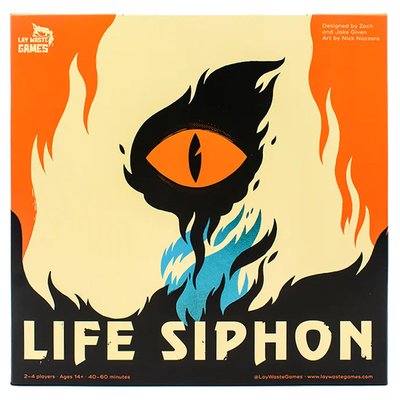
Last up for the panelist picks, we have Dylan, our heavy gamer. He picked it's a Wonderful World. Dylan says, "I found that if Magic players play something too similar to Magic, they just wish they were playing Magic instead." That's a really clever observation. They usually seem to love card drafting, and It's a Wonderful World is my favorite drafting game. It gives them some complex decisions as to what to do with their cards, and it just gives them a taste of accumulating resources to build things like in other board games they hopefully explore in the future. I might come back to this idea of drafting on my list. I'll I'll talk about it more then. So, before I get to my top 10, quick a few quick honorable mentions that are really close to making the list. This was actually a fairly difficult list to to make. Um, The Veil of Eternity, which is a a game about collecting cards and having different combos that go off on those cards. Resources play a big role in that game. Life Siphon, really clever game where your life is your resource. I think that's a clever hook.
Dice Throne, mentioned by Ambassadors earlier. This is a primarily a dueling game that involves rolling dice. Um, I didn't include I came very close to including this, but similar to what Dylan said, this might be almost too similar to Magic, and it leans heavily on the dice. Seasons, a really great game, I think, to play on board game arena. This is a game that includes a lot of combos, a lot of card card drafting, a lot of triggers to remember. Um, and last, Duel for Cardia. Probably the closest to making this list. It is another dueling game, but it's completely simultaneous. So, it's a game all about thinking when to play the cards that you have versus when you think the opponent is going to play the cards they have and you're playing each card simultaneously with the opponent. Really clever game, Jewel of Cardia.
Also, from Stillmire Games, these are the games that we make here. I think Wingspan is a great pick. I mentioned that in in LC's uh YouTube channel earlier. Wingspan leans into the idea of collecting, which I think is a major part of these trading card games and CCGs. you're collecting a bunch of birds each game and also combos. Wingspan has a bunch of combos, including something that I don't think many of these trading cards, well, they kind of do. It has order of operations combos where the order of activating one ability compared to the next ability really matters. Maybe magic has this in terms of the order in which you play the cards once they're in your tableau. I don't know. It's there a little bit. And then Duel of Melo is our dueling card game or dueling game set in the world of Scythe and Expeditions. see side up there. Um, Duel of Melo is a dueling game that's very as asymmetric. And I think that leans into something that Magic players really like. This idea that your faction, your deck, your cards are probably going to be very different than what the opponent is playing. And you're trying to to uh deal with that clash and race to be be the player who to knock out the other player. Um, so yeah, Dul of Melo is a decent comparison there.
Let's get to my top 10 list. At number 10, I have Dune Imperium. Dune Imperium is a deck building game, and deck building is a theme that will occur several times on this list. In Magic the Gathering, you deck build, you build your deck before you play the game. In deck building games, tabletop deck building games, you are building your deck as you play the game. So, there's no upfront work for you to do, which I think is part of the fun of competitive Magic. I get that. But, it is also nice to not have to do any prep work in advance, but to have that sense of what cards am I adding to my deck as I play. Junior Imperium does that really well. Also, one of the most popular ways to play Magic is the commander format where each player has a unique commander card and and also a full deck of cards. June Imperium has that. These this on the screen right now are all the different asymmetric characters in uh Dune Imperium Uprising. There even more in the original Dune Imperium uh when you combine the two. And so you have a character that's unique to your deck.
And I think Junior PM does a really clever way of combining their abilities. So you don't have to necessarily remember all the time these ongoing abilities. You have to remember some of them, but the uh the ability on the right is triggered when you play a certain card in your deck. And that card is the same in everyone's deck, but it just it says it has a signate ring on it and it says, "Okay, this is the moment when you trigger this signate ability," which I think is very very clever. So, if you like uh the deck building aspect of Magic, the deck construction aspect of Magic, and the commander format, I think Dune Imperium could be a great pick. There's also combat in this game. At number uh Millennium Blades, I don't have an image ready for this. So, Millennium Blades is a game that mimics the idea of of having a collectible card game. Even though this is not a collectible card game, it is the game about the act of collecting and playing in tournaments in collectible card game in a world where there is a collectible card game that is fictional in this world. So in Millennium Blades in this world is like the the most popular card game and everyone plays it. And in the game itself, you are opening packs, but they aren't really packs. They're the these cards look like they are packs, but they are not. They have something on the back of them that has different different cards that are in those packs. So it really it simulates the whole um the the scene the meta of a trading card game that of Magic the Gathering has real-time trading. It has like mini clashes, mini tournaments in it. It is a really really clever game. It it's a lot
to like set up and shuffle um and get and prepare and then clean up at the end of the game. But it is just impressive how much they encapsulate the feeling of being entrenched in a trading card game without actually playing a trading card game. That's Millennium Blades at number nine. At number eight, we have Either Stone. Fairly recent game. This is a one to four player game. I've played it headtohead and it works really really well head-to-head where uh you have you you do a draft. So, it's one of these games that has a draft. I'll talk about drafting again. I'll talk about that more in a moment. And number seven, but either so has a card draft at the beginning where you were selecting seven cards. I believe it's seven that are cards that you can play for that game. And that's those are the only cards that you have. There's no so you are constructing like a hand, but you're not really constructing a deck. They're not random. And you are choosing when to play those cards and which cards to draft. And they all have different abilities. There's a ton of combos in this game. So if you like the combos of Magic the Gathering, I think you'll really like the combos on Etherstone.
Also, uniquely in this game, uh, one thing that I really like is while you can mess with your opponent, you can have your opponent discard cards and resources or lose um something that's kind of similar to life. But in addition to that, and this is something that Magic doesn't do, and I wonder almost why it doesn't do this all that much, there is a third entity that you can um that you can fight in this game. So, you're not really fighting. You're messing with the opponent, but you aren't fighting them, but you are fighting these monsters that are on the table. And there's still tension between you and the opponent because you want to take out the monsters. Uh, it it gives you a it's good for you for your game if you take out these monsters. Um, but I really like that the combat level, like fighting engagement in the game happens not with your opponent, but with a a third entity on the table that all players want have tension in terms of how they how quickly they are are able to dispatch those monsters. I think that's a really neat concept in either stone.
At number seven, okay, now I'm going to talk about drafting. Finally, this is Seven Wonders. Seven Wonders is almost purely a drafting game. You are you're given a hand of random cards and you select one of those cards. You put it into play or you maybe you discard it or help build your wonder, but generally you're putting those cards into play to build a tableau of cards like you do in Magic the Gathering. Um and you pass the rest of the cards to the next player and they draw a card. They take one of those cards and so on. You do this over three eras. So the whole game is a drafting game as opposed to a magic draft where you draft cards, then you build a deck with those cards, then you play the game and during the game is when you're building the tableau. This kind of cuts to the chase. It does the two one of the two most fun things I think in Magic of drafting and actually building a tableau. They happen at the same time in seven wonders. And so I think that's great for Magic players. There's also combat. You're you're you're fighting against your neighbors on your left and your right once per round. Uh, but the thing I wanted to mention about drafting here is I heard the other day I heard someone talking I think it was distraction makers maybe or or team covenant talking about how um one of the reasons that there that trading card games need to have random booster packs is for the draft format. But I would argue that tabletop games including prime as seven wonders and a variety of other games have shown that you can have drafting in a game without random boosters. It's the randomization, the shuffling of the cards that gives you that random can of cards that feels so good. It doesn't matter what that what you open is random. It matters what you actually receive in your hand that fe
that it that that is randomized from a shared deck of cards. So, if you love the drafting aspect of Magic, but you don't want to pay for to play a draft every time you play, you can just buy Seven Wonders. You can buy three chapters. You can buy the next game on this list. There are a lot of great drafting games. Sushi Go, you can buy that. You can buy a lot of great drafting games and play them over and over again and get that feeling of a fresh, freshly open pack via the random cards that end up in your hand and then the random cards that the next player passes you and so on. That is seven wonders at number seven. At number six, we have another drafting game. I think this is the last drafting game on the list. This is Blood Rage. Now, Blood Rage does have something that isn't in Magic at all. Um, and some of these games do. Dun impirium has worker placement. That isn't in magic at all. I mentioned either stone has you fighting against the third entity. That isn't in magic. But I think it's okay like Dylan said that these games aren't exactly magic. They do have some other element.
And this in this game there is a map on the table. Now I actually like when I play Magic the Gathering that there isn't really a spatial element to the game. Um I'm not a tactical gamer, but uh I play that like a spatial tactical war gamer type. There is a tactical map in this game, but it's basically uh locations. The the spatial element of locations is more to show your the other players what you are attacking in any in any given turn. And there's a limited space to the number of units that can be in any region on this map. That's the the main reason for there being a map in this game. But the reason I put blood rage so high on this list is not only are you directly fighting against your opponents, but also you are drafting every round. are drafting cards that you will use for the rest of the round. Some of them involve combat. Some of them involve you getting asymmetric monsters.
Some of them involve you leveling up your abilities, like getting better at the the core actions in the game. And I think one of the really cool things here, and this ties into Magic as well, is that in Magic the Gathering, generally when you have two creatures fighting um or in combat, you you want your creature to win. You want the other creature to go to the opponent's graveyard. But in Magic, that isn't always the case. Sometimes you actually want your creature to go to the graveyard and that might actually dissuade the opponent from attacking and that is kind of the case in Blood Rage. Sometimes you want to win combat, but sometimes you have you've drafted cards that actually want you to lose combat. So I think that sort of head game in in in Blood Rage combined with the draft element is really nice for people who love Magic the Gathering. That's Blood Rage number six. At number five, we have Challengers. Challengers, I think, is a really interesting take on it's not drafting. It's about it's about deck construction and deck building where and head-to-head matchups in a game that can actually scale up to eight players. So, in challengers, you each player starts with the exact same hand of cards or deck of cards. But right away, you are allowed to gain uh to draw some cards from a from one deck. that deck actually changes over the course of the game, the deck that you can draw from, and you get to uh put some of those cards in your deck if you want and remove some other cards. This happens fully simultaneously with all other players and and then the game randomly pairs you up with another player and you do a quick duel with
them. It's largely an auto battle. It's really really fast. You're not doing a lot. You're mostly just revealing a card and having that card plus any previous cards add up to a higher number than your current topmost card. Um, you get some points if you win. You get fame for like pleasing the crowd. And then you do it again. And then you go back to the the deck of cards. You add some more cards to your deck. You take out some cards and you do another head clash with another player. In a two-player game, you would just be going against the same player every time. I think there is an like an automatic opponent that you can sometimes go against in like a in an odd number game. But the best way to play this, I think, is with a full eight players where you're going against every player and then there's a final matchup at the end. So, it captures the feel of a Magic tournament, but in about 30 minutes, like the entire tournament takes place in about 30 minutes with a ton of deck construction decisions happening throughout the process and um and a ton of head-to-head matchups that are happening in this auto battler, semi-auto battler format. I think this is a fantastic game for Magic players who love the idea of building a deck and going to a tournament to play that, but they don't have a weekend to do that.
Uh, instead you can do this. You can play challengers in 30 minutes with eight players, which happens to be, you know, one of the best numbers for a Magic Draft. Anyway, that is Challengers at number five. At number four, this is Good Neck. This is probably the game that is the closest to Magic the Gathering. Um, it it feels a lot like magic in that you have an an asymmetric deck of cards representing a certain faction and you are crafting that deck of cards as you wish. Some with cards from that faction, some with neutral cards. And then you're going headto-head with the opponent in this case trying to besiege. Actually, this is a four-player game. Um, let's see if I can find a two-player game. You're trying to besiege their uh their fortress. This is my fortress here. So that I at a certain point I need to draw a card from that fortress and I cannot do so. So this is a game about kind of milling your opponent. It does have a spatial element to it which magic doesn't have but I think it works well here and this isn't a collectible game like in every way it looks like a collectible game but in this game you aren't randomly opening opening anything. You are choosing the faction that you want you're to buy and then to to play every time you play this game.
Um, it also has some really cool mechanisms in that you are kind of stacking cards on top of one another so that if the topmost card dies, then the card beneath it is still alive and still has made maybe progression across the board closer to the opponent's fortress. So, uh, this is probably the closest to Magic. So, if you want a game that is very close to Magic but doesn't have the collectible randomization element, I think GoodDack is a great pick for that. At number three is Misborn, the deck building game. Uh, I love this game. I think this game is so clever on multiple levels. It is a deck building game, so you're kind of building your deck as you play. Um, and one thing that this does that that many deck building games don't do, and I think this one does it the best of them, is that you are fighting against your opponents. And I think it does it in a really, really clever way.
So deck building also strong sense of progression which I think magic has but with in magic oftent times the things that you that die kind of lose that sense of progression. There are also multiple ways to win in this game like Magic the Gathering has multiple ways to win. You can win in this game by eliminating all your opponents by completing three missions or there's one special card in the game that you can play if you find it uh to to win the game if you play that card. Also has a ton of combos in terms of the cards that you have. But the the main thing that I think is so clever about the combat is that when I uh when if I have the target on me, there's a target that gets passed around the table. When I have the target and I deal uh damage, so if I play Iron Pull here and I deal two damage, I deal two damage to every other player. It isn't just one player, every other player. And as long as I have the target and anyone else deals damage, that damage goes to me. uh it either goes to some cards that I haven't in play or it goes to me. I think the system it scales beautifully uh to other higher player counts to to two, three, four players because you're always kind of distributing that damage and choosing when you want to keep that target so you can deal damage to everyone versus when you want to give that target up to another player so that uh so that you don't die, so that you aren't eliminated. I think that is so clever.
it. In fact, I I like it more than the commander version of Magic uh where you're choosing who to attack or who who to deal damage to. I think this system I honestly I think it works better. I prefer this to that to that commander system. That is Misborn the deck building game at number three. At number two, so I'm going to end with two dueling games. Um this is Star Wars the deck building game. One of my favorite dueling games, one of my favorite deck building games. Uh, and I'll mention some of the clever things that I think it does that are a little bit different than magic because it is a head-to-head duel where you're trying to destroy three of your opponent's bases. Essentially, you're reducing your opponent's life to zero, but instead it is the opponent's base's life that you're return that you're uh reducing to zero. Um, also has a ton of combos in the game and has that deck building element where you're crafting your de game as you play. So the the two things I wanted to highlight briefly, one this idea of life and bases in the game versus Magic the Gathering's element of your life is is you as the as spellcaster. Um, the reason I like life being associated with the bases in this game is that it means when your first base dies, so when this base has 14 damage on it, you actually get to choose any one of your other bases and put that into play and uh have it have fresh life on it. And oftentimes it has an instant ability
when it comes into play or an ongoing ability. So, it gives you a little bit of a feel of of commander magic where you have an asymmetric character, but you get three of them over the course of the game. You have your starting one and you have two more that are coming into play and you get to choose it at that moment. You don't have to choose it before the game. You're choosing it based on the circumstances of the game at that moment. You get to pull that into play and your life is then associated with that base. It is such a fun decision in the game that really it actually it turns a bad moment of you being reduced to zero life into a good moment where you're like, well, I get to choose my base. I am going to be really powerful for the next few turns. The other thing this game does is that it has a shared uh like it's kind of like an ongoing draft in a way. Uh but it has a shared pool of cards that are one of the primary ways that you interact with the opponent or one of the ways that you interact with the opponent. Um some of the cards are facing me, some of the cards are facing you based on our faction in Star Wars coding game. Uh this is the card row that you can buy from that one of the players can buy from. So I can buy like ad general veers. I can buy him for $4. But on your turn, if General Beers is in this combat row, in this galaxy row, you can uh pay uh combat to remove General Beers.
That's why this four is facing you. You can remove General Beers from the combat row, preventing me from ever even seeing General Beers. Uh it works thematically. It works in terms of interaction. And uh and you get a benefit, too. You get a benefit when you do that. I think that's really really clever in this game that there is interaction that happens that isn't just destroying stuff that your opponents have made rather it's preventing them from getting the cards that they might need but you can't you have to actually have the resources you have to expend resources to do that in this game brilliant game Star Wars deck building game I highly recommend it if you enjoy Magic the Gathering I think I think you will really really enjoy this game but last it was very close between these two but my top pick was Mindbug again this is a dueling game uh takes about five minutes to play. So, it's really really snappy. This is the type of game that you might play like in between games of Magic or um I don't know it I I like the game like Even Magic aside, but I can see if you go to a Magic tournament and you just like need a little bit of a brain break, you could play Mindbug. Uh this game has the donkey space of of Magic in in a really really clever way. And by that I mean trying to predict what your opponent wants or might do uh is an ongoing question in this game because of the hook of the game, the mind bug itself.
And I should mention also one other connection here is that Richard Garfield was involved in the design and development of this game. There are some other designers too that did an incredible job with this game, but the the original creator of Magic was involved in Mindbug. So there's no resources to play cards in Mindbug. All you're doing on your turn is either playing a card. Doesn't have any cost. You just put it into play from your hand or you are attacking with one card. Uh that's that's all you're doing on a turn of Mindbunk. So it's really really snappy turns also really really snappy gameplay. But the core hook and this is what it makes it was a both a connection to Magic but also distinctly different is that you have two mindbug cards. Every player has those. And what they do is that uh if you play a card and I decide, oh, I I really want that card. That card is really really good. I can play a mine bug and that card goes to my side of the play of play instead of your side. And then that it goes back to being your turn since I've essentially stolen your turn there.
Magic has some things like this game where you get to take an extra turn where you clone an opponent's uh a spell or or creature. There are various ways like copy spells like that. This is built into the core game. Every game you have these two mind bugs. You were deciding when to use them. When is the best time for me to steal this creature? And what else does the opponent have in hand? Like why did they play that card? Did they want me to steal it so they could play another card that I can no longer steal because I only have two mind bugs? Or did they actually want me to take this card or not take this card? There there's all this like donkey space head games that happen in mind game in mind bug all in the span of like a fivem minutee game. Uh and there's I guess the equivalent of life in this game. Each player has three life you can gain more of it. But I rather than having like a a big chunk of 20 life, you only have three. So it's very very limited in this game. I think Mindbug is fantastic. I I I do I while it is fairly similar to Magic the Gathering in some aspects, it stream it like streamlines and condenses Magic into um a non-collectible game that feels different every time you play and gives you the mind games, the head games that Magic uh I think does so well. That is Mindbug at number one. I'd love to hear your thoughts about this. I I genuinely would. If you were into a trading card game or collectible card game or at one point in your life you were into one and then you started playing tabletop games, I'd love to hear the table tiptop games that scratched that itch for you um while not having those random elements um that that often
requires you if you want to play competitively to buy a bunch of packs, buy a bunch of cards uh that these trading card games do. Um yeah, I'd love to hear about that in the comments. And I guess it sounds like I did not go into too much this idea of like why do you have randomness in a in a trading card game. I think part of it is the collectibility that some cards are more rare than others. That's neat to have. I but uh every time that I have thought about maybe like dipping my toes into the collectible space, I've wondered why don't I just put all the these cards in the box? Why do I just give players these these cards or these components for them to play around with rather than make randomizing it which creates like then the only way that they get everything is via a secondary market where they can actually get everything.
So I always ask myself that question um when I'm thinking about games. Not that I think often about making a collectible card game, but I think that's a valid question to ask if you're thinking about making a collectible card game or trading card game. Ask yourself what is the benefit to players? How am I serving players by making this random um or offering random booster packs versus just giving them all the tools that they need and letting them play the game? Um so I'd love to hear your thoughts about that. I I know that's being a little bit critical, but I think it's more of a question to ask than than a criticism, but I would love to hear your thoughts. If you are into trading card games or collectible card games, how do you feel the random elements of those games serve you as a player? And I know maybe there are other answers about how they serve publishers. Publishers can make a lot of money from trading card games. I don't care about that. I care about offering a fun, joyous experience at the table for players. So, how do you feel that the random elements in those games, the random booster packs in trading card games do that for players? And again, what is your favorite non-collectible, non-trading card game that you enjoy that you think Magic the Gathering players and other trading card game players might also enjoy? Let me know in the comments. Thanks.