


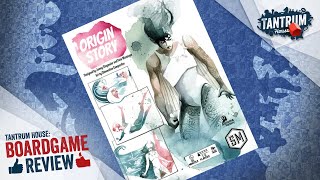
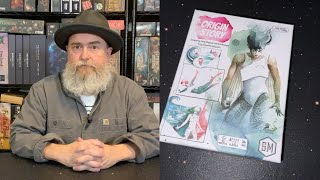









Origin Story box art

Origin Story

Game ID: GID0402242
Game Info
Year
2025
Players
1-5
Age
14+
Playtime
45 min
Collection
Ratings
Creator Score
Mechanic profile
Percentile rank vs. all games
Vibe profile
How this game feels to play
Description
No description available.
Ask a Rules Question
All mentions
Browse transcript mentions, sentiments, pros/cons, mechanics, topics, quotes, and references.
Total mentions: 120
This page: 50
Sentiment: pos 37 · mix 5 · neu 5 · neg 1
Mentions per page
Showing 51–100 of 120
Video oi1-Opi2PFg Top List at 23:35 sentiment: positive
video_pk 78484 · mention_pk 191167
Origin Story video thumbnail
Click to watch at 23:35 · YouTube ↗
Overall sentiment (raw)
positive
Pros
  • Unique superhero-themed trick-taking game
  • Chaotic and fun gameplay
  • Exciting superpowers and abilities
Cons
  • Not for competitive trick-taking players
  • Can be considered chaotic
Thematic elements
  • creating a superhero origin story
  • superhero world
Comparison games
  • Skull King
Mechanics (from transcript analysis)
  • Card Drafting (implied) — You get three powers to choose from, you add it.
  • Trick-Taking — This is a superhero-themed trick-taking game.
  • Variable player powers — And all these powers let you do crazy things that trigger at different times.
Video topics + discussion points
No key topics recorded for this video.
Quotes (from this video)
  • Galactic Cruise continues to be a game I play it on BGA now. It's I'm almost constantly in a game or two of this game on BGA. Like I don't know that I'm going to get tired of playing it primarily because of of the interesting puzzle that it gives you every time you play.
  • Shallow Sea has that really, really well because you're able to accomplish something, and by accomplishing something, it gives you this little shell resource, and you could spend that immediately to accomplish another thing, gives you another shell, and you can just have these massive turns
  • The presentation is amazing. The game looks beautiful.
References (from this video)
No references stored for this video.
Video rmfm7PL80R0 Discussion at 0:58 sentiment: positive
video_pk 72343 · mention_pk 170560
Origin Story video thumbnail
Click to watch at 0:58 · YouTube ↗
Overall sentiment (raw)
positive
Pros
  • Camping friendly
  • Loved art and theme
  • Will make it on every trip this year
Cons
none
Thematic elements
Comparison games
none
Mechanics (from transcript analysis)
  • Trick-Taking — The host states, 'We love trick-taking games.'
Video topics + discussion points
No key topics recorded for this video.
Quotes (from this video)
  • Um I always bring a green tote of board games, like in one of those All Play brand ones.
  • Um I always bring a green tote of board games, like in one of those All Play brand ones. Um I got it at a convention. I got it at Geekway, actually. And so it is limited space, and you always want the games you bring, or we do, to be camping friendly, chill vibes, um not too hard, like wind. You don't want to disrupt it. All that.
  • So, the first one, size is a factor, but also Jamie and I really love it, is Origin Story.
  • So, that's the second Stonemaier game we're going to bring on every camping trip this year.
  • Um this is another one we're excited to show to our camping friends, because like a game Game of Vantage is whatever you want it to be.
  • So, Vantage, Rolling Realms, and Origin Story are going to be coming every camping trip.
  • So, I like to commit to bringing the same set of games each year, not as like a hard rule, but it's just fun to be like, 'These are the ones that make the cut this year. This is the camping vibe for the year.'
References (from this video)
No references stored for this video.
Video ntle4nH8QOg Rules Teach at 0:00 sentiment: positive
video_pk 67812 · mention_pk 164079
Origin Story video thumbnail
Click to watch at 0:00 · YouTube ↗
Overall sentiment (raw)
positive
Pros
  • Solo mode plays well.
  • Can be challenging.
  • Can be pretty swingy, but it's also fun.
Cons
  • Can be pretty swingy.
Thematic elements
  • superhero
  • origin story
Comparison games
none
Mechanics (from transcript analysis)
  • Hand Management — Players manage their hand of cards, deciding which to play and which to discard or use for abilities.
  • Resource Management — Stamina is a resource used to activate card abilities.
  • Set Collection — Winning specific numbers of tricks or collecting certain card combinations can lead to bonus victory points.
  • Trick-Taking — Players play cards to win tricks, with a system for following suit and using trump cards.
  • Variable player powers — Story cards grant unique abilities that alter gameplay or scoring.
Video topics + discussion points
No key topics recorded for this video.
Quotes (from this video)
  • And if you like the content on the OneTop Co-op Shop, consider supporting us through Patreon.
  • The basic idea of Origin Story is it is a trick-taking game, a competitive trick-taking game for two to five players.
  • You play five rounds in the game. each round consisting of eight tricks.
  • You're either choosing to be a hero where you gain one victory point per trick you win or a villain where you get four victory points if you take zero tricks.
  • But the whole superhero theme that's added on to this and the thing that changes things up quite a bit is that you're going to be getting these story cards that give you special powers that let you change up how the trick taking works or give you bonus victory points for doing certain things.
  • In the solo mode, you're going against two bots called Vanguardians.
  • So I'm playing on difficulty three out of five. Maybe a little bit too high because I did barely beat them on some lower difficulties.
  • The game's pretty straightforward, especially if you know trick takers.
  • And I got four for getting zero tricks and two more for brainwash. So, I'm back to six.
  • The solo mode plays well. It can be challenging uh and it can be pretty swingy, but it's also fun.
References (from this video)
No references stored for this video.
Video ip0Hdet7N7U Review at 0:02 sentiment: mixed
video_pk 67811 · mention_pk 164078
Origin Story video thumbnail
Click to watch at 0:02 · YouTube ↗
Overall sentiment (raw)
mixed
Pros
  • Adds variety through hero mats, event cards, and superhero cards.
  • Hero/villain choice and zero-trick scoring option changes gameplay and feel of drawing a bad hand.
  • Solo mode is generally a pro, with bots that are not entirely predictable.
  • The story cards offer a unique element with many variations and combo possibilities.
Cons
  • Extra elements like hero mats, event cards, and superhero cards are not used that often and don't feel game-defining.
  • Villain choice can feel swingy, too difficult, and not rewarding enough compared to other games.
  • Solo mode can be swingy, with random options sometimes being 'super dumb' or providing the exact cards needed to win.
  • Eight-card hands make trick-taking less impactful compared to games with larger hands.
  • Story cards can feel horribly misbalanced, leading to frustrating chaos and imbalanced powers.
Thematic elements
  • Becoming a superhero or villain
  • Superhero origin story
Comparison games
  • Spades
  • Hearts
Mechanics (from transcript analysis)
  • Drafting — Players draw three story cards each round and pick one.
  • Set Collection — Superhero cards are drawn at the beginning of the game and picked at the end, providing something to work towards.
  • Trick-Taking — Regular trick-taking gameplay where players play eight tricks with an eight-card hand, trying to get as many tricks as possible for victory points, or aiming for zero tricks to turn into a villain.
  • Variable player powers — Story cards provide special powers to break basic trick-taking gameplay, offering unique abilities each round.
Video topics + discussion points
No key topics recorded for this video.
Quotes (from this video)
  • Origin Story is a competitive trick-T game for two to five players with a solo mode.
  • My number five point, the least important to know of the five, but still important or I wouldn't mention it are some of the extra elements in the game.
  • My number four point is a mix for my taste, and that's how the game is scored and the hero or villain choice each round.
  • My number three point focuses on the solo mode by the Automa Factory. And this is generally a pro.
  • Speaking of the trick taking, that's my number two, and it's actually a mix for my taste.
  • My number one point is one final mix, and that's focus on the story cards in the game.
  • So overall, if you want to play a trick taker with a really smooth playing solo mode that has tons of combo possibilities and lots of variety playtoplay, Origin Story might be for you.
  • But on the other hand, if chaos and imbalanced powers and sometimes feeling like you're out of the game pretty early sound frustrating, you might want to avoid this one.
References (from this video)
No references stored for this video.
Video gN0iNUxTrjU Rules Teach at 0:02 sentiment: positive
video_pk 67818 · mention_pk 164084
Origin Story video thumbnail
Click to watch at 0:02 · YouTube ↗
Overall sentiment (raw)
positive
Pros
  • Excellent blend of comic book theme and trick-taking mechanics.
  • Innovative two-player mode with sidekicks adds significant depth.
  • High replayability due to a variety of powers, events, and hero reveals.
  • Satisfying character progression and backstory development.
  • Stunning and unique watercolor art style.
  • Strong thematic integration of powers and narrative.
  • Solo mode is well-regarded.
Cons
  • The aggressive, confrontational nature of trick-taking is amplified, making it less suitable for players who dislike direct player-vs-player conflict.
  • The visual style, while beautiful, might not be perceived as traditional comic book art by some.
Thematic elements
  • Superhero origin stories
  • Superhero world
  • Players develop their hero's origin story over five rounds of trick-taking.
Comparison games
  • Marvel Champions
  • Sentinels of the Multiverse
Mechanics (from transcript analysis)
  • end-of-round scoring — Players score points based on their alignment (hero or villain) and the number of tricks won.
  • Events — A single event card is drawn mid-game, which significantly alters the rules or game state for the remainder of the playthrough.
  • Hand Management — Players manage their hands of cards, deciding which to play and when, and can sometimes discard and draw new cards to improve their hand.
  • Set Collection — Some powers involve collecting cards of specific suits or types to gain points or trigger effects.
  • Trick-Taking — The core gameplay involves taking tricks, with standard rules for following suit and trump suits. Special powers and events modify this core mechanism.
  • two-player variant — The game emulates a four-player game in a two-player setup, where each player controls a hero and a sidekick, adding complexity and strategic depth.
  • Variable player powers — Players choose and develop unique powers throughout the game, which significantly alter gameplay and strategy.
Video topics + discussion points
No key topics recorded for this video.
Quotes (from this video)
  • If you love comic books and you love trick- games, it's like the folks at Stonemire Games have literally parted the skies and delivered to you the perfect game.
  • This delivers on both of those in every way imaginable. a really solid trick- taking game and some really wonderful innovations on the form.
  • The only reason I would say this is not worth checking out is if you vehemently despise superheroes and want nothing to do with them, or if you fundamentally don't like tricking.
  • The aggressive, in-your-face, confrontational thing. Um, you know, and while Jen and I were really enjoying this and all the satisfaction of leveling up our characters and trying to score points, the first time Jen went super villain and I knew, oh, okay, I have to make sure she wins once and just once so she loses everything she put into that. That's when I realized, yep, like any trick taker, this isn't for me because all my thought is bent on denying you and everybody else around the table what you work so hard to achieve.
  • It's more interactive if such a thing is possible.
  • This game throws so much extra stuff into the mix that it will constantly be making you re-evaluate what a trick taker is.
References (from this video)
No references stored for this video.
Video 9Fodej0bVkw Review at 0:05 sentiment: positive
video_pk 67822 · mention_pk 164088
Origin Story video thumbnail
Click to watch at 0:05 · YouTube ↗
Overall sentiment (raw)
positive
Pros
  • The story cards offer tons of variability and allow players to shape their gameplay.
  • Synergizing story cards can make players feel increasingly powerful.
  • The alignment choice each round adds interesting strategy.
  • The integrated player aid on the back of superhero cards is a clever design choice.
  • Event cards add significant changes to a round, providing replayability.
  • The game is enjoyable at higher player counts (3-5).
Cons
  • It can be difficult to keep track of all player powers and abilities, even one's own.
  • The art style, particularly on the box, does not strongly convey the superhero theme.
  • Players who prefer a lot of control and planning might get frustrated by the randomness.
  • Assembling the score trackers can be tricky and lead to errors.
  • The two-player mechanism was not considered worthwhile by one reviewer.
Thematic elements
  • Superhero
Comparison games
none
Mechanics (from transcript analysis)
  • Engine Building — Players activate story cards and powers on their player boards using stamina, building up their abilities over rounds.
  • Hand Management — Players manage a hand of numbered cards and choose story cards to play.
  • Role selection — Players choose to be either a hero or a villain each round, which affects scoring.
  • Set Collection — Collecting certain combinations of cards or activating specific powers could be seen as a form of set collection.
  • Trick-Taking — The core gameplay involves playing cards to win tricks, with a lead suit and trump suit.
  • Variable player powers — Story cards and superhero cards grant unique powers that affect gameplay.
Video topics + discussion points
No key topics recorded for this video.
Quotes (from this video)
  • Origin Story is an engine building trick-T game for one to five players that is designed by Jamie Stegmire and Pete Whistinger.
  • Heroes will get a victory point for each trick they win during the round, and villains will get four victory points if they manage to earn zero tricks that round.
  • It can be a little chaotic and a little bit for people to really wrap their minds around, especially if they're not familiar with trick-taking games already.
  • The art style doesn't work for the game play. It's not that I don't like the art style. I think it's that the art style with what I'm expecting in the game. I want more comic book art in that.
  • The story cards, the special powers that you're going to be playing down onto your board. There are tons of them.
  • So, in conclusion, we really haven't talked about player count. We actually have played this at two, three, four, and five player count.
  • This one I would bring out when I have people who are experienced with trick taking so that they wouldn't get super overwhelmed by all of the powers and the changes to the game from round to round.
References (from this video)
No references stored for this video.
Video hBj0UxIQ9eA Review at 0:11 sentiment: positive
video_pk 67804 · mention_pk 164071
Origin Story video thumbnail
Click to watch at 0:11 · YouTube ↗
Overall sentiment (raw)
positive
Pros
  • The story cards are the secret sauce and make the game unique.
  • The hero/villain alignment adds an interesting layer of decision-making.
  • Deciding which story cards to charge after seeing your hand adds tactical depth.
  • High replayability due to different card combinations and strategies.
  • The two-player variant is thoroughly enjoyed, even more than other player counts.
  • The game has a great arc, becoming more complex and offering more options as it progresses.
Cons
  • It can be hard to keep track of all active abilities with higher player counts, leading to chaos.
  • Some characters and abilities feel imbalanced or not created equal.
  • The scoring for winning zero tricks should be scaled based on player count.
  • Some story cards are better suited for specific player counts.
  • The art on normal playing cards could have more variety.
Thematic elements
  • superhero development
Comparison games
none
Mechanics (from transcript analysis)
  • Card Drafting — One event, 'team selection', forces players to draft cards for the round.
  • Engine Building — Players develop their character by choosing and charging story cards that provide ongoing abilities.
  • secret goals — Players secretly choose an alignment (hero or villain) and a superhero that grant points based on different conditions.
  • Tableau Building — Players develop their character by choosing and charging story cards.
  • Trick-Taking — The core of the game is trick-taking with familiar lead, follow, and trump rules.
  • Variable player powers — Each character starts with a special ability, and story cards grant additional powers.
Video topics + discussion points
No key topics recorded for this video.
Quotes (from this video)
  • Hello my friends. Today we are going to be characters going through a story and developing ourselves into some superhero powers.
  • The story cards are the secret sauce. This is really what makes the game what it is in my opinion a good game.
  • Quite honestly, this two-player version of this game is my favorite version of this game because of those reasons. It's even more thinky tricktaking and uh it's less chaotic. It's honestly two-player is my favorite.
  • It can be really hard to keep track of all the active abilities.
  • Some of these do not feel like they are all created equal.
References (from this video)
No references stored for this video.
Video Q_k5nVg35AA Review at 0:04 sentiment: positive
video_pk 67767 · mention_pk 164031
Origin Story video thumbnail
Click to watch at 0:04 · YouTube ↗
Overall sentiment (raw)
positive
Pros
  • Adds interesting twists, turns, and chaos to trick-taking.
  • Building unique power sets is a favorite and unique part of the game.
  • The hero/villain choice adds an interesting dynamic.
  • The sidekick mechanic in a two-player game adds information and makes it feel like a four-player game.
  • The way you can build combos with abilities is really unique.
  • Interesting event cards can significantly change gameplay.
  • Powers can be very wild and create interesting combos.
  • Varied powers and event cards make for a different game each time.
Cons
  • Going villain can be tricky and hard to achieve.
  • Misplaying cards can be costly.
  • Some powers are hard to execute (e.g., winning all cards of a specific suit).
Thematic elements
  • building your own origin story
Comparison games
none
Mechanics (from transcript analysis)
  • bluffing/deduction — The hero/villain choice and imperfect information encourage deduction about opponents' hands and intentions.
  • Card Drafting — Players choose superpower cards to add to their abilities.
  • event cards — A special event occurs mid-game that affects all players.
  • Hand Management — Players manage their hands of cards, including drawing and discarding.
  • hand-building — Players add superpowers to their player board, creating a unique power set.
  • Set Collection — Some powers involve collecting cards of a specific suit or value.
  • sidekicks — In a two-player game, sidekicks act as dummy hands that can participate in tricks.
  • Stamina resource — Stamina is used to charge and activate superhero powers.
  • Trick-Taking — The core mechanic of the game involves playing cards to win tricks.
  • Variable player powers — Players select and power up unique superhero abilities that alter gameplay.
Video topics + discussion points
No key topics recorded for this video.
Quotes (from this video)
  • If you're a tricktaking fan, we've got we've got good news. If you're a superhero fan, we've got even better news.
  • This is the part that makes the game very unique to me. You're you're building your own power set basically.
  • This is a very clever, tricky game. No pun intended.
  • These sidekicks make it interesting.
  • Immediately gain seven points. Then take the top card of the superhero deck or the story deck.
  • When revealed, temporarily reveal your hand and choose a suit. Gain VP equal to the low the value of the lowest card in that suit.
  • Very, very different game every time you play.
References (from this video)
No references stored for this video.
Video EgRuaIanJ6g Unboxing at 0:14 sentiment: positive
video_pk 67681 · mention_pk 163862
Origin Story video thumbnail
Click to watch at 0:14 · YouTube ↗
Overall sentiment (raw)
positive
Pros
  • Fantastic artwork
  • Unique combination of mechanics (trick-taking and engine building)
  • Engaging event cards that add twists
  • High production quality
  • Character-specific abilities
Cons
none
Thematic elements
  • Superhero
Comparison games
none
Mechanics (from transcript analysis)
  • Engine Building — It's basically a tricktaking game. And it's also an engine building game.
  • Trick-Taking — It's basically a tricktaking game. And it's also an engine building game.
Video topics + discussion points
No key topics recorded for this video.
Quotes (from this video)
  • This entire game, everything in here just looks fantastic. But it's also Stonemire Games and their production quality and everything they do is through the roof.
  • This game looks absolutely fantastic. I love the artwork in it. I love the theme of it, the look of it. It just sounds really good. I can't wait to give this one a play.
References (from this video)
No references stored for this video.
Video y9Uh5D6EQ0U Review at 0:35 sentiment: negative
video_pk 67678 · mention_pk 163859
Origin Story video thumbnail
Click to watch at 0:35 · YouTube ↗
Overall sentiment (raw)
negative
Pros
  • The artwork is nice.
  • The variety in the powers is pretty high.
  • The core trick-taking mechanic is easy to understand.
  • The rulebook for the main game is not particularly big.
  • The two-player variant offers a tiny bit of extra strategy.
Cons
  • The back of the box has a piece of paper instead of being printed.
  • The rulebook doesn't cater to all potential interactions between powers, leading to confusion.
  • Frequent FAQ moments occur during gameplay due to unclear rules.
  • The trick-taking part is not particularly special.
  • Dealing only eight cards per round is low and doesn't mitigate bad hands.
  • The starting ability for players is often lame and unused.
  • There's a lot to keep track of with multiple abilities per player, especially in later rounds.
  • The game feels better with fewer players; five players can be too much.
  • The two-player variant is not the best way to play.
  • Stonemire Games has a track record of balance issues.
  • Some powers are unbalanced and vary greatly in effectiveness depending on player count.
  • Luck of the draw significantly impacts gameplay, potentially leading to a player being unable to win early.
  • The event deck in round three feels like a throwaway mechanic.
  • The solo mode is swingy, random, and difficult to manage.
  • The game feels flat and like a chaotic mess.
  • Player scaling is non-existent, leading to games where players are knocked out early or one player is too powerful.
Thematic elements
  • Superhero
Comparison games
  • Alice in Borderlands
  • Wingspan
  • Vidiculture
  • Scythe
  • Tapestry
  • Expeditions
  • Fox in the Forest
  • Niet
  • The Crew
  • The King Boru one
  • Lord of the Rings Trick Taker
  • Badger Badger
  • Nikosu Dice
  • Diamonds
  • Banner Festival
  • Four Northwood
Mechanics (from transcript analysis)
  • Alignment dial — Players can set an alignment dial to hero or villain mode, affecting scoring based on winning or losing tricks.
  • Deck building/upgrade — Players upgrade their superhero boards with various bonuses and special abilities drawn from a large deck of cards over five rounds.
  • event cards — An event card is drawn in round three, introducing special conditions for that round.
  • player powers — Each superhero has unique powers and special abilities that build up throughout the game, influencing gameplay.
  • Trick-Taking — The game features a standard trick-taking mechanic with three main suits and one trump suit.
Video topics + discussion points
No key topics recorded for this video.
Quotes (from this video)
  • The problem is that the rule book does not cater for all the potential interactions that this deck of cards can have.
  • This is probably the trick the the trick taking game I've played where I've had the most questions asked during the game.
  • The main issue I have with these powers though is the main problem that befits every single Stone Mar game in existence.
  • It feels like with the design of this game that somebody just basically went right let's just copy how trick taking works in every other game ever right we don't need to design that and now let's just come up with as many different ideas for powers as we can brainstorm in one big session with a couple of drinks that's what the design of this game feels like.
  • But nothing in this game scales with the player count. It just gives you a bunch of powers and just says play it with as many players as you like and see what happens.
  • And that's not a good feeling when you feel like you've basically been pseudo knocked out of the game in an early stage because somebody just got lucky with their powers.
  • This one just feels like a bit of a chaotic mess.
  • All in all, this one just kind of feels flat.
  • The chaos factor is too high here. The player scaling is non-existent.
  • This one for me gets a four out of 10.
References (from this video)
No references stored for this video.
Video DNmG-vmxayY Discussion at 9:27 sentiment: positive
video_pk 67631 · mention_pk 163792
Origin Story video thumbnail
Click to watch at 9:27 · YouTube ↗
Overall sentiment (raw)
positive
Pros
  • Creative trick taker
  • Most theme of any trick taker played
  • Works well for two players
  • Works well in a group setting
  • Appeals to families
  • Appeals to hardcore gamers
Cons
  • A little bit more on the chaotic side
Thematic elements
  • Superheroes or super villains
Comparison games
  • Skull King
Mechanics (from transcript analysis)
  • Role selection — Before each round, players choose to be a superhero (wanting to win tricks) or a super villain (wanting to not win tricks).
  • Trick-Taking — It is the only trick-taking game on the list, where players win tricks.
  • Variable player powers — Players gain superpowers over the course of the game that give them unique abilities.
Video topics + discussion points
No key topics recorded for this video.
Quotes (from this video)
  • Sanctuary is kind of a new version of Arknova. It's not necessarily a sequel to Ark Nova at all, but what it's doing is taking a lot of what people loved about Arknova, especially like the zoo, building and collecting animals, and it's repackaging it in a what I would call maybe a little bit smaller, but more streamlined, faster tile placement game that takes a lot of what people did love.
  • Orlone has continued to be my number one and it may still be my number one.
  • With that said, this big box has everything you've ever wanted. It has all of the expansions included. It has nice storage trays. Has all sorts of deluxe bits.
  • If you know someone who owns it and loves it, get them this big box because the storage solution for all things Arnac is fantastic. Plus, it does come with new content.
  • It's heavy but in a very approachable way. They really did a great job with every aspect of this game.
  • It does give us sort of vibes, but it's kind of like a stepping stone into that that heavier game.
References (from this video)
No references stored for this video.
Video W5QXeJcrTyo Rules Teach at 0:01 sentiment: positive
video_pk 67562 · mention_pk 163691
Origin Story video thumbnail
Click to watch at 0:01 · YouTube ↗
Overall sentiment (raw)
positive
Pros
  • Engaging solo mode that feels different from multiplayer.
  • Interesting theme of superhero origin stories.
  • Strategic depth in trick-taking decisions.
  • Variable player abilities and story cards add replayability.
  • Leadership mechanic in solo mode allows for strategic point gain and influencing the game flow.
Cons
  • The solo mode is described as the easiest difficulty, implying higher difficulties might be significantly harder.
  • The host mentions that 'creative' ability didn't end up helping much in the playthrough.
Thematic elements
  • superhero origin stories
Comparison games
none
Mechanics (from transcript analysis)
  • Drafting (story cards) — Players draw 'story cards' and choose one to keep, which represents part of their superhero's origin.
  • Hand Management — Players draw and play cards from a hand, making decisions about which cards to keep and which to discard, often through special abilities.
  • Push Your Luck — The 'High Noon' card in the final round involves revealing cards from hand and comparing them to deck cards, with potential for significant point gains.
  • Set Collection — AI opponents draw cards and keep cards that match suits currently in their hand, discarding others.
  • Trick-Taking — The core mechanic involves players playing cards to a central pile, with the highest card of the lead suit (or the highest trump card) winning the trick. Players must follow suit if able.
  • Trump suit — The 'love' suit is designated as the trump suit, which can win a trick regardless of the lead suit.
  • Variable player powers — Each playerboard has an innate ability, and players can charge and use special abilities throughout the game.
Video topics + discussion points
No key topics recorded for this video.
Quotes (from this video)
  • I'm going to be playing Origin Story, which is a trick taking game all about superhero origin stories.
  • You can either be a hero wanting to win tricks. You get a point for every trick that you win. Or you can be a villain. You get four points if you win no tricks, but no points if you win any.
  • It gave you a good idea of what the ultimate struggle mode is like.
  • leadership, I think, more than anything, because I could engineer a situation in the solo game where I could try and win the trick.
References (from this video)
No references stored for this video.
Video EKNs-uA1ehY Review at 0:18 sentiment: positive
video_pk 67523 · mention_pk 163646
Origin Story video thumbnail
Click to watch at 0:18 · YouTube ↗
Overall sentiment (raw)
positive
Pros
  • High variety and replayability due to story cards, superhero selections, and events.
  • Engaging and interesting game system that avoids being a dull standard trick-taking game.
  • Great artwork and thematic presentation, particularly the player boards and card evolution.
  • Fun and enjoyable experience, even for someone not typically fond of trick-taking games.
  • Uncertainty in how tricks play out adds to the enjoyment.
Cons
  • The host is not generally a huge fan of trick-taking games, which influences his overall enjoyment.
  • Another player (Ray) enjoyed the game but felt satisfied after one play and wasn't eager to play more.
Thematic elements
  • superheroes
Comparison games
  • Arcs
Mechanics (from transcript analysis)
  • Card Drafting — Players select one story card out of three dealt and later select one superhero card out of two.
  • Push Your Luck — The choice between being a superhero (scoring for tricks won) or a supervillain (scoring if no tricks are won) introduces a push-your-luck element.
  • Resource Management — Players manage stamina tokens which can be spent to activate special abilities.
  • Set Collection — Players collect tricks won throughout the round, which contribute to their scoring.
  • Trick-Taking — The core mechanic involves players playing cards in suits, with the highest card winning the trick, and hearts acting as trumps. Players score based on the tricks they win or don't win depending on their alignment.
  • Variable player powers — Players choose a superhero at the end of the game which grants special abilities, points, or ways to earn points.
Video topics + discussion points
No key topics recorded for this video.
Quotes (from this video)
  • Hello ladies and gentlemen, and welcome to the discriminating gamer.
  • I recently had my toe amputated and I had a prosthetic put on there made out of a mint. I call it my tic-tac-toe.
  • Now, this player board depicts different people who suddenly find they have superpowers.
  • I am not generally a huge fan of trick taking games.
  • Stonemare don't make crap.
  • And they really made pains here to make this an engaging and fun and interesting system, which I really appreciate it.
  • I'm not a huge trick taking fan and this game is not going to really change that for me. I like this game. I think this is a fun game. I enjoyed it. I didn't fall in love with it.
  • If you love trick-T games though, there's no doubt in my mind you will eat this one up.
  • So, with all that said, I'm going to go ahead and give Origin Story a seven on the coding scale.
References (from this video)
No references stored for this video.
Video HYc5-6a7gEU Discussion at 7:12
video_pk 67045 · mention_pk 162990
Origin Story video thumbnail
Click to watch at 7:12 · YouTube ↗
Pros
none
Cons
none
Thematic elements
  • Superheroes/Origin stories
Comparison games
none
Mechanics (from transcript analysis)
Mechanics unknown.
Video topics + discussion points
No key topics recorded for this video.
Quotes (from this video)
  • Now onto the video that I already filmed where I talk about sponsorships and maybe if I get to it if I have time, my ranking of my top 10 favorite Stonemaier games.
  • No money was exchanged. We're just kind of a figurative sponsorship rather than a a literal one.
  • Why build roads when you can go to space?
  • What better way to tour Japan than from inside a giant mech?
  • Making sure everyone's vantage is never blurry.
  • I love that a rum company is the sponsor of our wine making game Viticulture.
  • When you can't find enough friends to use as bait to tame real dragons, you can do it on the tabletop with much less bloodshed.
References (from this video)
No references stored for this video.
Video iYKQtjQjdEY Discussion at 7:49 sentiment: positive
video_pk 67043 · mention_pk 162950
Origin Story video thumbnail
Click to watch at 7:49 · YouTube ↗
Overall sentiment (raw)
positive
Pros
none
Cons
none
Thematic elements
Comparison games
none
Mechanics (from transcript analysis)
Mechanics unknown.
Video topics + discussion points
No key topics recorded for this video.
Quotes (from this video)
  • If I was a smarter man, Oh, Mitchell, you're the smartest man. You did it, but I just in case you didn't, I had to have a little voice giving up.
  • What would a modern day like a proper modern hobby board game of life look like?
  • The fact that you're horrified by King of Stone is another one.
  • The end at the end of the day, it's more about the social experience and the social experience was so fun, so enjoyable, and so connected that as much as it would have been great to play a board game, it was like we didn't miss it.
  • The Stonemaier Games logo with little cat ears.
  • I say that because you'll see products being announced or here and I say oh we decided, you know, world peace. No, that's not happening anything now. We're doing this now you're not doing that we know so there's so many things that people put out there that are not, you know, real products or real things and I'm like aw, it's sort of like did you ever have a dream that something amazing happened cuz a lot of times I can tell when I'm in a dream.
References (from this video)
No references stored for this video.
Video 2FCjlEUPgD8 Watch It Played Rules Teach at 0:14 sentiment: neutral
video_pk 63804 · mention_pk 157312
Watch It Played - Origin Story video thumbnail
Click to watch at 0:14 · YouTube ↗
Overall sentiment (raw)
neutral
Pros
  • Clear separation of draw deck and discard pile is easy to visualize.
  • Story cards provide varied powers and strategic choices.
  • Alignment-based scoring adds thematic payoff.
Cons
none
Thematic elements
  • Superhero origin, powers, talents, and alignment
  • Personal origin stories of superheroes or villains
  • Story-driven personal origin narrative
Comparison games
none
Mechanics (from transcript analysis)
  • Alignment and scoring — End of round scoring uses the alignment dial; hero gains one VP per trick won; villain gains four points if no tricks won; otherwise no points for villain.
  • Compound Scoring — End of round scoring uses the alignment dial; hero gains one VP per trick won; villain gains four points if no tricks won; otherwise no points for villain.
  • deck management — If a deck runs out, discard pile is shuffled into a new deck before drawing; if there is no discard pile, you don't draw.
  • End Game Bonuses — After five rounds, the player with the most victory points on their alignment board wins.
  • End-game condition — After five rounds, the player with the most victory points on their alignment board wins.
  • End-of-round resource handling — After scoring, all charged stamina is returned to supply; rounds progress to next dealer.
  • Event cards (round 3) — Round 3 reveals an event card with effects during and at end of round; events still interact with hero/villain scoring.
  • Events — Round 3 reveals an event card with effects during and at end of round; events still interact with hero/villain scoring.
  • Megaphone icon charging — Certain charge abilities with a megaphone icon must be charged by all players before resolving.
  • Round and tricks structure — Game consists of five rounds; each round includes eight tricks; winner of a trick leads the next.
  • Stamina and charging — Stamina tokens are spent to charge abilities; a charged ability is resolved later; some costs involve removing stamina tokens; stamina tokens return to supply after use.
  • Story cards and powers — Story cards provide powers, enemies, talents; from three drawn cards, players choose one to place on their playmat; others go to a shared discard.
  • Suits and card values — Cards are four suits (brains/green, speed/blue, strength/red, love/yellow) with numbers 1-13.
  • Trick-Taking — Players take turns playing tricks; leader plays a card, others must follow suit if possible; highest value in the lead suit wins the trick, with a trump-like interaction for love cards.
  • Trick-taking gameplay — Players take turns playing tricks; leader plays a card, others must follow suit if possible; highest value in the lead suit wins the trick, with a trump-like interaction for love cards.
  • two-player sidekick variant — In two-player games, each player has sidekick cards; sidekicks cannot score and follow special rules; controller chooses which sidekick card to play each trick.
Video topics + discussion points
No key topics recorded for this video.
Quotes (from this video)
  • If you'd like to support us directly, you can join our Patreon team, which I'll have linked below.
References (from this video)
No references stored for this video.
Video MVomW7XUCGQ the mill Playthrough at 0:03 sentiment: positive
video_pk 62814 · mention_pk 155526
the mill - Origin Story video thumbnail
Click to watch at 0:03 · YouTube ↗
Overall sentiment (raw)
positive
Pros
  • Solo mode becomes smooth after the initial confusion
  • Story and event cards add narrative variety
  • Character powers (e.g., Huntress) can enhance scoring and dynamics
  • Asymmetric Automa and deck interactions create a puzzle-like challenge
Cons
  • Shuffling and setup can be noisy and lengthy
  • Rounds can feel swingy due to randomness and hidden information
  • Learning solo rules can be intimidating at first
Thematic elements
  • superhero origin
  • story-driven with events and story cards
Comparison games
none
Mechanics (from transcript analysis)
  • Character powers and charging — Characters have special powers and can be charged by spending stamina to activate abilities or draw/discard extra cards.
  • Combat: Deck/Hand — A difficulty level selects how many Vanguardian cards are face-down and influences the Vancardian deck composition.
  • Difficulty/aux deck configuration — A difficulty level selects how many Vanguardian cards are face-down and influences the Vancardian deck composition.
  • Off-suit and Love mechanics — Certain events require playing off-suit with Love as the lead/off-suit mechanic and affect which cards can beat others.
  • Story and event cards — Players draw story cards and event cards that modify play and scoring; some cards affect how tricks are resolved or how off-suit play works.
  • Trick-Taking — Leader plays a card; followers must play a card in the lead suit; highest card in the lead suit wins the trick; non-lead cards may be replaced or discarded according to round rules.
  • Trick-taking with lead and follow — Leader plays a card; followers must play a card in the lead suit; highest card in the lead suit wins the trick; non-lead cards may be replaced or discarded according to round rules.
  • Unique Player Powers — Characters have special powers and can be charged by spending stamina to activate abilities or draw/discard extra cards.
  • Vanguardian deck per round — Each round begins with drawing a Vanguardian card that resolves effects or events affecting play.
Video topics + discussion points
No key topics recorded for this video.
Quotes (from this video)
  • Origin Story Solo.
  • We are going to become superheroes or maybe super villains.
  • Huntress saved me up there.
  • There can be some swingy rounds in this game if you just don't get if someone starts leading, you just don't have the cards.
References (from this video)
No references stored for this video.
Video beARmX1_ucs The Mill Unboxing at 0:03 sentiment: positive
video_pk 62816 · mention_pk 155528
The Mill - Origin Story video thumbnail
Click to watch at 0:03 · YouTube ↗
Overall sentiment (raw)
positive
Pros
  • Beautiful front box.
  • The art is so beautiful in this game.
  • these are really nice.
Cons
none
Thematic elements
  • superhero
Comparison games
none
Mechanics (from transcript analysis)
  • Trick-Taking — not described in transcript
Video topics + discussion points
No key topics recorded for this video.
Quotes (from this video)
  • Beautiful front box.
  • The art is so beautiful in this game.
References (from this video)
No references stored for this video.
Video BPbl0rS0_lw The Mill Playthrough at 0:58 sentiment: neutral
video_pk 62807 · mention_pk 155505
The Mill - Origin Story video thumbnail
Click to watch at 0:58 · YouTube ↗
Overall sentiment (raw)
neutral
Pros
none
Cons
none
Thematic elements
Comparison games
none
Mechanics (from transcript analysis)
Mechanics unknown.
Video topics + discussion points
No key topics recorded for this video.
Quotes (from this video)
  • We brought along a few Stonemer games and filmed ourselves playing them.
  • Origin Story in a yurt that's in the middle of nowhere with no cell reception.
  • we thought we would try to challenge ourselves this year and see how remote we can take Stonemer Games and film a mill video.
References (from this video)
No references stored for this video.
Video neswTmvSQaw the mill Interview at 7:39 sentiment: positive
video_pk 62815 · mention_pk 155527
the mill - Origin Story video thumbnail
Click to watch at 7:39 · YouTube ↗
Overall sentiment (raw)
positive
Pros
  • asymmetry with hero/villain choice
  • evolving powers add variety
  • accessible trick-taking that brings people to the table
  • art and card design enhancing power feel
Cons
  • balancing many powers to avoid interactions that ruin others' game
  • mental load with many powers and interactions
  • keeping the game substantial without becoming too long
  • prototype printing and testing can be time-consuming
Thematic elements
  • origin storytelling with trick-taking and engine-building, asymmetry
  • story about becoming a superhero
  • story-driven progression with evolving powers
Comparison games
  • Cat in the Box
  • The Crew
Mechanics (from transcript analysis)
  • alignment score dial — two-sided score dial that flips to show hero/villain alignment
  • Engine Building — cards build an engine to increase capabilities over the game
  • engine-building — cards build an engine to increase capabilities over the game
  • power activation — special powers that activate during play and can be chosen by players
  • Story cards — story elements that influence the engine and tricks
  • Trick-Taking — core mechanic with multi-round tricks and interactions with powers
Video topics + discussion points
No key topics recorded for this video.
Quotes (from this video)
  • Origin Story will be my first game that anybody can play.
  • the art for the 13 is it looks more powerful than the 1 or the 2
  • the score dials that flip to show the alignment
  • You choose if you're going to be a hero or a villain and you say either I want tricks or I want to try and win zero tricks.
  • It's going to give you a lot of variety that you're not going to get in other ones
  • 45 minutes on the box. It really is a 45 minute game.
References (from this video)
No references stored for this video.
Video -L1mS9MabYE Ryan and Bethany Board Game Reviews Review at 0:16 sentiment: mixed
video_pk 62210 · mention_pk 154724
Ryan and Bethany Board Game Reviews - Origin Story video thumbnail
Click to watch at 0:16 · YouTube ↗
Overall sentiment (raw)
mixed
Pros
  • Theme provides a narrative frame that complements the trick-taking mechanics
  • Story progression across rounds adds depth beyond standard trick-taking
  • Special abilities tied to stamina offer strategic choice
  • Two-player sidekick variant exists and works reasonably
Cons
  • Does not dramatically differentiate itself from other trick-taking games
  • Two-player variant is not as strong as the four-player version
  • Theme can feel forced or overemphasized compared to pure mechanics
  • Best experienced with four players
Thematic elements
  • Superhero origin, personal backstory creation, gadgets, allies, and a possible arch-nemesis
  • A five-round trick-taking game where players build a superhero or villain backstory with gadgets and allies.
  • Story-progressive with evolving abilities as rounds reveal more of the backstory
Comparison games
none
Mechanics (from transcript analysis)
  • hidden selection with simultaneous reveal — Players secretly choose hero or villain at the start of a round and reveal simultaneously.
  • Resource Management — Activating action abilities consumes stamina, limiting how many abilities can be used per round.
  • round-based progression with events — Each round introduces new events and additional abilities, gradually expanding gameplay and story elements.
  • Simultaneous Reveal — Players secretly choose hero or villain at the start of a round and reveal simultaneously.
  • Stamina resource management — Activating action abilities consumes stamina, limiting how many abilities can be used per round.
  • Trick-Taking — Players play cards each round; hero scores 1 point per trick, villains score 4 points if they score nothing; simultaneous reveal of hero/villain before each round.
  • two-player sidekick variant — In two-player mode, a sidekick accompanies the hero and participates in tricks; sidekick points do not count toward the player's personal score.
Video topics + discussion points
No key topics recorded for this video.
Quotes (from this video)
  • This game kind of spoon feeds itself to you.
  • The sweet spot is four players; this shines at that count.
  • This was an okay trick taking game.
  • Thematically you're kind of building your story as well at the same time.
References (from this video)
No references stored for this video.
Video iVM0L_YEPsE Jamie, Tabletoptiktok Discussion at 3:19
video_pk 61354 · mention_pk 154034
Jamie, Tabletoptiktok - Origin Story video thumbnail
Click to watch at 3:19 · YouTube ↗
Pros
none
Cons
none
Thematic elements
Comparison games
none
Mechanics (from transcript analysis)
Mechanics unknown.
Video topics + discussion points
No key topics recorded for this video.
Quotes (from this video)
  • this game is so creative because you get to play kind of each of your favorite games in it.
  • the box is organized in such a way that each of the cards are separated by color.
  • it's very fun to try and beat the courses and see how many um, attempts it takes you to do it.
References (from this video)
No references stored for this video.
Video Cd6SrrCa79c Allies or Enemies Review at 0:10 sentiment: positive
video_pk 61004 · mention_pk 153391
Allies or Enemies - Origin Story video thumbnail
Click to watch at 0:10 · YouTube ↗
Overall sentiment (raw)
positive
Pros
  • Strong, varied, game-breaking story cards that drive every game
  • Thematic watercolor art and well-designed components
  • Multiple play modes (2P, 3-5P, and solo) offering distinct experiences
  • Memorable asymmetrical power ramps and exciting endgame twists
  • Good player boards and dials for tracking scores and stamina
  • Clear thematic integration that makes the tableau-building feel meaningful
Cons
  • Complex tracking of many powers can be memory-intensive, especially at higher counts
  • Some cards can feel overpowered or swingy, risking unbalanced outcomes
  • In two-player mode, the villain option is less impactful and requires strategic adaptation
  • Balance of superhero cards can feel uneven across different player counts
Thematic elements
  • narrative-driven superhero competition with evolving abilities via story cards and events
  • Superhero universe with a five-round trick-taking structure where players build a tableau representing their hero or villain identity
  • story-arc progression through round-based powers and event-driven twists
Comparison games
  • Riptide from the Marauders
  • Multiple Man
Mechanics (from transcript analysis)
  • allegiance selection — each round players choose hero (positive points per trick) or villain (points for failing to win any tricks); allegiance affects scoring
  • event cards — one event card appears in round three that impacts all players with a game-wide effect
  • Events — one event card appears in round three that impacts all players with a game-wide effect
  • round-based progression — five rounds with increasing complexity; round three introduces a global event; round five reveals a final powerful power
  • solo/two-player modes — distinct configurations for two-player and solo play, each with its own pacing and strategy
  • stamina tokens — resources spent to power up abilities; higher-powered cards cost more stamina and reduce options for other cards
  • Story cards — at the start of each round, players choose one of three story cards to add to their player board, granting ongoing or round-specific powers and effects
  • Trick-Taking — lead card; other players must follow suit if able; highest card in lead suit wins unless a heart (wild/supersuit) beats all
Video topics + discussion points
No key topics recorded for this video.
Quotes (from this video)
  • the cards feel broken
  • these are all incredibly useful and very variable
  • three different games in this box
  • I think a better game at more players
References (from this video)
No references stored for this video.
Video K_Y55i12JOc The Dice Tower Top 10 List at 10:40 sentiment: positive
video_pk 42783 · mention_pk 129992
The Dice Tower - Origin Story video thumbnail
Click to watch at 10:40 · YouTube ↗
Overall sentiment (raw)
positive
Pros
  • Thematic hook is strong and mechanically integrated
  • Chaotic moments can be highly exciting and satisfying
Cons
  • Power economy can be hard to balance for new players
Thematic elements
  • Origin reveal through rounds and powers
  • Superhero alter ego with evolving powers
  • Chaotic, high-energy with reach for power spikes
Comparison games
none
Mechanics (from transcript analysis)
  • Simultaneous Reveal — Powers unlock over rounds driving dynamic choices and chaos control
  • Simultaneous reveal and power access — Powers unlock over rounds driving dynamic choices and chaos control
  • Trick-Taking — Players gain access to powers and abilities as the game progresses.
  • Trick-taking with power/ability charges — Players gain access to powers and abilities as the game progresses.
Video topics + discussion points
No key topics recorded for this video.
Quotes (from this video)
  • There's been a real kind of a renaissance, a trick-taking renaissance, some say, over the last several years.
  • No Loose Ends is my number one trick-T game of 2025.
  • There’s been a lot of innovation... exciting things happening within this sphere.
References (from this video)
No references stored for this video.
Video hy5lwze6iUo The Dice Tower Top List at 8:44 sentiment: positive
video_pk 42708 · mention_pk 129741
The Dice Tower - Origin Story video thumbnail
Click to watch at 8:44 · YouTube ↗
Overall sentiment (raw)
positive
Pros
  • Surprise popularity
  • Promotes long-tail engagement through series of games
Cons
  • Limited details for assessment in transcript
Thematic elements
  • story/narrative progression
Comparison games
  • Raz, a Dance of Love
  • Magical Athlete
Mechanics (from transcript analysis)
  • unknown — Tied for number five in popularity; specific mechanics not elaborated in transcript
Video topics + discussion points
No key topics recorded for this video.
Quotes (from this video)
  • The power of math.
  • anecdotal evidence, but sometimes it's all we got.
  • This is a Dice Tower push and the dice tower is pushing these games.
  • It's a good warm-up. Or, hey, it's only 40 minutes before dinner.
  • Disarms people a bit when you pull the map out of the box.
  • I really do want to upgrade Bomb Busters.
References (from this video)
No references stored for this video.
Video q6NMx1c-u9o The Board Game Garden Playthrough at 16:48 sentiment: positive
video_pk 42438 · mention_pk 128842
The Board Game Garden - Origin Story video thumbnail
Click to watch at 16:48 · YouTube ↗
Overall sentiment (raw)
positive
Pros
  • Beautiful Clementine artwork and unique card art for each card
  • Engaging blend of trick-taking with engine-building and tableau effects
  • Strong solo mode with approachable rules and AI behavior
  • High replayability through multiple story cards per round and varied alignments
Cons
  • Can be complex for new players; learning the nuances of the solo/Automa system
  • Long play sessions, especially in multiplayer; can be lengthy to resolve all tricks
  • Some players may find villain strategy challenging to execute consistently
Thematic elements
  • origin stories and superhero identities with trick-taking combat
  • Superhero origin story setup, competitive tableau-building
  • comic-book panels and evolving backstories
Comparison games
  • King's TrickTakers
Mechanics (from transcript analysis)
  • Automa (solo) with hero/villain alignment — In solo play, AI opponents (Automatons) adjust behavior based on hero/villain stance; players can surrender to end tricks and shift points.
  • Card exchange with Automa — Certain abilities allow exchanging cards with an Automa, affecting their hand composition.
  • Stamina resource — Stamina is gained at round start and spent to activate card abilities; unused stamina returns to pool at round end.
  • Story cards as engine-building tableau — Players add story cards to their tableau that grant ongoing or activated abilities, influencing round flow and end-game scoring.
  • Trick-Taking — Players lead tricks using suit hierarchy and trump, with victory points awarded for winning or strategy when avoiding/hunting tricks.
  • Trick-taking with four suits and a trump (Love) — Players lead tricks using suit hierarchy and trump, with victory points awarded for winning or strategy when avoiding/hunting tricks.
Video topics + discussion points
No key topics recorded for this video.
Quotes (from this video)
  • I am absolutely in love with Clementine's artwork.
  • Origin Story is a day one purchase for me.
  • The solo is like pretty straightforward.
  • The art is really amazing.
  • I am new. Uh, working giving you a lurk and listening.
References (from this video)
No references stored for this video.
Video hPF1VekLDdA Tabletop Tokki Discussion at 3:09 sentiment: positive
video_pk 40107 · mention_pk 121212
Tabletop Tokki - Origin Story video thumbnail
Click to watch at 3:09 · YouTube ↗
Overall sentiment (raw)
mixed_negative_to_positive
Pros
  • unique powers shift state dynamics
  • inherits engaging trick-taking flavor
Cons
  • betting on tricks with evolving powers can be unwieldy at higher player counts
  • length can overstay its welcome
Thematic elements
  • trick-taking with evolving powers
  • superhero/villainy theme across rounds
  • rolled-forward character development
Comparison games
none
Mechanics (from transcript analysis)
  • betting on tricks — players bid on how many tricks they will win based on their cards
  • drafting unique powers — each round you draft powers that evolve your strategy
  • multi-round progression — powers influence outcomes across rounds with endgame scoring
  • Predictive Bid — players bid on how many tricks they will win based on their cards
Video topics + discussion points
No key topics recorded for this video.
Quotes (from this video)
  • I'm in love with this game.
  • I would love to play and explore more of these in the future.
  • This is a really cool implementation of taking known game mechanics and sprucing them up with new cards and new abilities.
  • I definitely felt like Origin Story overstayed its welcome and could have been more concise.
  • Dice Pool Party is a roll and write game, but not like any other ones I've ever seen.
References (from this video)
No references stored for this video.
Video ebSUDPSMbUk The Discriminating Gamer Top 10 List at 1:39 sentiment: positive
video_pk 39624 · mention_pk 119687
The Discriminating Gamer - Origin Story video thumbnail
Click to watch at 1:39 · YouTube ↗
Overall sentiment (raw)
positive
Pros
  • Fast, engaging gameplay
  • Strong artwork and presentation
  • Interesting blend of trick-taking with engine-building elements
Cons
  • Not the host's usual preferred genre
  • Some complexity from interactions may require setup/teaching
Thematic elements
  • Origins and powers; teamwork vs. competition
  • Superhero-themed universe; card-driven action selection
  • Narrative framing through card-driven events
Comparison games
none
Mechanics (from transcript analysis)
  • event-driven changes — Events shift the state of play and alter available options
  • Events — Events shift the state of play and alter available options
  • Resource Management — Players accumulate and expend resources to activate abilities
  • Trick-Taking — Players play cards to win tricks; timing and card synergy matter
Video topics + discussion points
No key topics recorded for this video.
Quotes (from this video)
  • Origin Story is this kind of superhero tricktaking game.
  • I fell in love with Wingspan and Finsspan because of the production and gameplay.
  • Wormspan is just the right balance of complexity and approachability.
  • Expeditions… aesthetically I think it's pretty fun, but there’s some it’s almost a 4X game in some ways.
  • Wingspan was just opened my eyes to what a great and fun theme it was and really fun gameplay.
References (from this video)
No references stored for this video.
Video JwM1jJRmM24 Banter and Boards Review at 11:10 sentiment: mixed
video_pk 39475 · mention_pk 119152
Banter and Boards - Origin Story video thumbnail
Click to watch at 11:10 · YouTube ↗
Overall sentiment (raw)
mixed
Pros
  • Adds meaningful player agency and variability
  • Unique hero/villain choice each round increases replayability
  • Rich engine-building layer on a familiar trick-taking core
Cons
  • Can be overwhelming for players new to trick-taking
  • Some groups may find it too busy or complex
  • Balance and card power can feel uneven (leadership card described as overpowered)
Thematic elements
  • Trick-taking with engine-building, role choice each round
  • Origin stories of heroes or villains
  • Story-driven character abilities and choices
Comparison games
none
Mechanics (from transcript analysis)
  • Engine Building — Acquiring abilities converts into charge tokens used to trigger effects.
  • Engine-building via charge tokens — Acquiring abilities converts into charge tokens used to trigger effects.
  • Hero/Villain selection each round — Before each round, players choose to be a hero or a villain, affecting scoring and strategy.
  • Story cards and abilities — Three story cards per round grant ongoing or round-based abilities; chosen and applied throughout the round.
  • Trick-Taking — Follows traditional trick-taking rules with a designated trump suit (heart) and a lead-follow dynamic.
  • Trick-taking with a heart trump — Follows traditional trick-taking rules with a designated trump suit (heart) and a lead-follow dynamic.
Video topics + discussion points
No key topics recorded for this video.
Quotes (from this video)
  • This is one that I would for sure pull out when I'm going to any family gathering because it's so simple to learn and teach.
  • The funnest part is just seeing how the actual race plays out.
  • Distilled, very thematic, very approachable for a Euro game.
References (from this video)
No references stored for this video.
Video gAORrPY8qTs Brains On Games Review at 0:24 sentiment: positive
video_pk 39072 · mention_pk 117815
Brains On Games - Origin Story video thumbnail
Click to watch at 0:24 · YouTube ↗
Overall sentiment (raw)
positive
Pros
  • Short play time (~45 minutes) with a compact box
  • Engine-building elements add depth and theme
  • Asymmetric powers and hero/villain choices increase replayability
  • Strong thematic integration with superhero motif
  • Playable at 1-5 players; sidekicks for two-player mode
Cons
  • Some rule interactions can be ambiguous for new players
  • Artwork style may be divisive among fans
  • Only two hero identities are available per round, which can limit thematic variety
  • Base game has a limited number of hero cards; expansions may be needed for more variety
Thematic elements
  • origin stories, hero vs villain, identity reveal
  • Superhero-themed, multi-round arena where players accumulate powers on a personal board and reveal identity in round five
  • asymmetric, evolving engine-building through round powers
Comparison games
none
Mechanics (from transcript analysis)
  • Asymmetric Player Powers — Each player has different base powers and chooses a hero or villain identity affecting scoring.
  • dummy hands / sidekicks — In 2-player games, there are dummy hands (sidekicks) to simulate more players.
  • Engine Building — Players add powers to a personal board each round, building a scoring engine.
  • engine-building — Players add powers to a personal board each round, building a scoring engine.
  • event deck / round twists — An event deck introduces round-specific twists, notably in round 3 changing rules.
  • Events — An event deck introduces round-specific twists, notably in round 3 changing rules.
  • Memory — Remembering played cards and probabilistic decision-making influences play.
  • memory / probability reasoning — Remembering played cards and probabilistic decision-making influences play.
  • Trick-Taking — Follow-suit play with a trump suit; players try to win tricks based on round power and hero/villain strategy.
Video topics + discussion points
No key topics recorded for this video.
Quotes (from this video)
  • Origin Story is a mustfollow trick-T game, meaning that one player leads and plays a card into the trick.
  • This is a really good quick playing smallbox superhero game that was a lot of fun.
  • Stonemire, like I said, you've created something that I think is special.
  • I'm going to pull this out again and again. Everybody I know is going to want to play it.
References (from this video)
No references stored for this video.
Video rT5TYOQkGBM Stonemaier Games Top 10 List at 13:16 sentiment: positive
video_pk 38702 · mention_pk 116622
Stonemaier Games - Origin Story video thumbnail
Click to watch at 13:16 · YouTube ↗
Overall sentiment (raw)
positive
Pros
  • Trick-taking with heavy theme and ramping variety
  • Accessible two-player puzzle with strong teaching design
  • Great onboarding for new players to trick-taking games
Cons
none
Thematic elements
  • Array
Comparison games
  • Vantage
Mechanics (from transcript analysis)
Mechanics unknown.
Video topics + discussion points
No key topics recorded for this video.
Quotes (from this video)
  • Cooperative poker with, you know, with some theme added and some rules—it's a two-word description that will do this: Cooperative poker.
  • It's about the journey, not about the endgame.
  • Cozy Stickerville is comfort food in game form.
References (from this video)
No references stored for this video.
Video QZFjfFdlka8 The Board Game Garden Discussion at 49:16 sentiment: positive
video_pk 37437 · mention_pk 112509
The Board Game Garden - Origin Story video thumbnail
Click to watch at 49:16 · YouTube ↗
Overall sentiment (raw)
positive
Pros
  • Excellent solo play, strong art
  • Engaging superhero theme
Cons
  • Some players may want deeper multiplayer depth
Thematic elements
  • origin stories and heroic growth
  • Superhero origin with trick-taking and solo-ready play
  • punchy, comic-book flavor with modular content
Comparison games
  • Ark Nova
  • Gloomhaven: Jaws of the Lion
Mechanics (from transcript analysis)
  • solo mode — Strong solo capability with adaptive play.
  • Trick-Taking — Trick-taking core with solo improvements and boss cards.
Video topics + discussion points
No key topics recorded for this video.
Quotes (from this video)
  • This game looks absolutely beautiful.
  • I freaking love the art in all of the charming games.
  • The galactic cruise is huge and fantastic.
References (from this video)
No references stored for this video.
Video yqlZB4t_aH4 BigPasti Analysis at 0:33 sentiment: mixed
video_pk 36778 · mention_pk 110449
BigPasti - Origin Story video thumbnail
Click to watch at 0:33 · YouTube ↗
Overall sentiment (raw)
mixed
Pros
  • High production value and artwork that reinforce a hopeful, narrative mood
  • Strong attempt to blend narrative progression with procedural trick-taking gameplay
  • Flexible power system that invites thematic alignment and creative play
Cons
  • Balance and predictability concerns; RNG and round events can derail narrative expectations
  • Conflicting design goals: the game sometimes requires abandoning narrative cohesion for mechanical optimization
  • Possible dissonance between trick-taking traditionalism and tableau-first thematic aims
Thematic elements
  • Origin narratives, personal growth vs. strategic optimization, and the tension between story cohesion and mechanical disruption
  • Five rounds of trick-taking framed around a hero/villain origin story with evolving powers and narrative development
  • Narrative progression through character tableau development, with dramatic in-game reveals that can reshape the state of play
Comparison games
  • Scythe
  • Wingspan
  • Vantage
  • Dota 2 (Ability Draft)
Mechanics (from transcript analysis)
  • Event-driven round changes — Round three features a major event; round five reveals dramatically alter the game state and potential endgame
  • Luck and RNG interaction — Random draws and power availability interact with player choices, creating fluctuation in outcomes and narrative plausibility
  • Power drafting and draws — Players draw and select powers that shape their hero's capabilities, impacting both resilience and narrative direction
  • Tableau Building — Players customize their hero by adding abilities to their tableau to influence trick-taking and scoring opportunities
  • Trick-Taking — Traditional trick-taking foundation: play highest card in the lead suit with a trump system; rounds determine winner of tricks
  • Villain mode — A potential optional mechanic where a player can declare villain status to influence scoring (e.g., four points if no tricks won) and alter balance
Video topics + discussion points
No key topics recorded for this video.
Quotes (from this video)
  • Origin Story is the most anti-Stonem game they've ever made.
  • The game is mean in a very personal way, yet fascinating and weird.
  • The puzzle of interacting with narrative cohesion versus optimization is the core tension.
  • This game evades a traditional score-out of 10 and is best experienced through playing it and forming your own judgments.
References (from this video)
No references stored for this video.
Video cBtZPGcpjSU Tabletop Tolson Review at 0:00 sentiment: positive
video_pk 35587 · mention_pk 106346
Tabletop Tolson - Origin Story video thumbnail
Click to watch at 0:00 · YouTube ↗
Overall sentiment (raw)
positive
Pros
  • Fast play that fits a game night (around 45 minutes for 1–5 players).
  • Strong, cohesive artwork and a striking visual language that reinforces theme.
  • Innovative fusion of story/backstory elements with a trick-taking core.
  • Character customization through powers and backstory cards creates varied strategies.
  • Clear scoring with easy-to-track progress and intuitive end-of-round resolution.
Cons
  • May be a bit dense for brand-new players due to multiple decks and power interactions.
  • Managing three separate decks can add setup/cleanup overhead for some groups.
  • Some randomness from event cards can skew early rounds and impact perceived balance.
Thematic elements
  • origin story, heroism vs. villainy, personal growth
  • Superhero origin arc played over five rounds; character-driven narrative with evolving abilities
  • story-driven, flavor-forward
Comparison games
  • Vantage
  • Stamp Swap
Mechanics (from transcript analysis)
  • character-specific powers and backstory cards — players select or reveal power cards that modify how tricks are played, how stamina is spent, or how scoring occurs.
  • deck management and tableau integration — the board doubles as a player board with a personal tableau that tracks five rounds and powers.
  • end-of-round and round-three event interactions — rounds resolve with end-of-round abilities; round three introduces a random event that changes strategy.
  • Resource Management — stamina tokens are earned across rounds and spent to activate abilities or modify card values.
  • simultaneous alignment reveal per round — each player secretly chooses to be a hero or villain for the round; alignment affects how points are earned.
  • Simultaneous Reveal — each player secretly chooses to be a hero or villain for the round; alignment affects how points are earned.
  • Stamina resource system — stamina tokens are earned across rounds and spent to activate abilities or modify card values.
  • Trick-Taking — three decks are in play: a standard 52-card deck plus two specialized decks (story cards and event cards) that influence how tricks are won and scored.
  • trick-taking with multi-deck integration — three decks are in play: a standard 52-card deck plus two specialized decks (story cards and event cards) that influence how tricks are won and scored.
Video topics + discussion points
No key topics recorded for this video.
Quotes (from this video)
  • This is fast. This is a 45-minute game, maybe shorter, because you are going to play over five rounds and you have a character.
  • Amazing artwork. I cannot say enough about this. This is definitely my style of artwork.
  • This is a fast, delicious trick-taking game with the heart of this origin story to superhero that really does feel like you're growing and building your own person.
  • The trump suits are super easy to identify.
  • Origin Story if you've got a chance to. Boy, is it gonna just keep on coming out at game night for me.
References (from this video)
No references stored for this video.
Video xozdf9UNHJY JestaThaRogue Rules Teach at 0:01 sentiment: neutral
video_pk 34593 · mention_pk 103055
JestaThaRogue - Origin Story video thumbnail
Click to watch at 0:01 · YouTube ↗
Overall sentiment (raw)
neutral
Pros
  • Clear rules explanation and a well-structured five-round flow
  • Strong thematic integration with hero/villain dynamics
  • Two-player variant adds replayability and asymmetry
  • Rich interaction through abilities and stamina economy
Cons
  • Complex system with many moving parts could be intimidating for beginners
  • Some interactions with sidekicks in two-player mode may feel limited or jarring
Thematic elements
  • Heroes vs Villains and the tension of doing good (or avoiding winning) for points
  • A superhero world where players discover powers across a five-round trick-taking game
  • Competitive, role-based trick-taking with evolving powers and alignment
Comparison games
none
Mechanics (from transcript analysis)
  • ability_charging — Charge various abilities by placing stamina on cards and dials, with some requiring multiple slots.
  • alignment_mechanic — Each round, players reveal alignment (hero or villain) affecting scoring.
  • card_value_modification — Abilities can modify card value or suit; tie-breaking favors earlier card.
  • Compound Scoring — Points earned based on tricks won and alignment; end-of-round adjustments occur.
  • event_card_mechanic — In round three, a one-time event card modifies gameplay rules.
  • Events — In round three, a one-time event card modifies gameplay rules.
  • Hand Management — Deal eight cards to each player and manage hand with charging of abilities.
  • hand_management — Deal eight cards to each player and manage hand with charging of abilities.
  • round_based_scoring — Points earned based on tricks won and alignment; end-of-round adjustments occur.
  • stamina_resource — Stamina tokens are spent to charge abilities; unused stamina persists within round.
  • Trick-Taking — Eight tricks per round; lead suit rules; love is the trump suit.
  • two_player_variant — A separate two-player setup introduces phantom sidekicks and altered play.
Video topics + discussion points
No key topics recorded for this video.
Quotes (from this video)
  • You're a superhero discovering your powers across five rounds of trick taking.
  • Will you fight for justice or win tricks or go full villain and carefully avoid winning even one?
  • Love is the trump suit.
  • The winner of the trick will gather all the cards played and keep them in a stack in their play area and will lead the next trick.
References (from this video)
No references stored for this video.
Video b_bSfnYFthE TheGameBoyGeek - Hi Quality Hi Energy Board Game Reviews Analysis at 0:02 sentiment: neutral
video_pk 34201 · mention_pk 101817
TheGameBoyGeek - Hi Quality Hi Energy Board Game Reviews - Origin Story video thumbnail
Click to watch at 0:02 · YouTube ↗
Overall sentiment (raw)
neutral
Pros
  • Combines trick-taking with engine-building and card-driven storytelling
  • Dynamic round events that alter scoring and strategy
  • Secret heroes add strategic depth and late-game leverage
  • Clear path of character development through story cards
Cons
  • Rules complexity may be high for new players
  • Stamina management and alignment decisions can be intricate
  • Drafting and event interactions may slow down play for some groups
Thematic elements
  • Origins, hero vs villain, and strategic misdirection through story cards.
  • A superhero-themed, competition-driven board game with evolving rounds and character development.
  • Story-driven tableau with evolving character development through rounds.
Comparison games
none
Mechanics (from transcript analysis)
  • Alignment mechanic — Before each round you choose Hero or Villain, affecting point rules.
  • Drafting / team selection — In some rounds you draft cards and form teams affecting play.
  • Event-driven round changes — Rounds introduce events like Superpower Olympics or Contest of Champions that modify play.
  • Final reveal turnaround — Round 5 reveals one of two secret heroes with powerful effects.
  • Narrative Choice — Choice of story cards each round that affect scoring and character development.
  • Resource Management — Story cards are charged with stamina earned each round; stamina powers abilities.
  • Secret heroes and abilities — Reveal secret superhero abilities late in the game to influence scoring.
  • Simultaneous Reveal — Round 5 reveals one of two secret heroes with powerful effects.
  • Stamina resource management — Story cards are charged with stamina earned each round; stamina powers abilities.
  • Story cards — Choice of story cards each round that affect scoring and character development.
  • Trick-Taking — Eight tricks per round with lead-follow-trump and four suits: brains, love, speed, or strength.
Video topics + discussion points
No key topics recorded for this video.
Quotes (from this video)
  • Origin Story is a competitive tableau and engine building trick taking game
  • the core of the game is trick taking where each round you'll have eight tricks
  • Many story cards will allow you to break these rules
  • Before the first trick of each round, you choose your alignment to either be a hero, getting points for each trick taken, or a villain, getting four points for winning no tricks
  • At the beginning of the final fifth round, you get to reveal one of your two secret superheroes
References (from this video)
No references stored for this video.
Video 09-0rwdPZR4 Board Game Dad Top 10 List at 19:41 sentiment: positive
video_pk 32847 · mention_pk 97348
Board Game Dad - Origin Story video thumbnail
Click to watch at 19:41 · YouTube ↗
Overall sentiment (raw)
positive
Pros
  • Engaging superhero crafting concept
  • Easy to explain; plays to five players
  • Strong educational potential with multiple base-board ideas
Cons
  • Would benefit from more base boards or expansions for variety
Thematic elements
  • Trick-taking with evolving superpowers
  • Superhero origin stories
  • Innovative, character- and power-centered
Comparison games
none
Mechanics (from transcript analysis)
  • End-game scoring via attributes — Scores are tied to the attributes on collected cards and the cards used for tricks.
  • Secret hero/villain role — Choose whether to pursue hero or villain strategy; powers augment play.
  • Trick-Taking — Five rounds; players gain a new power each round to influence tricks.
  • Trick-taking with evolving powers — Five rounds; players gain a new power each round to influence tricks.
Video topics + discussion points
No key topics recorded for this video.
Quotes (from this video)
  • "The theatrical run"
  • "It's very intuitive"
  • "I love how the auctions work in this game"
  • "This is not their first board game at all"
  • "Donkey Hot the Ingenious Adalgo is one to check out"
  • "Shallow Sea is the name of that game"
  • "Seven Wonders Dice is the best Seven Wonders game made so far"
  • "Origin Story plays one to five players"
  • "Epona is my choice for the number one game this year"
References (from this video)
No references stored for this video.
Video tfs0_MVy8lw Just the Rogue Top 10 List at 6:15 sentiment: positive
video_pk 32583 · mention_pk 96442
Just the Rogue - Origin Story video thumbnail
Click to watch at 6:15 · YouTube ↗
Overall sentiment (raw)
positive
Pros
  • accessible trick-taking core
  • thematic progression feel through rounds
  • asynchronous powers enhance replayability
Cons
  • some powers can be confusing for new players
  • timing rules can be tricky with multiple powers
Thematic elements
  • Trick-taking with evolving story cards and alignment-based scoring
  • Fictional city where would-be heroes and villains write their fate
  • story-card driven evolution over five rounds
Comparison games
none
Mechanics (from transcript analysis)
  • alignment-based scoring — Wins for heroes and losses for villains adjust per round
  • Compound Scoring — Wins for heroes and losses for villains adjust per round
  • story_cards — Round-specific story cards shape powers and scoring dynamics
  • Trick-Taking — Players win/lose tricks to score points per round
Video topics + discussion points
No key topics recorded for this video.
Quotes (from this video)
  • Sweetlands looks like candy but punches like a brick.
  • Nova Era is my game of 2025.
  • Pandemic with extra steps, but walking is on brand.
References (from this video)
No references stored for this video.
Video AXA7zSq3Tl4 Tabletop Tolson Top 10 List at 11:04 sentiment: positive
video_pk 31909 · mention_pk 94125
Tabletop Tolson - Origin Story video thumbnail
Click to watch at 11:04 · YouTube ↗
Overall sentiment (raw)
positive
Pros
  • great artwork and table presence
  • strong hook with hero progression and final reveal
  • replayability through many cards and modifiers
Cons
  • not all cards seen each game; may feel limited
Thematic elements
  • origin story selection, hero/villain alignment
  • superhero universe in a council/arc setting
  • story-driven, competitive tableau-building
Comparison games
none
Mechanics (from transcript analysis)
  • character specialization and victory points — choose hero/villain identities and gain VP via a dial
  • deck-building and tableau management — large decks with modifiers; plan towards a final reveal
  • Hidden Victory Points — choose hero/villain identities and gain VP via a dial
  • Trick-Taking — players take tricks with decks that gain power and versatility
  • trick-taking with modifiers — players take tricks with decks that gain power and versatility
Video topics + discussion points
No key topics recorded for this video.
Quotes (from this video)
  • it's a light train game that pares down all the train stuff into really simple decisions that makes a train game worth playing.
  • I think Finsspan is a nice uh contribution to the span games and you just kind of like have your own area, your own pile, your hand and your discard pile. Everything is face up. There's no secrets here.
  • Ants really captured me. I was like this is good.
  • This is a puzzle game. It's figuring out how to 100% maximize your turn using the fewest resources and workers to get the most stuff.
  • The cooperative variant, it's just 10 out of 10. And the reason why is because everything before this was cooperative.
References (from this video)
No references stored for this video.
Video OnbYX7Zkha8 kovray Rules Teach at 0:04 sentiment: neutral
video_pk 28976 · mention_pk 85147
kovray - Origin Story video thumbnail
Click to watch at 0:04 · YouTube ↗
Overall sentiment (raw)
neutral
Pros
none
Cons
none
Thematic elements
  • Superhero origin stories with hero vs. villain alignment
  • Superhero origin adventures across five rounds with engine-building and trick-taking mechanics
  • story-driven progression through rounds with evolving abilities
Comparison games
none
Mechanics (from transcript analysis)
  • Compound Scoring — score points from story cards and round-end alignment bonuses
  • Engine Building — charge abilities with stamina tokens to activate powers and score points
  • engine_building — charge abilities with stamina tokens to activate powers and score points
  • event_card_effects — round 3 introduces event cards that modify scoring or round conditions
  • Hand Management — choose one story card to play each round and manage two hero/villain cards
  • hand_management — choose one story card to play each round and manage two hero/villain cards
  • set_collection_scoring — score points from story cards and round-end alignment bonuses
  • trick_taking — play eight tricks per round; lead suit rules; highest card wins; trump via yellow heart
  • Trick-Taking — play eight tricks per round; lead suit rules; highest card wins; trump via yellow heart
Video topics + discussion points
No key topics recorded for this video.
Quotes (from this video)
  • Origin Story is played over five rounds where you'll discover your hero's origin story with cards through the mechanisms of engine building and trick taking.
References (from this video)
No references stored for this video.
Video gp60-URV_5k Stonemaier Games Discussion at 31:31 sentiment: mixed
video_pk 28471 · mention_pk 83576
Stonemaier Games - Origin Story video thumbnail
Click to watch at 31:31 · YouTube ↗
Overall sentiment (raw)
mixed
Pros
  • rich theme, potential for expansions
  • story-driven hero reveals
Cons
  • wanted more superheroes at launch
  • production packaging decisions caused issues
Thematic elements
  • superpowers and destiny
  • hero origin story with superheroes
  • story-driven character reveals and upgrades
Comparison games
none
Mechanics (from transcript analysis)
  • box art and packaging decisions — box design with two display options; back-of-box component list decision.
  • co-operative work-in-progress with cards — players reveal a superhero; includes a deck of cards representing powers.
  • mini-expansion potential — planning for more superheroes and villains.
Video topics + discussion points
No key topics recorded for this video.
Quotes (from this video)
  • giving players some starting resources at the beginning of the game... we like to give players a little boost
  • a tiny formatting thing that actually makes a big difference
  • the back of the box content packaging decision required a separate sheet to show the component list
References (from this video)
No references stored for this video.
Video E0ddZQhKLOw kovray Playthrough at 0:00 sentiment: positive
video_pk 28121 · mention_pk 82282
kovray - Origin Story video thumbnail
Click to watch at 0:00 · YouTube ↗
Overall sentiment (raw)
positive
Pros
  • Clear, helpful reference card that guides play and rule follow-through
  • Two-player mode with sidekicks provides a compact, interactive experience
  • Strong thematic integration with narrative-driven scoring and alignment choices
  • Charging abilities and ally/story cards introduce meaningful engine-building decisions
  • Sidekicks add tension and opportunities to influence tricks via unique effects
Cons
  • Rules and interactions are fairly rich and may present a learning curve for new players
  • Scoring can swing dramatically based on superhero reveals and trick outcomes
  • Thematic clarity depends on correct interpretation of charged abilities and event timing
Thematic elements
  • origin of a superhero, power progression across chapters
  • A superhero origin tale told through episodic rounds in a two-player duel with sidekicks
  • episodic, chapter-based progression with a hidden final form
Comparison games
none
Mechanics (from transcript analysis)
  • alignment_mechanic — At round start, players simultaneously choose alignment (hero or villain) with different scoring goals
  • character_abilities_and_charges — Characters have abilities that can be charged with stamina and triggered to modify tricks or draw/discard cards
  • deck_recycle_and_reveal — Some turns involve revealing cards from the deck or allies and potentially returning them to hand after effects resolve
  • end_of_round_scoring — Scores are tallied at the end of each round, including stamina-based bonuses and trick counts
  • Events — Rounds may include event cards that alter the landscape and scoring opportunities
  • Hand Management — Players manage a hand of cards and sidekick cards, choosing which to play and which to replenish or discard
  • hand_management — Players manage a hand of cards and sidekick cards, choosing which to play and which to replenish or discard
  • round_events — Rounds may include event cards that alter the landscape and scoring opportunities
  • sidekicks — Each hero has sidekick cards that must be played by the corresponding player and influence trick outcomes
  • story_cards_and_charging — Each round begins with selecting and charging story/ally cards to modify abilities and scoring
  • trick_taking — Players and their sidekicks play cards to win tricks; lead suit must be followed; a trump suit (color) can win tricks regardless of lead if present
  • Trick-Taking — Players and their sidekicks play cards to win tricks; lead suit must be followed; a trump suit (color) can win tricks regardless of lead if present
Video topics + discussion points
No key topics recorded for this video.
Quotes (from this video)
  • This is origin story.
  • There can only be one.
  • The best part about that is it's all on this handy dandy reference card right here.
  • We are playing the two-player version.
  • Origin Story is a two-player version.
References (from this video)
No references stored for this video.
Video Smy1WruvwYA Stonemaier Games Playthrough at 0:00 sentiment: positive
video_pk 13758 · mention_pk 40217
Stonemaier Games - Origin Story video thumbnail
Click to watch at 0:00 · YouTube ↗
Overall sentiment (raw)
positive
Pros
  • Strong thematic integration with superhero origin storytelling
  • Engaging solo mode with dynamic Vanguardian bots that provide strategic variation
  • Clear and expressive trick-taking core mechanics with flavorful trump (Love) and lead-follow rules
  • Story cards and built-in character abilities add narrative depth and replay potential
Cons
  • Solo rules can be complex to learn and require careful setup (event deck, difficulty dial, leadership options)
  • AI behavior is deterministic and may feel predictable over repeated plays
  • End-of-round scoring and some interaction mechanics can be confusing without reference cards
Thematic elements
  • origin stories, heroism, and competition between heroes and villains
  • A superhero origin world explored through a solo trick-taking framework with Vanguardian opponents
  • panel-based storytelling with story cards and leading Vanguardians
Comparison games
  • Euphoria Worm Span
Mechanics (from transcript analysis)
  • Alignment (hero/villain) and scoring — Players choose to be a hero (score points for tricks) or a villain (score differently, e.g., points if you win no tricks); alignment influences end-of-round scoring.
  • Boss Battler — Autonomous opponents ( Automaton, Facreon, etc.) are revealed to have fixed behaviors and limited information that players must react to during each trick.
  • Character boards and stamina resource — Each player has a character with a stamina pool that can be charged to power abilities; stamina can be spent to draw or alter hands and effects.
  • Combat: Deck/Hand — Solo mode uses a special mini-event deck; players can adjust difficulty to alter the mix of events and impact the challenge level.
  • Deck management and card replacement — After each trick, Vanguardians draw and replace cards from the deck, adjusting hands and available options as the round progresses.
  • Lead nomination and ally/leader mechanics — The lead can be transferred or nominated to another Vanguardian, granting tactical points and shifting control of the next trick.
  • Solo-event deck and difficulty adjustment — Solo mode uses a special mini-event deck; players can adjust difficulty to alter the mix of events and impact the challenge level.
  • Trick-Taking — Players lead tricks using a lead suit; there is a trump suit (Love) that can override lead suits; rounds consist of multiple tricks with scoring tied to alignment.
  • Unique bot opponents (Vanguardians) — Autonomous opponents ( Automaton, Facreon, etc.) are revealed to have fixed behaviors and limited information that players must react to during each trick.
Video topics + discussion points
No key topics recorded for this video.
Quotes (from this video)
  • Origin Story, which is a trick taking game all about superhero origin stories.
  • Love is the trump suit.
  • There is brains, speed, strength, and love. Love is the trump suit.
  • That's the superhero card revealed.
  • Leadership like flight helped, telekinesis helped, and I could engineer a situation in the solo game where I could try and win the trick.
References (from this video)
No references stored for this video.
Video rujLg6Xp5WQ Stonemaier Games Top List at 2:51 sentiment: positive
video_pk 12595 · mention_pk 36733
Stonemaier Games - Origin Story video thumbnail
Click to watch at 2:51 · YouTube ↗
Overall sentiment (raw)
positive
Pros
  • Meaningful progression and engine interaction
  • Clear tension from stamina resource management
Cons
  • Can be complex for new players
Thematic elements
  • Progression through evolving power as the game advances
  • tableau building and engine-building within a trick-taking framework
  • Strategic, engine- and hand-management driven
Comparison games
  • Vantage
Mechanics (from transcript analysis)
  • Progressive trick-taking — You become stronger as rounds progress, influencing play through tricks.
  • Stamina tokens to activate powers — Limited tokens per round constrain which powers you can use.
  • Tableau building with engine-building — Your tableau grows and powers your engine over the course of the game.
Video topics + discussion points
No key topics recorded for this video.
Quotes (from this video)
  • Actions always succeed in Vantage; the challenge is how much time, morale, and health you lose along the way.
  • the limited information of I can see something that you can't see and how that encourages communication and cooperation.
  • one player is playing a card and that card has instructions that the other player must follow or you lose.
  • if you roll seven bells on your turn, you just instantly win.
References (from this video)
No references stored for this video.
Video QsAQ_YT73d0 Stonemaier Games Rules Teach at 0:12 sentiment: positive
video_pk 12550 · mention_pk 36620
Stonemaier Games - Origin Story video thumbnail
Click to watch at 0:12 · YouTube ↗
Overall sentiment (raw)
positive
Pros
  • Engaging fusion of trick-taking with engine-building mechanics
  • Strong theme integration with hero/villain alignment
  • Fast-paced simultaneous decisions
Cons
  • Some complexity may be high for new players
  • Asymmetric hero cards mean some variance between players
Thematic elements
  • Origin stories for heroes and villains
  • A fictional superhero universe where players create their own origin stories
  • Story-driven tableau-building with trick-taking engine; players choose heroic or villain alignment each round
Comparison games
none
Mechanics (from transcript analysis)
  • Hand Management — Managing a hand of trait cards; discard/draw options during the round.
  • hand_management — Managing a hand of trait cards; discard/draw options during the round.
  • simultaneous_decisions — Alignment choice (hero or villain) and some resource decisions happen simultaneously at round start.
  • stamina_resource — Stamina tokens are charged each round to activate abilities for points or discarding/drawing.
  • Tableau Building — Story cards are drafted to build a personal tableau over rounds, affecting abilities and scoring.
  • tableau-building — Story cards are drafted to build a personal tableau over rounds, affecting abilities and scoring.
  • Trick-Taking — Players play a card to win a trick; trump suit (brains, speed, strength, love) and following rules apply; leader sets the lead card.
Video topics + discussion points
No key topics recorded for this video.
Quotes (from this video)
  • Origin Story is all about creating the origin story for yourself as a superhero or potentially a super villain.
  • The art in this game is by the amazing Clementine Campardau.
  • One of the five player mats in the game. This is a one to five player game.
  • There are eight tricks, and you gain points from tricks and stamina-based actions.
  • We are telling their origin story rather than using the story that we already know for existing comic book characters.
References (from this video)
No references stored for this video.
Video Vp6YqhGfoB8 Stonemaier Games Discussion at 7:23 sentiment: positive
video_pk 11876 · mention_pk 34793
Stonemaier Games - Origin Story video thumbnail
Click to watch at 7:23 · YouTube ↗
Overall sentiment (raw)
positive
Pros
  • Strong integration of trick-taking with tableau/story-building
  • High replayability due to varied story cards and power cards
  • Beautiful art by Clementine Campardau
  • Unique two-box design concept adds visual appeal
Cons
  • Potential complexity for new players
  • Rulebook clarity could be a barrier for some groups
Thematic elements
  • Origin stories, heroes and villains, identity building
  • Modern city; superhero origin arc
  • Story-driven tableau-driven progression
Comparison games
  • Role Player
  • Skull King
  • Tapestry
  • Sushi Go
  • Sushi Roll
  • New York Slice
  • Seven Wonders
Mechanics (from transcript analysis)
  • end_game_origin_reveal — Final round reveals the character you became and grants bonus points
  • engine_building — Cards activate to develop your character's abilities over rounds
  • hero_villain_rounds — Each round you choose to be a hero or a villain with different scoring rules
  • tableau_building — Build a tableau of story cards that define powers and events
  • trick_taking — Use a deck of cards to win tricks; core scoring via tricks won
Video topics + discussion points
No key topics recorded for this video.
Quotes (from this video)
  • This game is called Origin Story.
  • This is an engine building, tableau building, tricktaking game where you are telling your own story as you become a superhero or potentially a super villain.
  • Two boxes built into one, essentially.
  • You start off creating a hero and then based on cards that become revealed you can turn into a villain during the game.
  • In the final round, you reveal who you've become, the superhero that you've become.
  • There is a symbiotic relationship between two parts of the game.
  • The art is beautiful. Clementine Campardau did a wonderful job with this.
References (from this video)
No references stored for this video.
Video 0yIV-Wv5TlA Stonemaier Games Top List at 30:00 sentiment: positive
video_pk 11179 · mention_pk 32871
Stonemaier Games - Origin Story video thumbnail
Click to watch at 30:00 · YouTube ↗
Overall sentiment (raw)
very positive
Pros
  • Deep engine-building with storytelling integration
  • Strong superhero reveal moment that provides a satisfying payoff
  • High replayability through varied hero choices and story outcomes
Cons
  • Co-design aspect and IP familiarity may impact accessibility
  • Complex rules may raise entry barrier for new players
Thematic elements
  • story-driven hero development and identity reveal
  • superhero tableau-building and trick-taking arc
  • story-led progression with superhero reveal at the end
Comparison games
  • Duel for Cardia
  • Vantage
  • Finsspan
Mechanics (from transcript analysis)
  • level-up and reveal — players level up their superhero identity as the game progresses
  • Simultaneous Reveal — players level up their superhero identity as the game progresses
  • Storytelling — player choices influence the narrative arc and superhero reveal
  • storytelling progression — player choices influence the narrative arc and superhero reveal
  • tableau-building with trick-taking — engine-building through tableau with trick-taking challenges and hero reveals
Video topics + discussion points
No key topics recorded for this video.
Quotes (from this video)
  • In the world of Vantage, nobody cares that I'm trans. I'm merely a passer by chatting with the Denizens, playing games, and participating in trials.
  • Dispatch is eight scenarios. It's a little bit like a superhero animated TV show where you are making story choices.
  • Inkorn is a deck builder in the style of Slay the Spire, but it adds a lot of things that aren't in Slay the Spire without overly complicating the game.
  • Here Lies is a cooperative mystery solving game that does a brilliant thing with limited communication and limited information where one player has all the answers.
References (from this video)
No references stored for this video.
Video IU5kB51mCXI Stonemaier Games Discussion at 30:23 sentiment: positive
video_pk 10788 · mention_pk 31839
Stonemaier Games - Origin Story video thumbnail
Click to watch at 30:23 · YouTube ↗
Overall sentiment (raw)
very_positive
Pros
  • strong thematic hook with superheroes
  • interactive and teachable
Cons
  • potentially steep learning curve for new players
Thematic elements
  • heroic teamwork and strategic tableau
  • superhero-themed trick-taking and tableau-building
  • story-driven engine and trick-taking fusion
Comparison games
  • KeyForge
  • Dune: Imperium
Mechanics (from transcript analysis)
  • engine_building — multi-layer action engine driving player choices
  • tableau_building — build a personal tableau of powers and combos
  • trick_taking — engine-building layered on trick-taking fundamentals
Video topics + discussion points
No key topics recorded for this video.
Quotes (from this video)
  • My job is to serve you. My job is to bring joy to your tabletop.
  • Expeditions ... is a sequel very much mechanically and thematically.
  • We are here to serve you and bring joy to your tabletop.
References (from this video)
No references stored for this video.
Video _M8cZZ9TdVA Board Game Hangover Top List at 3:57 sentiment: positive
video_pk 10684 · mention_pk 94153
Board Game Hangover - Origin Story video thumbnail
Click to watch at 3:57 · YouTube ↗
Overall sentiment (raw)
positive
Pros
  • Trick taking with substantial additions around core mechanic
  • Superhero/villain theme adds narrative depth
  • Story cards create progression feeling
  • Niche appeal for trick-taking enthusiasts
Cons
none
Thematic elements
  • Superheroes vs villains with narrative building
  • Superhero/Villain universe
  • Story card development with player progression
Comparison games
none
Mechanics (from transcript analysis)
  • Events — Thematic events add variety and excitement
  • Powers — Each character has special powers affecting gameplay
  • Role selection — Players become superheroes or villains, determining if they want to win tricks
  • Story cards — Build a personal story by playing cards in front of you, enhancing moves and actions as game progresses
  • Storytelling — Build a personal story by playing cards in front of you, enhancing moves and actions as game progresses
  • Trick taking — Play card of same color as lead, highest card wins the trick
  • Trick-Taking — Play card of same color as lead, highest card wins the trick
  • Unique Player Powers — Each character has special powers affecting gameplay
Video topics + discussion points
No key topics recorded for this video.
Quotes (from this video)
  • It's a boss fighting game with QR codes. In this game, you're going to get pick one of four heroes and then mix it with one of the four classes
  • Every other page in the rule book has this info about how the mechanisms in the game relate to real life
  • It's a dice placement game by Stefan Feld. What else do you need to know?
  • It's basically trick taking game with a lot of things around it
  • If you lose an auction, you also get some rewards
  • Let us know which ones are you most excited to try down in the comments
References (from this video)
No references stored for this video.
Video EsMicHUceBE Stonemaier Games Discussion at 20:00 sentiment: positive
video_pk 10585 · mention_pk 31183
Stonemaier Games - Origin Story video thumbnail
Click to watch at 20:00 · YouTube ↗
Overall sentiment (raw)
positive
Pros
  • Compact packaging and effective organization
  • Encourages customization and inserts culture
Cons
none
Thematic elements
Comparison games
none
Mechanics (from transcript analysis)
  • inserts and box organization — Custom inserts and components designed to organize a game structure.
Video topics + discussion points
No key topics recorded for this video.
Quotes (from this video)
  • remove cards that add a take that element to an otherwise not take that kind of game.
  • It is. And I use the word empowering.
  • don't be afraid to remove that card
  • pairing people up because when you think about it
  • the 3D printing community is very open and sharing
References (from this video)
No references stored for this video.
Transcript Navigation
Showing 51–100 of 120
Game Deep Dive