Top 10 Things Tabletop Games Can Learn from Digital Games
Games in This Video
17 games are featured in this video — they unlock as you watch.













Transcript
Hey, I'm Jamie from Stonemire Games, and today I'm going to talk about the top 10 things that I think tabletop games could learn from digital and video games. This topic was suggested by Steve, I believe. Maybe a few people suggested, but Steve was one of them. And Steve also helped out quite a bit with this list. Thank you, Steve, for contributing this list. I'm going to be reading some quotes from Steve throughout this video. Um, I will say upfront, I am much more of a tabletop game player than a digital game player. But I over the last few years, especially in researching Vantage, I researched a lot of video games. Some of them I played, some of them I just watched people play or talk about what made them work or not work.
And so I I am very much aware of digital games and what makes them special. And so I'm trying to learn from that and apply those lessons to tabletop games. So today I'm going to share the top 10 things and I'll also share some examples of tabletop games that already do some of these things. Uh before we jump into the list, I have some picks from panelists. Our digital gamer Caitlyn said, "The one thing I've realized from playing on board game arena is that I'm out of practice on scoring games." So I would say to game developers, make sure scoring is streamlined and not too convoluted. And this is something that I will talk about a little bit more later. And it's a great point about scoring. Our heavy gamer, Dylan, says, "Musical immersion and satisfying feedback for interacting with the game. Fun game v fun video game actions may not even have any actual utility, but they still feel good, like when singing swinging your sword makes a sound and a burst of sparks or jumping makes a puff of dust appear. A game example of this that I added to Dylan's uh quote here are the textures in the game Santa's Workshop.
Tan's workshop just has cardboard tiles, but the tiles have different textures representing what those tiles are, like if they're linen, if they're wood. And so just picking up a regular cardboard tile is enhanced by those special textures. Um, so our last our solo gamer, Aaron, says, "Don't forget to design catchup mechanisms. I've been playing a lot of Mario Kart World and the way it weighs its items based on racer position. So those in first will generally get weaker items and those in back will get the stronger ones is such an enjoyable simple catch-up mechanism. I'm not saying board games don't have catch-up mechanisms. They most certainly do. Just that sometimes it's either forgotten or too opaque. Some examples I added here for Aaron's example are the games Quacks of Quinnberg and Isisle of Sky. I think both have excellent catch-up mechanisms that help players who have fallen behind still feel like they have a chance to actually win and sometimes even makes it feel good to nerf yourself early in the game. So, you get those catch-up mechanisms and then you burst into into the lead. Uh, great picks from our panelist. Let's jump into the top 10 now. And so, I'm going to be showing the tabletop games here, but talking about the mostly digital games.
So our first category is character customization and cosmetic upgrades. Uh and also some of these items in the list came from ambassadors. Ambassadors suggested some of these and this is something that ambassadors suggested. They wish that tabletop games had more opportunity for character customization and more cosmetic upgrades. And two examples that came to mind for this uh were Aridia. Aridia is what you can see on this on the screen here. Aridia is an adventure game. And Aridia does something I think somewhat unprecedented in table games in that uh when you build your character at the beginning of the campaign, you have a lot of choices that you can make including the body type and the head that goes on that character. So that I think there's like 15 different bodies and 15 different heads. So there's a ton of different combinations that can emerge from those two combinations of things of the components. You just pop the head into the body and you have a unique character. There's a lot of other customization that goes beyond that, but I think especially with these preprinted prepainted miniatures, these are these are prepainted in the game. Uh you have a a lot of customization in terms of uh what your miniature actually looks like in the game. The other example I wanted to give is a game called Goodnack or Goodnack. This is a card game played on a grid and they are doing something kind of neat with uh with the the I guess the cosmetic upgrades that can come along in the game. There are a lot of video games that let you pay extra to or try to
encourage you to play more to get like different outfits for your character, different looks for your characters, uh different versions of cards. I think Marvel Snap did that quite a bit. Um, good neck does that with uh kind of the I don't how do you even want to call it rarity, but basically they are printing different versions of cards to add a slight collectible element to it, but the the versions of the cards are purely aesthetically different. Um, they aren't actually mechanically different at all. So, people who don't want to get caught up in the collectible card game element of trying to chase the better cards, uh, they're all there in good. You don't need to chase them. You get those cards, but you might want to chase a special version of a card. Uh, and that's what Good Knack is doing with cosmetic upgrades. That is number 10. At number nine, we have achievements and unlocks. A lot of video games have different ways that you can have little endorphin boosts along the way while you're playing, little goals to strive for, and ways that games can unlock different elements after you reach those achievements, which can make the game even more accessible. Here's what Steve has to say about this. Uh, Steve says, "Video games, oh, and uh, visible here is a game called Trek 12."
Steve will talk about that in a second. Other examples are inside. There are achievement sheets in the game side that we make some of our games. Dwarf Formantic also a tip game based on a digital game has a nice series of achievements and unlocks as well. But here's what Steve says. He says, "Video games reward you for completing tough challenges with meaningful unlocks. And some board games are starting to catch on. Trek 12 is my favorite example of this. When you meet certain when you meet specific challenge requirements, you unlock new content. It adds replay-ability and a sense of progression that makes each session feel rewarding and fun. It's basically a metag game. You are playing the game as per normal, trying to win while also trying to achieve these oneoff unlocks. This also cuts down on the paralysis caused by offering a bunch of different modes from the start. So, if you I'm sure you've probably or maybe you haven't, but there there are some games that have a bunch of different modes of play or a bunch of different modules out of the box and that can be a little overwhelming for someone to decide what's the right combination of these modes, like why aren't they in the in the core game, which ones should be in the core game?
Um, and so un having offering players a system to actually unlock those things can be a lot of fun. It doesn't have to be a campaign. It can just be a way to unlock those things if you so choose to do so. Like there's nothing stopping Steve from just opening these envelopes if he if he wants to. But the game is giving him a gamified way of doing so that feels a little extra special. Also tied to this, some ambassadors mentioned secret bosses and secret levels. And I think that's another thing that we can that are found in digital games and video games that can be done through unlocks in tabletop games. At number eight, we have save systems. better ways to save the games. This is particularly true in campaign games. Uh digital games are very good at saving your current status. In fact, in fact, you could have a number of different campaigns going or number different runs or plays of of a digital game and save each one separately. That is very diff difficult to do in a in a tabletop game.
But, uh with with any campaign game, it's really nice if the game makes it easy for you to save your current state um and continue playing later on when you're ready. And the example that I've shown here is the Fellowship of the Ring trick taking game. This was actually harder than I thought to find a great example for because even games that I think go out of their way to create a really really good save system. It's still pretty cumbersome. Like it's still like these are often complex games that are asking to save their game state and it's just it's pretty difficult to do that. Uh and so but this is an example of a game I think does it really well. You can see there are three different slots for cards. They use these um uh linen bookmarks to help you mark what chapter you're in. It's easy to to figure out which cards you've used or haven't used. Really nice, elegant save system in the Fellowship of the Ring trick taking game. Here's what Steve has to say about this. I believe this is Steve's quote. He says, "Some board games offer save mechanisms, especially campaign games, but they can be fiddly and timeconuming to execute.
Video games make saving nearly effortless. board games could benefit from more streamlined intuitive save systems. And I absolutely agree with Steve there. At number seven, we have on a broad category of ongoing support, balance patches, and community engagement. All these different things that show uh where a publisher can show that it is actively listening to the people who are playing the game and helping the game evolve as a result of all that feedback they're getting from people who are playing the game. Uh I am using Wingspan here as a visual example because Wingspan has uh a lot of fan content that we now openly promote on our website. Uh we we encourage thirdparty creators to make whatever they want. We don't ask for a cut of that as long as they follow a few specific guidelines um about what they create. They can't just replace the the game itself. Um you can't sell wingspan cards, but you could sell like nicer versions of the food tokens for example.
And even some games that we're coming out, we we're working with uh with fan designers to release packs of fan design cards. This is a really a pattern of things that we do with some games where I I've worked with a number of fan designers to even release official expansions for some of our games. Also related to this for balance patches is Tapestry. Tapestry. I've gathered data for Tapestry from the start, from when we first released the game. I have now, I think, at least 10,000 data points that people have reported for their scores of Tapestry that eventually helped me uh create a box of revised civilizations for for Tapestry using years of data from the game. Also, Bloom Haven. Gloom Haven had, I believe, enabled some fans to release an actual expansion for Gloom Haven released and sold it. So, I thought that was very generous of them to do at Gloom Haven.
Here's what Steve has to say about this. He says, "Video games stay fresh through patches, updates, and community content." Uh Steve has something nice to say about me here. He says, "Jamie, you've done an outstanding outstanding job bringing this mindset to board games. Tapestries, Revised Civilizations, and Wingspan's fan packs and expansions have both kept have kept both games alive and thriving long after launch. And those are just fairly narrow examples. I think there are companies that go even above and beyond this idea of engaging fans and having fans uh create mods and 3D uh specs for their games and things like that. That is a a neat place that I could see board games continuing to grow. At number six, we have scalable difficulty levels. And the examples I have for this are the game games Nations and my game Vantage. Vantage took inspiration from nations and letting each player choose their own starting difficulty level. Steve says about this, "Video games let you tailor the challenge to your comfort zone from casual mode to insane mode. Some board games offer this flexibility, especially in solo and co-op modes, but there's room to grow. Games that allow you to fine-tune difficulty would be more accessible and satisfying for a wider audience. I think this is a great point from Steve and I agree. A lot of solo games and a lot of cooperative games, Vantage is a cooperative game, offer you different levers to pull to make the game more or less difficult. Vantage has a has a ton of levers that you can pull.
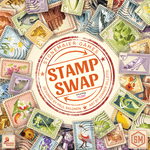
Some of which you have to somewhat discover, but many of them are are overt and right there in front of you to decide how you want to use those levers in the game. But in competitive games, I think they're a lot rare. And that's why I wanted to highlight nations because at the beginning of any game of nations, you get to choose your individual difficulty level. You can make it really hard. You can make it easier, not necessarily easier to win, but just a little more forgiving. And I think that's really clever of letting individual players in a competitive game choose their own difficulty level. I agree with Steve. This makes the game instantly more accessible for someone. At number five, I have simultaneous play. Steve says this about Oh, and what I'm showing here is Earth. I'll talk about more in a second. Steve says, "Video games excel at simultaneous engagement. Everyone's playing all the time. Imagine Mario Kart where each player races one at a time instead of all all at the same time. Not so much fun when everyone's playing individually. Fortunately, more board games like Earth and Stamp Swap are embracing simultaneous turns or shared action phases. I don't think simultaneously simultaneous play works in every game. Um, it does create some challenges with interaction, which video games can have a lot of interaction and simultaneous play. It's tougher for tabletop games to do that. But I think we have seen some very clever games including uh Earth and our game stamp swap come out over the last few years with excellent simultaneous play where all players are engaged all the time or even engaged in just what the active player is doing. Like in Space Base, there's only one active player at any given time in space, but all players are using the dice that that player is
using. They can't buy cards when it's not when it's not your turn in space, but you're still engaged in doing something and gaining stuff when it's not your turn. So, I think this is a I I think this is something that definitely more tabletop games can can learn from digital games. Something that can be helpful to keep in mind that not everything needs to be individually turnbased and the games can scale up even to higher player counts when you're using simultaneous play. And number four, we have I I'm calling it streamlined is better. And Slay the Spire, which is a table game inspired by the the digital version of the digital game Slay the Spire, is a great example of this. In the digital version of Slay the Spire, there is some math that you can do where you can let the computer do for you where you might have a card that gets 75% more powerful or you might have a card with 150 hit points that you have to deal with. In the tabletop version, they did something really smart where they simplified that math. they almost across the board divided everything by 10. So instead of trying to take out someone with 100 hit points, you're trying to take out someone an enemy, a monster with 10 hit points. Simplifying that math, streamlining it, I think can make a game much more accessible. Uh, and so I I I love seeing this in games where instead of having these giant inflated numbers, these complex calculations, there's still complexity, but just a little more streamlined, a little bit a little bit simpler. And I think something else related to this that an ambassador mentioned is that they appreciate in video games the that they appreciate small focused indie
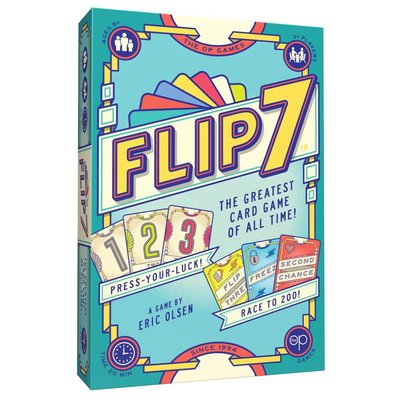
games over big sprawling AAA titles. Again, I don't think this is a universal rule. I think there are some wonderful big sprawling AAA titles. Vantage, which I showed you a few minutes ago, is one of them. But there also there's also something to be said for a game to be super streamlined and focused on doing one specific thing really really well. Um, and so I I think both can coexist, but I think uh I think it's important to keep in mind even within the same studio that you can have a big sprawling game and the next game that you release can be really small and focused and just do one thing really really well. I think Flip 7 has had a lot of success in just doing one streamlined thing really really well recently. At number three, we have tutorials, onboarding tools, and ease of setup. This is something that digital games do exceptionally well, not almost across the board, where it it's really easy to just turn on a digital game and start playing. Either there's a tutorial to help you playing. There's uh or you can just start playing and learn as you go, or you can uh you you can have these tools that pop up to help you learn what different things mean as you're playing. And also, digital games are really easy to set up. the game sets up for you as you play. You don't have to go through the arduous nature of setting up a digital game. Some examples of this are our game Tapestry and this game First Rat. I'll explain why I picked First Rat in a second, but here's what Steve says about this. Steve says, "There are few things that are more intimidating than a 20 plus page rule book. Video games drop you into the action quickly and teach you as you play. Board games are getting better at this." And Jamie, you've set a great standard. This is very kind of Steve to say. Tapestry's onepage intro rule book.
It's actually four pages, but there's a onepage reference guide is exactly the kind the kind of player friendly approach that more games should follow. I think it really depends on the on the on the rule book, but uh like even with our game Apiary, for example, Apiary has a probably a 20page rule book, but it also has a one-page back and front teaching guide where that pretty much has all the rules that you need to know that someone can use to teach the game from that teaching guide. Um I'll talk about reference cards in a minute, but that's another tool for this. But these I making make understanding that that first play of a game is intimidating and difficult. And anything that you can do to make that a little bit easier for players to get into that first play of the game is great. And also making the game easier to get to the table through something that First Rat does that I think is exceptionally clever because I think board games more than ever like to advertise their variability. And oftentimes variability comes with a lot of different things that you need to set up. You need to randomize like 10 different decks of cards and a bunch of different tokens and lay them out on certain places of the board and roll a bunch of dice in advance, whatever it may be. More setup often means more variability, but it also means more setup and more time to set up. And that means it might be more difficult to get the game to the table. What First Rat does is that it gives you a double-sided board. On one side of the board, there is a preset layout for the entire board.
You don't have to do any setup really. I mean, there's a few little things you have to to randomize, but for the most part, you just put the you put the board on the table and you start playing. The other side of the board, these ovals are blank, and you can randomize a bunch of tiles to randomize what these different action spaces mean. So, it gives you the best of both worlds. It gives you it gives you a preset, easy to set up side, a standard side to start out with, especially if you're teaching the game, and then it gives you a completely variable side that takes longer to set up. It's your choice to use that side, but it's there if you want it. I think this is a really clever solution for games to offer that option between the two. At number two, I have ability trigger reminders and hover over details. Uh the way I phrase this, and I'm showing the our game Finsspan here, organize triggers so they can't be missed, and provide detailed reference cards for each player, plus text to support icons. So, this is something that the video games I think do really, really well. And it's tied to the onboard onboarding category I mentioned a second ago. But the idea that if I am playing a game, even on board game arena, uh, and I don't understand what a card does, I can hover over that card and it can tell me in plain text what that card does or what that tile does.
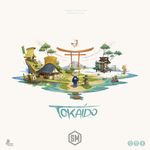
Uh, this is part of what I'm talking about here, but I think this is really nice for games to do this. And I think one of the ways that games can do this in general is if you have a g an icon heavy game in addition to the icons, have text that explains the icons or text that at least supports the icons right next to it. Yes, it it becomes slightly less language independent there, but it becomes so much more accessible and easier to play if you don't have to remember what all these icons mean, especially if they're in a certain combination. It's something that we did with our version of Tokaido. Instead of only asking you to understand these combinations of icons, we put the text on the back of the character tiles. But in addition to that, you can just give each player a detailed reference card. Uh this is something that I believe that every game can benefit from. Even the most simple games with like three actions. Put those actions on a reference card for each player so they don't have to remember it. They can. It makes learning the game easier. It makes getting the game back to the table easier. It means that you don't have to look up everything in a rule book. You can just look down at your reference card like we have in Finsspan. Every player gets their own reference card down here. I'm zooming in. Here we go.
That explains the different icons in the game. A lot of them are intuitive in my opinion, but they're here as a reference if you need to look at them. Um, and the last element here is organize triggers so they can't be missed. I think Finsspan is actually another good example of this. By this I mean you probably have played a complex game where when you do one specific thing in the game, you have to remember to trigger several other cards, several other abilities that are tied to that one ability. And depending on the user interface of the game, it might be fairly difficult to remember to trigger all those different things. Games can help you, a good user interface, in my opinion, can help you remember all those triggers. Finsspan does this by having you dive from top to bottom, activating abilities as you go. Um, and so you you can't really miss any of these triggers.
They're I mean, you can, but they're there for you in a specific order. Just dive down one step by step, and as you go, activate the different things. uh it organizes it to help you not miss those triggers. Video games are really good at this because they just tell you, you know, they like warn you, hey, you didn't activate this thing. Do you want to? Or it just does it for you automatically. But I think games, the user interface of games can uh can really help players avoid forgetting different ongoing engine building triggers uh with examples like Finsspan SAI that does this I think really well as well. Yeah, other other games do it too. Last, we have scoring, assistance, and milestones. This was the category that I heard the most from Stommyer Ambassadors. They struggle with the the scoring elements of games. The the that that you might have fun playing the entire game and then suddenly you have to do accounting at the very end of the game to figure out your score. Some players enjoy this. I get this, you might be watching this saying, I I love the accounting phase of the game at the end of the game. But a lot of people responded that they are frustrated by it. Uh, and they like that video games do the scoring for you. And they can even do it in dramatic fashion like Wingspan Digital does the scoring in a fairly dramatic fashion that I really enjoy watching. Here I have shown uh Arc Nova. I think Arc Nova does something related to the milestones element. I'll zoom in a little bit here, but what Arnova does is that it gives you a lot of scoring during the game and then some scoring at the end of the game. And during the scoring uh during the game, you aren't just gaining points, but
you're often moving towards different milestones. On one side of the score track, you are moving towards better income. You're all all really consistently getting better income. And on the other side, you're getting these powerful benefits as you improve your uh your conservation. You're getting these powerful one-time benefits. as you advance on this track, making scoring more engaging, giving you this little bit of feedback along the way that you are doing okay, that you're doing well, that points mean something more than just something to work towards for the end of the game. Uh, here's what Steve says about it. He says, "Board games often withhold feedback until the final score tally. That can be frustrating, especially when you realize too late that your strategy was doomed from turn two. Unlike video games, which give you constant feedback loops, many board games lack this clarity. Mid-game checkpoints, adaptive scoring hints, or tension building milestones could help players better understand how they're doing without spoiling the challenge. I totally agree. This is tied largely to the milestones element of this game of Arc Nova. But I also think just in general when games help you score uh by by maybe balance putting like 75% of the scoring during the game and then only around 25% at the end of the game. I think that can really help. Not every game needs to do this, but I think it's something to keep in mind that players can be frustrated by backloading the scoring at the end of the game. Um, I also mentioned here the the digital game Inkborne that I'm working on uh with Acram Digital. They uh I think they're doing a lot of neat things in terms of giving you little like it's one of these uh uh rogike games where you're
getting little victories along the way. You're not just building up to one final boss. you are, but those little victories along the way really matter. I think rogike games do that really well. So, yeah, those are the top 10 things that I think tabletop games could learn from digital games. This help this putting together this list was really helpful for me as well because there's these are things that I think about, but I don't always end up actually putting in our games. And so, this is a great reminder to me of some of the things that digital games do really well that I need to work on as a designer and as a publisher for the tabletop games that I make. I'd love to hear your thoughts. What are some of the top picks from the list that I mentioned? If there's anything from the list that I didn't mention, and if you have a great tabletop game or video game example to go with it, I'd love to hear about that in the comments below. Thanks.