How to design a TABLEAU BUILDING board game *Top ten mechanisms*
Games in This Video
20 games are featured in this video — they unlock as you watch.






Transcript
many of the most popular board games over recent years have been described as tableau builders but what does this term actually mean and what sort of mechanisms are employed in these games to give them their distinctive feel in this video i'll be looking at 10 mechanisms used in tableau building games i'm adam porter i'm a game inventor from cardiff in wales and over recent years i've made many videos covering the different mechanisms in game genres abstract games action selection games trick taking games two player games and many more but i haven't made one of these videos for a while because i've been focusing on talking about product design principles and how they can be utilized in board game design i'm aware though that lots of my viewers probably want me to stop banging on about industry stuff and just have a good old deep dive into the games that they enjoy so that's the goal for this video let's start by defining what a tableau is so the term has been used for centuries to describe static images where characters are arranged for dramatic effect absorbed and unaware of the existence of the viewer this might relate to a photograph or to a painting now i first came across the term as a drama student studying the techniques of bertolt brecht or stephen burkhoff and in this setting a tableau is a living statue an arrangement of static actors posed to depict a scene or an emotion one form of traditional tableau that we might encounter in gaming circles is the miniature diorama whereby skilled miniature painters produce epic war
scenes for display purposes only here's an example from warhammer's own website and as with so much of our gaming jargon we've adopted a term and then redefined it for our own use in gaming this word refers to a selection of cards tiles and tokens which are positioned in front of one individual player we each have our own tableau it's a thematic term rather than a mechanical one our collection of cards in a game of bruges is a tableau in the sense that it represents a community of individual characters like our living statues collected together into a static snapshot the characters are alive in our imaginations but utterly unaware of our existence as observers where tabletop gaming starts to stray from the formal definition is in making its tableaus dynamic in a strategic board game it's an expectation almost a requirement that a tableau provides players with a constantly changing array of actions that they can engage with this seems to me to be totally contrary to the true meaning of the term so i would personally consider there to be a distinction between games with tableaus meaning static collections of cards and tableau builders featuring vital dynamic arrays with which players can engage just as we have games with decks which are not deck builders a game might feature a tableau but not be a tableau builder indeed once we start introducing actions and upgrading cards and manipulating our displays a tableau becomes almost indistinguishable from
that other broad gaming term an engine so in gaming pylons an engine is a collection of components gathered by a player which enhances their opportunities and upgrades their rewards throughout the game so that there's a sense of momentum and each subsequent round of the game brings greater and greater levels of achievement right so let's spell it out seven wonders tableau builder sushi go game with tableaus in sushi go your array of cards has no available actions there's no engine the cards simply score points at the end of the game in seven wonders the cards give you access to resources which allow you to carry out certain actions purchasing better cards and building those wonders so does this mean that tableau builder and engine builder are just two different terms for the same thing well not quite by my definition all tableau builders are engine builders but the same isn't true in reverse there are many engine builders where there are no individual tableaus involved i'm thinking of deck builders and bag builders and dice builders games where players amass armies on a shared board any of these genres could include a degree of engine building so i would say that tableau building is a subset of engine building but we could pick apart definitions all day long and come up with totally different conclusions so let's not worry too much about it before i dive into my top 10 mechanisms i should say that tableau builders feature a wide and diverse range of markets and currencies the manner in which you amass
your cards is not a defining feature of the genre so i won't be going into too much detail about this in the video in each of the games that i'll mention there are usually a wealth of other engaging mechanisms to explore outside of the construction of your tableau one recurring mechanism is the utilization of multi-use cards for example in san juan your cards can be used as a currency you spend cards to build buildings but they also function as the buildings themselves giving you access to special actions and scoring opportunities you can even tuck face down cards under your production buildings to represent resources which will be sold later on for you guessed it more cards the first few of my categories relate to how and when your abilities activate number one is an ongoing effect in abyss players are ruling undersea kingdoms and trying to gain the most influence on your turn you either gather allies from the debts in a push or luck card draw or gather piles of unseen cards from the council or recruit lords by spending allies and pearls the lords give you access to a variety of different abilities and if you have enough you can also gain locations which score you additional points at the end of the game abyss features many different powers which work in different ways but a lot of them are permanently switched on your tableau simply allows you to break the basic rules of the game in a variety of different ways you can use the same mechanisms as the other players but things work slightly differently for you your rewards are greater or those
restrictions which hold the other players back they don't apply to you ongoing effects like this are the mainstay of tableau builders the downside of them from a design perspective is that they're passive it falls to the player to remember which abilities they've collected and how they work and as you build up an assortment of such powers it's quite easy to forget to apply your new rule when the specific situation that it references comes about so number two is immediate activation in pioneer days players roll dice and then take turns to select one from the pool each generating some sort of action the remaining dice result advances a disaster track which will eventually cost all players a number of resources the chosen dice either give income provide resources or recruit townsfolk and it's here that the tableau building starts each townsfolk card has an effect and provides end-game scoring bonuses many of the cards in pioneer days give a one-off ability as soon as they're placed into your tableau of course this doesn't contribute to the development of an engine because the benefit isn't recurring so this feature isn't enough to define a game as a tableau builder and pioneer days does feature many other card and action types but the presence of a powerful single-use ability is common to most tableau builders it's a useful tool for the designer of a tableau building game because it presents the player with a meaningful choice do i select this card which gives me a very powerful reward but i only get the benefit once or do i
select this weaker power which gives me recurring benefits throughout the game number three is pay to activate so in bruges each player starts the round with a hand of cards and on your turn you play a card which gives you access to one of six different possible actions gathering workers or money or dealing with threats or building canals or houses or collecting citizens and the citizens form a tableau in front of you throughout the game and each card is unique with its own special ability and or scoring opportunities in bruges many of the cards have abilities which can only be used if you spend a token the token is returned to the supply so use of that action is dependent on having a ready source of the corresponding tokens this is a good way of increasing complexity in the engine building it's not as limiting as having a one-shot ability but it doesn't have the total freedom of an ongoing effect either the player must build their engine in such a way that they have the necessary resources available to them when they need them this is an example of layering one mechanism on top of another creating an interlocking series of different strategic paths in order to use this action i need a resource but in order to gain that resource i need to use a totally different action and that second action is influenced by the number of certain cards in my hand but i was saving those cards for something else it's delicious dilemmas like these which make strategic games so satisfying it's no surprise to find stefan feld a designer known for his complex interweaving mechanisms
leaning heavily on these mechanisms in bruges number four is adjacent activation in glenmore players are building up land holdings in scotland on your turn you move your figure to any space on the track and take the corresponding tile placing it into your display you activate that tile and all adjacent tiles and then the track refills now your tiles in glenmore activate immediately as soon as they're placed into your tableau but they're not single use they're going to activate again and again every time you place another tile alongside them the next player to take a turn is always the player who's furthest back on the track and some tiles are going to give you resources some exchange resources for victory points some give you clan members and you can only place tiles adjacent to other tiles with clan members on them special locations give access to a wide range of immediate ongoing and end game effects incorporating spatial aspects into a tableau game is a natural fit because your cards are laid out on the table in front of you each card is going to have a neighbor so that creates a nice little bit of design space for a game maker how can these cards relate to each other based on their position in my tableau in arcane academy you activate the ability of a tile by placing an exhaustion token on it and all tiles linked to the activated tile by connectors will activate at the same time in a later turn you can remove all of your exhaustion markers instead of taking an action wingspan is one of the most popular tableau builders on the market
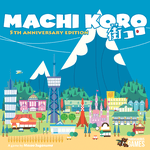
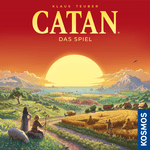
when you place a card in wingspan you position it in one of three different rows this bolsters your engine in two ways so when you take an action in a later turn gathering food or laying eggs or drawing cards you'll gain a better version of the action depending on how many cards are in the rows but then all cards in that row will activate in turn generating resources victory points or manipulating your display in various ways the beauty of this mechanism is the chain reactions that it creates when you take your turn it sets off a series of events all of which provide the player with loads of immediate feedback whether that's resources or victory points or additional actions feedback and the dopamine rush that goes along with it is one of the key things which leads players to feel engaged in a game number five is occurrence based activation in my farm shop players are building up their personal player boards adding cards to upgrade their available actions and on your turn you roll three dice you use one to select a new upgrade and the remaining two dice to activate one of your fields but the important thing is that the other players get to activate their corresponding fields too the fields give you resources or convert resources to points and various other upgrades in my farm shop the players gain resources immediately when other players roll and then select certain dice results even if it's not their turn it's similar to the activation of tiles that happens in catan or the cards in machicoro or even other players landing
on your hotel in monopoly the reward is unexpected and exciting yes you planned for this but you were never sure that your plan was ever actually going to materialize my farm shop mitigates some of the randomness that can be associated with this mechanism because the active player chooses two dice from the three available results but a current spaced activation doesn't have to be random at all in st petersburg at the start of each round all cards of a certain color activate predictably for all players generally green cards generate you income blue cards generate victory points and orange cards offer up a mixture of the two the sequence is totally predictable but the strategy in the game is all about working out when to shift from purchasing cards to generate income to purchasing point generators in that way as a similar flow to a deck builder perhaps the most common usage of occurrence based activation is in games where i gain a benefit whenever my opponent does something there are a number of cards like this in abyss in evolution a scavenger card allows you to gain food any time any player attacks with a carnivore now one potential downside of this mechanism is that players need to be aware of what other players have in front of them which can be tricky when there are a lot of cards on the table it can be frustrating when a game is slowed down by players peering across the table to read every card in front of each opponent but a huge positive is that this is a form of positive interaction many players struggle with negative interaction whereby my actions directly
hurt other players this is the reverse my actions benefit me but someone else gets a kick back too so everyone feels good about the experience number six is worker placement in everdale players place workers onto the central board to gather resources you can instead play a card and spend resources to put it into your tableau cards provide many different actions and benefits but some provide additional worker placement spots where you can position one of your workers in order to gain a reward worker placement games often have tableau building mechanisms built into them the player uses worker placement mechanisms to gather resources but they need to do something with these resources otherwise there's no game frequently the answer is that the player spends those resources to develop their own player area their tableau or engine from a design standpoint it's a logical progression that some of those developments might provide additional worker placement spots it measures the two mechanisms together neatly and it makes the game feel like a unified hole number seven is the ability to activate the other player's tableau in key flower players bid with workers for tiles to add to their own village and each tile has an action which can be activated by placing workers you can use the tiles in your own display or in the central display or in an opponent's village but at the end of the round the workers are claimed by the owner of the tile which they were placed on this is another design choice which i think should be used sparingly if players are able to use their opponent's
tableaus then they need to be aware of all the options available to them this is practically difficult because icons and writing are hard to see from across the table but it also tends to result in a massive decision space because each player will have so many options available to them on their turn and this can really slow a game down the other downside is that it can lead to a bit of bad feeling in at the gates of loyang several of the helper cards allow me to utilize an opponent's tableau swapping a vegetable with one from their market stall or plucking a vegetable from one of their fields it's one of those really tight uber rosenberg games where players are struggling to achieve everything that they want on one of their turns so the loss of a key vegetable can be devastating the positive of such a mechanism though is that the world feels bigger than your own little player area if you represent a village then that village is part of a larger interconnected world the game feels richer and the players are encouraged to interact with each other number eight is where cards generate more cards in some games the cards or tiles available to you especially those which have amazing abilities or high scoring potential are dependent on you having certain cards present in your tableau in evidel players must pay berries to add character cards to their tableaus but they can gain the card for free if they have a suitable building to house the character in splendor made a big splash in 2014 with its series of transactions and upgrades each turn the player takes new cards which give them more purchasing power to gather better
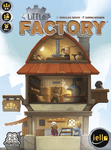
and better cards eventually culminating and attracting the high-scoring nobles many splendor-like games followed such as the recent titles happy city and little factory happy city is essentially a tableau builder for young players players start their term by taking income as shown on their cards in their townscape they then may purchase a card from the central display and cards are worth victory points at the end of the game calculated by multiplying the number of residents by the number of hearts in the city representing happiness but players can gain additional cards for free by gathering together certain combinations of colored cards in the basic version of the game these award more residence or happiness but in the advanced version the cards give access to a wide variety of different actions ongoing abilities and scoring opportunities little factory has a bit more going on you start with a few basic resource cards and on each turn you use the cards in your hand to purchase better cards from the display this might mean trading the cards for something of equivalent value or discarding a card to gain a more valuable one or sometimes simply revealing a card is enough to get an additional resource for example to gain this cow i need to discard grain presumably to feed it and clay presumably to house it i can reveal the cow to produce milk which has a value of four or i can discard the cow to produce a steak which has a value of eight or i can trade the cow for other resources of equal value to it
the tricky bit is that you can only gain a card if it's currently present in the central display the aim of the game is to construct point scoring buildings as with other cards these can be constructed by trading cards of equal value or by discarding specific resources and most of the buildings give you access to additional powers that you can use on your turn changing a set of resources into something better or swapping resources for victory points this is where the engine building comes into the game with this building i can bake bread using coal and this sack of flour this bakery allows me to turn that bread into two victory points but if i have the in and a steak and some bread i can make delicious sandwiches worth four victory points apiece and when one player has 10 victory points they're declared the winner sometimes the more powerful cards or tiles gathered throughout a game replace the weaker versions that you currently have in front of you key flower features the ability to upgrade your tiles if you use an upgrade action and pay the necessary resources you can flip a tile to its reverse side to gain access to better abilities in st petersburg some of the cards that you gather for your tableau must displace existing cards of the same color you pay the difference in cost between the two cards and you gain the upgraded ability some cards have symbols to show that they can only display specific cards for example a lumberjack becomes a carpenter workshop a shepherd becomes a weaving mill a ship milder becomes a wharf number nine is containing resources
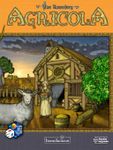
so in agricola the player's tableau is in two parts cards played throughout the game give access to additional actions and powers as we've seen with other games throughout this video but a large part of a player's tableau is their personal player board representing their farm this essentially acts as a storage space for resources sheep cows and pigs need to be kept in fenced pastures workers need rooms built for them in the farmhouse vegetables and grain grow on plowed fields incorporating storage into tableaus is not unique to agricola another example is the game's steampunk rally where players build large racing contraptions powered by placing dice into specific slots to generate movement the storage cards allow players to keep dice for the following round instead of discarding them the final feature which is universally present in all tableau builders is the ability to score points from your gathered items san juan demonstrates two of the most common methods of scoring components so this is individual points allocated to each individual component as we've seen with each card scoring a specific number of victory points or points coming from gathering sets of resources this is a frequent mechanism which works brilliantly because it gives players direction with set collection mechanisms they know what they need to do in order to maximize their scoring where their attention should be focused from the moment they pick up that card santa monica features this same sort of set collection as san juan but it also incorporates scoring based on adjacency a slightly more thinky but still
intuitive method of scoring your tableau so what is it about tableau building that players find engaging well tableau building is going to really appeal to players who like organizing and collecting stuff because of the engine building potential there also tends to be a really nice feedback loop in most of these games it's easy to get immersed in a game when you feel like each turn you're just getting better and better essentially tableau building is just a really solid core to construct a game around you can add all sorts of other mechanisms around that core you could have an ingenious card drafting mechanism i mean that's great the cards can form your tableau once you've collected them you want player interaction well great build that into those card effects maybe you just want a more relaxing experience i mean that's fine too minimize the interaction and players will have plenty to engage with in their own personal puzzle of card interactions and set collection if you're a designer i hope this video has given you an idea of some of the tools available to you when designing games with tableaus if you're a game player and a fan of the genre maybe there are one or two games here that weren't on your radar but now you might consider giving a try if you enjoyed the video please subscribe hit like and let me know in the comments and i'll see you next time