/pic3490053.jpg)
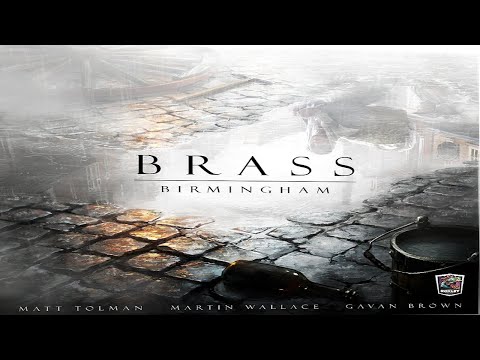



Brass: Birmingham Deep Dive
What the Community Thinks About Brass: Birmingham
Brass: Birmingham commands widespread admiration from reviewers as a masterfully designed economic game that somehow manages to be dense with rules yet surprisingly clean in execution. The consensus is remarkably consistent: this is a game that rewards mastery, encourages cooperation without being soft, and delivers genuine satisfaction through the interconnected systems that make up the industrial economy. Reviewers acknowledge significant hurdles during the teach, rulebooks that feel disorganized, iconography that requires careful study, but once players cross that learning curve, they discover a game of remarkable elegance. Shelfside calls it a "10 out of 10" despite not typically gravitating toward euros, praising how the game resolved their usual reservations about length and interaction. Board Game Dad echoes this: "I can't help it, I love this game," despite identifying real flaws. Meeple University presents it as a quick-start tutorial that respects players' time while acknowledging the systems' intricacy. The game's position as one of the highest-rated titles on BoardGameGeek reflects a community consensus that the design's depth and elegance outweigh its learning friction.
Core Mechanics That Define Brass: Birmingham
Network and Route Building
Network building is the spine of Brass: Birmingham. Players construct canals in the first era and railways in the second, paying costs to place link tiles that connect cities across the map. But the mechanic's brilliance lies in how routes become leverage: links score points based on the industry icons they touch, and they serve as supply lines for resources that feed into the broader economy. A canal or railway placed by one player becomes infrastructure that others can exploit, turning the map into a collaborative puzzle where building a connection benefits multiple entrepreneurs simultaneously. Reviewers emphasize that the game excels precisely because placing links isn't an attack, it's infrastructure that everyone leverages. Tangible rewards come from the connections themselves: links score at the end of each era, and smart placement early, or opportunistic placement late when the board state shifts, is how players accumulate victory points without needing to own every city.
Hand and Resource Management
Each player starts with eight cards and draws two after each action. Cards serve multiple purposes: location cards build in specific cities, industry cards build specific industries, but any card can be discarded for actions like selling, building links, or developing tiles. This flexibility is central to the decision loop. Because the central deck runs out during play, the final turns of each era become a tight calculation: with no fresh cards incoming and a finite hand, players know exactly how many turns remain and must plan accordingly. Resources, coal, iron, and beer, circulate through the economy, becoming scarce or abundant based on what players build and sell. The closed economy means supply is finite and player-driven, creating moments of genuine scarcity where paying inflated prices becomes a calculated risk or waiting a turn becomes the smarter move.
The Brass: Birmingham Experience
Intense, Opportunistic Tension
Reviewers describe a game that creates constant, low-level tension without being confrontational. The competitive edge comes from timing: costs fluctuate as iron and coal are bought and sold, cheap opportunities are seized before others notice, and position on the board matters tremendously. Board Game Dad captures this: "There is tension on many levels, one is about the rewards that you get for exporting goods, there is a free beer bonus for the first people that can deliver exports, so there's competition to get that in, then there's competition for the spaces on the board." Every opponent action ripples across the table. When a rival places a coal mine, they supply iron to the market for everyone's benefit, but they also grab a choice space and position themselves closer to merchant cities. The turn order system, where spending determines next-round sequence, adds another layer: spend aggressively and act late, or conserve and move earlier. This creates a rhythmic tension between tempo and efficiency that reviewers consistently praise.
Satisfying Engine and Positive Interaction
The core satisfaction comes from watching your economy accelerate. Income increases as tiles flip, resources become abundant enough to execute bigger plays, and suddenly the financial maneuvers that felt risky early feel effortless. Shelfside describes the pleasure vividly: "How can I put into words how good it feels to have your tiles flipped at the right time? That's cash. You're frequently excited for other people's turns while playing this game because who knows what they'll do to help your economy." The genius is that this satisfaction is shared: flipping an opponent's tile they've been nursing gives them income and stability, but the game celebrates both their victory and your opportunity to leverage their improved position. Unlike many competitive games, there's no incentive to sabotage; destruction generates zero points. Instead, the game asks: can I use what my opponents just built? Reviewers emphasize how rarely players experience truly bad turns; options abound, loans are available at a cost, and adaptation is always possible.
What Makes Brass: Birmingham Stand Out
The Two-Era Structure and Board Reset
The division into canal and railway eras is a signature innovation that reviewers highlight as central to the game's replayability and strategic depth. The reset is bittersweet, players must abandon the networks they built, but it prevents the board from becoming unmanageably crowded and forces constant strategic recalibration. Fresh hands, a new deck, higher-tier industries now accessible, and railways that cost more but stay permanent: the progression feels like natural evolution. The consistency combined with meaningful change keeps play smooth while ensuring games feel distinct.
Thematic Coherence and Historical Grounding
Reviewers emphasize how thoroughly theme and mechanics are integrated. Shelfside articulates it clearly: "This theme meets the gameplay amazingly. This countryside board is going to get wrapped up with the change of the industrial revolution as you build all these tiles and then you're utilizing shipping lanes and you're even paying your workers which help you sell with beer." The rulebook even includes historical asides explaining why coal needs bulk logistics, why iron can be transported by horseback, and why pottery is expensive and hard to develop. Every industry tile has mechanical weight that reflects its historical role. Coal mines generate income but need logistics; iron works provide flexible resources; pottery pays huge points late but is expensive to research; breweries produce beer needed for sales and their production scales with era. This integration means players aren't just executing a mechanical puzzle, they're simulating the economic rise and fall of industrial entrepreneurs.
Potential Drawbacks
The Learning Curve and Rulebook Organization
Every reviewer who loves the game also acknowledges the formidable barrier to entry. The rulebook lacks a table of contents, buries key sections like the introductory game in the back, and leaves important concepts like network connectivity scattered across multiple pages. Board Game Dad had to warn new players: "You have to watch and pay attention to the symbols on your player board because it's not intuitive and you're going to find yourself making a mistake where you think something costs one thing and you find out you were wrong." The pottery industry, with its alternating free and expensive tiers, epitomizes the unintuitive iconography problem. Shelfside recommends external learning aids: "For such a well-designed game overall this rulebook is just... it's tearing me apart." First-time hiccups are real, players forget which industries can be developed, misunderstand coal connectivity rules, or get surprised when the board wipes between eras. Despite this, reviewers emphasize it's worth the friction.
Analysis Paralysis and Play Duration
While the box claims a 2-hour runtime, multiple reviewers note that with four players the game stretches toward three hours, and slower groups can exceed that. The culprit isn't the game's structure, turns are straightforward mechanically, but rather player deliberation. Because every action ripples across the economy, players naturally examine board state, count resources, and mentally simulate sequences before committing cards. Shelfside cautions: "In groups of players with analysis paralysis it can grind to a crawl, so if you are a slow player make sure to play with people who don't mind that." The teach can also consume an hour even with good guidance, and the rulebook doesn't help streamline that process. Reviewers emphasize the game is worth the time investment, but potential players should commit to bringing a prepared teacher or accepting an extended first session.
If You Enjoy Brass: Birmingham
Players who relish Brass: Birmingham's network-building and resource-management depth should explore Brass: Lancashire, the predecessor that shares the same mechanical DNA with a focus on cotton ports and a tighter scope. For those drawn to the engine-building satisfaction and positive-interaction elements, Food Chain Magnate offers a more cutthroat economic simulation. PowerGrid appeals to players who love the tile-placement puzzle and shared infrastructure but want a simpler teach. For players hungry for more Brass evolution, Brass: Pittsburgh extends the system into 19th-century America with oil fields, pipelines, and heavy trains, maintaining familiar decision patterns while introducing fresh strategic layers.
What Reviewers Are Saying
"How can I put into words how good it feels to have your tiles flipped at the right time? That's cash. You're frequently excited for other people's turns while playing this game because who knows what they'll do to help your economy."
— Shelfside
"I love games where it matters, it really matters what your opponents do. Absolutely love that about Brass: Birmingham. There's tension on many levels: competition for rewards, competition for spaces on the board, and the dynamic economy where you must seize opportunities."
— Board Game Dad
"Brass Birmingham is a pretty heavyweight game that would appeal to people who like a good amount of player interaction and thinking on their feet. You see the iron market is getting empty so you can make a quick buck by placing one there. Opportunism makes brass really tick."
— 3 Minute Board Games