/pic8657239.jpg)
/pic1296144.jpg)
/pic6770323.png)
/pic8657239.jpg)


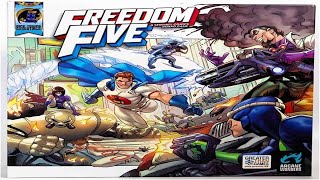






Freedom Five: A Sentinel Comics Board Game Deep Dive
What the Community Thinks About Freedom Five: A Sentinel Comics Board Game
Freedom Five arrived with high expectations built on four years of anticipation. Reviewers who approached this Richard Launius-designed game expecting disappointment found themselves pleasantly surprised. The consensus leans toward approval, though with some reservations about whether the game delivers on the superhero fantasy it promises.
Board Games UnLocked's hosts found the game exceeded their expectations, appreciating its mechanical polish and production quality. They emphasized the variety of content and the depth available to players willing to engage with the campaign structure. Meanwhile, independent reviewers praised the art direction and presentation while wrestling with core gameplay questions: does the game make you feel heroic, or does it relegate you to puzzle-solving against an escalating threat?
The divide in community sentiment centers on a single crucial tension. Reviewers agreed Freedom Five respects its IP, delivers mechanically sound gameplay, and contains genuine content value. Where opinions split is whether these strengths translate into the experience players expected. Some found the game's blend of deck-building, cooperative management, and thematic narrative compelling. Others felt something essential was missing, that the superhero fantasy got lost in the mechanics.
Core Mechanics That Define Freedom Five: A Sentinel Comics Board Game
Campaign-Driven Scenario Progression
Freedom Five structures itself around comic book scenarios organized into campaign chapters. Rather than endless replayability of fixed puzzles, the game guides players through an unfolding narrative where early victories unlock rewards for later scenarios. This progression system lets players customize their hero decks with new abilities and augmentations between scenarios. Reviewers found this approach fresh enough to sustain interest, even when individual scenarios played longer than anticipated. The comic book presentation ties directly into this structure, with each scenario appearing as a numbered issue, creating a natural sense of story advancement.
Asymmetric Hero Abilities and Color-Based Action Economy
Every hero plays fundamentally differently, built around their unique ability cards and action economy. The game uses colored dice rolls to test attributes, and each hero excels at different colors. This design choice forces player cooperation and specialization rather than allowing any hero to handle any threat. Reviewers noted that characters feel distinct immediately, not just in flavor text but in how they mechanically engage with the board. One reviewer remarked that the variety in character abilities means every playthrough with different heroes creates genuinely different strategic puzzles to solve.
The Freedom Five: A Sentinel Comics Board Game Experience
The Tension of Escalating Threats
The game creates pressure through a rising Mastermind track that advances when players fail certain checks or make wrong choices. This system generates the feeling of a ticking clock, forcing decisions about what to prioritize when the board floods with enemies. Reviewers appreciated having control over this escalation mechanic; rather than random chaos determining defeat, players' tactical choices directly influence how quickly the threat level rises. The mastermind track gives the game its emotional arc: manageable at first, increasingly desperate as the clock nears ten.
The Mystery of Unknown Threats
The game uses envelope cards and hidden scenario elements that players only reveal through specific actions. This creates genuine surprise but also produces frustration: reviewers described moments where drawing a particularly difficult test at the wrong time felt punishing rather than earned. The hidden information extends to what happens when players resolve certain cards, which can trigger either helpful events or devastating complications. Some reviewers embraced this uncertainty as thematic, while others found it occasionally unbalanced, creating scenarios where luck intervened too heavily in what should feel like a strategic game.
What Makes Freedom Five: A Sentinel Comics Board Game Stand Out
Authentic Superhero IP Integration
Rather than using the Sentinels universe as a thin coat of paint, reviewers consistently noted that the game oozes theme. The comic book artwork appears on every card in multi-panel strips that feel pulled directly from an illustrated story. The scenario books themselves are formatted like comics, complete with narrative text that explains why the heroes are fighting these particular threats. One reviewer called out the artwork specifically, noting that unlike many licensed games that feel corporate, this design respects the source material.
Strategic Variety in Hero Selection and Scenario Setup
The game succeeds at offering meaningful choices before play begins. Players choose which heroes to field, and different hero combinations create different strategic problems to solve. Additionally, the scenario setup (which villains appear, where they start, what special rules apply) varies enough that repeat scenarios feel different. Reviewers appreciated that the game encouraged experimenting with different character combinations rather than locking in one optimal team.
Potential Drawbacks
Difficulty of Feeling Powerful
The central criticism emerged consistently: the game doesn't reliably make players feel like superheroes. Reviewers described moments where basic minions proved difficult to defeat, requiring multiple turns and resource expenditure to dispatch enemies that should fall quickly to powered individuals. One reviewer noted frustration at needing dice rolls just to kill basic minions, then taking substantial damage on a miss, creating a whack-a-mole feeling rather than an epic battle fantasy. This gap between the IP promise and the gameplay delivery leaves some reviewers feeling the core system contradicts the theme.
Scenario Length and Pacing
Several reviewers expressed concern about scenario length, particularly as the campaign progresses. One described a late-game scenario feeling like it overstayed its welcome, extended by an unfortunate dice roll that prolonged the final confrontation. While the reviewer acknowledged this depended partly on scenario structure and luck, the possibility of a 45-minute scenario extending toward an hour or more emerged as a potential concern for some play groups. The game doesn't adjust difficulty scaling based on player count, which one reviewer noted could make higher player-count games feel trivial or overly long depending on how quickly threats resolve.
If You Enjoy Freedom Five: A Sentinel Comics Board Game
Players who find satisfaction in Freedom Five will likely enjoy related experiences. Those drawn to the IP should explore Sentinels of the Multiverse, the original card game that inspired this design. For players who appreciate the cooperative puzzle with an escalating threat, Pandemic shares similar mechanical DNA, though Pandemic strips away the IP. Street Masters and Brook City (both mentioned by reviewers as design references) offer similar cooperative combat against thematic threats. Defenders of the Realm, Richard Launius's original game from which this design draws, presents a more traditional take on similar mechanics. Players seeking contemporary alternatives might explore Marvel Zombies for superhero theming or Frosthaven for campaign progression with high production values.
What Reviewers Are Saying
"I love Defenders of the Realm. That's one of my favorite games. So the puzzle of this kind of game is awesome. And having all the different characters that they have out for it being completely different and their stuff is awesome. It actually exceeds my expectations to be honest with you, as high as my expectations were because of all the hype."
— Board Games UnLocked
"It's licensing the characters from Greater Than Games, but this is an Arcane Wonders game. And so, this is, you know, you're on a map of the city. There is a mastermind causing havoc. There will be little henchmen sprouting up, but it is your job to try and keep control of all this and ultimately stop the mastermind."
— slickerdrips
"I'm sure there was decisions were made for this entire game, right? I'm not thinking it came out of nowhere, right? It was definitely thought through, but I don't know, they didn't put the fun in the superhero game. And it's big, the box is massive and it's got a lot of minis and stuff, and it looks good."
— UndeadVikingVideos