/pic4597095.jpg)
/pic382457.jpg)
/pic4597093.jpg)
/pic588210.jpg)
/pic4597095.jpg)
/pic446261.jpg)
/pic664192.jpg)
/pic4137630.jpg)
/pic5975807.jpg)






























Lost Cities Deep Dive
What the Community Thinks About Lost Cities
Channels that cover Lost Cities converge on the same core praise: it is a fast-teaching, tense two-player card game that keeps rewarding the same pair of players the more they return to it. Actualol frames designer Reiner Knizia's whole philosophy through Lost Cities, arguing that simple rules hide real strategic depth once both players understand the risks involved. Going Analog's hosts call it a fantastic gateway game that is also beginner friendly, and describe how playing the same opponent over months turns it into a psychology match rather than a casual card game. Adam in Wales - Board Game Design goes further, naming it the answer to what game to introduce to a partner who does not normally play board games, and treats it as the poster child of the two-player-only category because it borrows drafting and set collection ideas that show up across the whole genre.
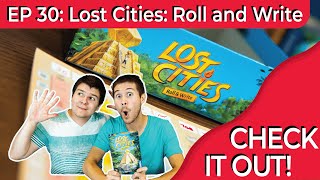
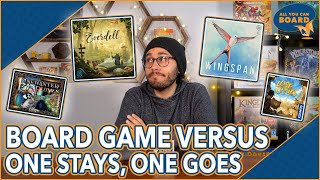
The disagreements are just as informative as the agreement. All You Can Board loves Lost Cities enough to rank it high on a personal top 50 list, yet chose to remove it from a collection in favor of Enchanted Plumes specifically because Lost Cities only seats two players and because heavy personal experience with it creates a lopsided match against anyone new to the game. Going Analog's own hosts split over the negative starting score built into each expedition: one host called the multiplying negative math weird and complicated for newcomers, while the other insisted the math is not that hard and that the tension is the point. The hosts behind the Lost Cities and Celtus retrospective, Dave Luja and Matthew Jude, spend real time separating the original card game from its board game and roll and write spinoffs before settling on the same conclusion as everyone else, that regular Lost Cities remains one of the best two-player card games available.
Core Mechanics That Define Lost Cities
Building Expeditions in Ascending Order
Actualol lays out the core structure: there are five expeditions, each represented by a color, and on a turn a player either plays a card onto an expedition or discards it. Cards played into an expedition must climb in ascending numerical order, and once a color has been started, that commitment locks a player in. As the Lost Cities and Celtus retrospective puts it, in Lost Cities a player is stuck going one way once an expedition has begun, unlike some of Knizia's other designs that allow play in both directions. Each expedition starts at negative 20 points, so committing to a color is a real gamble that only pays off once enough cards are stacked onto it, and playing a wager card before any numbered card doubles, triples, or quadruples whatever that expedition eventually scores, for better or worse. A completed run of all eight cards in one color earns a 20 point bonus on top of that.
Shared Discards and Hand Management
The other half of a turn is drawing back up to a full hand, either from the deck or from the top of any color's discard pile, and every discard is visible and available to the opponent. Actualol describes the resulting behavior as hate hoarding: holding onto a card a player does not need purely to keep a rival from taking it. All You Can Board describes the same tension from the other side of the table, watching an opponent's hand and holding back a card because the opponent has already shown interest in that color. With only eight cards allowed in hand at once, that discard-and-draw loop forces players to decide early whether a color is worth committing to before there is enough information to be sure.
The Lost Cities Experience
A Tense, Two-Player-Only Standoff
Every channel that reviews Lost Cities in depth describes it as an intimate, cutthroat two-player experience rather than a party game. Going Analog's hosts describe the game turning into what they call a crazy psychology game after repeated matches against the same opponent, because both players start reading each other's risk tolerance instead of just reacting to the cards in hand. All You Can Board makes the flip side of that point: after playing enough Lost Cities to understand the flow of a match, introducing it to someone brand new, such as on a date, would likely mean crushing that person simply through experience rather than raw skill.
Quick to Teach, Full of Swings
Adam in Wales - Board Game Design highlights the small box and simple rules as part of why Lost Cities works so well as a first pick for anyone exploring two-player-only games. Actualol pairs that ease of entry with genuinely wild scoring swings, warning that a badly managed expedition, especially one doubled or tripled by a wager card, can leave a player with a negative 80 point result, which is exactly what keeps the stakes feeling real turn to turn.
What Makes Lost Cities Stand Out
Reiner Knizia's Signature Simplicity
Multiple channels tie Lost Cities directly back to Reiner Knizia. All You Can Board refers to it as the Knizia game when explaining why cutting it from a collection felt like a hard call, and Adam in Wales - Board Game Design credits the same designer while walking through the game's colored expedition slots. Actualol adds biographical detail, noting that Knizia released Lost Cities in 1999, the same year as Ra and Battle Line, and describes Lost Cities as the most owned Knizia title on BoardGameGeek, with tens of thousands of owners and heavy monthly play numbers according to that channel's research.
Optional Sixth Expedition and a Wider Family
The Lost Cities and Celtus retrospective walks through just how many spinoffs share the Lost Cities name, from a roll and write version to a board game edition, before singling out the original card game with its added sixth expedition as the version worth recommending, calling the extra color slightly more forgiving than the original five-suit design. That same conversation calls plain Lost Cities the one that most people have actually played and one of the best two-player card games of all time, distinct from the pawns-and-tracks board game adaptation carrying the same name.
Potential Drawbacks
Locked to Two Players
The clearest limitation across the coverage is the player count. Actualol notes upfront that Lost Cities is strictly a two-player card game, and All You Can Board names that same restriction as the deciding factor in choosing to keep a larger-capacity game instead, since Enchanted Plumes can seat up to six players where Lost Cities cannot expand past two.
Luck of the Draw and a Steep Familiarity Gap
Going Analog's hosts disagree over how much luck drives outcomes. One host gets frustrated pulling nothing but low cards while an opponent draws the high ones needed to finish a run, while the other argues the game only feels like luck until a player has played enough to make objectively better decisions than someone still guessing. All You Can Board's experience points at a related risk: once one player has logged far more games than the other, that gap in familiarity with the discard timing and hand pressure can turn a friendly match into a lopsided one.
If You Enjoy Lost Cities
- Arboretum, which Actualol recommends as the closest match for players who want the same expedition-scoring feel but with more than two people at the table.
- Battle Line, also released the same year as Lost Cities and pointed to by both Actualol, as a next step up for fans who want more advanced Knizia, and Adam in Wales - Board Game Design, who places it in a related but distinct area-majority category from Lost Cities.
- Hanamikoji, another compact two-player card game Actualol suggests to anyone who already loves Lost Cities.
- Enchanted Plumes, which All You Can Board describes as taking the essence of Lost Cities and reworking it to support up to six players.
- Musee, which Going Analog's hosts describe as basically the same ascending, five-color card system as Lost Cities, reimagined as a museum collection with staircase bonuses between floors.
What Reviewers Are Saying
"It makes Lost Cities a tense, cagey affair where you keep cards just to stop your opponent from getting them. It's like you're in a divorce settlement, you always hated that porcelain hedgehog, but now you're not letting go of it because you know how much your partner wants it."
— Actualol
"Lost Cities I'm restricted to just two players, and that other player has to be very into that kind of style of cutthroat, grueling card game. But not only that, because I've played so much Lost Cities, unless I'm playing with Carlo, at this point I am going to have an unfair advantage no matter who, no matter what the situation is."
— All You Can Board
"I think that's a game that just gets better and better when you play the same person over and over. There was a time when I played my old co-worker Mike at PlayStation where we played a couple games per lunch every day for several months."
— Going Analog