/pic3727516.jpg)
/pic4128153.jpg)
/pic1246187.jpg)

/pic3727516.jpg)






































Twilight Imperium: Fourth Edition Deep Dive
What the Community Thinks About Twilight Imperium: Fourth Edition
Twilight Imperium: Fourth Edition inspires fierce devotion among its players. Reviewers consistently describe it as one of the most ambitious and rewarding gaming experiences available, despite its notorious length and complexity. The consensus is clear: this is not a casual game, but for those who commit to it, it offers moments of genuine excellence that few board games can match.
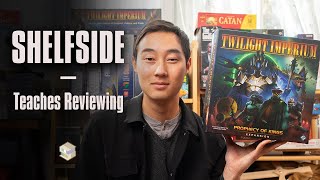
The game generates strong opinions across its communities. Shelfside reviewers, who have logged hundreds of hours with the game across multiple years of dedicated play, remain enthusiastic even after extensive familiarity. Their perspective carries weight because they understand the game's systems deeply and have explored its variants, expansions, and different player count configurations. Players consistently cite the political depth, asymmetric faction design, and the sheer scale of the experience as reasons to return again and again. The addition of expansions like Prophecy of Kings and Thunder's Edge has reinvigorated interest, with reviewers praising how these additions solve existing problems while adding meaningful complexity.
Core Mechanics That Define Twilight Imperium: Fourth Edition
Negotiation and Political Maneuvering
At its heart, Twilight Imperium operates as a negotiation game wrapped in a science fiction setting. Players must constantly broker deals, form temporary alliances, and leverage their influence to shape outcomes. The agenda phase, where players vote on laws that affect the entire galaxy, becomes the crucible where political skill shines. Reviewers emphasize how this mechanic forces genuine player interaction: you cannot win through isolated optimization. You must read the table, understand what other players need, and make compelling offers. Whether trading technology for precious trade goods, promising support for the Throne in exchange for military restraint, or negotiating the terms of a temporary non-aggression pact, the game rewards players who understand diplomacy as deeply as they understand tactics.
Asymmetric Player Powers and Faction Identity
Twilight Imperium features seventeen factions, each with a completely distinct ruleset and playstyle. The Emirates of Hacan excel at trade and resource generation. The Yin Brotherhood convert enemy infantry through psychological warfare. The Federation of Sol use their versatility to adapt to any situation. This asymmetry means that learning to play Twilight Imperium is not a single learning curve but rather a landscape of seventeen overlapping challenges. Each faction feels like playing a different game, rewarding both mastery of individual factions and the ability to predict and counter what opponents can do. Designers Dane Beltrami, Corey Konieczka, and Christian T. Petersen built these powers so that no single faction dominates across all player counts or game states. This balance through calibration rather than symmetry creates the conditions for emergent gameplay where every faction combination produces different strategic priorities.
The Twilight Imperium: Fourth Edition Experience
Epic in Scope and Scale
Reviewers consistently describe Twilight Imperium as delivering epic moments. The game makes players feel like they are commanding galactic civilizations in genuine conflict for supremacy. The narrative arc of a game naturally builds: early rounds involve cautious exploration and tentative positioning, mid-game brings the first major conflicts and pivotal political decisions, and late-game delivers climactic struggles as players race toward victory. Multiple reviewers note that despite the game's length and the inevitable low moments when a player falls behind, the endings reliably deliver satisfaction and memorable stories. Players speak of moments where a single negotiated deal swung the tide, or where a daring military strike reshaped the board state, or where the political climate shifted so dramatically that yesterday's enemy became today's necessary ally.
Table Presence and Component Quality
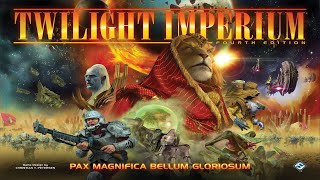
The physical production commands attention. Twilight Imperium ships with hundreds of tokens, multiple decks of cards, a massive modular board, and faction-specific components that signal identity instantly. The custom faction tokens feel weighty and substantial. The faction boards and player reference cards use dynamic artwork that differs for each of the seventeen factions, making the game visually distinct across player positions. This is a game that looks like a big deal when it hits the table, and that visual gravitas supports the emotional stakes of play. Setup takes time and demands care, but reviewers note that this investment separates Twilight Imperium from casual games and signals that something serious is about to unfold.
What Makes Twilight Imperium: Fourth Edition Stand Out
Faction Variety That Actually Plays Differently
Each faction does not simply have different stats or bonuses. They operate under genuinely different rules. The Ghosts of Creuss can navigate wormholes others cannot access. The Naalu can claim priority and see what public objectives will appear before committing their strategy. The Nomad move freely without requiring command tokens. This variance means that a player's entire approach to resource management, military positioning, and political alignment shifts based on their faction. Reviewers highlight that this creates extraordinary replayability. Twenty or thirty plays feel like exploring different games rather than mastering a single system.
Multiple Paths to Victory
The game offers four primary scoring mechanisms: public objectives, secret objectives, agendas, and special faction abilities. These systems interact in complex ways. Controlling Mecatol Rex (the central planet) guarantees points but also paints a target on your back. Pursuing military conquest might grant secret objective points while also generating political support. Using your faction's unique once-per-game ability might unlock an unexpected pathway to victory that other players did not anticipate. This multiplicity of scoring channels means that a player who falls behind on one metric can still engineer a comeback through a different path. Reviews consistently praise this design choice as it prevents the game from becoming a blowout and keeps all players engaged even as the endgame approaches.
Potential Drawbacks
Substantial Time Commitment
Twilight Imperium regularly runs four to six hours, sometimes longer. Even experienced groups playing optimized versions find themselves investing a half-day minimum. For new players unfamiliar with faction abilities and strategy card interactions, the time investment balloons further. Reviewers acknowledge this candidly as a real constraint. Some players find that once they accept the length and plan accordingly, it ceases to be a drawback. Others find that the time investment, while rewarding, limits how frequently they can play. This is not a game for weeknight gaming or casual play.
Steep Learning Curve and Rules Density
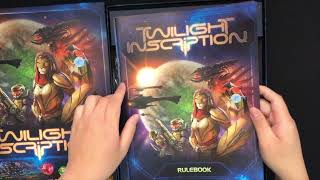
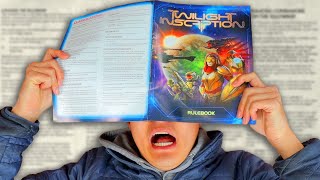
The rulebook intimidates newcomers. Twilight Imperium demands that players internalize numerous systems simultaneously: the action phase, strategy cards, command tokens, the agenda voting process, combat resolution, tech trees, relic shards, and seventeen unique faction abilities. No single subsystem is overwhelming, but the combination creates substantial cognitive load. Teaching the game requires patience and a willingness to tolerate early rounds where players struggle to optimize even basic decisions. Reviewers recommend that groups accept this teaching investment as the price of entry and commit to playing multiple games before declaring whether the game works for them.
If You Enjoy Twilight Imperium: Fourth Edition
Players drawn to Twilight Imperium's blend of negotiation and asymmetry may find satisfaction in other titles. Eclipse offers space opera scope and tech development in a shorter timeframe. Gaia Project shares the faction asymmetry and area control skeleton but streamlines the rules. Star Wars: Rebellion delivers asymmetric factions and hidden information in a two-hour package. Battlestar Galactica (the original) pioneered the social deduction elements that Twilight Imperium weaves into its political phase. For those seeking the negotiation depth without the combat system, Dune: Imperium emphasizes deal-making and political maneuvering.
What Reviewers Are Saying
"As much as I'm not a huge fan of the game, I can appreciate it. I said this in my review way back is that I think part of the allure, a significant portion of the allure of Twilight Imperium is that you get to do this communal thing with your friends for a day. That it is an event, right? That it is something you plan for."
— Rahdo Runs Through
"My takeaway is that three players is actually so so good and I was at fault for denying myself it all these years. Not only is the board small to incite a lot of conflict, the Mexican standoff element actually works really well in TI because the game's incentives are already so muddied from the ways to score points and who the heck is actually winning."
— Shelfside
"The game I had the most fun with was the first game we played of the new expansion Thunder's Edge, which was really cool. Everyone was playing a new faction, so it was all new experience and we had some new relics that were in the deck and a lot of the planets were totally new to everyone. So there's a lot of novelty."
— Shelfside