

/pic8037477.jpg)







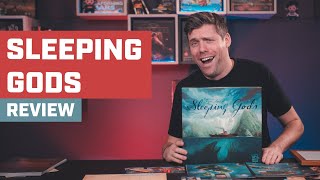

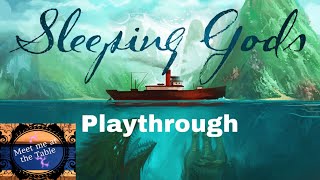




Sleeping Gods Deep Dive
What the Community Thinks About Sleeping Gods
Sleeping Gods has generated nearly universal enthusiasm among board game reviewers. The consensus is clear: this campaign-driven cooperative game represents one of the finest achievements in modern tabletop game design. Reviewers consistently praise it for successfully merging mechanical depth with narrative engagement, creating an experience that feels like playing through an interactive storybook. The game's combination of exploration, player agency, and thematic coherence resonates across different gaming philosophies, though some reviewers note it demands significant time commitment and works best with specific player counts.
Core Mechanics That Define Sleeping Gods
Campaign Structure with Keyword-Driven Narrative Branching
Sleeping Gods employs a campaign system where player choices create persistent consequences across multiple sessions. Designer Ryan Laukat wove a narrative branching system using quest keywords that unlock new story passages and potential paths through the game world. Reviewers describe how collecting specific keywords opens previously inaccessible sections of the 170-page storybook, creating genuine replayability since different keyword combinations lead to different story outcomes. This system transforms what could be linear campaign progression into a web of interconnected narrative paths, rewarding players who explore diverse locations and make varied decisions.
Command Token Economy for Crew Coordination
The game's action economy centers on command tokens, which serve multiple purposes throughout gameplay. Players generate these tokens through ship actions and can spend them to upgrade characters, make extra crew members participate in challenges, or activate special abilities. Reviewers note this creates constant decision tension: should tokens be saved for critical moments, spent on character development, or used to help allies? The elegance lies in how this single resource touches nearly every significant action, forcing meaningful tradeoffs that reinforce the cooperative nature of the crew working together toward survival and return home.
The Sleeping Gods Experience
Narrative-Driven Exploration with Meaningful Discovery
What distinguishes Sleeping Gods from other campaign games is how thoroughly it integrates story progression with physical exploration. The atlas-style map reveals locations as players explore, and each location description comes paired with vague directional clues that players must interpret. Reviewers describe the satisfaction of matching visual clues in the atlas illustrations to location descriptions, creating moments of "aha" recognition when they correctly deduce a location's identity. The game rewards careful reading and visual literacy, making exploration feel like solving gentle mysteries rather than following waypoints. Many reviewers note they felt genuinely invested in discovering what lay beyond the next island or mountain range.
Cooperative Tension Without Quarterbacking
The game's design actively discourages one player from dominating decision-making. Challenges allow multiple crew members to contribute, and characters gain fatigue if used too heavily, forcing players to spread agency across the crew. Combat encounters avoid the typical "optimal solution" trap by presenting puzzles where damage allocation decisions require input from all players without overwhelming complexity. Reviewers appreciate that the game maintains cooperative engagement throughout without descending into analysis paralysis, even in combat sequences that initially appear puzzle-like.
What Makes Sleeping Gods Stand Out
Separation of Survival and Exploration Mechanics
A defining feature is how the game decouples survival resource management from narrative exploration. Players handle ship health, fatigue, and crew morale through ship actions, but these survival mechanics don't prevent exploration during the main phase of each turn. This differs sharply from similar games where failure in the narrative creates immediate mechanical punishment that blocks further story discovery. In Sleeping Gods, a failed exploration challenge creates consequences within the story but doesn't stop the player turn, allowing continued progress through the narrative. Reviewers note this keeps the story momentum alive rather than grinding play to a halt while crews recover.
Branching Narrative That Respects Player Choice
The storybook doesn't punish players for taking paths that don't seem "optimal." Instead, different choices lead to genuinely different outcomes and endings. The game includes multiple victory conditions tied to different narrative paths, creating thirteen distinct possible endings. Reviewers describe how decisions made twenty hours ago in the campaign can directly impact which ending becomes available, creating a sense that the entire journey mattered. The story doesn't judge players for exploring dangerous dungeons or pursuing side quests; these diversions open story branches rather than lock them away behind "correct" choices.
Potential Drawbacks
Campaign Length Uncertainty and Play Time Investment
While the game advertises sessions lasting 60-120 minutes, reviewers consistently report actual play sessions of 3-4 hours once campaign progression begins. This creates a commitment challenge: groups must be prepared for substantial blocks of time if they want meaningful campaign advancement. Some reviewers note this extended playtime creates pacing concerns, particularly regarding player count. At two players, engagement remains high and downtime minimal. At three players, the extra crew member adds complexity that stretches turns significantly. At four players, the accumulated downtime can become noticeable. The storybook creates natural break points for multi-session campaigns, but players should expect this to stretch across weeks of dedicated gaming time.
Setup, Teardown, and Campaign Permanence Friction
The game requires careful management of numerous card decks, tokens, and board state between sessions. The atlas's dynamic nature, combined with quest card tracking and the complexity of maintaining ship status, makes setup and teardown substantial undertakings. Additionally, the game consumes its components as played; cards move into discard piles and cannot be reset without manual effort. This design choice reinforces the campaign's one-way narrative but means the game cannot easily support multiple parallel campaigns from a single copy, placing it at odds with replay desires. Reviewers note this stands as a minor friction point against the game's replayability promise, since physical restoration between different campaign attempts would require photocopying or meticulous record-keeping.
If You Enjoy Sleeping Gods
Players who love Sleeping Gods tend to appreciate several related games. Those drawn to the campaign storybook structure might explore Gloomhaven Jaws of the Lion, which compresses the dungeon-crawler campaign experience into a more streamlined format with equally innovative presentation. Fans of the narrative branching and keyword system can find similar satisfaction in Tainted Grail: The Fall of Avalon, though reviewers note Sleeping Gods handles narrative integration more elegantly. The exploration and discovery elements appeal to those who enjoy The Seventh Continent, another sprawling campaign that rewards experimentation, though that game carries different design philosophy regarding challenge and permanence. Players seeking a lighter entry into campaign gaming might prefer My City or Stuffed Fables, which offer campaign progression without the narrative depth. Those captivated by the open-world freedom within a structured campaign should investigate Spirit Island, which delivers asymmetric cooperative play with deep mechanical layers, or Pandemic Legacy, which pioneered the campaign-driven legacy experience. For solo players specifically, Gloomhaven and Mansions of Madness offer comparable depth with robust solo modes.
What Reviewers Are Saying
"Sleeping Gods joins the very rare company of open world games that survive that curtain drop and an even rarer company of campaign board games that we've finished with glee."
— No Pun Included
"Sleeping Gods is a 2021 release it's a cooperative campaign style game for up to four players you and your crew are on a steam ship in 1929 and you become lost in a strange world."
— Meeple Mountain
"After 12 hours, our first campaign started dragging mechanically, but the story kept us invested."
— Board Game Critique