Episode 106: Moe Poplar - Educational Historic Games? - Top 5 Cooperative Games - Community and ...
Games in This Video
22 games are featured in this video — they unlock as you watch.





Transcript
War for Roshar is on Kickstarter now through November 5th. Designed by John D. Clair, the strategic board game captures the epic war across Roshar, the setting of Brandon Sanderson's best-selling Stormlight Archive novels. Two to four players take control of iconic leaders such as Kaladin and Taravangian, who each wield unique starter cards and abilities. Each round, players must muster troops, sway the alliances of nations, and maneuver forces for the upcoming battles. Will you lead Odium's forces to reclaim a stolen world or unite the nations and fight with honor? Prepare for the true desolation, one final war, the war for Roshar.
Hello and welcome to episode 106 of the Board Game Geek podcast, where we geek out about board games, mechanisms behind them, and the people who create them. I'm your host Amanda Panda,
and with me for this episode is Moe. Hi Moe.
Hey Amanda, great to see you.
Moe is a local friend, designer, and self-publisher in the area where I live, and I am glad you very kindly have decided to join me today while you're away. But first of all, why don't you tell everyone a little bit about yourself?
Sure, I'm Moe Poplar. Apparently I'm a starting to be a convention fixture at at the conventions. Uh I went to what, 19 conventions this year?
Wow.
I was all over the place, and I'm tired even thinking about it. Next year I'm going to do fewer conventions.
I'm uh the principal person at Ash 'n' Feet Games, and we publish games that, you know, just bring people together and create great energy around the table. And people are like, so is it that all games? I'm like, okay, we don't do multiplayer solitaire. That's what we don't do.
I'm glad people have those games. Those aren't the games that we want to make. I started designing games about 9 years ago, coming up on my ninth year anniversary and playing RPGs for decades. A little over 9 years ago, I stumbled across a game called Pandemic. And I didn't know games could tell those kind of stories and I was just really turned on. My IT brain was like, how do you make that? Could I make my own? And here I am.
Yeah. So, your first published game it was Dark Heights, correct?
Oh, you're asking all the bad questions. My first published game was Shibuya Nights.
Oh, Shibuya Nights.
anime role-playing game. It came and went and people had fun playing it and I started publishing RPGs for other companies. Meanwhile, I was I was actually fiddling with and trying to figure out how to make a game that would become Chrome Snatchers.
Oh.
It took me a long time to be pitching that and developing it and getting good notes from people. And, you know, at a certain point, I was like, maybe I could do this. I played D&D, I played a Palladium, but I really fell in love with a system called Champions and in the '90s. It was a game that you had to build everything yourself. So, to play Champions and make it like a lifestyle thing, you were already kind of getting your head around kitbashing the heroes, the villains, the world that the heroes would interact with. That was kind of a tradition of gaming that I came from. So, it was not a surprise when I stumbled upon board games and realized anybody could make anything and start kitbashing that.
So, you started with RPGs and then you designed your own games. Now, why did you choose to self-publish versus try to pitch your games to other publishers?
Well, I did pitch my games to publishers. I pitched the game that would become Crumb Snatchers to about seven or eight publishers over the years. It just became a thing. I I think I just wasn't a good pitcher because I would pitch, people would be like, this is interesting, I'll be in touch with you, and folks never got back in touch with me. I would pitch online and I wouldn't hear back. You know, COVID was a big part of this. I guess I'm not a good pitch guy.
Well, it's good that you self-published so that your games can still get out there and everyone can still play them.
It took a long time and it took me really understanding the business. There was a long time people were like, well, you should publish this yourself, but I was quite clear. You can print a bunch of copies of a game, but that doesn't mean anybody's actually going to buy it. It It took me a long time of studying the industry and studying the business and figuring out what the catchphrases were, what people were actually interested in. I kind of realized the importance of art and not just graphic design, but product design.
And
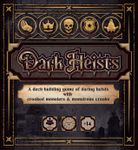
that's when I released my first game, Dark Heist. And even Dark Heist, people like it as a game. People who played the the game during the playtest, they loved it, but I've had some coaching. You know, I found some mentors in the business and I've had some coaching and I learned a lot that I could have done better with that as a product. I think you see some of the results in Crumb Snatchers that it's a family-friendly cookie stealing card game. It looks like a box of cookies as you walk by it on the shelf. And even when people don't know I'm the designer, I see them walk by and they have to pick it up and touch it. That is just as important as is the game fun if you want to get into the business of selling games.
Absolutely. Now, going back to you talking about how you went to a lot of conventions, you not only went to conventions for yourself. A lot of these conventions, you were helping to sell other independent designers' games, especially them from the same area as you, which is Southern California, right?
Yeah, I did the math and realized if I showed up at a convention and I had five shelves worth of Dark Heist, which is a spooky deck builder game where you recruit monsters and criminals to do haunted heists. I think deck building is one of the more popular genres in the business, but it's a game that's not for everybody. It's got some mature themes to it. It's very stabby. It's got a lot of take that to it. These are two big things that a lot of people aren't necessarily interested in, but the people who like it love it. So, a deck builder with lots of interactivity with a spooky thing to it, it suits a lot of people, but it doesn't suit everybody. So, it occurred to me very early on if I just have one product, people are going to figure out if they want this product or not and they're going to see it, like it, or leave it before they even get to the booth. Before they even look and interact with the product, they're like, "Yep, nope. Yep, nope." Sometimes I'm the same way. That's a booth that sells fluffy unicorn games and teddy bears.
And I am certain that somebody's game, those teddy bears might be murdering each other, but if you showed me that, I'd actually be interested in checking it out. Everybody's got their their vibe. I quickly realized there people who have games that are selling. I'm part of a couple of really amazing design communities and man, some of these people have games that I'm so jealous that I didn't design. And you know, some of them I am a huge champion of their games and I tell people about them all the time and when I tell them about it, people buy them. And so, it clicked for me right away that I can sell games. That's not a problem. And so, as I started vending in Southern California, Northern California, and Vegas, I started showing up almost more like a retailer who has something different than every other retailer. And people come to my booth and they're like, "Wow, you have all these games.
I've never seen any of this." And I'm like, "Yeah, these are local publishers like me. Most of them don't have distribution and that doesn't mean they're not great games."
Yeah, absolutely. I love seeing that and you're supporting each other, which is wonderful. Now, our main topic for this episode is can historical board games be educational, which is very interesting. Now, you have a board game that's coming out soon, right? That is historical. You're at a convention right now as of the recording of this episode all about historical war games. So, do you want to talk about why you picked this topic?
I have a game coming to Kickstarter on November 3rd, Fabulous Freeman, where you can travel around America helping heroes of the Harlem Renaissance, which is a thing in the 1920s where after World War I, alcohol became illegal, but because of a whole lot of political stuff, it was a opportunity for a lot of uplift in the black community. And so, you really had people starting to who who had done work, who were brilliant, who were talented, really starting to get the shine that history would suggest they deserved. And so, in this game, Fabulous Freeman, you play young upstarts who don't have names. You're you're archetypes of people who might have lived back then and you go from city to city and you work with the communities to solve local problems and you want to get to people like Ida B.
Wells or Lewis Latimer or C.J. Madam Madam Walker and help them in the abstract be the amazing people they were. Some people don't know Madam C.J. Walker was a first self-made woman millionaire in the West, not black woman, just woman who made her own fortune. She did it by doing some real kind of bootleg scientific examinations, and I say bootleg because it started off in her kitchen before she got into laboratories, before she got into manufacturing, and she was able to create beauty products that didn't hurt people and allowed men and women to have more self-esteem, and they paid for it to the to the tunes of millions of dollars. And so, people play this game, and one of the the vibes that one of the comments I get is people play this game is this really cool that you have this educational game. And it's a comment that never really sat right to me because if you're playing a game about history,
Mhm.
then there has to be something at risk that maybe the history doesn't happen.
Mhm.
Otherwise, you could just be reading a book if you just want to see how the story went, you know? I like historical games. I like games that allow you to explore moments in history, but one of the things that's always intrigued me is that there has to be some play in it. There has to be a opportunity for the history to not have happened, otherwise you don't actually feel the stakes.
Mhm.
And so, one of the questions I've been chewing on is can historical games actually be educational? Because you could play uh Civil War war game where the good Confederacy wins because of how the dice roll, you know?
Yeah.
Or because the car the card draws go. If you walked away from that saying, "Well, the Confederacy won." Well, I think you learned the wrong thing from the game.
That's interesting because I feel like if you talked to someone about a historical war game or any type of game set in history, they think automatically that yes, you're going to learn something or yes, they are going to put factual information or they will put something in the rulebook. Most most games will put in the rulebook, oh, this is the facts. This is what we changed. And so I feel like almost in my mind every historical war game is educational.
I guess I think historical games are a avenue to engage with the history. They are a thing that can really entice you to learn more about the history. Some people don't read that part of the rulebook.
That's true.
Or read the flavor text on the cards because a lot of that's in there, too. Yeah.
I write rulebooks and I've had a lot of people ask questions about things that are right there in the rulebook. On page two. There's a definitely a point where I think the point of a historical game is actually not the rulebook. It's the experience of engaging in whatever is going on in the game, what it on the board, in the card play. It's just interesting to me. I am trying to fix my face to of course say, if you like this game, you should get it. And if if you like it because you think it's educational, sure, it's educational.
I think too hard about this stuff. I know that if you're playing with younger people, you actually have a responsibility to let them know World War II didn't actually end up this way. But you have had a chance to experience the stakes of the war in a way that you would you might not experience just reading a book. When you have to move the troops, when you have to figure out what information to give away and your subterfuge, I think you feel in a visceral way what the history was about. But you can do that and still not know the dates and the important names of the people involved, you know? So, I don't know. To me, it's just interesting.
Do you feel that most historic war games are not designed from the point of view of teaching education and instead just designing from the point of view of taking something that happened in history and making it into a game that people can play from both sides and see how it might have turned out differently if people made different choices.
You're asking me a question that is the intent of hundreds, if not dozens of designers. I love John Company by Cole Wehrle, which is a really dark game if you think too hard about it. But, you play the I'll say bumbling bureaucrats working for this corporation that they don't really understand how what the paper clips that they steal in the office will affect the lives of hundreds of people off the coast of Africa or off the coast of India. And when you get that feedback, the incentives of the games are specifically designed that the feedback is not people got hurt. The feedback is if you don't find somebody to blame and get fired, the company might shut down. I really had a lot of insight into how just following orders is sometimes an evil and toxic thing and how sometimes the butterfly effect of what we do at our day jobs might have serious ramifications elsewhere. And John Company is about the East Indian Trading Company and about the 1800s. I I don't really want to think about how sometimes our day jobs in real life might also fit [clears throat] in these categories.
Yeah.
But, as a But, as a historical game, there are a lot of people who want to play Oranges and Lemons. There are a lot of people who want to play Brass Birmingham. And they don't want to think about it in terms of what was happening because of these industrial England games. And I look at John Company, and it kind of brings those two ideas together in a way I think is profound.
Okay.
I Is it to be educational? Is that the goal? I learned a lot.
Is there an example of a good historical game that you found to be very educational or that you found to be a good example of a historical game that is educational?
What's educational mean? I think you learn a lot from John Company. I like a lot of these Roman games. I think you learn a lot from Brass Birmingham. I think you learn a lot from these games. I don't know how much they prepare you for a test. And I guess that's I guess that's where I'm drawing a line of educational. What does educational mean? If you play March of the Ants, you might learn lots about dozens of different thoraxes of ant species around the world. Does that make you an expert? Are you able to get a degree? I don't know.
I'm glad we talked about that because I was thinking more like most games you can learn something, but you're talking about defining educational games as in it can help you pass a test, basically, right?
I think games give you a sense of a thing. I don't know if they necessarily teach you the thing. It's my opinion. I'm I'm really open to discussion on this.
Yeah, absolutely. I think your initial comment about how a lot of games can give you that first spark of a conversation that helps you get that curiosity going and helps build upon different topics that you can then teach further and get people engaged with the game and then go on and teach further with the actual real-life facts of what happened, and I feel like that's very educational. I know a lot of books are like that, right? Where they will have the You read the book, and then you have talking points afterwards, and more
research to be done. But, I also understand what you're coming from in that I agree that historical games, especially historical war games, might not teach you a lot of actual facts of what's going on around it. It just tells you this This happened, and then you're going to try and see if you changed history, what would happen, or if you were trying to make sure that history kept going, what would happen. Because I do have a couple of games from indigenous designers that are actually there to teach kids about the history of the indigenous people. And so, it is a different play. It's a different design than, let's say, just a regular battling war game, right? That is set in a historical time. So, I totally understand what you're saying, but it is very interesting. I feel like any game could be educational. It can be used by teachers to teach a point or get kids interested in a point, but you have to, as always with anything, take the next steps and actually research and read and learn about it.
I guess that's part of my problem. And when I'm making Fabulous Freeman, I'm making a game that is supposed to be replayable. That's a game that's supposed to be fun, a game that is supposed to really create cool stories and experiences at the table. And so, some people might say, "History was a lot more racist than this game is." And And I'm like, "Yeah, this game's supposed to be fun."
Racism's not that fun.
Yeah, I don't want to deal with racism. Most people don't want to deal with racism.
Yes, absolutely.
So, I think it comes back to what's the product. And as a product, I think as I attempt to make something that is replayable, that's fun, that isn't always ending the same way, that doesn't feel so easy that it's like of course we're going to win because this should be nice to us, but also isn't so hard that it's like you're trying to prove to us how hard and dark the history of black people was. Nobody wants to play that game. I I'm sorry, I don't want to play that game.
So, as I think about what a product is, I guess one of the things I'm exploring is do people want educational games? I learn a lot about space playing Seti. Does Seti want to teach me more or it doesn't really want to lean into like what cool aliens could look like? And I think there's that balance of learning and fun that needs to be there. And you can't go too deep in the learning at the at the expense of fun.
Absolutely. Well, especially since the main point of games is the fun versus the learning. Right?
I don't know.
That's a that's a different topic for a different podcast.
What is What is the goal of games?
I guess the main goal that people play games is for fun. versus learning. But I guess that also depends on the setting, right?
Yeah, yeah, yeah.
Yeah. Well, that was an interesting discussion. Put your opinions into the comments below. So, for our top five for this episode, it is top five cooperative games. Now, I'm guessing you chose this because Fabulous Freeman is also a cooperative game.
Fabulous Freeman is a cooperative game. I like cooperative games, but I've seen some that I don't like.
I have strong feelings.
What is it that you like about cooperative games?
I like a cooperative game when we are working together toward a goal, but I am always in control of my decisions. So I I don't
So you
I don't like it
when someone alpha games you, right?
Yeah, when somebody's quarterbacking or alpha gaming, that's less than fun.
How is it that you feel cooperative game best doesn't allow alpha gaming or quarterbacking?
I much am more interested in kind of the affirmative things about some of my favorite cooperative games. I think at its best, cooperative games do magic.
Oh, magic, okay. Sounds good. Well, why don't you start us off then?
I guess I'll take one of my favorite cooperative games off the table that is truly magic, and that is The Mind. The Mind is a really cool trick of a game. We're just going to get together, and we're just going to put the cards in our hand in numerical order. How hard could that be? We all know how to count.
Mhm.
Well, yeah, but nobody can talk. I find that The Mind is a game I love introducing to people who aren't familiar with modern board games because people have this idea that they're going to win, they're going to dominate, they're going to destroy, all the verbs that I used as a kid when I played Uno and Monopoly. I played with people as young as five who were able to kind of really understand the tension and stakes, and at a certain point, tune in with everybody else.
Yeah.
And somebody just played the five. I have the 21. When do I play that? Mhm. I think it's just such a brilliant experience of a game.
Very meta in a way. You're always squinting at each other a little bit.
Yeah, yeah, yeah, yeah, yeah.
Yeah. I do like the way the Brothers Smurf play it, though, when they're they talk about something completely not related, like going grocery shopping.
Mhm.
To give you little hints on where they are, of how far they can go, that type of thing, which is more fun for streaming because you don't want to have a completely silent stream, right? But also, it's a little bit more engaging because you're kind of putting your all yourselves in the same place and then trying to talk your way through little tidy hits without telling everyone exactly what you have. It's a great game.
All right.
That's The Mind.
The Mind?
The Mind. Noted. Not a game for streaming.
You could, but it's it's hard when you're just staring at each other and it's completely silent, right? Uh so, that's The Mind for two to four players. It's designed by Wolfgan Warsch and it's published in North America by Pandasaurus Games.
Thank you.
It's the one that I learned first. It's the one that is the kind of quintessential cooperative game that I think everyone thinks about when you say a co-op game. It is Pandemic. For two to four players from Matt Leacock and published by Z-Man Games. And it is great. I mean, there's a whole bunch of different versions of the game. There's expansions. There's a Lord of the Rings version as well. And it is that first thing that a lot of us hobby board gamers would think of when you say a cooperative game. And it was the first one I really fell in love with. I blamed it out. I have little germ meeples in plastic containers that look like Petri dishes in my game and I love it. I got most of the expansions as well. And while yes, this could have a little bit of the alpha problem, you really are trying to discuss with each other and say, "If I go here, can you take care of that before it gets too bad? Or can I bring you over here with me?" And if you get a great group together, it really feels really good when you're like, "We did it. We We completely found all the cures. You don't even have to get rid of all the germs in the world. You just need to find a cure for every one of them and get back to Atlanta and then you all survived and you all win and and the asymmetrical powers also make things a little bit interesting because it's not
hard to learn unlike some other games with asymmetrical powers, but it makes it more interesting on what you focus on for your own rules. Do you like this one, too?
Pandemic has a soft spot in my heart because somebody said, "You like role-playing games? Here's a board game you'll like." And I found it very exciting, intriguing, and engaging. Not the first board game I ever played, but maybe the first modern board game I played. I'm a big fan of Pandemic. I have definitely since played with people who were a little impatient with people learning. I have played with people who I thought could be better citizens with people who are playing.
Great game.
My next one, I'm going to I'm going to yes and what you said.
Okay.
Okay.
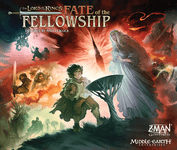
And I'm going to say that if you're going to Pandemic, I'm going to raise you a Fate of the Fellowship.
Aha.
Also by Matt Leacock. I've come a long way since Pandemic. I've played hundreds of board games and my taste is a little more refined and some people would say obtuse or obscure.
This game takes what was going on in Pandemic and it does more than just change the cards to Lord of the Rings themed. It really creates a couple other mechanics that give you, again, a real visceral sense that the stakes are high and that you're trying to get it all done with a very limited resources. First time I played, we were having a good time and the game was very engaging and fun. We tossed out the ring and we were like, "Yay!" And someone says, "We lost." And I was like, "What happened?" And they were like, "The deck ran out."
Oh, yeah.
That's a thing? And so
It's a thing from normal pandemic, the original.
The game was so engaging. Each character has its own way to play. The asymmetry is so distinct and different and everywhere you go, you're dealing with your own battles, your own challenges. Sure, there might be quarterbacking in this game, but it does such a good job of engaging with the theme. The second time I played, we also lost, but the deck didn't run out.
The only time I've ever won this game is by playing with Matt Leacock. So So maybe we should play together and hopefully we can win, but I agree with you on the characters. I feel like they really evoke the sense of the character. Like they didn't just slap it on to the original pandemic characters' abilities. Yeah, they really said, "Oh, this person was like this or this Gandalf was by himself, but also with the hobbits." And so he has different abilities when either of those happens. It was a very good IP theming of a game. They didn't just slap it on. It was really thoughtful and really designed well, I think. And it was 17 years. So original pandemic came out in 2008. 17 years later, we have The Lord of the Rings: Fate of the Fellowship. Isn't that crazy?
It's such a excellent implementation. Pandemic sought by my heart. This Fellowship game like has me by the neck.
That's The Lord of the Rings: Fate of the Fellowship for one to five players by Matt Leacock and published by Z-Man Games.
There we go.
Yeah, I think I'm going to choose my next one's going to be Codenames: Critical Role Adventures for two to four players. Designer, I apologize for pronouncing your names wrong. I think it's Vlada Chvatil and Filip Pond Nesky, but it's published by CGE or Czech Games Edition and this is the fully cooperative version of Codenames. So, normal Codenames is played in teams and so you have one who's the code master and then they are trying to get their teammates to guess correctly and then you have Codenames Duet where it is cooperative but it's only for two players and you're trying to guess what each others people are. But in Codenames Critical Role Adventures, everyone's playing on the same team and then you have one of the code masters. Now, I played it at higher than four player counts. I actually played it, I think it was like six players where it's me and then five other people and they were all like just guessing and trying to figure it out and you always play with three different adventures or three different characters and the great thing is it's a campaign and just like with RPGs like Critical Role, you can level them up, they'll get new abilities and they have their own little sidekicks and it's it's a lot of fun and I really enjoyed this version of Codenames even though I enjoy most of the versions of Codenames, this is the fully cooperative one and yeah, there can be some people that are like it's obviously this or it's obviously
that and I think it's up to whoever is the code master, the person leading the game to be like, well, let's all agree, let's vote and see who it is and that way there's not just one it's not a Codenames Duet again, right? But you can actually play with different players coming in and out. You can have the same adventures, there's different maps to go through, so it's a lot in a small box to go through with Codenames and you can mix and match them. So, I have mixed and matched Disney pictures with Codenames Critical Role, which is also very fun. Okay, okay. So, I went to Gen Con this year and Critical Role had a room where they were demoing this game and it seemed like every time I went there, they were like, "If you'd have come here 15 minutes ago, there was no line. And now we have a 30-minute wait."
Everybody tells me that going to Gen Con is partly the enjoyment of waiting for things.
Line Con?
It's not as bad as sitting in a Comic-Con. But
That's true. That's true Line Con. That's true Line Con.
But there was just so many pretty things and so many places you could just rock up and stumble into a demo in the exhibitor room. I was just like, "Okay, I'll come back." And I haven't gotten the chance to play it yet. Looking forward to it. I'm hearing things and somebody who's still deep into the role-playing game space. I played Daggerheart, fun game. So, I'm like, "Um this code name sounds like it's right up my alley." If you know anybody in the Southern California who's playing it, I mean, you should let me know.
We should just have a We We live close enough that we could get together and have game night. It's just the timing of it all and and trying
You say that and I only see you in other states at conventions.
Hey, I say that to other people all the time. I say that to other content creators. I'm like, "We could have been just playing games nearby, right?" But no, we have to go across the country to Philadelphia to finally meet up and play games. [gasps]
But it happens. It happens. Especially I think in Southern California, it's just the driving. It's not the distance, it's the time factor, right?
Okay.
Yeah. Well, what's your next one?
I'm going to keep it heavy, folks. I thought about a bunch of games that I thought were great co-op games and I was trying to figure out which one and the further I got down the road, I'm like, "Uh-oh, are these solo games?" But
A lot I think every co-op game is soloable.
Well, I hear that Codenames that you just talked about.
Except for Codenames. You can't solo Codenames.
Yeah, Faded the Fellowship, definitely not soloable.
No, you can.
And
mode.
Is there?
Yeah, you just won't win.
I have not won the solo mode yet.
I wouldn't want to play The Mind solo either.
Oh, yeah, that's true. You can't do The Mind solo. You're right, there are so many games now that you can't solo. That's true.
So, this is my one guilty concession to this, the co-op games that could be solo games, and I think that's Spirit Island.
Oh, yes. Oh, that's a good one.
Spirit Island is such a good system. It does such a good job at the generative challenge and keeping it strategic. And my first couple plays, it all just washed over me and was such an emotional experience. I just really dig that game. And the more I played it, the more I realized what's kind of got this little clockwork engine to it, where you're flipping the cards and then you're seeing what the challenge is going to be in a couple seasons. I really dig this game.
Absolutely love Spirit Island. It is more on the heavier side to learn and get into, but once you do, it is quite fun and I quite enjoy the theme of it as well. And it is for one to four players. It's designed by R. Eric Reuss, and it is published by Greater Than Games, and I think it's a great choice. Okay, so then what's your honorable mention? I'll give you two.
Okay, Dead Cells and Slay the Spire.
Slay the Spire. Mhm.
I dug both of those games and they they think they both did a great two to three player mode, but also you could just play the solo.
Dead Cells for one to four players,
Yeah.
designer Ludovic Maublanc and Théo Rivière. Rivière, I apologize. From Scorpion Masqué. and then we have
Slay the Spire.
Slay the Spi- Wait, I have Slay the Spire the board the video game is solo though.
Well, that's the thing. I was thinking about these and I was like, of course they could have great so- solo modes because low-key they they come from solo games.
Yeah, Slay the Spire the board game from one to four players. Designers Gary Drozdowski, Anthony Giovannetti, and Casey Yano and publisher is Contention Games. But yeah, I think you're right. I Slay the Spire is based on a solo video game or PC game. So is Dead Cells, okay.
Spirit Island is not and so it it not being based on a video game I was like, okay, this is obvious the choice because, you know, it was designed to be a board game.
Yeah.
As as far as I'm aware.
Great choices. So for my next choice and I didn't have either of your honorable mentions on my list partly because I haven't played either of them, but I am interested in Slay the Spire because it's a deck builder and I really enjoy them. But my next choice is not a deck builder. It's Burgle Bros for one to four players. Designers Tim Fowers and published by Fowers Games. This one is really fun. I think it already has a version three to it as well, but this is where you and your friends are going to go on a heist. You're going to try to find the safe and then you have to go and look into the other rooms to find the combination. You have to roll the dice to get the combination. That sort of thing, but at the same time there's a guard on all the floors that's going to be moving every turn and you're trying to duck around them. You're trying to not get caught on camera. There's motion sensors. It really does feel like a heist game and it is really quite fun. It's definitely one that I have played for years for years. And we play it on BGA as well.
And it's just the three of us and we just start a new game afterwards. I do believe I think it was Burgle Bros. 2 where he made it so that it is now 3D where the different floors can be on top of each other instead of just side by side. And then Burgle Bros. 3 I think now has more technology into it. You're trying to hack the system and it's one of those games that you can really lean into the role-playing part of it, but it's quite fun.
Okay.
Have you played this one?
I have not. Here's my problem. There's so many good games.
There is. There's so many good games.
There's so many games that I bought, I fell in love with, and I own, and I'm trying to get back to the table. And then there are people like Amanda who tell me about Burgle Bros.
Sorry, not sorry.
Right?
This is definitely a classic for me and I love it. It's Burgle Bros. from Fireside Games. Okay, your next one, my friend. This is your fourth one.
My fourth one. All right. I'm putting it in as my submission of cool new games that are doing awesome things because I struggled with a bunch of games that I felt like were kind of at this weight that you know, you could get anybody into, totally have a good time, big laughs, big vibes, big feelings. And I'm going with Bomb Busters.
Yes. Oh, I love this game.
I played the heck out of this game. And it's one of those games that my family are not gamers and I got my family to play and they went from loving it to liking it to you need to go find some friends to play that with.
It just got too hard?
It is very me and I think they like it. I also have a teenager who's part of this equation and I I think we're at that stage of development that anything I want to do isn't cool. And so, I definitely felt some gloating that my my wife tells me I shouldn't be doing when his friends came over and he said, "Hey, we're going to play Bomb Busters."
And I'm like, "You don't want to play Bomb Busters with me?" He's like, "I want to play with my friends."
Teens do.
As teens do. But, yeah, I totally love this game. It does give me the mind vibes. I really dig how it creates this pattern thinking.
Mhm.
Yeah. Deduction, yeah.
Deduction, yeah.
Where you're trying to see what numbers someone else has in front of them just by asking certain questions and have to do this. Okay, well, it was in this side of the tray versus the other side of the tray and it has a campaign that builds on top and gets harder and harder. And it's so interesting, but then one person might just think something wrong or weird and you're like, "No."
Rules are they require you to give clues to other people. As people get down to their only one, there's a clue and you're like, "Okay. Okay. Okay. Wait. Wait. They did something. That means something." And
Yeah.
It's It's a game that you have to lock in and pay attention and I love it.
Well, that's Bomb Busters for two to five players. Designer is Hayashi Hayashi and the publisher is Pegasus North America over here in the United States. Yeah, this one's a good one. It's a award winner as well.
Yeah.
Great choice. Yeah. I am going to choose for my next one The Game, but the deluxe edition. Now, I have to say the deluxe edition because the deluxe edition has little things that you add in that you can change the game from just The Game to have differences in how you play it. So, for an example, so The Game, you are trying to deduce what everyone has in their hand, and you're trying to make sure that you are organizing these number chips so that the person that's going to show their hand first has the lowest value hand versus the highest all the way to the highest value hand. So, it's very interesting because you usually have four rounds, and you're like, "Oh, this card came out in the flop, and that made their number jump really high, which means now they have this hand versus that hand." And it's really little deduction on how other people are doing, and you're trying to read their minds a little bit. But, with the deluxe edition, they've added things like a dealer mode where one person gets the dealership, they get the cards for the flop, the river, and the turn, and they add it to their card, their two cards that's in their pocket, and they can They're the ones who decide what goes out.
So, everyone's playing it. So, it's very interesting, and that just goes around, and in turn order, everyone can be the dealer, and then there's other cards that give you different abilities or different events. They're At higher player counts, I got to play it at 10 players, which was very, very interesting. You have these chips that basically say, "Well, because there's 10 players, it's very hard to get them in order. There's a lot of times where two players have very, very close hands or almost identical hands. So, you have these chips that say, "Well, I think I have very, very close to you, so I'm going to take this chip, and now I'm out of this game. You don't have to worry about my pocket and deciding the order or the ranking of the cards." So, I like all of these different modules that you can add in that changes a little bit about how it plays, and it adds variability to it. Also, the deluxe editions is gorgeous because, you know, you have all the chips, you have these big bars of quote-unquote gold to keep track. You have the player mat that also stays in the game or in the box, I should say. So, it's a great addition.
It's a lot of fun, and they've added in some of these promo modules into the game so that it's everything's in one box, which is really, really nice.
It's pretty cool. I like The Gang. I played it Actually, I like my friends who like The Gang.
They twisted my arm cuz I am not good at poker. And it's so funny how poker is kind of all over board games, you know? Yeah, like there's a little poker here, there's a little poker there. The Gang is it is a cool game. I often get my straight flushes and my full houses confused and the order. And people are like, "Here's the cheater card." And sometimes I'm playing poker and I feel like my my head's swimming. But, what I like about The Gang is you end up playing the people at the table.
Yeah.
And so, I have a group of friends who like to play and we have that one friend who's always going to like overbid. We're playing the the the game but with this person, and it's just
that's always an interesting challenge.
And I agree with you. The Gang is more about playing the people versus Texas Hold'em. That's The Gang Deluxe Edition, designer John Cooper, Corey Heath, and published by Kosmos in the US. And your last one, sir.
All right, my last one. So, this is the first one I thought about because we were talking about our historical games educational and co-ops. And this game has nothing to do with fabulous Freeman, but it absolutely is a historical game, and I played it and I learned a lot, and it is a co-op game that will kick your butt.
My final choice is Black Orchestra. And in Black Orchestra, you play Germans in Nazi Germany who realize uh Hitler's evil and you got to kill him. And so you play one of several people who were conscientious objectors during World War II who did very aggressive or subtle things to undermine the Reich. And the fictional turn of the game is you're trying to murder Hitler. I played a couple times, but my first time is the most memorable because I played Dietrich Bonhoeffer who is this pacifist Christian dude and I shot Hitler in the head with a pistol.
And one of the cool things about the game as a game is that you can't quarterback other people because they know what they have in their hands and if they play wrong or if the wrong thing happens or if the the the SS show up in the wrong place, they'll go to jail and lose turns and lose resources. There's just such There's a level of complexity that is so elegantly delivered. And yeah, I call it my favorite co-op of all time. That said, I did learn a lot about people who were trying to undermine Germany. I picked up some names and I was able to take that information and go learn more about these people and what they actually did and not what I made their play their characters do.
Absolutely. That's Black [clears throat] Orchestra for one to five players. It's soloable. Designer is Phil DuBarry and publisher is Game Salute. Definitely one I probably have not played and maybe will not play.
Just because it's not my theme.
That's the beautiful
Yep.
thing with variety and diversity.
Absolutely. So for my last pick, I'm going to cheat a little bit. Yeah. Because they use the same system. And what? Okay. So it is The Crew and The Lord of the Rings trick taking series. So, you have a the crew, which has now three games in that series. The Journey to the Ends of the Earth is the newest one. And then you also have the Lord of the Rings the trick taking game, which is also I think it's two right now in there. And the first one is the Lord of the Rings the Fellowship of the Ring trick taking game, which is based on the crew's system of having tasks that change from game to game. They're both campaign games and everyone has a specific task, but the Lord of the Rings has the IP and they also have their own I guess special abilities depending on which of the characters that you choose.
Right.
And that will also tell you what what of the tasks you have. So, to me they all mix into the same in my mind and I really enjoy both of them. It is very interesting that the Lord of the Rings the trick taking game series you can actually solo, but the crew you cannot.
It's very interesting because you can do the Lord of the Rings the trick takers by yourself.
Oh.
There is a solo mode, but not the crew. The first one of the crew is the crew the quest for planet nine and that one is for two to five players. Designer is Thomas Sing and publisher is Cosmos and the latest one is also the same designer. So, Thomas Sing designed all of the crew. And then we have the the Lord of the Rings the Fellowship of the Ring trick taking game is the first one in that series for one to four players. Designer is Brian Roemmelt who is also designing that series as well and the publisher is Office Dog Games. And I love trick taking. I like working together in a trick taking game. There's sometimes you're like, "You got to focus. Focus, people. I have to get this done." And there's a little bit of that if you get a good group in and you're all like dialed in. "We got this. We got this." It's just it feels so good when you get it and you you get all the tricks and you're like, "We won again."
and you keep on going because especially in the Lord of the Rings series, it follows the books very well and therefore you're like, "Oh my god, we got to get to this chapter so that I can see the end." So, you got to get to this chapter. We know this is coming. We got to get them what they need and sometimes it just doesn't work, but I've never sat down to play either of these series of games and just play one game. And so, it's really fun. I really enjoy these this both of their series.
Nice. Can I give you a honorable mention cuz I almost picked something very similar?
Okay. Yes, please do.
I chose Bomb Busters, but it was really really hard not to choose Sail.
Ah, yes.
Also a cooperative trick-taking game. Sail by Ioyama Corio Cor Corio and Kuso. Yes. And I also was very close to choosing Sky Team by Luke Laurie.
Ah, yes.
And I didn't choose Sky Team cuz I knew you were going to choose Sky Team.
It's on my list and then I was like, "Well, you didn't choose The Crew, so I guess I'll But it was definitely on my list for sure.
Yeah, but Sail in particular does trick-taking in such a compelling and interesting way. It was a hard one not to choose because I feel like there are these new light games that two-player in particular that are doing co-op in such interesting ways.
Sail now is going to have Sail Legacy. Yeah, very interesting. I don't think I've ever won a game of Sail though. It's just It's so hard.
So,
Yeah.
Sail's interesting because I feel like in a normal trick-taking game, you can really benefit from being better than somebody else because you can win.
Mhm.
But Sail, the two people have to play at the same level. Sometimes that means somebody really struggling to play up and sometimes that means somebody kind of all right, this is not the optimal thing to do, but I think this is what they're going to do.
Yes, absolutely. Yeah.
So
Yeah, definitely.
You're definitely getting back to that mind mold from the mind type
Yeah, so your two honorable mentions are for two players only, Sail from All Play and Skyteam from designer Luke Ramon and publisher is Scorpion Masque.
Yes.
Uh yeah, the great game. Skyteam is a dice placement game, so you have the luck of the dice. You do have some rerolls that you can do. You have some coffees, you can change the numbers, but you're really trying your best to figure out which dice to play where and in what timing in order to clear the skies, in order to land properly, in order to have the good access and not come in all wonky and it's really fun. It also is another campaign game where you can keep playing and at different levels. So, yeah, that one's a fun one. I really enjoyed it. It was on my list, I just didn't say it. So, I'm glad it was on your honorable mentions. So, now you have had four honorable mentions, so I'm just going to talk about two real quick. The first one I'm going to talk about is very similar to The Mind in a way. It is Take Time.
Mhm, yeah, I like that one.
Yeah, Take Time is for two to four players. The designer is Alexey Chevchenko Pivovarov Proporchenko, I apologize, and Julian Prothery, I think. I'm probably saying that wrong, but it's from Ludovic or from Asmodee in North America. And instead of putting them all into one or two piles, you're trying to put these cards around a clock and you have to match the actual rules of each of the the times and a lot of the cards are played face down, so you don't know what other people have played. And it also is a campaign game that levels up and limited communication, very fun. I really enjoy it. It's also a beautiful game.
It is such a spectacular production. I was really pulled over as somebody took out all of those different clock pieces and set them up on the table. I was like, "Wow, this is an experience."
So, that's Take Time from Asmodee, and then my last one is a little bit of a cheat, but it's Title Blades 2: Warding Sky, one to four players. The designers Tim Eisner and Ben Eisner. Publisher is Druid City Games. It's a little bit of a cheat because it's currently on Kickstarter. I got to play a pre-production with a bunch of different content creators, and it is so much fun. Even though someone might be doing what you think you were planning to do, there's always something else to do. And there's really fun movement mechanisms. You'll be like, "I can take some hits for you." And it's not a bad thing if you lose a lot of health, but you're trying not to die at the same time as trying to pick up different things, and you're trying to take down the monster.
And it is a a campaign game as well, where you are trying to get through. You'll have different level ups and things like that. And you can help each other. You can literally give each other help. And it's I love games, the cooperative games where you can basically give someone something else.
Nice.
Or you can give them health, or you can give them supplies, just like in Pandemic, you can trade cards. It it's really fun. It does continue on the storyline of the Title Blades 1. And it's beautiful. It is a beautiful modular board as well. So, that is Title Blades 2: Warding Sky.
I'm feeling behind. I haven't played the first Title Blades. So,
You don't need to. I haven't finished the first title blades campaign.
Oh, okay.
So, yeah, you can jump right in. You won't know some of the lore, but some of the lore might be spoiler
Mhm.
if you haven't finished the first one, but you can jump right into the second one, so.
I think at your social media,
Yeah.
your YouTube, I feel like I'm the boringest person in Los Angeles.
Why?
Cuz you
you done?
play all the awesome new games.
Oh my goodness. Don't even say that. That's not true. That's not true. I wish I could play more. Don't compare yourself to me because otherwise I have to compare myself to someone like Board Game or Staff who
Oh, okay.
plays like 10 games a week and I'm just like, what the hell? It's always good to at least play something and hang out with friends, right? So, and that leads us to our moment of positivity where we say something small, something big, just something that makes us happy in our lives and bring some positivity into the world. Moe, did you want to go first?
Sure. My moment of positivity is just a shout-out to the board game community. I find that is so supportive and so encouraging and I think the more I look at screens, the more I sit and I'm typing and working all day and zooming, it's just great to get with people and move some meeples around, play some cards, put some tiles down, and just be present. And yeah.
I have met so many people this year, especially going to conventions, that some of whom I can't remember their names, but I just remember such good feelings about and such a good vibe, and I wish folks well. And it's such a awesome and supportive community. And I hope, you know, everybody feels that way. That That's the news from Lake Wobegon.
I think that we all can make the board game community around us better, right? That we can generate that feeling in others, that we can make sure that our tables are a safe space and that we can make sure that we really keep it a great community and not let those people that will tear tear us down or tear others down on at our table, right? That's a great statement. For me, I'm just going to talk about something a lot more frivolous, I guess. I recently was able to take a trip and go see the turning of the leaves. And it's beautiful. Yeah.
Where'd you go?
Well, I went to the Michigan area. So, around the Great Lakes. Yeah. It was beautiful. A lot of the trees were still changing and how some of the trees changed their red They had like red tops and then green leaves for the rest of the tree. And it looked like they had a little hat on. Or some of the trees had a variety of colors because each leaf really starts changing colors from their tip to the branch. So, we had red tips with a little bit of orange and yellow and then green bottoms. And then the whole tree looks multi-colored and it really looks really cool when the wind blows through them and they sparkle that way. It was really pretty to see just a line of orange and yellow and red and green and just to see the fall colors out there.
That's awesome. I'm from California and I often poopoo this idea of seasons, but it is so healthy to pause, take stock of what has gone, where you are, and how far you've grown, and where you want to grow.
Absolutely. Just reflect, right? And remind yourselves that you've survived and lived and grown through all the days and to not compare yourself because you did your best and you've gone so far and to not have other people's stories or other people telling you that you are stuck or you're not where you need to be because everyone's journey is different, right? That's right. You be the leaf you are.
Yeah.
All right. I'm a My last name is Poplar, that's a tree, so I'm all into the tree tree jokes. And tree metaphor.
So, where can people find you on the interwebs?
On the interwebs, you can find me at Ashyfeet.com. If you want to see where I was the last couple days and where I'm going to be, I'm mostly on Instagram at Ashyfeet.com. I am trying to Facebook more. I've been logging into TikTok. Like What what TikTok? It's a weird place. I I think I like it. I hear about some games that I've never heard of over there. And there's a vibe to the the gamer community. And so, it's just so interesting how these digital platforms have such different paces, flavors, styles. So, yeah, mostly on IG, but I lurk.
You lurk.
I lurk.
And don't don't forget your Kickstarter is coming up soon for Fabulous Freeman.
Fabulous Freeman, it's a fun Black History game. Some people are upset that it's not about racism or slavery, but it's not about racism or slavery. It's a little more Indiana Jones, a little less Roots. And you can tell great stories about helping heroes of history. It's a what? 30 to 40 minutes. It is not a long heavy game. It's not a long time, it's a good time.
It is probably suitable for kids eight and up. You can have a really cool experience. And there people who are like, "Wow, I kind of want to do that again." I'm like, "It was like 40 minutes. Do it again, you know?"
Absolutely.
I've played I've played 18XX games. You can play a lot of Fabulous Freeman in in 3 4 hours.
True, not false. And where can people find you at conventions? Are you going to BGG Con or PAX Unplugged?
Yes, I am almost fully booked at BGG Con. I need to figure out if I can get a badge. And I will be at KublaCon Fall in San Francisco. I will be at Stay His Con, where the historical nerds hang out, cuz since I'm a historical nerd, and I will be at PAX Unplugged in December. Then I will be sleeping for a while.
It's no longer season. It's just the cons year-round now.
They There are, but there seem to be big ones. Last year in March was really busy. And then June, July blur, and then November is height.
Mhm. Mhm. Absolutely, yeah. I'm not crazy. I love it.
If you game it, you're doing all right.
Well, thank you so much, Moe, for joining me for this episode of the BGG podcast. Remember, if you have any comments, you can put it on the BGG page. I'll try my best to look at them all, or you can go and find Moe on Instagram and message him directly so that he knows what your opinions are. You can start a discussion. And also tell us what cooperative games we might have missed as well. There's a lot of them out there, and I, too, like a good cooperative game. I would rather work with someone than against them.
Aw, I like to win.
That's why some people don't like cooperative games. They're like, "Well, I'm not winning." Yes, you are. You're winning with everybody else.
I think cooperative games have the ability to tell great stories, but sometimes you need to assert your dominance.
I can totally see that. Okay. Thank you, everyone, and happy listening.
Bye-bye.
You've been listening to the Board Game Geek podcast, produced by Amanda Wong and edited by Amanda and Moonlight May. Be sure to visit us on the web at boardgamegeek.com. You can also You can also find us You can also find us on YouTube. Be sure to visit us on the web at boardgamegeek.com. You can also find us on YouTube, X, Blue Sky, Instagram, Facebook, and TikTok under boardgamegeek and Twitch under boardgamegeekTV. You can reach us via email You can reach us by email via podcast@boardgamegeek.com. Thanks for listening and happy gaming.