25 Popular Board Games Destroyed in 15 Mins
Games in This Video
23 games are featured in this video — they unlock as you watch.











Transcript
25 board games, one brutal thing that ruins each one. Let's go.
No intro, just destruction. We've played all of these multiple times. Here's what actually broke them for us at the table.
Game one, Cascadia. Beautiful nature game that's complete multiplayer solitire with zero player interaction.
Everyone builds their own habitat tableau 3 ft away from each other, completely unaffected by anything you do on your turn. People literally check their phones mid round because there's zero incentive to watch others play. You could play solo or with five people and the experience is virtually identical every single time you play it.
It's not engagement. It's everyone doing their own puzzle in the same room. That's not multiplayer. That's just playing at the same table.
Game two, Wingspan. Gorgeous production quality, but multiple simultaneous subsystems that can feel complex initially for new players. Our partner Sarah, who plays strategy games regularly, felt initially overwhelmed on her first turn. The theme helps make the design intuitive once you understand what's happening, but there's a learning curve getting there. The game can still drag with four or five players, especially with newcomers still learning the systems. And the point salad scoring has a lot of paths to victory. You're simultaneously trying to score eggs laid, tucked bird cards, bonus objective cards, round goal tiles, and specific bird powers all at once. That's broad scoring, which some people love for the flexibility, but it can feel overwhelming initially if you're tracking it all for the first time.
So, it's not that it's broken, it's just that firsttime players need a moment to get their head around everything that's happening at once. The theme eventually makes sense of it all. Game three, Everddale. First half is absolutely delightful. Adorable creatures into gorgeous tree combos flowing naturally. You're smiling at production and theme integration. By round three, your hand can become challenging if deck variance hits wrong. You need construction workers but only drew berry tokens. You need berries but only have worker cards in hand. We played six different sessions and this hand management pattern showed up in most games. But here's the thing. The game remains remarkably well balanced throughout. Games are often miraculously close with players finishing within 10 points or fewer of each other. It's hard to run away with a huge lead, which is actually fantastic for keeping everyone engaged the entire time.
So, deck variance creates legitimate tension and hand management challenges, but the game doesn't punish you brutally for it. You can absolutely come back from a rough turn. It's worth sticking with because the balance genuinely shines through over multiple plays.
Game four, Spirit Island. Cooperative puzzle that's mechanically brilliant until you crank the difficulty setting way up from base level.
At low difficulty, it's absolutely trivial to solve. Everything works out mathematically with minimal effort. Zero tension or dramatic moments. Bump it to medium difficulty and suddenly it becomes completely different. brainmelting, where you're tracking 30 simultaneous systems and one bad choice six turns ago ruins everything cascading down.
The sweet spot where it's actually engaging and fun is razor thin and hard to hit. We've hit it maybe once every seven or eight plays, only when everyone showed up mentally focused and prepared. Base difficulty feels boring and too easy. Medium is brutally hard and overwhelming. There's no real smooth progression between them whatsoever. It's frustrating because the game is mechanically brilliant, but the difficulty curve is completely broken. There's no middle ground where it's challenging but fair. You're either demolishing the invaders or getting completely demolished yourself.
Game five, arcs. Colewor's space opera with incredible tactical depth and extensive card text sitting at the table during actual play throughout. Chapter 4 hits and you've got a dozen guild cards with stacked effects piled everywhere on the board, creating complex interactions. We created custom reminder cards just to track what's actually possible during a single round. The rule book is praised as elegant and efficient, but actual gameplay becomes, wait, can I do this specific action every 30 seconds? It demands three solid hours of your life, plus complete mental clarity from every single player throughout. One distracted person, and the whole game slows to molasses immediately. The extensive card text and complex interactions are real. People praise the elegant design online, but you're constantly rereading card abilities every round during actual play. It's elegant in theory, but cognitively demanding in practice. And you can't just skim abilities because missing one interaction breaks your entire strategy. One person zones out for one turn and suddenly everyone's confused about what's possible. It's a lot of cognitive load for a trick-taking game.
Game six, Dune Imperium. We've played 20 times and deck variants can significantly disadvantage certain draft positions and turn order sequences consistently. We spent a session where I drew combat daggers, literally just military daggers, every draw when I desperately needed spice tokens for locations. By the time I got cards worth actually playing, everyone had strategized around me not having anything useful to contribute. Turn order determines a lot in this game's economy. If you're last in turn order and the deck gives you exactly what nobody else needs, you're locked out of meaningful turns for a solid 30 minutes. We tracked card distribution. Variance exists in most deck builders, but this one punishes your specific turn order position heavily every single game.
It's demoralizing because you can make the best decisions possible, but still lose to card distribution before you even start playing meaningfully.
Game seven, Brass Birmingham. One wrong move with how the link network system works, and you've completely invalidated your entire strategy.
The game doesn't forgive misunderstandings clearly or teach you mechanically what you did wrong. We had a session where halfway through round two, someone realized they'd been scoring networks incorrectly the entire time through genuine misunderstanding. We tried to rewind, but nobody wanted to keep playing after discovering that major mistake had invalidated everything. Rules elegant until they're not, then brutal punishment.
It's not just losing. It's realizing you wasted two hours on a game you were playing wrong the entire time that kills the motivation to continue or play again soon. Seven Wonders Duel, two player civilization builder that's mechanically elegant until one player assembles the science card strategy effectively.
We've played 18 games now. If Blue gets three related science cards by age two, the other player faces an extremely uphill battle for the remaining ages. Science can scale powerfully and become difficult to counter, but it's not a guaranteed win. A determined opponent can still interfere with the science path and score aggressively elsewhere.
One session, partner got three identical science symbols by turn four. I spent the last 30 minutes at a significant disadvantage mathematically. Not fun being dramatically behind so early, but not completely unwinable if I drafted better counterplay earlier. The asymmetry creates some imbalanced moments, but it's not a pure blowout every time.
Game 10, Ticket to Ride. We love this game, but someone blocks your critical route six rounds ago, and you don't find out until endame when you reveal tickets.
You get hit with negative points for something already decided before you knew you were failing on that route. The game doesn't warn you until too late to adjust strategy meaningfully. We house rolled visible tickets in all our games because stock gameplay hides critical strategic information from players unnecessarily.
Game 11, Blood Rage. Lose one key battle round two, and you're spending significant time watching everyone else maneuver for the remaining game.
The snowball effect is substantial. Your armies are reduced, territories controlled by others. One player won a single early critical battle, and the rest of the table struggled to stay competitive by endgame. The punishment for losing early is considerable participation drop.
You're not meaningfully playing anymore after that point, just calculating endgame scores.
Game 12, Azul. The floor line is a design tax on anything remotely fun or interesting strategically.
One mistake means dumping tiles to negative points as punishment. We've never had a game where someone didn't feel cautious about experimenting. It actively encourages conservative play over creative attempts. Games 13. Gloom Haven six-month campaign. Discovered month three we'd been playing an ability completely wrong the entire first campaign. Couldn't rewind because 20 sessions had gone by under wrong rules. One missed rulebook detail silently ruins dozens of hours invested. The rule book has so many subsystems and exceptions that rulebook mistakes are inevitable and invisible during actual play.
Game 14, Scythe. marketed as a war game with gorgeous mechs, but actually punishes fighting other players throughout gameplay.
Economic Engine players print resources freely while you burn them on military action. Every new player we taught expected confrontational competitive gameplay. It's absolutely not that kind of game. It's an economic engine builder wearing mechs as window dressing. Attacking costs you mobility next turn. Fighting is objectively bad strategy in a game about mechs, which is conceptually wild when you think about it.
Game 15, The Crew. Brilliant cooperative trick-taking design, except you need the exact same group every time with consistent focus.
One distracted player ruins everything immediately. We tried rotating players in. Disaster for campaign continuity. Game thrives on shared narrative progression and consistent participation. Bring one distracted friend and the campaign arc suffers significantly.
Game 16, Pandemic Legacy. Legacy moments are incredible when they work correctly, but you're probably misplaying mechanics somewhere throughout the campaign.
Most of your campaign, you're misplaying something mechanical. By three scenarios in, you've locked permanent story elements based on faulty understanding. Best dramatic moments happen in the first playthrough you likely did wrong. It's bittersweet. We're definitely not going back through old sessions to verify. Ignorance is absolute bliss here.
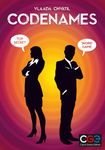
Game 17. Code names. Party game. Until new players don't understand the clues and awkward silence replaces fun.
The clue giver walks a razor line between clever and intuitive that new players haven't calibrated. You end up laughing at confusion or being genuinely annoyed. Sometimes clues make zero sense and the game becomes 20 minutes of awkward silence instead of party fun.
Game 18, Terraforming Mars. Half the massive deck is completely useless with your specific corporation choice at game start.
Card varants brutal. You draw cards and instantly know they're dead weight that doesn't synergize. One player drew three cards that literally didn't work with their corporation. played anyway because turning down resources is bad, but felt like the game hated them personally that evening.
Game 19, Great Western Trail. Same circular route many times throughout the game, improving incrementally each loop.
Theme promised adventure and frontier exploration. Actual gameplay is improve deck so you move fractionally faster next loop. Both felt drained by repetition after 2 hours of walking the same path repeatedly. Game 20, Twilight Imperium. Eight-hour day commitment, full group attendance, full mental energy required throughout. Miss one element and you're slogging through 4 hours with zero payoff. We started at noon, everyone exhausted by 400 p.m. with 90 minutes remaining. Nobody was having fun, just trying to end it. One person tired, one distracted, one didn't read faction carefully. Whole game becomes a slog experience.
Game 21. Nemesis. Cinematic horror only if everyone memorized every icon perfectly beforehand.
We kept asking, "What does that symbol mean? Trying to escape with tension, but constantly checking the 50page rule book. Can't maintain immersion. Checking references constantly."
Game 22. Sea salt and paper. Push your luck game with luck dependent top decking outcomes.
Lucky draws dramatically influence outcomes. One player hit consecutive perfect draws and snowballed effectively. Another session, different player, similar pattern. Variance inherent to the design, not pure strategy.
Game 23. Slay the Spire board game. Imports video game grind without instant restart mechanic that made the video game addictive.
Board game setup takes 20 minutes for a scenario you've played before. Video game has instant restarts rewarding learned knowledge. Board game is spend 40 minutes setting up for content you've memorized. Breaks the roglike loop.
Game 24. Planet Unknown. Lazy Susan gimmick novelty can wear off after multiple plays. Asymmetric starting boards create some imbalance.
One player sometimes had better board layout by seating position. Where you're physically sitting affects your game experience. Novelty gimmick fades naturally with familiarity.
Game 25. Legendary Marvel. Multiple expansions mean extensive keywords and tracking becomes difficult.
Rule book becomes unwieldy. Setup takes significant time finding boxes. By turn three, nobody knows expansion specific symbols without checking references. Expansion bloat is real.
Here's what we learned. We genuinely enjoyed many of these games. Loved some. But acknowledging specific frustrations versus what the box promises, completely different experience. the patterns. Some punish luck heavily, some punish learning curves, some punish risky strategies. Once you understand the specific challenge, decide if it's your kind of game. These games have dedicated fan bases despite their specific quirks. Half are genuinely great when you know what you're getting. Walking in blind thinking Cascadia has deep interaction or Spirit Island plays smoothly at medium difficulty, that's disappointment every time. But informed expectations change everything. The worst thing about a game isn't always a dealbreaker. Sometimes it's just requiring the right group, the right mood, or honest expectations going in. Context matters way more than people realize.
25 games, and we kept our actual experience front and center. We found these specific issues frustrating at our table. Different groups will have different experiences based on their preferences and play styles.
Thanks for hanging with us while we got honest about games we genuinely care about deeply. We're Board Game Critique and we'll see you in the next one.
We'll keep playing all these games, especially the frustrating ones. That's the beautiful curse of being a board gamer. See you next time.