Top 10 Mechanisms - JonGetsGames
Games in This Video
26 games are featured in this video — they unlock as you watch.




Transcript
welcome to Jong it's games this is the first out of four special top ten lists that are being created to help support at the John goes pro pledge drive that's happening over on patreon throughout the course of February 2018 this is of course happening because I have recently started making these videos professionally and I am seeking extra support to continue to make this happen and if you are interested in checking out some of the ways that you can support the channel please check out patreon.com/crashcourse case it is my top ten mechanisms and board games and I figured this was a pretty good list to start things off with because it's gonna give a good framework for where I am as a board gamer you know obviously my tastes and the things I enjoy in games is going to be reflected in the reviews and whatnot that I do so I figured this is a really nice thing to just get out there so I think let's go ahead and now start with mechanism number 10 which is trading and negotiation in games so this is a simple idea where you have a certain amount of stuff and your opponents have stuff as well and you want to gain access to it and they want stuff that you have so you come up with a deal whether that be on trading this stuff back and forth or maybe it's going to be a favors like okay well if you give me that then I will not get in your way on this other spot out there on the board and there's a variety of different things you can do in trading and negotiation style games and some examples are Settlers of Catan bonanza and side irreal confluence and they all touch on this in slightly different ways Settlers of Catan was my first love of board gaming like it's what caused me to
really fall off the deep end into modern board games and a big recent event was I loved having this big hand of cards with all these different resources and trying to work into the correct sets to actually build those buildings out well the dice are not always gonna be rolled in such a way to give you what you need so you are just constantly talking back and forth with the people around the table trying to cut really hard deals and I just really enjoyed that aspect of the game you have other games that like Bonanza which have a more straightforward trading style like in that game you have a hand of cards and you cannot rearrange with the cards in your hand so in that case you actually have a reason to trade cards away because you have to play cards from one side you're handed and if the card that that is in the spot that's going to get played its gonna be and for you then you really want to get rid of it so you're in a situation where you're desperately trying to get rid of something in a trade but you don't want your opponent's to necessarily know how bad of a situation are in although if they look down they can usually figure that out themselves and then try to maybe squeeze a little bit more out of you because they know that you are in a position where you need to get rid of something and that puts them in a position of power and psy.d real confluence is a pretty new game that just came out it's got a lot of cube pushing and whatnot through a bunch of technologies on your area but you need to trade in order to get to the right colored cubes to run your technologies and in that game the trading is very wide open and you're not just trading these resources back and forth you can trade favors you can trade the use of pretty much anything in front of you as long as you're not giving away victory points and in that game I really like
the situation where you really can just kind of go crazy with the kind of creativity that you need to make these negotiations happen like you know I will give you this benefit for three turns in a row I just desperately need that one thing right now and now your opponent needs to figure out what is worth it to them like is three turns of access to maybe a special power worth giving getting rid of a resource right now and so all three of these games are just excellent examples of the kind of wheeling and dealing that you can do and I really enjoy this aspect to board gaming and it doesn't seem like training happens that often as a mechanism in games and this is probably the most kind of headspace II type of mechanism that I enjoy specifically because when you are doing trades in games usually they are binding there's no lying or deceit or backstabbing going on here it's just I have a thing you have a thing let's try to come up with a deal and I found that to be very satisfying pretty much every time I bumped into it in games up next at number 9 we have a work replacement which is probably one of the most common mechanisms in Euro style board gaming for the last 10 years and the reason for that is because it's a very effective way of giving you choices and and giving you the ability to impede your opponent's without directly messing up with the kind of stuff that they have in their area because the way that worker placement usually works is you have a worker or sometimes you spend multiple workers and you put them out on two locations in at the middle of the board in such a way that you will gain some benefits and then you will get in other people's way in the classical style of work placement like peace for Odin and Stone Age whenever you go to a spots your opponent's just cannot go on to that
spot anymore they have to find other plans that they can do with their workers potentially going on to locations that you want to go and then blocking you out as well but there are other games that do a slight tweak on this making it more of a speed bump as opposed to a big stop sign like Manhattan Project energy Empire and that one you can place your worker onto a spot - and if your opponent wants to go there as well they are able to they're just gonna have to spend more resources in order to actually pull that off so it's really a question to them is is it worth all of those extra resources to continue doing that action or maybe they're going to go ahead and do something else and the extreme and nice example of worker placement is something like a tar stone where it's more of a worker bumping situation where you can always go to a spot where your opponents are it bumps their worker off and now they get that worker back with which they can put it out back onto the board and I've never actually played charter stone but from what I understand the general idea there is once all your workers are out you're going to spend a turn to pull them all back so it the longer you can postpone spending a turn to pull all your workers back you the better off you are gonna be so there's this nice spectrum of worker placement mechanisms they can't be utilized and in general when a game has this idea in it I have enjoyed it because I enjoy in direct competition between opponents around the table like multiplayer solitaire games are fine with me but I in general prefer a little bit of getting in other people's way and I never like take that kind of direct interactions with my opponents but I love seeing what they hope to want to do and then realizing that it's pretty good for me - and going on that spot and
stopping them from doing it or just making it a lot more costly for them for some reason this makes me feel good inside when I make situations harder for my opponents but of course I am a competitive gamer and so that's where a lot of this comes out so I think the work replacement is a very malleable mechanism and that's obvious by how many games use it to great success in general and it's one that I certainly don't mind what I see it - on the rules of a game when I bring to them a mechanism number eight we now have Tai Lang and this can be used in a couple different ways but the classic style is exemplified by the game Carcassonne where every single turn you simply take a single tile and you were gonna place it out onto a communal area in Carcassonne z-- case they are square tiles but sometimes they are hexagons and sometimes they are funny shapes that look kind of like Tetris pieces and in a lot of these cases where you are building something in the middle of the table collectively together you have a situation where you're trying to try to puzzle things together and that's kind of a standard thing that goes with all tiling is the puzzle nature of what you are trying to do in Carcassonne you're probably trying to connect to that tile up with maybe some other castles to get yourself some extra victory points or maybe put it down in such a way to cut off a castle from one of your opponents so now they can't score any points at all which is a really nice kind of counter move that you can do in that game but there are also games like corkle where you are again to placing these square tiles out into the middle of the table but you now have a hand-up tiles and you are maybe putting out to multiple ones at the same time to score yourself a variety of
points and you're of course trying to set yourself up to not set your opponents up you want to make it so that you get more points and you don't give easy points to your opponents and then a kind of new style of tile line game that lots of games are doing these days is the tetromino style where you have various goofy shaped types of pieces and I think you are always building your own thing in this case I've never seen a game with a tiling pool in the middle where you're shaping these things in but the satisfying part of this style of gameplay which games like Baron Park exemplifying is you are literally putting a little puzzle together and in the case of Baron Park you are not actually drawing random tiles in any case at all in that game you are especially taking specifically shaped tiles and then trying to build some extra combos that go forward for that and there are a lot of other examples I could give for tiling this is a very popular style of play but the reason that I enjoy this mechanism so much just keeps coming back to the puzzling nature of how you fit all these things and it's very satisfying to look at whenever you finish a tile and game you usually have something cool and completely unique to your specific table or just specifically you if you're building something in front of you and I find that to be quite appealing as well as all of the puzzle decisions about how to actually fit these things in up next we have number seven which is multi-use cards I've seen this used in a variety of different ways but the classic idea here is you have a card and it has different sections on it and when you play that card you're gonna do something different with it depending on what you want to do
I think Gloria Rome is a really good example of this where you have a card and you could play it as an action or that card it might end up turning into a resource that you can use to build buildings or it could maybe be a citizen that's going to get launched into your citizenry area which will increase your ability to do other actions later on in the game so that single card can be a variety of different things some of those you play right into and other ones the car just kind of goes into like a pool and then kind of magically turns it into resources and it kind of changes state based off of where it is in the game if it's you know in the bottom part of your player board on the right-hand side or if it's in your hand there's just a variety of different options that this card can be there is a another kind of situation you can have with multi-use cards and that is cards as currency it's kind of like a sub mechanism within this umbrella and for this you have games like origami and race for the galaxy where you can actually spend cards from your hand to pay for the ability to play other cards in your hand so in this case there are two uses for the card the card can either be the actions on it or it could just be a currency to get other cards played and I really enjoy the decisions that go into trying to figure out which cards you can sacrifice to make it the other cards come down into your area and that's kind of another different way to look at multi-use cards my third example is Arboretum in this game you are trying to bunch of cards there are beautiful trees and in this case you are playing these trees down into a tableau in front of you it's kind of like a tiling game in that respect but from a multi-use perspective the way
that you score in this game is you look at the cards down in front of you and you also look at the cards you have in your hand and you only score the trees down in front of you if you have the most of that type of tree in your hand still which means that even though these cards don't have different sections on them they are a drastically different thing based off of their in your hand or down on the table at the end of the game you're not going to score the stuff down to the bottom if you don't have the cards as currency in your hand so in this case you're not actually spending cards they're actually clogging up your hand and you are trying to keep these really good ones in your hand you maximum hand size of seven in this game and you are trying to get rid of the other things around the side while maintaining this really nice heap of power within your hand so that you score the points you want at the end of the game so as you can see there are a variety of different ways that you can see cards as being multi-use and there are many other examples I could go into but just these three should give you a good idea as to why I like this mechanism so much because it's so flexible and it allows players to have to think really hard about which state they want this card to actually be in in order to and get the most worth out of it so that's why I like it so much for mechanism number six we now have time tracks and the idea here is you are gonna have a track and you will have a personal pawn on that track and when it's your turn you can go as far ahead as you want to and it's going to change from game to game whether or not there's some restrictions or not but you can go a variable number of spaces ahead and try to do an action and this is great because it gives players a wide variety of choice but there is oftentimes a
detractor to how far you go and more often than not with games that use this mechanism it is that it is only your turn when you are the farthest to pawn back on that track so if you take for instance the example game Tokaido in this one you can move all the way up to a specific stopping point there are a variety of locations that you have to stop at as you go down this path as you're kind of wandering through Japan trying to have a really nice vacation but within that given chunk that you're able to jump towards you have a lot of different options but if you go like five steps ahead and one of your opponents just hops along and does one and then one and then one well the ability for you to jump ahead and do this one ability before your opponents might not be worth all of the extra turns that you're giving to your opponents if you jump too far ahead another example would be patchwork in this case it's only a two-player game so you don't have to worry about lots of your opponents taking lots of turns behind you but in this case you are actually a bit restricted as to your options for how far you go forward because in that game you are drafting tiles from a row and the tile is going to tell you just how much time you are forced to go ahead but once again if you decide to invest in that really big expensive tile then maybe you go for a whole bunch of time and your opponent might be able to grab several tiles behind you there are a couple games that kind of break the mold on this heaven a nail is one of those where you go as far ahead as you want to along the track and then you still go in player order just like clockwise around the table and this kind of unlocks a new style of gameplay too this time track mechanism because in this instance it's always gonna be your
turn in clockwise order around the tables so if you go really far ahead there isn't inherently a problem with jumping that far ahead to get this really nice thing so you have a humungous amount of great valid options to you and there is a extra counter pool that happens in games like this I know lignum also has this type of mechanism because if you jump really far ahead and your opponents um doesn't the end of the third person is gonna be like well if I jump really far ahead to try and get access to the stuff that's way deep and right next to the person that jumped really far ahead then we're gonna be competing for that but it's suddenly the third person you can just pick up all of these crumbs that are behind us so you have this extra push and pull between the players trying to figure out do they go far ahead just to compete with you on the various options there and how are they gonna help and hurt themselves in that situation so I just think that the decisions that come into play with games that use time tracks are incredibly satisfying and I mean you know there are lots of other games that use this as the mechanism and many of them tweak it in subtle ways here and there but in general if a game has this mechanism in it I am very interested in trying it out all right we've now reached a mechanism number five and if you'll bear with me this one's gonna be a little bit different because I had to come up with my own name for it because I have never seen anybody articulate this before in fact it's possible people might argue with me that this isn't actually a mechanism at all but I have noticed a pattern of this in games that I really like and so for now I'm calling it random input management and now you
might be saying well why don't you just call this like hand management or something like that and in this case it's because specifically what I'm talking about is games that just give you something random in this case it could be a hand of cards like the game of taeju or it could be a pile of dice that you then roll and after you evaluate this randomness as input you then decide on what you're going to do as output so for instance with t2 which is a classic climbing style card game you are given this big hand of cards and suddenly you need to consider well how am I going to play these cards out am I going to do this as a pair and this is a full house or am I gonna try to make make this straight happen and you're just doing this constant planning based off of this random input like you had essentially no control over the cards that you have in your hand I guess 42 you do get to pass cards around a little bit but as the general idea you are trying to develop and manage patterns and plans based off of this input and then you have other games that like Oracle of Delphi where you just roll these dice and then you need to come up with a plan for your turn you are racing around the Mediterranean with your little boat and the dice that you rolled they they might not have given you the options that you wanted but in that game in particular there are still lots of options available to you and there's lots of ways to manipulate those dice to kind of modify the luck of the the input luck that happened to you in order to get some really good actions out of it and another example is also another stuff on fel game and that is la isla because in this case you are every single turn given to three cards and
they're actually multi-use cards so this is another showing for that other mechanism but in a la Isla skate you have to simultaneously choose a an action for all three of those cards and it'll be a different thing for all of those and so you randomly got these cards and one of these cards is going to be a resource cube one of these cards is going to do a scoring bump and then one of these cards is going to become an ongoing power and you have so many perturbations that you can work with with all three of these cards having a resource on them a scoring option on them as well as a power and now you just deal with that input randomness and figure out how I'm going to get the most worth out of this little hand of cards in this case obviously and teach you you're playing multiple hands as you are thinning out your hand versus a la isla where they're still cards but you are just simultaneously doing one plan and then rolling with it but in all of these cases I just love the mental gymnastics that I have to do to try and get good worth out of this random set of input that the game gave me so I'm going with random input management as a mechanism and we'll see if that one sticks next up we have at number four and this one is asymmetric player powers and the idea here is that each player around the table does something different from with the other people around the table and hopefully in all of these circumstances the abilities that they have are balanced but what it means is that each player is doing something either slightly different or drastically different depending on the game and I really like the spectrum of asymmetry that shows up in board games and some of
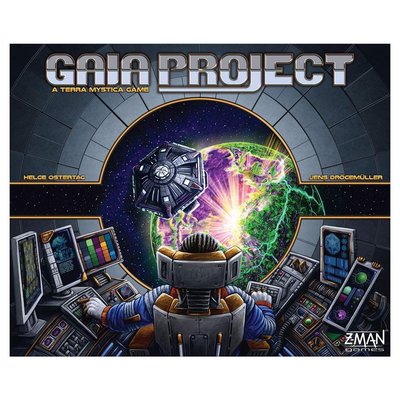
them are a very minor like Tolkien the Mayan calendar for instance in that game you start things off and there are these little setup tiles and you are going to select a couple of them and flip them over and they will give you a starting advantage on some of the tech tracks as well as a differing amounts of resources and then you kind of go off from that point and that's a very minor asymmetry but it is going to nudge you in the right direction as far as dictating what kind of strategy you might be playing for that given game but then on the entire opposite side of the spectrum you have situations like captain sonar where every single person around the table is doing something completely different they're essentially playing an entirely different game well I guess in Captain sonar that's a team versus team game so every person has a person across the table on the opposing team doing the exact same role but in that one you have the radio operator playing a game with completely different rules like it's entirely different game to the engineer over on the other side and they're on the same team and they're gonna win together and lose together even though they are doing things with literally zero crossover and I think probably the middle of the ground is something that you see more often in board games and I like all of these things but in that middle ground you have situations where people have a rather significant asymmetry that is going to affect their status in the game for instance you have a spirit island which is a cooperative game and the other games like Gaea project which is a competitive game and in both of those situations the asymmetry that you pick is going to drastically affect your overall strategy it will in both of these cases that
allow you to kind of seemingly break rules and do things that seemed kind of unfair which is fine in a cooperative perspective but not to in competitive but hopefully in these competitive asymmetric situations everybody is kind of breaking the rules equally in different ways and so everybody feels like they have a good ability but man that person's across the table they how are they allowed to do that you know I just really like those kind of situations and unfortunately it does constantly bring up the question of is this balance like is the person who won were they the person who played best or perhaps they just played well with a asymmetry that is actually a little bit better than it should be in any given situation and unfortunately asterisks are gonna be kind of added in your mind sometimes with these games but the added joy that comes from the diversity of different game styles with these games I think is well worth that kind of niggling feeling in the back of my head and also another thing that this does is it drastically increase the variability of these games because it means that if you sit down to play the game again like you know two nights in a row for instance you will find yourself playing a very different game in some of these situations from the last one based off of the asymmetry that you chose and so in general I do prefer the kind of medium to heavy asymmetry but even the light examples like I said with silk'n is still a really great way to differentiate one play from the next and I just love seeing this in games alright let's now move on to mechanism number three this one is a pool drafting and the idea here is that you have a game state where there is a certain
amount of stuff in the middle of the table and you will just call that a pool and when it's your turn you are going to draft or take out some of the stuff from that pool and then utilize them in your area and the reason that I love this mechanism in games is because I love in direct conflict in games and this they seem to go very well together because as you are taking your turns in games with pool drafting in them you are trying to figure out which of the options in the middle of the table are going to be good for me but also which are going to be good for my opponents and am I able to work myself into a situation where I can take a turn that's good for me and bad for my opponents at the same time and you there are many different ways that games utilize this azul' that came out last year that does this where you have these little coasters in the middle of the table with a variety of tiles on each of them and when it's your turn you're going to take some of the tiles from a coaster and put those down onto your area and that means those tiles are now gone and as you get deeper into the round in Azul there's gonna be less and less and less so it's just this shrinking pool until there's essentially nothing left and you are the challenge here is to try and work it so that you are doing good things the whole way through even when the options start to dwindle there are other games that use dice instead of things like tiles for instance Santa Maria in that game you just roll a bunch of dice and you kind of put them in the columns associated with these six sides because they're just standard D sixes and then you are taking these dice out of the middle and if only one two was rolled and two is the perfect die for you well that's wonderful and you're gonna go ahead and grab that but maybe
that two is actually perfect for your opponent and just okay for you but the one is actually amazing well now suddenly you have that great decision of do I do the amazing turn for myself or the okay turn that also really affects my opponent maybe that's somebody you think is winning and that's something that you're going to be pretty motivated to go ahead and do the last example of cool drafting I like to mention kind of twist this up a little bit and that's seven Wonders dual because in the previous two examples the pool just constantly shrinks until there's nothing left but in seven wonders dual this is a two-player only game and you're putting a bunch of cards out in the middle of the table but most of the cards are locked out you don't actually have access to them until they get kind of freed up as you start to draft the cards from the area so that means in that specific game as you are drafting cards you are unlocking new opportunities for your opponents which is something you certainly don't want to have happen and you don't actually have the kind of drying-out thing happen until the very very end of the given rounds in that game so it has a different tempo state to it but in general this pool drafting idea just creates such wonderful decisions such great in direct conflict which is something I love seeing in games to the point where if I hear that a game has this mechanism I will pretty much just play it like sight-unseen I don't even really need to read the rules I'm gonna be confident that that's gonna be a game that I am likely to enjoy up next we have number two and this one is engine milling so the simple idea here is that you are going to try and assemble an engine that is going to turn
resources into victory points and oftentimes with engine building games you actually start off with a tiny not very good engine and as you are playing the game you're going to build new to that are gonna get kind of locked in and let you increase your capacity to turn not much into quite a lot but also it has a really fun Cabo e type of nature as you just generate more and more stuff and escalate things as the game goes on one classic example of engine building would be through the ages because in that game you start off being able to make just a little bit of ore and just a little bit of food and by the end of the game you have turned the ability to just have ore in these little bronze Hut's into just a spacefaring civilization or something like that and mechanically what you're doing surrounds at that game is you are spending resources to be able to make more resources and then you can spend those more resources to generate extra science and unlock new abilities and increase your military strength and just do all sorts of things they're gonna branch off from the fact that you are investing in the ability to make more resources in the case of through the ages there's pretty much just that food and or but in other cases you have it situations like Lorenzo el magnífico and in that one there is a variety of different resources and as you are playing in that game you are going to be taking these new cards and putting them into various spots on your tableau and then you are going to activate those areas and they are potentially going to combo in such a way so that you can spend a little bit of resources and you know a little bit of wood might turn into some picture points in some extra
military tracks and then you might be able to spend money to get this extra resource and you cannot to in this case use the stuff you just made to go back into stuff that you previously made but you can chain turn to turn in this one to try and customize this kind of combo rific engine that you are putting it together in front of you trying to get the most victory points another example would be terraforming Mars in this case we're kind of back to a single resource situation because in this game you just have fistfuls of cars in general and you need to spend money to actually get these cards into your hand and then you need to spend money to play these cards down in front of you and you put these down into an ever-increasing tableau of stuff and again in that game you start off with pretty much nothing and at the very end you might be yourself in a situation where you have specialized really hard on like building plant life out on the planet or you might have a situation where you have a whole bunch of little buttons that you can essentially press in order to you would get extra abilities and extra victory points and in all of these situations you're gonna find yourself kind of going down a specialization route in order to turn not much into a lot and I find the process of working my way through these games to be intensely satisfying because it's just it's just fun did I kind of crank the handle on these kind of things and see how much stuff you can get out to end um yeah I think that's pretty much all I have to say about this one like engine building is such a solid wonderful aspect to games and I love seeing it in them alright we've finally reached my number one favorite board gaming mechanism and that is incentivization so the idea here is that you have a situation in a game
some sort of activatable spot or maybe a card that somebody can grab and it is going to stay in the game and keep collecting resources or currency or victory points until somebody ends up taking that one spot and there are lots of examples of this some games use it to a very small extent and some games use it to a large extent for a classic example we have small world this is a game about kind of putting dudes out on a map but you have a selection process where you're going to pick a race and modify a pair that are randomly associated with each other and it's possible that that pair might not be very good but if you want to take something that's not that pair then you have to put a currency down onto that one and then find yourself going higher and higher up until you find the one you want so what that means is this poor pairing of stuff is gonna start collecting more and more money as players are like I don't want that I'm gonna put a currency down and skip it until you finally get to the point where somebody says you know what it's really bad combo but there's so much currency on that specific spot but I've got to take it I'm gonna grab it strictly for the incentivized income that is now laying on top of it and this comes to the crux as to why I love this mechanism so much because it's essentially a self-balancing situation within the game and it is worth noting that just because this is my favorite mechanism does not mean that I'm gonna love every game that uses it I don't actually like small role at all but that one particular part I do enjoy so there are lots of other games that use this that I like a lot more and use it to a greater extent one of them is the Stoffer dynasty this game came out a couple years ago and it has
incentivization coming out everywhere because what you're doing this game is you are trying to do some area majority out in a map but that's not really what I'm talking about on each turn you have a choice of either putting people out onto the map or selecting an option of these four or five different spots and every single round you're going to incentivize every one of the spots with a little treasure chest and you will gain access to the abilities on those treasure chests when you evaluate that spot and what that means is the weaker location that actually has zero bonus at all he's gonna start accruing more and more of these chests until somebody says you know what I just want the chests even though the action itself isn't great but then when you come to the actual main map for this game where you're putting all these dudes down trying to win these area majorities you're scattering chests all over the place when do you actually evaluate the region's you will get to gain access to those chests actually when you put the people down you get those and what this means is the spots that people are not going to will keep collecting these treasure chests until somebody ends up wanting to go there and I just think that works so well but you are not always gonna have games that use this in a positive sense in fact the game Firenze a I think uses this brilliantly because in this game you have a card room and you're gonna randomly shuffle up these cards and then splay them out and on your turn you have to take one of the cards and the left hand most card is always free but if you want to keep going down you're gonna have to put some currency down onto those cards but the great catch for this game is that some of these cards are awful and like it's not just like oh that's not particularly good like one of
them is a warehouse fire and you're gonna lose a ton of your resources if you take the warehouse fire so that means the warehouse fire usually finds itself going all the way to the left and then people keep putting resources on top of it in order to skip it until finally someone says you know what the resources I'm losing in this warehouse fire are not are insignificant compared to the vast amount of resources I'm gonna gain because everybody keeps skipping it and I just think in that game in particular it's such a wonderful example of how this self balancing thing could work because some of the cards are excellent and they rarely have any currency put on them at all and some of them are really just not good and you will find yourself in a situation where you're actually happy to have a warehouse fire and that's just such a wacky thing to think about so yes I hope this adequately explains why I think that incentivization is a idea to have a board games and lots of games use it to a very small extent but there are very few games that use it heavily and I would love to see more come out I think that this is probably an underutilized idea and board-gaming and I am always looking forward to playing new games that use it and with that we've now come to the end of this first out of four special top tens that are coming out over the course of this month I hope you have found this one interesting hopefully it's given you some insights as to how I work as a board gamer and how I'm going to enjoy and not enjoy some other things in the games that I'm playing and as this video was created to help support the pledge-drive that's happening I would again ask that you go over to patreon.com/scishow on gates games and check out those pledge rewards
and see if you think it's worth it to you to go ahead and directly support this channel and help me continue to professionally make these videos for everyone out there who is enjoying this board gaming content as always I'd like to thank everyone who's already been supporting this channel through patreon including all of these producer level pledges if you'd like to see more vlogs style content like this one as well as full game playthroughs and in-depth board game reviews please subscribe to the channel thanks for watching cool