
























Goa box art

Goa

Game Info
Year
2004
Players
2-4
Age
12+
Playtime
90 min
Publisher
Collection
Ratings
Creator Score
Mechanic profile
Percentile rank vs. all games
Vibe profile
How this game feels to play
Description
No description available.
Ask a Rules Question
All mentions
Browse transcript mentions, sentiments, pros/cons, mechanics, topics, quotes, and references.
Total mentions: 87
This page: 37
Sentiment: pos 28 · mix 7 · neu 0 · neg 1
Mentions per page
Showing 51–87 of 87
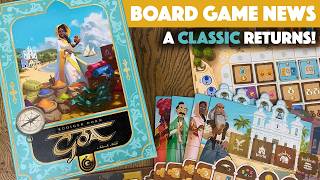
Video IEbKxVqdlHQ News at 0:08 sentiment: positive
Goa video thumbnail
Click to watch at 0:08 · YouTube ↗
Overall sentiment (raw)
positive
Pros
  • Clever and interesting mechanics
  • Engaging bidding system
  • Revitalized with modern art and production
  • Includes original expansion (Bonanza)
  • Potential for solo mode and additional modules
Cons
none
Thematic elements
none
Comparison games
Mechanics (from transcript analysis)
  • action selection — Follows the bidding phase with a phase where players take actions, described as 'doing lots of euroy things'.
  • bidding — Features an interesting bidding mechanic, including a pre-phase for plotting and an auctioneer who can take the item for one less than the highest bid.
  • player interaction — The bidding mechanic creates player interaction, particularly the 'James Bond mechanic' where players bid to prevent others from getting items cheaply.
  • Set Collection — Players upgrade things on their player boards, which are associated with various actions.
Video topics + discussion points
No key topics recorded for this video.
Quotes (from this video)
  • There is a new version of Goa coming out.
  • Over 20 years old.
  • this trend of revitalizing old games. We're seeing a lot of old Euro games that we love being presented in a more modern way.
  • Go was on our list of games that probably needed a facelift.
  • this is uh sort of a a classic that doesn't get I don't think the attention that it deserves
  • it was really clever. It does some really interesting things.
  • the bidding mechanic has this sort of pre-phase where you're like plotting this like little path player by player onto these tiles for which you're bidding, you know, and then player by player each player gets to be sort of the auctioneer and you go around the table and it sounds like there's maybe a couple in the two different editions that existed, two different ways they did this, but you go around the table, everyone gets to go higher on the bid all the way around to the auctioneer and the auctioneer for that particular piece gets to say, 'Forget it. I'm going to take it.' And if they do that, they have to pay one less than the highest bid that was at the table, which is interesting.
  • I don't even want it, but I'm not going to let you get it for one less.
  • the art on this one is done by Niad.
  • This is the person who did Seasons.
  • It's a really nice production.
  • This is Quinn number 30, which is crazy to me also that we're up to number 30.
  • If you want Ryan to buy all of your games, just put numbers on.
  • it includes that Bonanza expansion
  • they've hinted online, and I can confirm there are some other things that are going to be added. Uh, they've mentioned a solo play, solo mode.
  • this launches on GameFound, but the page is up already if you want to go check it out.
  • But now that it looks like this and it plays like Gulla, we're slowly crossing off games on my need to be deluxified list.
  • I would love to see Tuah get this kind of treatment.
References (from this video)
No references stored for this video.
Video w9PgzFqYKS0 Review at 0:03 sentiment: positive
Goa video thumbnail
Click to watch at 0:03 · YouTube ↗
Overall sentiment (raw)
positive
Pros
  • Beautiful, sexier version of the game with updated graphic design and artwork.
  • Interesting and unique auction mechanic with strategic depth and mind games.
  • The auctioneer mechanism where the auctioneer gets the money or can buy the item is highlighted.
  • Money circulation during the auction phase makes things interesting.
  • Player boards offer multiple action tracks to progress, leading to more powerful abilities and points.
  • Limited storage for goods forces strategic acquisition and management.
  • Exploration cards offer bonus actions and set collection opportunities.
  • Outposts provide more depots and are a key way to score points.
  • The 'Captains' module adds variable player powers, a requested feature for Euro games.
  • A solo mode is included, offering more replayability.
  • Variant available to remove luck from contract acquisition for establishing outposts.
Cons
  • Tiles themselves don't score points, requiring players to focus on actions and progression.
  • It's possible to go through an entire auction phase without getting anything.
  • Revealing exploration cards for contracts can introduce luck that some players might not like.
  • Being forced to spend money on a bid you only intended to raise can be a negative outcome.
Thematic elements
none
Comparison games
none
Mechanics (from transcript analysis)
  • action selection — Players take actions, typically three per round, with options to gain ships, produce goods, collect money, or progress on their player board.
  • Auction — A central mechanic where players place tokens to claim tiles, leading to an auction where the auctioneer has final say, but money circulates. It involves bluffing, strategic bidding, and managing hidden currency.
  • Contracts — Players gather contracts to establish outposts, which provide more depots and end-game points.
  • Resource Management — Managing goods, money, and ship cards is crucial, especially with limited storage space on player boards.
  • Set Collection — Exploration cards and contracts have set collection elements for end-game scoring.
  • Tile Placement — Tiles are seeded onto the central board and players place their markers adjacent to existing tiles.
  • Variable player powers — The 'Captains' module introduces unique player powers at the start of the game.
  • Worker Placement — Placing tokens on the central board to claim auction tiles is a form of worker placement, which then triggers auctions.
Video topics + discussion points
No key topics recorded for this video.
Quotes (from this video)
  • the auction is really probably one of the more interesting auction mechanics in gaming.
  • this is where the there's a lot of mind games that happen here.
  • the auctioneer gets the money in this case.
  • Money is all handled via cards and it's face down in front of you. So you never exactly know what somebody has, so you can't just math it out.
  • the auction like we can't talk about this enough because this really is the mind games, the meaty part of the game because there is so much to consider.
  • The captains module really brings a lot of what I think Euro fans in general would want to this.
  • It's a solo mode. I know for me it's all about variable player powers, but for a lot of people it's all about that solo mode.
References (from this video)
No references stored for this video.
Video 2CXyL8d1aPw Tantrum House Crowdfunding Roundup at 3:46 sentiment: positive
Tantrum House - Goa video thumbnail
Click to watch at 3:46 · YouTube ↗
Overall sentiment (raw)
positive
Pros
  • old-school strategy
  • efficiency
  • long-term planning
  • traditional Euro without a lot of randomness
Cons
  • less randomness may feel slower
Thematic elements
none
Comparison games
none
Mechanics (from transcript analysis)
Mechanics unknown.
Video topics + discussion points
No key topics recorded for this video.
Quotes (from this video)
  • "layered systems"
  • "very very minimal luck"
  • "strategy-first experience"
  • "direct competition"
  • "tactical decision-making and a strong visual presence."
  • "immersive campaign-style games with miniatures and strong narrative elements."
  • "cooperative experience likely best for families or groups that enjoy teamwork-focused gameplay."
References (from this video)
No references stored for this video.
Video FwKm_8LUz5w Watch It Played Review at 0:22 sentiment: positive
Watch It Played - Goa video thumbnail
Click to watch at 0:22 · YouTube ↗
Overall sentiment (raw)
positive
Pros
  • Plays well with 2-4 players, including 3 players, without unbalancing.
  • Appeals to both casual players and strategists due to its dual-sided design.
  • The 'brainy side' removes luck and changes strategy by allowing faster movement and self-walling.
  • Special cards provide interesting tactical options like moving through walls or removing them.
Cons
  • If you have four walls around you, you cannot play a card to escape; once surrounded, you're out.
  • If you trap yourself, you and your opponent might both be eliminated.
Thematic elements
none
Comparison games
none
Mechanics (from transcript analysis)
  • Board Flipping / Two Modes — The game has two sides: the 'bright side' (card-driven) and the 'brainy side' (strategic, no cards), offering different gameplay experiences.
  • Card Play — The 'bright side' uses a deck of cards that dictate movement and wall placement. Special cards include wilds that allow moving through walls or removing walls.
  • Hand Management — Players hold a hand of three cards, allowing them to choose their actions rather than being forced to take a random draw.
  • Movement — Players can move their pawn up to one, two, or three squares based on cards played, or up to a number of spaces equal to the number of adjacent walls plus one additional space on the 'brainy side'.
  • Player Elimination — The objective is to be the last player remaining by trapping opponents with four walls.
  • Wall placement — Players place physical walls to trap opponents. On the 'bright side', wall placement is dictated by card colors corresponding to board squares. On the 'brainy side', walls can be placed anywhere.
Video topics + discussion points
No key topics recorded for this video.
Quotes (from this video)
  • hi everyone welcome to GTS distributions
  • you brought a game with you and it is this is gotam
  • it's all about you know it's a good deal this is a good deal like I said this is the best game for trapping your friends right now
  • you have to remember is these are get out of jail free cards they're not raised the dead cards
  • you have to be very careful so if you're in this situation you just trapped yourself and you're both out
  • there's a lot of strategy in actually thinking about how you want to trap your opponents here
  • as the game progresses it starts getting very very tight
  • we've been playing the bright side of gotam
  • so the brainy side of gotam what we're going to do is the rules are the exact same or the objective is the same
  • so there's two different versions We got a colorful side we got the and then we got this the brainer side here
  • Ray thank you very much for this excellent overview of gotam I think I've got it
  • for Gen Con we are going to be doing a limited edition version of roll for it
  • so Rodney do you really want one of these do you really want one yes I do
  • Ray thanks so much again for coming by showing us gotam showing us this very cool implementation of R for it it's just always a treat to talk with you
References (from this video)
No references stored for this video.
Video pSvyMPG_hXw Getting Games Preview at 0:04 sentiment: positive
Getting Games - Goa video thumbnail
Click to watch at 0:04 · YouTube ↗
Overall sentiment (raw)
positive
Pros
  • gorgeous artwork on Apothecary cards
  • lightweight, quick 15-20 minute gameplay
  • tactical puzzle with meaningful decisions
  • restocking mechanic is clever
  • ability to peek at arrow-marked potions reduces memory load
  • multiple Apothecaries expand action options
  • engaging spatial puzzle on a 4x4 grid
Cons
none
Thematic elements
none
Comparison games
none
Mechanics (from transcript analysis)
  • end_condition — the game ends when a player achieves their third match
  • hire_apothecary — spend two gems of the same color to take the Apothecary from the market; a new Apothecary is refilled after purchase; if you have one of each color you can spend three different colors to draw a random top-deck Apothecary
  • Owl swoop — move a card one or more spaces in a diagonal line; the move may pass through other cards
  • power_and_apothecaries — activate the power of one or more active Apothecaries on a turn, with the constraint that different Apothecaries must be used; powers include moving potions diagonally (e.g., Owl swoop)
  • restock — restock face-down potions by counting face-down potions, subtracting from three, and placing that many new potions (up to three) face down on the board with the arrows pointing to the active player
  • reveal — flip a face-down potion card to reveal its color and take a gem from the supply of that color
  • Simultaneous Reveal — flip a face-down potion card to reveal its color and take a gem from the supply of that color
  • special_matching — special match patterns occur when more than one three-in-a-row is created at the same time; patterns include plus-sign, four-in-a-row, and tea; bonuses include removing the entire match and awarding a gem
  • two_actions_per_turn — each turn a player selects two actions from a set of four, and cannot repeat the same action twice in a single turn
Video topics + discussion points
No key topics recorded for this video.
Quotes (from this video)
  • wow this is a much lighter quicker experience than I was expecting
  • stunningly gorgeous art on these cards
  • restocking ability is one of the coolest ideas
  • this is a gorgeous tactical filler game
References (from this video)
No references stored for this video.
Video 6e5bBultbew Getting Games Rules Teach at 1:22 sentiment: positive
Getting Games - Goa video thumbnail
Click to watch at 1:22 · YouTube ↗
Overall sentiment (raw)
positive
Pros
  • Eco-friendly pencil with seed-planting potential
  • Dice-driven movement provides strategic depth with direction, distance, and deviation mechanics
  • Tour plans and local guides add strategic flexibility and progression opportunities
  • Clear thematic setup (Goa) and tangible scoring structure
Cons
none
Thematic elements
  • vacation planning and sightseeing
  • Goa, India
  • instructional tutorial and demonstration
Comparison games
none
Mechanics (from transcript analysis)
  • Compound Scoring — Landing exactly on a tourist destination earns points; destinations are categorized (beaches, waterfalls, forts, historical sites, religious sites) and points are awarded based on visits and type bonuses.
  • Destination-based scoring — Landing exactly on a tourist destination earns points; destinations are categorized (beaches, waterfalls, forts, historical sites, religious sites) and points are awarded based on visits and type bonuses.
  • Dice Rolling — At the start of each day, the active player rolls three dice: a direction die, a distance die, and a deviation die; the values determine the path on the map.
  • dice-driven movement — At the start of each day, the active player rolls three dice: a direction die, a distance die, and a deviation die; the values determine the path on the map.
  • Die allocation and simultaneous planning — The other players choose from the remaining dice for their direction, distance, and deviations; decisions are planned with limited individual options and can be made concurrently before turns resolve.
  • Eco-friendly daily pencil — A pencil used to mark days, commissioned for the game, made from recycled Indian paper and containing seeds to plant after use.
  • Edge rules and map boundaries — You cannot leave the map; if you reach the edge you must continue from the opposite side (bounce-back-like behavior).
  • End-of-day and end-of-game scoring — After 12 days, points come from visited destinations, completed tour plans, and various type-based bonuses. The highest total wins; ties are broken by beaches visited.
  • Movement with deviations — Movement proceeds along the map in a chosen direction, with the ability to change direction a number of times equal to the deviation die outcome.
  • Tour plans and local guides — Players have tour plans that influence scoring; visiting planned destinations augments points and local guides can modify future die values.
Video topics + discussion points
No key topics recorded for this video.
Quotes (from this video)
  • the player with the most points will be the winner
  • these are the most scenic waterfalls in all of goa
  • we've completed a full three-player game of gogoa i hope you enjoyed learning how to play the game
  • this pencil it was specifically commissioned for this game
References (from this video)
No references stored for this video.
Video fPHw-mAEnW0 Getting Games Review at 0:00 sentiment: positive
Getting Games - Goa video thumbnail
Click to watch at 0:00 · YouTube ↗
Overall sentiment (raw)
positive
Pros
  • Engaging euro-style progression with track-based scoring
  • Once-around auctions create tension and meaningful choices
  • Strong end-game scoring via exploration cards and outposts
  • High replayability and variability through card effects and contracts
Cons
  • Rule ambiguity around set collection end scoring
  • Crunchy complexity may be challenging for newcomers
  • Requires careful management of money leaving the system
  • Not yet played a physical copy; experiences may differ on table
Thematic elements
none
Comparison games
Mechanics (from transcript analysis)
  • Auction / Bidding — During each round, players place numbered tokens in an order and bid for tiles; the high bidder pays the bank or the tile is taken by the bidder depending on bids.
  • Contract cards and one-round effects — Some tiles grant one-shot effects or effects usable once per round, influencing late-game scoring and strategy.
  • Exploration cards and end-game scoring — Drawing exploration cards provides strong effects and end-game scoring based on set collection; sets of the same icon yield points.
  • Multi-Use Cards — Some tiles grant one-shot effects or effects usable once per round, influencing late-game scoring and strategy.
  • Once-around auction for tiles — During each round, players place numbered tokens in an order and bid for tiles; the high bidder pays the bank or the tile is taken by the bidder depending on bids.
  • Outposts, depots, and storage — Depots store resources gained from actions; outposts store resources and contribute to end-game scoring, with upgrades affecting value.
  • Resource and boat economy — Boats and resources are gained via actions and are used to move down tracks; resources come from depots and are spent to advance tracks.
  • Resource Management — Boats and resources are gained via actions and are used to move down tracks; resources come from depots and are spent to advance tracks.
  • Tile Placement — Tokens must be placed adjacent to previously placed tokens, either orthogonally or diagonally, forming the order used for auctioning.
  • Tile placement with adjacency rules — Tokens must be placed adjacent to previously placed tokens, either orthogonally or diagonally, forming the order used for auctioning.
  • Track Advancement — Players move their tokens down five tracks on their board, with most of the points coming from track advancement.
  • Track advancement for scoring — Players move their tokens down five tracks on their board, with most of the points coming from track advancement.
Video topics + discussion points
No key topics recorded for this video.
Quotes (from this video)
  • It's definitely crunchier than I expected.
  • I was really intrigued by this game.
  • Points are boring and so this game was able to wrap all of the points up into interesting things that I would want to do anyway.
References (from this video)
No references stored for this video.
Video eh_lahK1iJI The Dice Tower Review at 1:03 sentiment: positive
The Dice Tower - Goa video thumbnail
Click to watch at 1:03 · YouTube ↗
Overall sentiment (raw)
positive
Pros
  • NPC factions create non-direct conflict which freshens head-to-head play
  • Strong action selection with permanent upgrades
  • Deluxe production and artwork
  • Multiple play modes (solo, co-op, competitive) add replayability
  • Backside faction variants increase replayability
Cons
  • Learning curve with rules interactions and some hiccups learning to manage NPCs
  • Not as quick a game as some others in the Mythos line and can take longer to teach
  • Some interactions can be confusing at first (NPC expansions and deity interactions)
Thematic elements
  • Deity activation, expansion, and non-direct conflict with NPC factions
  • Two-player area-control fantasy setting with three NPC Femoran clans and deities
  • Strategic, abstract conflict with deity-driven progression
Comparison games
none
Mechanics (from transcript analysis)
  • alternate faction back sides — Back sides of factions alter expansion patterns and add replayability through different rules.
  • area_control / majority scoring — Players compete for control of color coded regions to earn points; NPCs contribute to scoring.
  • Asymmetric Mechanics — Back sides of factions alter expansion patterns and add replayability through different rules.
  • combat with NPCs — Conflicts involve removing units until one side is exhausted; players do not directly fight each other.
  • deity activation and worship cubes — On a turn, a player activates a deity, resolving its effects; higher deities cost worship cubes; activated deity moved to the top for future turns.
  • Expansion mechanics — Expansion from origin points into adjacent spaces; expansion determined by the number of discs shown on the activation card.
  • neutral enemy expansion — After each player turn, neutral Femoran NPCs expand according to a deck; roads influence their expansion.
  • permanent upgrades via deities — Certain deity activations grant permanent bonuses via Celtic knot symbols that upgrade future turns.
  • scoring and regional bonuses — Regions have victory thresholds; HQ presence yields bonus points; tie broken by total scores.
  • variants: solo and cooperative play — Solo or cooperative modes exist, with shared goals and special adjustments to scoring and tokens.
Video topics + discussion points
No key topics recorded for this video.
Quotes (from this video)
  • The NPCs are a game changer for me
  • I love getting at least two of them in a game and you can win by not focusing on that
  • This is a rock solid game
  • Wow, that's so different and that's so fun
  • A fresh approach to area majority
References (from this video)
No references stored for this video.
Video SBezL4oeSj4 BoardGameCo Review at 8:59 sentiment: mixed
BoardGameCo - Goa video thumbnail
Click to watch at 8:59 · YouTube ↗
Overall sentiment (raw)
mixed
Pros
  • Multiple viable strategies and strong auction mechanic
  • Tight integration between bidding and tableau progression
  • Flexible playstyle depending on how board lays out
Cons
  • Pacing can be slow in the first rounds
  • Reliance on luck with some draws (expedition cards, depots) can be punishing
  • Action economy can feel cramped early in the game
Thematic elements
  • Economic expansion through auctions and tableau development
  • Coastal trading routes in Goa during the exploration/colonial era
  • Economic strategy with negotiation and risk-reward in an auction-driven setup
Comparison games
Mechanics (from transcript analysis)
  • Auction / Bidding — Players bid to acquire tiles; bids escalate; highest bid wins, with payment mechanics affecting money flow
  • auction bidding — Players bid to acquire tiles; bids escalate; highest bid wins, with payment mechanics affecting money flow
  • Compass cards — Grant extra actions; spending cards increases action economy each round
  • Resource management and movement up tracks — Spend goods and ship cards to move up tracks, unlocking better actions and end-game points
  • Start player and board edge positioning — Starting with a marker, the bid location affects available options; later bids determine starting position for next round
  • Tile types and effects — End-game scoring tiles, ongoing tiles, blue one-time discard tiles, and goods tiles with different immediate or ongoing benefits
  • Trade depots and scrolls — Refillable goods depots and scroll-based costs; risk/reward with backup scrolls and draws
Video topics + discussion points
No key topics recorded for this video.
Quotes (from this video)
  • Goa feels like the kind of game that I would have loved 10 years ago.
  • It's a solid 3.5 out of five.
  • There are a lot of tableau building, a lot of auctions.
  • Goa has a nice clean auction with a smooth tableau.
References (from this video)
No references stored for this video.
Video MYBGYPCtqqU Getting Games Playthrough at 0:02 sentiment: positive
Getting Games - Goa video thumbnail
Click to watch at 0:02 · YouTube ↗
Overall sentiment (raw)
positive
Pros
  • Deep strategic options through auctions and route-building
  • Multiple paths to victory via outposts, exploration, and production
  • Flexible endgame scoring with varied scoring avenues
Cons
  • Complex rules can be intimidating for new players
  • Relatively long playtime and multi-step turns
Thematic elements
  • trade, exploration, cultural exchange
  • 16th-century Goa, at the crossroads of global trade
  • historical economic simulation
Comparison games
none
Mechanics (from transcript analysis)
  • Action options and token mechanics — Six core actions (outpost, progress, produce, boat, explore, move tokens down) with an optional sixth booster via token advancement.
  • Auction / Bidding — Players place auction markers and bid on tiles; the winner pays and claims the tile’s effects.
  • auction and bidding — Players place auction markers and bid on tiles; the winner pays and claims the tile’s effects.
  • End Game Bonuses — Points come from progress, outposts, depots, exploration cards, money, purple endgame tiles, and bonuses.
  • Endgame scoring — Points come from progress, outposts, depots, exploration cards, money, purple endgame tiles, and bonuses.
  • Exploration cards and bonuses — Exploration cards offer powerful effects and hand management nuances; bonuses can trigger endgame points.
  • Modular Board — Optional Bonanza, Gambit, Stories, and Captain modules alter rules and add variability.
  • modular expansions — Optional Bonanza, Gambit, Stories, and Captain modules alter rules and add variability.
  • Nazar stone and compass cards — Nazar stone designates auction order; compass cards grant extra actions during the action phase.
  • Outposts and depots — Outposts provide flexible resource placement; depots store resources with a four-depot limit.
  • Progress and ships — Resources require ships to move progress markers; progressing yields victory points.
  • Three-phase round structure — Each round consists of tile placement phase, auction phase, and an action phase where players take three actions.
  • Tile market and phased auctions — Tiles are auctioned in a set order across the round; the Nazir stone can influence the next round’s auctions.
  • Track Advancement — Resources require ships to move progress markers; progressing yields victory points.
Video topics + discussion points
No key topics recorded for this video.
Quotes (from this video)
  • Goa stands at the crossroads of global trade.
  • The game takes place over eight rounds.
  • There are six different action options.
  • Outposts are a lot like depots, however, they have flexibility with the resources that can be placed on them.
  • The sooner you get an effect like this, the better.
  • First person to hit the fourth row gets an exploration card bonus.
  • There is a full-fledged solo mode that you can play.
  • Bonanza tiles, Gambit modules, Stories module, Captain's module expand the game.
References (from this video)
No references stored for this video.
Video O7XywTh_6dw Jamie, Tabletoptiktok Rules Teach at 0:00
Jamie, Tabletoptiktok - Goa video thumbnail
Click to watch at 0:00 · YouTube ↗
Pros
  • Quick to learn and teach
  • Language-independent
  • Simple core mechanic with meaningful strategic depth
  • Variant with three tiles increases options
  • Immediate scoring keeps players engaged
Cons
  • Two-player mode can yield no scoring if no areas are completed
  • Base rules may feel light unless the variant is used
  • Rule explanations can require attention to scoring nuances
Thematic elements
  • Color mosaic and area-building
  • Two to four players build color-mimicking mosaic tiles on a shared grid; quick, accessible tile-laying abstract.
Comparison games
none
Mechanics (from transcript analysis)
Mechanics unknown.
Video topics + discussion points
No key topics recorded for this video.
Quotes (from this video)
  • It's really quick to teach. It's very straightforward.
  • I like it because you have three tiles, so you have a lot more options of what to play when.
  • When to close off areas, when to risk letting them grow bigger, do you place a tile that helps yourself, but also helps your opponent
References (from this video)
No references stored for this video.
Video z1XabVT_UAo Before You Play Top List at 53:00 sentiment: positive
Before You Play - Goa video thumbnail
Click to watch at 53:00 · YouTube ↗
Overall sentiment (raw)
positive
Pros
  • Great auction system that is very interactive
  • Strategic depth in enhancing player board actions
  • Plays fantastically at the full player count
  • Upcoming new edition will improve availability
Cons
  • Hard to find a copy
  • Auction explanation can be complex
Thematic elements
  • Portuguese spice traders
  • Goa region of India
Comparison games
Mechanics (from transcript analysis)
  • action selection — you're trying to enhance like your different actions.
  • Auction — you have an auction phase where there's these tiles that are kind of set up on the table.
  • Engine Building — you're trying to soup up your player board. Try to get your player board souped up.
  • Set Collection — you're trying to set collect
Video topics + discussion points
No key topics recorded for this video.
Quotes (from this video)
  • Hi everyone, my name is Mon'nique
  • This technically our top 10 favorite games of all time. There's so much pressure in that.
  • Root is a game of asymmetric woodland forest creatures going to war.
  • In the end of the day, it's also one of those games where it's just a race to a certain number of points.
  • There is a way to play where it can play well at two because before that it was you really want to play like at the full four, but they have this clockwork expansion which basically adds like these bots that actually kind of work pretty well.
  • You can't wing it. You can't be like, 'Here's just a basic and here's what you do.'
  • Ark Nova is the heavy game about building out zoos. The zoo competition game where you have a deck of animal cards and you're trying to get them to live in your zoo.
  • Spirit Island is my number four, and I love Spirit Island. It's one of my favorite co-ops for sure.
  • Dune Imperium is themed after the books of Dune. We talked about it last episode, so I won't go too deep into this, but you are basically worker placement and deck-building at the same time.
  • Scythe is my number one favorite game of all time as of right now.
  • It's a long experience so you have to be ready. You have to be mentally ready to play this game.
  • This is a Euro game, but it looks like a war game.
  • every time I play the game, I am just so immersed in the fun of trying to to figure out my board while also keeping an eye on other players.
  • This game we were ready to play again because it gives you a sense of h I I'm I'm going to try that again. I'm going to try to do something different.
  • This might be surprising for some because this is Conbon EV.
  • It's a great auction system though. It's it's it's one of my f it's probably my favorites.
  • how tight the game can feel. Um, especially when you turn the corner into the rail era once you get into that second uh the second half of the game.
  • The game itself has a really clever market um kind of system where uh there's coal and iron, at least in the original game, and uh coal has to be transported along network lines and iron can be kind of teleported in.
  • Naveen really loves brass. Like I have to tell myself mentally like you're going to play brass today, but Naveen can play this game.
  • We've done it. We've finished our top 50 board games of all time that we've been planning on doing for like two years.
References (from this video)
No references stored for this video.
Video GDgtK5bk_6c The Dice Tower Week In Review at 16:40 sentiment: mixed
The Dice Tower - Goa video thumbnail
Click to watch at 16:40 · YouTube ↗
Overall sentiment (raw)
mixed
Pros
  • builds beautiful combos
  • strong thematic elements
Cons
  • symbolism is not aesthetically strong
Thematic elements
none
Comparison games
none
Mechanics (from transcript analysis)
Mechanics unknown.
Video topics + discussion points
No key topics recorded for this video.
Quotes (from this video)
  • It is an excellent production. It is everything you've come to maybe know and love about Neuroshima Hex.
  • Outstanding, man. I love this trick-T game that also includes set collection.
  • Disappointing. This is basically Forbidden Island, the card game with too few spaces and a little too much swinginess.
References (from this video)
No references stored for this video.
Video 3OSffm1m4WA The Dice Tower Top List at 11:23 sentiment: positive
The Dice Tower - Goa video thumbnail
Click to watch at 11:23 · YouTube ↗
Overall sentiment (raw)
positive
Pros
  • Technology tracks add depth
  • Fresh and unique at the time
Cons
  • Aged-looking components
Thematic elements
  • Auction with technology tracks that enhance actions
  • Historical trade and exploration network
  • Auction + track-based progression
Comparison games
  • Tiger and Euphrates
Mechanics (from transcript analysis)
  • Auction — Auction phase with upgrading technology tracks
  • Auction / Bidding — Auction phase with upgrading technology tracks
Video topics + discussion points
No key topics recorded for this video.
Quotes (from this video)
  • This Martin Wallace game really fascinated me at the time; it was unusual, unique.
References (from this video)
No references stored for this video.
Video Z_TO-P5uHxw The Dice Tower Analysis at 4:21 sentiment: positive
The Dice Tower - Goa video thumbnail
Click to watch at 4:21 · YouTube ↗
Overall sentiment (raw)
positive
Pros
none
Cons
none
Thematic elements
none
Comparison games
none
Mechanics (from transcript analysis)
  • Stacking / timing — Acrobats stack in a timing-based challenge.
  • Stacking and Balancing — Acrobats stack in a timing-based challenge.
Video topics + discussion points
No key topics recorded for this video.
Quotes (from this video)
  • Cash and Guns is such an excellent game.
  • I think it's the last game they made and it just wasn't very good.
  • Beasty Bar Down Under... five out of 10.
  • Aridia. One of my favorite, probably my favorite adventure dungeon crawl style game. A 10 out of 10.
References (from this video)
No references stored for this video.
Video 09-0rwdPZR4 Board Game Dad Top 10 List at 21:43 sentiment: positive
Board Game Dad - Goa video thumbnail
Click to watch at 21:43 · YouTube ↗
Overall sentiment (raw)
positive
Pros
  • Educational and thought-provoking
  • Enriching puzzle-like gameplay suitable for families
  • Replayable with varying strategies and board growth
Cons
  • Can be fairly complex; not ideal for very young children
  • May benefit from an expanded set of boards for greater variety
Thematic elements
  • Raising horses; stable management
  • Horse tableau-building frontier
  • Educational, puzzle-like
Comparison games
none
Mechanics (from transcript analysis)
  • Compound Scoring — Score via interactions among horses, trainers, and equipment; multi-row scoring.
  • Pattern and set-scoring — Score via interactions among horses, trainers, and equipment; multi-row scoring.
  • Resource Management — Manage deck resources to unlock scoring opportunities and chain combinations.
  • Tableau Building — Draft cards to build a tableau across five stables; plan for point maximization.
  • Tableau-building / card drafting — Draft cards to build a tableau across five stables; plan for point maximization.
Video topics + discussion points
No key topics recorded for this video.
Quotes (from this video)
  • "The theatrical run"
  • "It's very intuitive"
  • "I love how the auctions work in this game"
  • "This is not their first board game at all"
  • "Donkey Hot the Ingenious Adalgo is one to check out"
  • "Shallow Sea is the name of that game"
  • "Seven Wonders Dice is the best Seven Wonders game made so far"
  • "Origin Story plays one to five players"
  • "Epona is my choice for the number one game this year"
References (from this video)
No references stored for this video.
Video Ardk5_e4DqY The Dice Tower Discussion at 4:07 sentiment: mixed
The Dice Tower - Goa video thumbnail
Click to watch at 4:07 · YouTube ↗
Overall sentiment (raw)
mixed
Pros
  • beautiful components
  • high scoring variety
Cons
  • symbol complexity is high
  • glyphs overwhelm clarity
Thematic elements
  • horse racing/score accumulation
  • horses and tableau
Comparison games
none
Mechanics (from transcript analysis)
  • Tableau Building — players assemble a tableau of horses with diverse scoring patterns
  • tableau-building / scoring variety — players assemble a tableau of horses with diverse scoring patterns
Video topics + discussion points
No key topics recorded for this video.
Quotes (from this video)
  • I hate this game so much.
  • The theme definitely is carrying the game but I really like the mechanisms too.
  • It's a nice back and forth two-player game trying to outguess the other person.
  • This is basically Scrabble with pictures.
References (from this video)
No references stored for this video.
Video iLFZajA10dY The Dice Tower Review at 0:51 sentiment: mixed
The Dice Tower - Goa video thumbnail
Click to watch at 0:51 · YouTube ↗
Overall sentiment (raw)
mixed
Pros
  • Engaging horse and stable theme with cohesive design
  • Two distinct drafting modes add variety and strategic depth
  • Specific deck splitting helps search for particular horses
  • Breeding mechanics provide meaningful decisions and potential points
  • Clear visual cues for stables and card placement once you get the flow
  • Modular approach to scoring with multiple endgame incentives
Cons
  • Symbol-dense and potentially visually confusing
  • End-game scoring can be tedious with many cards to assess
  • Rulebook presents two rules in close proximity, causing confusion
  • Breeding rules add complexity with unclear payoff for some players
  • Art and symbol language can feel cluttered and not immediately intuitive
  • Two-mode drafting can complicate beginner onboarding and slow early turns
Thematic elements
  • Horse breeding, stable economy, deck- and card-driven tableau building
  • Horse breeding and stable management in a stylized equestrian world
  • Competitive tableau-building with interlocking card synergies and breeding dynamics
Mechanics (from transcript analysis)
  • breeding of horses — Breed mares and stallions to gain points, with type-matching rules.
  • deck segregation / targeted searching — Purple/green decks are split to allow targeted search for specific horse types or abilities.
  • deck-building / drafting — Players draft from piles and assemble their own stable tableau.
  • End Game Bonuses — End-game points come from riders, breeders, and other card icons with various bonuses.
  • End-game scoring bonuses — End-game points come from riders, breeders, and other card icons with various bonuses.
  • I Cut, You Choose — Two drafting modes: low-interaction and split-into-two-groups for players to pick from.
  • I split you choose / drafting variant — Two drafting modes: low-interaction and split-into-two-groups for players to pick from.
  • owner actions and resource cubes — Owner cards grant actions when cubes on the owner card are used.
  • set collection / scoring by stable cards — Stables score points for cards that meet specific requirements.
  • symbol-driven card interactions — Symbols on cards interact with adjacent cards, creating cascading effects and strategic planning.
Video topics + discussion points
No key topics recorded for this video.
Quotes (from this video)
  • It's about raising horses and stables.
  • Not heavy, but has a lot of symbols.
  • I'd prefer the low interaction mode.
  • This needs an overhaul. They need to honestly cut out the interactive thing.
  • The symbols and the art are a bit overwhelming; it isn't visually clean.
  • I would like to see what the other player has instead of constantly guessing.
References (from this video)
No references stored for this video.
Video Py1AxtZoYOk Gaming Rules! Discussion at 1:06:43 sentiment: positive
Gaming Rules! - Goa video thumbnail
Click to watch at 1:06:43 · YouTube ↗
Overall sentiment (raw)
positive
Pros
  • clean, elegant euro with a short teach and a two-hour game time
  • modernized edition with additional modules
Cons
  • older random elements historically in original version were problematic; variant rules address it
Thematic elements
  • auction and route-building with modular modules
  • classic euro game reprint with refreshed art and modules
Comparison games
Mechanics (from transcript analysis)
Mechanics unknown.
Video topics + discussion points
No key topics recorded for this video.
Quotes (from this video)
  • This is one of my favorite games of all time. It's in my top five, definitely.
  • Recall is one of the better of the games that came out at Essen last year. I'm going to play it many more times because I really enjoy it.
  • It's not a big campaign that's going to take you months and months to play. And it's also whilst there is narrative included in the game, which is really nice.
  • The core gameplay of Elder Scrolls: Betrayal of the Second Era is in the individual battles, which is like a lot of games from Chip Theory Games, very tactical.
  • Goa is a great old-school euro game with a clean, focused design and a very accessible teach.
References (from this video)
No references stored for this video.
Video 8LgZvoEetSQ Foster the Meeple Top List at 3:38 sentiment: positive
Foster the Meeple - Goa video thumbnail
Click to watch at 3:38 · YouTube ↗
Overall sentiment (raw)
positive
Pros
  • very compact, travel-friendly
  • solid abstract gameplay
Cons
  • very light on theme; may feel abstract for some
Thematic elements
  • stone-stacking competition
  • abstract, two-player arena
  • abstract, strategy-focused
Comparison games
  • other two-player abstracts
Mechanics (from transcript analysis)
  • gradual area influence — Control emerges from placement and pressure across the board.
  • tile/stones stacking — Players place stones on a shared board while respecting spatial constraints.
Video topics + discussion points
No key topics recorded for this video.
Quotes (from this video)
  • it's so many amazing small box games we love them
  • you can travel with it, you can camp with it
  • tiny boxes pack a ton of game into a tiny footprint
  • you have to be into it, you gotta yell in Fuji Flush
References (from this video)
No references stored for this video.
Video GQdEw5bjpi4 Board Game Coffee Playthrough at 37:17 sentiment: positive
Board Game Coffee - Goa video thumbnail
Click to watch at 37:17 · YouTube ↗
Overall sentiment (raw)
positive
Pros
  • Varied scoring that rewards accuracy and force control
  • Interesting twist with movement and platform interaction
  • Engaging for players who enjoy spatial judgment under pressure
Cons
  • The geometry of the ramp/targets can be inconsistent on different tables
  • Ballistics feel fragile or unpredictable for new players
Thematic elements
  • Ninja dexterity with a more tactical, projectile-based approach to scoring.
  • A tabletop obstacle course where players launch bolas toward vertical targets, with a ramp-based setup and backboard-like structure.
  • Competitive with emphasis on accuracy and strategic positioning.
Comparison games
none
Mechanics (from transcript analysis)
  • Platform scoring modifier — If a bola lands on the platform (or a similar elevated area), it scores differently (one point) compared to hitting the actual target (three points maximum per object).
  • Projectile launch and target landing — Players launch bolas (stringed weights) over a ramp, attempting to land on designated targets. Points vary by target value and by whether the bola lands on a platform near the target.
Video topics + discussion points
No key topics recorded for this video.
Quotes (from this video)
  • you have to bounce it off and get it in
  • the most you can get in this game is nine because you can knock them all over
  • the center is three points
  • this one's for all the marbles
  • the most you can get is nine points
  • this is portable one thing I like to bring out here
References (from this video)
No references stored for this video.
Video aQJTCxGdeMY The Cardboard Herald Interview at 1:52 sentiment: positive
The Cardboard Herald - Goa video thumbnail
Click to watch at 1:52 · YouTube ↗
Overall sentiment (raw)
positive
Pros
  • two-player friendly
  • strong thematic integration with myth
Cons
  • abstract feel may be hard to grasp for some
  • not a heavy combat game by design
Thematic elements
  • two-player abstract with mythic flavor
  • mythology-inspired setting with Irish myth influence
  • abstract with mythic overtones
Comparison games
Mechanics (from transcript analysis)
  • two-player abstract strategy — two players engage in strategic positioning and confinement with thematic hints from myth
Video topics + discussion points
No key topics recorded for this video.
Quotes (from this video)
  • it's almost to me like an inversion of what you expect out of a heavy conflict game.
  • we were given free reign.
  • The role of a game designer is to play game until it's fun and then stop, but it's kind of true.
  • the first track, that first play that someone gets to be a complete bop, a complete banger.
References (from this video)
No references stored for this video.
Video IOwTL5Nemo4 Meeple Mountain Review at 0:14 sentiment: positive
Meeple Mountain - Goa video thumbnail
Click to watch at 0:14 · YouTube ↗
Overall sentiment (raw)
positive
Pros
  • Fast-paced, easy to learn
  • Great for 2-6 players, making it table-friendly
  • Ties theme to tangible rewards (toy-like gashapon tokens and cards) to reinforce decisions
  • Varied reward cards encourage different strategies and set-collection paths
Cons
  • Luck plays a heavy role, which may reduce strategic control for some players
  • Theme and depth are light; may not satisfy players seeking heavy Euro-style decision-making
  • Replayability depends on the distribution of reward cards and tokens
Thematic elements
  • Collecting and matching toy types to maximize rewards in a luck-driven set-collection system
  • Playful toy vending world inspired by Japanese gachapon culture
  • Casual, explanatory, lighthearted with emphasis on luck and pattern matching
Comparison games
none
Mechanics (from transcript analysis)
  • bonus tokens and wilds — Bonus tokens can provide extra turns, wild Gosha cards, or extra points when spent or redeemed.
  • draw from multiple piles — On a turn, a player selects two Gosha cards to pick up, which may come from different piles or the same pile.
  • end-game triggers — The game ends when the last bonus token is taken, reward cards run out, or it’s no longer possible to form four different Gosha decks; players get one final turn.
  • half-tickets and full tickets — Some reward cards yield halves of tickets; collecting two halves forms a full ticket used to gain a bonus token.
  • reward-driven scoring — Turning in Gosha cards to meet reward card requirements grants reward cards and points.
  • Set Collection — Players aim to collect Gosha cards that match the toy types and quantities shown on reward cards.
Video topics + discussion points
No key topics recorded for this video.
Quotes (from this video)
  • it's a simple card game about toy vending machines
  • you don't know what toy you're going to actually receive every time
  • this is a fast playing luck game of collecting cards and turning them into points
References (from this video)
No references stored for this video.
Video mQw_bode3Rk The Cardboard Herald Discussion at 27:04 sentiment: positive
The Cardboard Herald - Goa video thumbnail
Click to watch at 27:04 · YouTube ↗
Overall sentiment (raw)
positive
Pros
none
Cons
none
Thematic elements
none
Comparison games
none
Mechanics (from transcript analysis)
Mechanics unknown.
Video topics + discussion points
No key topics recorded for this video.
Quotes (from this video)
  • I think five shorts in the can is a momentum, it's going to be a priority.
  • The YouTube algorithm is fickle because we don't want to tailor our content to it, but we have to consider it.
  • PAX Unplugged could be a great place to do interviews, but we have to be mindful of publishers' time and not be overly intrusive.
  • Yokohama is a really interesting game with an interesting history, and I wanted to capture that in the review.
  • Desperate Oasis is a small game and the Shorts performed reasonably well for it.
References (from this video)
No references stored for this video.
Video Pjk0mVlEsVg Chairman of the Board Discussion at 15:23 sentiment: mixed
Chairman of the Board - Goa video thumbnail
Click to watch at 15:23 · YouTube ↗
Overall sentiment (raw)
mixed
Pros
  • Strong, coherent euro with satisfying engine-building strands
  • Dense, well-constructed production and a deep strategic layer
Cons
  • Norably opaque at times; can be difficult to grasp balance of competition
  • Less accessible to casual players looking for a light experience
Thematic elements
  • cartography-like progression through tracks with color-dice as resources
  • historical-leaning euro with river city and imperial commerce flavor
  • classic Euro with a heavy emphasis on color-based resource acquisition and interaction
Comparison games
Mechanics (from transcript analysis)
  • color-dice resource management — Dice show which area you go to next; color determines resource flow and track advancement.
  • high player interaction with shared plans — Building plans interactively affects others; costs and benefits are shared in a nuanced way.
  • tile-based planning and track progression — Build on tracks and develop technology to unlock bonuses and optimizations.
Video topics + discussion points
No key topics recorded for this video.
Quotes (from this video)
  • Time of Seth here adds an entire new action to the game which in the grand scheme of themes is a seventh action so it's not crazy extra additions but it's still a big deal when you're changing a core of the game this much
  • it's going to enhance all of the other portions of the game incentivized some of the weaker aspects and really made the dice drafting that much more tense
  • this is such a great twist because there's so much more to think about and so much more risk while progressing yourself further
  • Quacks is wonderful it is what's your favorite chip of all of them—the loco weed chip is hilarious
  • This War of Mine is severely punishing but extremely thematic and one that you'll be thinking about during and after the play
  • the grande piece in El Caballero — that one piece can pay off massively and control multiple regions
References (from this video)
No references stored for this video.
Video pK74Huu6Ovs The Dice Tower Review at 0:13 sentiment: negative
The Dice Tower - Goa video thumbnail
Click to watch at 0:13 · YouTube ↗
Overall sentiment (raw)
negative
Pros
none
Cons
none
Thematic elements
  • Dinosaurs
  • Dinosaur themed
  • No narrative
Comparison games
none
Mechanics (from transcript analysis)
  • Tile picking — Pick up tiles with plunger pieces as fast as you can
Video topics + discussion points
No key topics recorded for this video.
Quotes (from this video)
  • man, I I I love this game
  • I don't know what happened here. This game has been universally scorned
  • It's a fantastic experiment from Freriedman Freeze, but I don't want to buy a game where a lot of the games aren't that great
  • robots versus ducks. You know, the never-ending war
  • This is fantastic a game, but I think it's fundamentally broken
  • I really want to like this game
  • One of the creepiest covers of all time. The animals are staring into your soul
  • definitely for me one of the best of the Uve Rosenberg tile laying games
  • I hate. I really do hate this game
  • It's a really funny little game
References (from this video)
No references stored for this video.
Video LO7l94RAnk4 The Broken Meeple Review at 1:29 sentiment: mixed
The Broken Meeple - Goa video thumbnail
Click to watch at 1:29 · YouTube ↗
Overall sentiment (raw)
mixed
Pros
  • Visually appealing art deco styling with colorful horse imagery
  • Multiple play modes: solo/low interaction and high interaction for multiplayer
  • Solid strategic depth within a light euro framework
Cons
  • Rulebook readability issues; two separate rule sets printed together in the book
  • Theme is largely absent despite the horse motif
  • Scaling issues at higher player counts; 5-6 players feel impractical and space-intensive
  • Production quality criticized relative to price
Thematic elements
  • Horse breeding and racing as a lightweight thematic veneer
  • Horse stable tableau-building in a generalized strategic setting
  • abstract, mechanically driven with minimal theme integration
Comparison games
Mechanics (from transcript analysis)
  • breeding mechanic — stallions and mares can be bred to earn victory points, with constraints and potential cross-player bonuses.
  • cards selection timing — rounds expose a set of selection cards which determine draw options, costs, and bonuses.
  • Compound Scoring — scoring is driven by matching symbols across rows and columns in the tableau and related cards.
  • I Cut, You Choose — high-interaction variant uses a paired, split-and-choose mechanic to allocate cards between players.
  • split-you-choose variant — high-interaction variant uses a paired, split-and-choose mechanic to allocate cards between players.
  • stable management — cards are placed into stables with slot limits and type requirements to unlock completion bonuses.
  • symbol matching scoring — scoring is driven by matching symbols across rows and columns in the tableau and related cards.
  • Tableau Building — players assemble a grid of horse and equipment cards to trigger scoring conditions.
Video topics + discussion points
No key topics recorded for this video.
Quotes (from this video)
  • Aona is not particularly the best hit that I could have imagined.
  • The theme is non-existent.
  • The solo mode is nice and speedy.
  • It's basically a solitaire game.
  • For crying out loud, publishers, can you please just pay somebody to look at your rule books?
  • IT'S OVER 9,000.
References (from this video)
No references stored for this video.
Video tv-wGkiro_g Before You Play Top List at 27:15 sentiment: positive
Before You Play - Goa video thumbnail
Click to watch at 27:15 · YouTube ↗
Overall sentiment (raw)
positive
Pros
  • elevated thinking and player interaction
  • highly regarded heavy game with lasting appeal
Cons
  • out of print
  • steep learning curve
Thematic elements
  • economic optimization and player interaction
  • spice trade in Goa (colonial era)
  • thinky, strategic
Comparison games
none
Mechanics (from transcript analysis)
  • economic/resource management — acquire and convert resources to scores
  • high interaction / impact of decisions — decisions affect other players' options
  • multi-use cards / card drafting — cards enable various actions; strategic choice matters
Video topics + discussion points
No key topics recorded for this video.
Quotes (from this video)
  • the artwork sold you
  • it's the perfect game to teach people who don't play games
  • volcano chits and lava flows
  • it's like mafia
  • the cards you mix them into a faction and now you have like ninja ghosts or like fairy dragons
References (from this video)
No references stored for this video.
Video ZAHnBTELn2E Before You Play Top List at 4:31 sentiment: positive
Before You Play - Goa video thumbnail
Click to watch at 4:31 · YouTube ↗
Overall sentiment (raw)
positive
Pros
  • Interesting theme of horse breeding
  • Player interaction through breeding mechanic
  • Plays up to 6 players
  • By prolific designer Vladimir Suhi
  • Medium weight game
Cons
  • Unclear interaction mechanics at higher player counts
Thematic elements
  • Breeding and racing horses
  • Horse racing
  • Tableau building with animal breeding
Comparison games
none
Mechanics (from transcript analysis)
  • Breeding — Breeding horses with other players to complete stalls
  • player interaction — Players can choose between low interaction and high interaction variants
  • Tableau Building — Building out different stalls with card combinations
Video topics + discussion points
No key topics recorded for this video.
Quotes (from this video)
  • October. We are going to be talking about our top 10 most anticipated games at Essen Spiel
  • This is the world's largest board game convention held in Essen Germany
  • We are expecting a baby any day now
  • They're all clever. Clever in their own way, one way or another
  • It just sounds very euroy. something that goes right up our alley
  • I like these kind of games where you're trying to always bring up the rear. I feel like it kind of creates this internal tension and decision-making
  • It's a little funky, but it works really well
  • Pretty much if there's a David Turxy Euro game that's coming out, my board and dice, we would love to play it
  • I am absolutely judging this board game by its cover and by its looks
  • The looks alone and the fact that it's like a heavy euro has us both really, really intrigued in this one
  • So anyh who, really looking forward to playing this one. That is our number one, Sanctuary
  • There are a lot of publishers that you see there that you don't see anywhere else and they're from all over the world
References (from this video)
No references stored for this video.
Video 6rga2FEKCjM Chairman of the Board Top List at 9:05 sentiment: positive
Chairman of the Board - Goa video thumbnail
Click to watch at 9:05 · YouTube ↗
Overall sentiment (raw)
positive
Pros
  • elegant restriction-based decision space
  • tight, fast play around ~20 minutes
  • rich for experienced gamers while approachable for newcomers
Cons
  • less mainstream appeal due to abstract feel
  • mature look may intimidate casual gamers
Thematic elements
  • Sudoku-inspired placement and control
  • grid-based territory control
  • elegant, tactical
Comparison games
none
Mechanics (from transcript analysis)
  • grid-based influence — control regions by placing stones with different numbers to maximize koi token bonuses
  • Influence Points — control regions by placing stones with different numbers to maximize koi token bonuses
  • Sudoku-inspired placement — each stone has a number; cannot place same number in same row/column or region
Video topics + discussion points
No key topics recorded for this video.
Quotes (from this video)
  • an absolute blast to play
  • this is up there with those classics
  • clearly elegant and tightly designed
  • it’s a pure two-player gem that should hit higher on the radar
  • the box art is a little bit misleading and it makes it look boring, but the gameplay is far from that
  • the game hits so many checkpoints
References (from this video)
No references stored for this video.
Video 5gHHUMPmroY Chairman of the Board Top List at 28:40 sentiment: positive
Chairman of the Board - Goa video thumbnail
Click to watch at 28:40 · YouTube ↗
Overall sentiment (raw)
positive
Pros
  • deep euro design, timeless feel
Cons
  • older design, could feel slow to new players
Thematic elements
  • colonization and trade
  • classic Euro, tile auction and resource management
  • elegant, strategic
Comparison games
Mechanics (from transcript analysis)
  • auction/bidding with power grid mechanics — auction for tiles, gain resources, upgrade boards, and score
Video topics + discussion points
No key topics recorded for this video.
Quotes (from this video)
  • this one might be the most diverse one
  • i thought this game had some really tacked on mechanisms that just did not need to be there
  • this is basically a kids game
  • it's striking, but not everything lands
  • a very solid gateway game
  • goa is a great example of classic euro design
References (from this video)
No references stored for this video.
Video CxO32ud4mVg The Dice Tower Discussion at 22:38 sentiment: positive
The Dice Tower - Goa video thumbnail
Click to watch at 22:38 · YouTube ↗
Overall sentiment (raw)
positive
Pros
  • ingenious action-grid mechanic
  • fun themed meeples (spice bags)
Cons
  • older design; some players prefer newer systems
Thematic elements
  • spice commerce and resource management
  • Spice trade on the Indian Ocean
  • middle-weight strategy
Comparison games
  • Katan
Mechanics (from transcript analysis)
  • action selection — start from a corner of a central grid and chart routes
  • Auction — bid on actions and influence routes and resources
Video topics + discussion points
No key topics recorded for this video.
Quotes (from this video)
  • Switches get stitches.
  • Pumpkin spice latte time.
  • Century Pumpkin Spice Road was the obvious choice.
  • This is the worst cash grab I've ever seen.
  • Shoots and Ladders mixed with Candyland.
  • What about a Muppets version of Robo Rally?
References (from this video)
No references stored for this video.
Video NrHfn1ZGiqg The Dice Tower Discussion at 3:19 sentiment: positive
The Dice Tower - Goa video thumbnail
Click to watch at 3:19 · YouTube ↗
Overall sentiment (raw)
positive
Pros
  • tension between map deployment and city actions
  • distinct “circle of life” mechanic for unit cycling
Cons
none
Thematic elements
  • engine-building through resource placement
  • Desert quest, gem mining and jewelry crafting
Comparison games
none
Mechanics (from transcript analysis)
  • engine-building and tile-based resource placement — Travel across the desert with camels; collect gemstones and craft jewelry on a personal workbench; manage water and locked protection tiles.
Video topics + discussion points
No key topics recorded for this video.
Quotes (from this video)
  • Here's a small game, Elmystic.
  • It's super easy.
  • The cat says moo. What?
  • Here's a bunch of games to see and to play.
References (from this video)
No references stored for this video.
Video Nl9i0CaCfH8 Foster the Meeple Discussion at 20:09 sentiment: positive
Foster the Meeple - Goa video thumbnail
Click to watch at 20:09 · YouTube ↗
Overall sentiment (raw)
positive
Pros
  • engaging city-building with strong theme
  • interesting asymmetry and planning
Cons
  • rule complexity can be a barrier for new players
Thematic elements
  • city-building and resource management
  • New Orleans, historical development
  • hefty Euro with thematic flavor
Comparison games
Mechanics (from transcript analysis)
  • hand management / drafting — select cards to develop districts and actions
  • Resource Management — manage resources to build and upgrade
Video topics + discussion points
No key topics recorded for this video.
Quotes (from this video)
  • find your people find your community
  • the Discord is amazing
  • it's a tornado at Pax
  • we've doubled the amount of people we've played with
  • this year focusing on doing what you love and surrounding yourself with your people
References (from this video)
No references stored for this video.
Video Qo6ThDr5MMY BoardGameCo Discussion at 4:46 sentiment: positive
BoardGameCo - Goa video thumbnail
Click to watch at 4:46 · YouTube ↗
Overall sentiment (raw)
positive
Pros
none
Cons
none
Thematic elements
none
Comparison games
none
Mechanics (from transcript analysis)
Mechanics unknown.
Video topics + discussion points
No key topics recorded for this video.
Quotes (from this video)
  • Essen attendance is insane; almost three times bigger than Gen Con
  • Tariffs just represented a incentive to finally shut down
  • I'm excited and a little nervous about Essen
References (from this video)
No references stored for this video.
Video cKisxyc3rPg Adam in Wales - Board Game Design Discussion at 11:03 sentiment: positive
Adam in Wales - Board Game Design - Goa video thumbnail
Click to watch at 11:03 · YouTube ↗
Overall sentiment (raw)
positive
Pros
  • Fast rounds, high interaction
  • Chibi artwork is appealing
Cons
  • Elimination can be divisive for some players
Thematic elements
  • Abstract, fast-paced card interactions
  • Card-based simultaneous play with micro-rounds
  • Bold, chibi-style artwork
Comparison games
Mechanics (from transcript analysis)
  • Elimination-based progress — Some players are eliminated from the round as the game progresses.
  • Simultaneous card play — Players select and reveal cards; power on each card shifts win conditions per round.
Video topics + discussion points
No key topics recorded for this video.
Quotes (from this video)
  • it's so silly isn't it it's so light it's so humorous
  • let me show you how it works in flick up
  • we're taking different themes we're mashing them together to create these games
  • pandemic the cure is the best
  • takenoko chibies is really good
  • it's going to look fantastic
  • Buffy the Vampire Slayer themed version of legendary would be all over it
  • Dominion was the pure deck builder
References (from this video)
No references stored for this video.
Video RGf51_T7D30 Meeple University Review at 0:44 sentiment: mixed
Meeple University - Goa video thumbnail
Click to watch at 0:44 · YouTube ↗
Overall sentiment (raw)
mixed
Pros
  • Innovative eye split drafting creates meaningful interaction in a pair-based setting
  • Deep tableau strategy with multiple synergy pathways
  • Breeding and stallion mechanics add high scoring potential and variety
  • Flexible scoring via rows/columns and stables encourages tailored combos
Cons
  • Icon-heavy with a steep learning curve
  • Large table footprint and space-hungry components
  • Can be engine- or analysis-heavy and slow down for new players
Thematic elements
  • Breeding, stable management, and racing strategy
  • Horse racing world: training, breeding, and management of racing horses
  • Procedural, puzzle-like with strong emphasis on combos
Comparison games
Mechanics (from transcript analysis)
  • breeding system — Mares, stallions, breeding tokens and foals for high-scoring pairings
  • eye split drafting — Pairwise split-and-choose drafting where players influence each other's options
  • grid/tableau placement — Cards are placed on a grid to form rows and columns with scoring based on placements and combos
  • money/coin economy — Coins to acquire horses and cards; discarding cards can generate coins
  • position swapping with horse box — Optional mechanic to swap horses for better scoring positions
  • Set Collection — Collecting cards with matching icons/attributes to trigger points and bonuses
  • set collection and combos — Collecting cards with matching icons/attributes to trigger points and bonuses
  • stable management — Stables with capacities and objectives that yield rewards as they fill
Video topics + discussion points
No key topics recorded for this video.
Quotes (from this video)
  • eye split you choose (the core mechanic that makes this game unique)
  • This is a grid placement tableau type of game
  • it's a big space hog
  • icon heavy, lots of icons
  • two moments of making choices
  • the best thing you can do is find two cards that score off each other
References (from this video)
No references stored for this video.
Transcript Navigation
Showing 51–87 of 87
Game Deep Dive