Dice are not the answer | Revisited











Transcript
Hello, I'm Adam Porter. I'm a board game designer from Wales and I wanted to revisit some of my older videos. For uh the last few years, I've really been getting into the finer detail of board game design. Um, and I do wonder whether maybe what some people want to see is something a lot simpler, more of the the basics of how do you get a game made? And I thought a good way of doing that might be to revisit some of my earlier videos. And I'm talking about going back, you know, 9 or 10 years really and looking at those early videos and seeing if any of my opinions have changed. So, this is this video will be a combination really of of re-watching that older video, but also me chipping in here and there with a bit of commentary to let you know how I feel differently about things now and also maybe to let you know a little bit about how my career has developed since those early days in my game design career. So, the video that we're going to look at today is called Dice are not the answer. And this video was published, it says on my screen here, on July the 5th, 2017. So, we are talking uh around 9 years ago. This video achieved well, it's had 22,715 views as of recording of the video today. Um, it still gets quite a lot of views each month, frankly. Not not an enormous amount, but you know, people do still watch it. And at the time, this was one of my I felt like this was one of my breakout videos. This was one that got a lot of engagement. I think largely because some people didn't like the
content. Some people liked to have a bit of a a complain about the things that I was saying. Maybe it was controversial. Let's find out. So, I'm going to play the video and then I'm going to pause it here and there and just let you know if there's anything I want to update. So, let's click on here. Hi, I'm Adam Porter and this is my board gaming vlog. And I know I've had a bit of a break for a few months, unfortunately. Uh I haven't had the time to make these videos. It's been because I've been devoting so much time to designing games. Um as you'll know over the last few years, I've been designing games. I've been regularly going to play test UK meetups, which are meetups of um designers trying to make inroads into the industry. Uh I meet. So, in these early videos, I did tend to ramble quite a lot and give a lot of story about what was going on in my life at the time.
Maybe I still do. Um, so I apologize if that is the case, but I've really tried to clean up the intros to these videos and make them a little bit more engaging. Um, but let's see what I'm going on about here. Years now, I've got to the point where I've got a few games, five games, uh, waiting to be published. So, they should be out over the coming months. Okay. So, at that point, I had five games which were waiting to be published. Um, I'm I'm trying to think what those would be. I guess that would be my my first three or four published games were Big Bizarre with Blue Orange, Doodle Rush, and Piccoo with Brain Games, and Throne with Whiz Kids. Now, the fifth game, I'm pretty sure, would have been a game called City Rollers that was never actually published, although it was licensed to Liberia. So, um, that was hugely exciting for me at the time. I I mean, Blue Orange, Liberia, um, Whiz Kids, Brain Games. I I really felt like this was a a moment where my life was about to change. And I mean, my life did change, but not in the way that you might expect. You know, I didn't make an absolute fortune from any of these games. And in fact, City Rollers was never actually released.
Eventually, that contract was terminated after months and months of development. Um, I think the the strategies within the company changed, the the the team changed, and and ultimately it was decided they didn't want to publish it. Um, and I never found another home for it, although I got close a few times. So yeah, interesting looking back. I I guess I'm playing down in this video how excited I was. I really thought that uh I had a very bright future ahead of me. Um so in this particular video, I wanted to talk about the pitfalls that people hit when they're firsttime designers. And uh specifically, I want to talk about dice and randomness in first time designs. So, this was a very specific issue that was coming up a lot in our play testing group at the time. Um, and I have seen it since, but at the time it was it was quite a big deal. It felt like a big deal to me. Um, very frequently people would be turning up with these games that would be absolutely rammed full of randomness despite being quite a large complex game. And so I was trying to direct quite a specific problem here uh which is uh [clears throat] you know firsttime designers people coming with their first design making it mega complex and actually having quite a lot of promise in it and then just ruining it by ramming it full of these random uh number generators dice for combat dice for movement dice random events card draws and so on. Um but a lot of people
watching the video took it a different way. I'll come back to that.
Okay. So, to get it out there straight away, I designed dice games. Two of my games which are coming out soon will be dice games, but they are specifically dice games. They are games entirely based around dice, around rolling dice, mitigating the luck, manipulating those dice, um push your luck, sort of gambling sort of. So these two games that I'm talking about here are Throne and City Rollers as I've mentioned elements to them. They are not large games that use dice for a degree of randomness within those games. And that's what I'm talking about here when I say to you dice are not the answer in a first time design. Frequently when prototypes come to our group, we'll find I always thought it was quite a good hook for a video. Dice are not the answer. It's quite catchy, isn't it? As a as a as a video title. I think I've since used it as a a chapter heading in one of my books, I believe. Um, yeah, I always thought it was quite good. Maybe that's why the video caught on. Uh, I mean, the views weren't to the same level as I might get for some of my videos now, but at the time I felt like, oh, this video's really caught fire.
That there will be roll and move mechanisms. So that basically is the old style um Monopoly style game where you roll the dice and you move that many spaces. You have no choice about where you end up. Or maybe you have the choice of going left or right as in a game like Talisman. Again, an old game now. We're looking back to the 1980s here. This is not modern stuff. Um but basically your move is dictated by the dice roll. The other thing I see frequently is roll for combat. Now, this is much more present in the modern board gaming hobby. It's still used in a lot of American style games particularly. Um, so when we're fighting, battling, fantasy games, sci-fi games, rolling the dice in order to resolve combat. And then the other thing is just randomness all over the place. And to me, this is really uh characterized by the event deck.
Frequently, I see this in a firsttime designer game. um an event deck, a deck of cards, and on at the beginning of a round or at the beginning of a player's turn, they draw an event and something random happens. Now, it might wipe out one entire portion of the board and all the pieces on it. It might take away all of a player's resources or all of all players resources. It may reset the work that has been carried out over half an hour or an hour of gameplay, and that can be deeply frustrating. Okay, so event decks are something I have come back to in later videos and indeed I made a video um that was about outdated mechanisms in games and I talked about event decks in that as being something to to avoid in your designs. I got a lot of push back for it frankly in the comments. A lot of people were fiercely defensive of event decks. Um and so maybe I'm slightly on the wrong path here. Particularly, I I totally concede that event decks are used um extensively in cooperative games. Things like Pandemic are built around the idea of an event deck that at the end of every turn, you're turning over a card and then you're do seeing what happens and that's affecting your strategy moving forward. Um so, so I do see their utility. I do see that they're useful in some situations. Absolutely. But again, I'm talking about quite a specific problem here, which is people designing these highly strategic games and then filling them with randomness, which is kind of completely overwhelming and obliterating any real strategy in their
games and making it quite hard for them to take that game forward. You know, if they want to do anything more with that game, I think they're going to struggle as a result. Um, I recently in a in another video talked about a an old game from the 1990s, 1980s, 1990s called Lost Valley of the Dinosaurs where every turn you would start by rolling a dice, moving your adventurers across the board, and then drawing a card from a deck and then doing what it said. And that was the entirety of the game. But it was really, really fun. It was a game for children, and it created really wild, you know, stories and outcomes. And it was very dramatic and exciting and cinematic this game. But I can't imagine a game like that coming out today for all sorts of reasons which are discussed in this other video, but the event deck itself feels like something of an previous era.
Um, that's not to say it can't be used really effectively, and maybe I'll go on to mention a couple of those things in this video. So, let's start playing again. So, the first thing I'm going to do is just go through this collection of games here and let's have a look and see how many of these games feature roll and move mechanisms. I'm excited about this looking at my collection and seeing what I had in my collection back then because it will have changed enormously over the years. So, many of these games I will have sold. So, I'm probably going to be watching this thinking, "Oh, I wish I'd kept that. Why did I not hold on to that?" Um, yeah. Or why did I ever buy that? I might be thinking that as well.
So, if we take a look at my collection and starting at the top and moving down, how many of these games that you can see here feature roll and move? Well, the answer is none of them. Even these adventure games where we're moving around a map, they don't tend to feature roll and move. Not even in something like Super Dungeon Explore, which is your classic dungeon crawler, or Teenage Mutant Ninja Turtles, which is a miniatures battle game. Not even in Imperial Assault. We don't see Roll and Move in there. So, a lot of these games I spent hours and hours and hours painting up miniatures. Star Wars Imperial Assault, Super Dungeon Explore. I don't have those games anymore. I sold them on uh years later because they they were just gathering dust really. They're massive boxes packed full of these painted miniatures and and I was never getting an opportunity to play them. Um quite complex as well. So, they were always if you left it for months or years, the idea of going back and relearning the game was quite difficult.
Um, so I I don't really miss them, but I do have fond memories of painting up the the the miniatures. As we come down here, there is one game which does, and this is Marrakesh. This is a children's game with a big chunky dice where you can move about on the board that has a bit of roll and move in it. And further down as we get to some of the older games, well, Hero Quest, that certainly features roll and move. None of the games on the next shelf, none of these at all feature roll and move in them. And then as we go along the top, there's no roll of move in here. I like the way the games displayed here. This is in a previous house before I moved into this house. And I had I had a lot of games, but I had fewer than I have now. So, being able to display them standing up on the top of the um on the top of the shelves, I I thought that looked quite nice. I thought that was quite an attractive way to display my games. And I'm not able to do it anymore. There's just piles of games everywhere. try and keep them neat, but I can't do a nice display like that. I just don't have the space. And in fact, until you come down to this shelf here, which has three racing games, this is where we see some roll and move starting to happen. So, Formula D, this is a straightforward racing game, rolling dice moving around the track. Um, but it has an ingenious mechanism uh to to to deal with that.
And then these two racing games here both have roll and move in. And actually, there's a similar game a little further along, which is the game Manila. This is similar in feel to Camel Up. Uh, again, you're rolling dice and moving things. Aside from that, underrated game Manila. If you like Camel Up, you'll love Manila. None of the games in my collection here have roll and move in them at all. So, Monopoly is a bit of a classic example here because it has Roll and Move and then it also has event decks. as two of them, community chest and chance. So when I land on a chance space or a community chest space, which is through no strategy, through no fault of my own, I haven't decided to go there, just the dice roll has taken me there. I draw a card and something bad might happen to me or something good might happen to me.
Now that is chaotic. It's unskillful. It's sort of entertaining momentarily to go, I've got 20 quid. You know, it's not fun to lose the 20 quid, although it may be fun for the other players to laugh at me in a mean-spirited way. Um, but ultimately it leads to a frustrating I sound like I've had a really bad experience. So, like I've bit of a bitter here, like I've just come out of a game of Monopoly where I was absolutely ganged up on by my mates or something like that. I don't think that was the case, but but I do sound a little bit like there's some sour grapes or something going on here.
Gameplay experience. Um, so Monopoly has a bit of both. Hero Quest was a favorite game of mine as a child, the old MB Games, Games Workshop game. Um, so let's have a little look at a bit of of uh Hero Quest in action. So here we have an elf. He's in a room with two orcs. He wants to get away from the orcs, but the only way he can do it is by rolling the dice. He rolls them. He gets two ones. So, he can only move two spaces of a possible 12. He moves two spaces away from the orcs. He now, well, he he can't fight. So, he decides he's going to search. So, he draws a treasure from the treasure deck, but it's not a treasure. It's a wandering monster, an event from the event deck. So, a chaos warrior is placed on the board. And if we have a look at the chaos warrior card here, we can see he rolls three attack dice. So now we have combat by dice. He rolls three skulls. That's three hits on the elf. Now the elf only has two defense dice. So he can only counter one of those, two of those hit points at most.
So he rolls two of them. He's looking for shields. Doesn't get them. Three hit points. Elf is dead. Okay. Through no fault of his own. Now the dwarf has a turn. Two sixes. Brilliant. He's he's running away from an ogre and a gargoyle. He's got a 12. He's miles away. Okay, now what did he do differently to the elf? Nothing. And yet the elf is on the floor and the dwarf gets away.
So this I do remember filming this and I mean the commitment the commitment. I rolled and rolled and rolled those dice. I wanted to get a to naturally roll a one and a one and then again to roll a six and a six and to roll a handful of skulls. you know, I rolled those dice over and over and over again in order to get those results and then of course have to edit it down. Um, yeah, that was that was some commitment, I remember. But I have used this footage for for Hero Quest for many, many years since, so it was uh it was worth it. I've managed to use this bit of B-roll in many many videos afterwards. Hero Quest, what a what a classic game. I'd love a game of HeroQuest. I haven't played this for a few years.
Okay, so hopefully you're starting to get the point. Once we introduce this degree of randomness into a game, then all strategic decisions and tactical decisions cease to matter. Doesn't matter how interesting and and and ingenious your game design is. It's going to be completely undermined by the luck and chance in the game. Unless it's a very very short game. I'm not saying you can't use uh roll and move or roll for combat in games, but I think they should be reserved for experienced game designers. they're no longer useful mechanisms for somebody learning. Um, you know,
I can see how this might have aggravated some viewers. Like, it might be coming across a little bit condescending, like, you know, me telling you what you can and can't do and talking about, oh, you you know, if you're a newcomer, you can't do this, and only experienced designers can handle this. And I obviously consider myself an experienced designer at this point with my five unreleased [clears throat] games. I I I think the advice is true, but maybe I would want to present it in a slightly more humble way. The advice is meant to be um helpful, which is that if you're a newcomer, I think these these things can be quite harmful. Like you you know, if you if you do use uh event decks and and massive amounts of dice rolling, then it can really obliterate your game. It can make it very hard for the players to see the bits of the game that are genuinely clever and interesting and the strategies that you intended to have in there because the dice rolls are just ruining all of that.
Um I in in one of my books I describe it like a new cook using too much garlic and and the garlic just disguising all the other flavors. And you know, if you're if you're if you're fresh to cooking and learning to cook, maybe hold back on the garlic a little bit and you know, and then you can you can sprinkle a bit of it on as you get a bit more confident with your cooking. Um, so dice are the garlic of the of the game design, the game design world. It's not to say you can't use it. In fact, they might make your your your game even more flavorsome. But maybe at the start, just hold off a little bit until you've really practiced and learned your skills. introducing themselves into game design. In fact, I would say they're toxic. I would say they destroy your first designs. They can be used ingeniously as in um Formula D uh where a player can select which type of dice they want to use. In fact, let's look at all the alternate mechanisms for moving around the board. What else could we do?
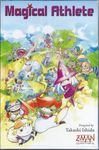
So before I come back to that point about the video and looking at the other mechanisms that you could use for movement, I think roll and move can be used ingeniously. I mean we've recently seen the massive success of magical athlete, an older game but coming back in this new form and being enormously popular um and and using roll and move as it absolute core. I made a video uh a number of years ago, much later than this one about all the different ways roll and move have been used brilliantly. There's a lot of games that do do it really really well, but it's still sort of seen as a bit of a dirty word in the industry. Um, and and often when we think of roll and move, we're thinking of the games that don't do it so well. The games where, you know, it really is a case of just do what the dice tells you. That's not the experience if you're playing a game like the flick or Deep Sea Adventure or um, you know, even games that I mentioned in in this video previously, Camel Up, for example. But let's have a look back at the video at uh I think I'm about to show some examples of other approaches you might take to having movement in your games.
So, here are a bunch of games where you move around the board throughout the game. How many of these use roll and move? Not that many. There are a few. There are a few in here. So specifically, there's formula D, which uses this clever sort of dice system where you choose which type of dice you want to use, what size of dice, and you work your way up through the gears. So you might be using a big chunky 30-sided dice that comes with additional risks, or you might use the nice and safe uh little four-sided or six-sided dice. Um, so that is how Formula D gets around the problem. Camel up. This one uses dice rolling, but here we're gambling on where the playing pieces are going to end up. So, the playing pieces in Camelop and in Winner's Circle and in Manila, the playing pieces don't belong to any particular player. Uh, so when we roll the dice and move those pieces, it it's a case of we're we're betting on which ones we think are going to get there first. This feels like a whole other video, doesn't it? that uh I I've made many videos in the years since this one about different mechanisms and and how the different options available to you. So, I could imagine a video about how different board games um incorporate movement and the different mechanisms that they use in order to drive the movement of pieces uh around the board or or through the game. Maybe that's something that I should consider for a a future video with a little bit more thought going into it. A little bit more
research and scripting going into it than this. This is one of the things actually with these early videos is I didn't script them. Um I literally just put on the camera and spoke off the cuff a bit like I'm doing to you now. Whereas these days I do tend to sit down and write much more detailed scripts that takes an awful lot longer but uh might make for a slightly smoother viewing experience hopefully. Now, roll for combat. I know I'm going to have a harder time convincing you of this that it's not worth using um because it's used so frequently in so many games. And also, I'm well aware that my collection leans well away from the sort of games that use combat at all, let alone roll for combat. So, I may not be the best person to speak on this. That said, I this is a bold statement that roll for combat is not a um is not a mechanism that you should be using. A roll for combat goes all the way back to what was it the 1800s uh Crepiel the Prussian war game uh where roll for combat was introduced as opposed to games like chess and things like that where the the combat was entirely deterministic. Um so it's been around for a long time rolling dice for combat and it may even predate um crep spiel. That's just the the first one that I can think of. Um one thing about combat is that combat is supposed to be fast. uh and and and and simultaneous and it's not supposed to be a very thinky sort of affair. It's all very reactive. And so I think um
dexterity elements work well, but but it's hard in a big strategy game to start to incorporate a little bit of dexterity. Works really well in a game like Catacombs, for example, which is all built around flicking pieces into each other in order to to fight with them. But maybe rolling dice is about as um fast and uh and unpredictable as as as combat is in real life. Maybe it's the the best that we've got for for sort of simulating it. Um I I don't know that that's an answer to a reason to always use it. I think there are are obviously good strategic reasons why you might want to use a more deterministic system, a more predictable system. But if you want excitement of combat, maybe dice are as good a way to do it as any. So, I think I'm taking quite a bold stance here in saying you shouldn't be rolling dice for combat. Um, but you know, I I I understand my my the thinking of my former self. I do I do understand where I'm coming from, right? If that maybe thinking about other ways makes your game a little bit more interesting, a little bit more distinctive, why do it the same way that everybody has always done it in the past? I think roll for combat is so generic now that it's very hard to make your system of rolling to fight interesting and different and and and make your game unique and and if even if you have all sorts of other unique stuff going on in your game that role for combat just overwhelms it and and and undermines everything else that
you're doing there. So find other interesting ways of of of doing combat whether it's to do with card play or um you you know there there are other randomizers or maybe it doesn't need to be random at all.
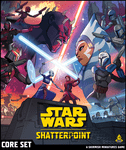
I can see myself struggling here to think of what other ways you might do it. Maybe I should have thought about that more before I made the video. One game that I remember playing it's a while ago now, maybe a year or two ago, but I remember playing Shatterpoint, which is a miniatures game, skirmish game, um and really being impressed by the combat in that game. And there is a lot of dice rolling involved, but it's everything around the dice that's really really clever. the way that uh you can combo those dice and take different uh combine different actions in clever ways. It made a really cinematic sort of experience. So, I've always thought if I wanted to make a game with combat, which I probably won't, frankly, um but Shatterpoint would be one that I would revisit because that's one that really stood out for me as as being something interesting, but it still used rolling of dice. And finally, the dreaded event deck. So uh what what exactly is this all about? Well, I think players are introducing designers are introducing event decks because they want their game to have a narrative drive. They want story elements in their game. They become so immersed in the world of their game. They think this this this world would have earthquakes and volcanoes and tornadoes or dinosaur attacks or whatever. And so therefore, the only way they can factor those into the game is to have a card draw which says dinosaur attacks lose a turn or dinosaur attacks move back three spaces. And and it can be devastating to your design. It can completely make I I do agree with this point. Um
still now I don't understand quite why I was so angry about it. I do seem quite cross about it, but I do I do still agree with it. I think, you know, building a narrative into your game is more than just sticking a whole bunch of little random events on cards. You know, if you're going to have a volcano or something like that, then build it into the mechanisms of your game. Make it feel like a volcano, right? Don't just stick it on a card or a volcano erupts or a dinosaur attacks or whatever. Um, I think there are more clever ways of doing it than that. Um, and that is what I've seen quite a lot in play test groups is that you will have this nice strategic game with a lot of potential in there and then you'll have these random card draws that just say this random thing happens and it it frankly it makes me stop caring about the game at that point. Everything else meaningless because it it can throw you back so many paces. Everything you've been building up wiped out or you lose the game just on a card draw. So, how do games introduce those narrative elements without the randomness of this card draw? Well, if we look at games that have events in them. So, games like evolution climate or tua or dominant species, what tends to happen is that a series of events are laid out at the start of a round or several turns ahead.
And then players have a chance to react to this. Maybe to deal with the event by putting some resources into it to make that event go away or maybe by taking control of that event to ensure that it doesn't happen to them but they can drive that event towards another player. Now that is not uh total chaos. That is not total luck because the other players have seen that event is there too and if they wanted to they could take it and drive it in that direction. This is how it works in a massive strategic Euro game like Dominant Species without making the whole thing chancebased.
I think that's quite a a good explanation of how event decks can work really well. You know, the idea of that you're you're shown the events in advance and then you have time to prepare for them. I think that can be uh can be a really effective way of using them.
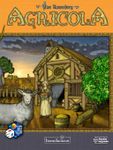
Let's have a look at the event decks in a gricola. A Gricola has two decks which uh two decks of cards which you can add into the game as little expansions which are event decks. That's exactly what they are. In fact, I've got them on the table over here. So, I'll show you. Um so, these are sort of almost promo items really. There's the legendary forest deck and the X deck. And what this means is when you go and gather wood in a gricola, which is a gricula is very strategic game. You gather wood to build fences to house animals. You cook the animals to make food to provide for your family. A lot of the game is is about building up to gathering new family members, having this family growth action. You'll spend the first half of the game trying to make your house big enough, make sure you've got enough food to have that extra family member. Now, in the Legendary Forest deck, every time you go and gather wood, you draw a card off the top of the deck. or in the X deck. Every time you go to the to gather stone in the quarry, you might encounter aliens, so you turn over a card off the deck. So, let's have a look at the top deck of the X deck. I think this was a slightly unfair way of uh of demonstrating event decks because I don't think anybody uses these decks, right? These are definitely promo items.
I have played with them once or twice just for the fun of it, you know, and and I think that's probably all they were intended to be. Um, and yet I'm sort of presenting it as if these are are serious inclusions into into a gricola, but they are very good examples of what I'm talking about actually. Um, you know, a really strategic game that doesn't need a random set of events. You could imagine somebody designing a game like a grier, bringing it along to a play testing group, and then you're playing it, and you're thinking, why am I drawing these random cards all the time? This is just ruining any strategy in the game whatsoever. And and my advice to that person would be, well, get rid of the random cards and let's just play the strategic game. And then you've got a Gricola, fantastic game, right? Which doesn't need all of the random story elements to it. Um, so it it sort of works, but it is an odd choice in that these aren't really a core part of the game. These are are almost a sort of a jokey sort of add-on by the publisher just just for the fans to just get a little bit of extra stuff.
Earth girls are easy. Immediately carry out the family growth even without room in your home action. So, I've already said the first half.
It's a bit gross this card, isn't it? Um I I don't think I acknowledge that in the video. Um but the card itself is yeah dubious
of the game for most games of a gricular is spent trying to get yourself ready to have a new family member and make it possible with the single draw of a card from an event deck. This is giving one player that um ability. That player now is is most likely going to win. Certainly they're at a huge advantage through no skill whatsoever. A board game design is only as good as the decisions that a player makes on their turn. How many decisions are there in your uh in your prototype? Okay, I don't I don't hold that anymore. That's a view that I've genuinely changed then. I don't believe that a game is only as good as the decisions that you get to make in that game. I think there are multiple things that make a game great and decisions is one of them, a really important part of it. But I also do believe that there are some really really good games where you make very few decisions um or or your decisions are not all of that impactful, but the game is so rich and thematic and there's so much interaction between the players and it's also engaging that actually the absence of any serious decisions doesn't really matter all that much. So I I think that's a strong statement to make that a game is only as good as the decisions that you make. Um, I would probably not make a a statement like that these days.
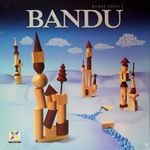
How many decisions can a player make on their own term? What dilemas do they have? Do they have choices? Are those choices interesting? Are they equally as exciting whichever way they go? Are they overwhelming choices or are they at the right sort of level? Does it matter whether they go that way or that way? Or will the result turn out the same anyway? This is what we're looking for. meaningful, interesting decisions. Unless you're making a game like um Villa Pleti or Bandu or Junkup where you're stacking pieces or something where you're flicking or a speed game in which case decisions don't really come into it. In a strategy game, we want choices and those choices have to mean something and they have to be fun and and sort of delicious little puzzles for us to solve.
Okay, so I have clarified that I'm talking specifically about strategy games there. um not dexterity games or you know so yeah I'd agree with that if you're gonna have strategy you you need some really nice decisions that's a big part of it um and you'd struggle to have a good strategy game without some decent decisions in there so I'm glad I clarified that point anyway thank you very much for watching this first in my little design series hope well hopefully it'll become a series uh I'm Adam Porter if you want to watch the other videos on my channel then please do it's Adam's board game Wales and if you want to follow me on Twitter I'm @ Boardgame Wales. Thank you very much for watching. All the best.
And it did indeed become a series. Um I think there must be well over a hundred videos in this series now. Um so this really was the start of of something new for me and something that I've managed to keep on doing for the last 9 years. Um and most of my opinions from this video really are are very very similar. Um looking at the video, looking back at the video, am I happy with it? Well, yeah, actually, I think I'm I'm reasonably happy with the way I presented it. I'm reasonably happy with the the editing of it. It's um I think it's reasonably engaging. I think the examples are decent. So, I I I think it stands up. So, I'm still quite glad to have this one being a video which people watch on the channel. Um if I wasn't so happy with it, maybe I'd be thinking about deleting it. But, but it's No, I think it's I think it stands up. I think maybe I could have measured some of those opinions a little bit and um you know not stated them in such a with such certainty um so it didn't come across quite as condescending as it might have done. But then again that probably is the reason that this video took off where some of my previous videos hadn't. You know something like that sort of counts for engagement really as far as the YouTube algorithm is concerned. If you can get people commenting I I don't like to employ that tactic at all. you know, try and say things controversial just to get views. But clearly, some people did find this a little controversial and challenged me a lot in the comments, and
that probably helped the channel in the long run. So, I I I wonder what you made of this video. Let me know what you think of the video that I've made now, the video that I made back then and the video that I'm making today. Was it interesting to watch me watching it? Was it interesting to hear my updated views on it, or was it distracting? Would you rather just go back and watch the original video? Um, I might make some more of these. I think it could be an interesting way of revisiting some of that uh some of that advice from from the past and particularly some of the more basic topics without getting into all the the depths of design and so on. So, uh, as I said in the video before, thank you very much for watching. Uh, I hope you enjoyed it. Please watch some of my other videos and I'll see you on the next one. Until then, all the best.