21 Lies Board Gamers Tell Themselves
Games in This Video
28 games are featured in this video — they unlock as you watch.


















Transcript
Every single person listening to this has been lied to about board gaming. Not by some shadowy conspiracy, but by the hobby itself, by forums, by YouTube videos, by game night chatter, and by the little stories we tell ourselves to justify our spending habits.
And the worst part, the biggest lies aren't the ones told to outsiders.
They're the ones we tell each other. We're not talking about people who think Monopoly is the pinnacle of game design. We're talking about the lies that experienced hobbyists believe, repeat, and defend every single week.
So, today we're going through all of them. The myths we wish someone had busted for us on day one. And fair warning, some of these are going to sting because we believed most of them ourselves at some point.
Oh, absolutely. And honestly, we're going to move fast because there are 21 of these and every single one deserves attention. Let's start with the one that probably stings the most. The cult of the new is something other people fall for, not me. I used to genuinely believe I was the measured, thoughtful buyer. I researched before spending. I compared reviews. I waited for second opinions. I was above the hype.
And then you looked at your shelf.
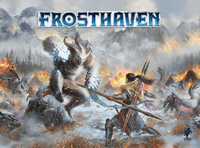
Exactly. Three games still in shrink wrap from over a year ago. Two more punched but never played. A Kickstarter pledge that arrived, got admired for an evening, and was quietly shelved next to another Kickstarter in exactly the same condition. Nobody is immune to this. The cult of the new isn't an affliction of the careless. It's a psychological trap baked into the very infrastructure of the hobby. BGG has a hotness tracker that refreshes constantly. Publishers time campaigns to manufacture urgency. Social media rewards the unboxing photo, not your 300th play of a 5-year-old game. The entire ecosystem is engineered to make buying feel like participating. Think about Frosthaven. It raised nearly $13 million on Kickstarter. How many of those copies have seen fewer than sessions? The dopamine hit from buying a game is real, and it's completely separate from the enjoyment of playing one. Once you acknowledge those are two different experiences, you start seeing how the industry monetized the first one at scale.
Which feeds directly into the next lie. More complex equals a better game. This might be the single most damaging belief in the serious board game community. It runs so deep. The logic sounds reasonable on the surface. A heavier game demands more of you intellectually, so it must reward you more richly. Complexity becomes a proxy for quality, and suddenly the BGG weight score is a prestige metric. Twilight Imperium gets discussed in reverent tones, not just because it's good, but because it's demanding. Playing it becomes a statement.
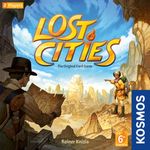
But here's the problem. Complexity and depth are not the same thing. The game can be staggeringly complex and entirely shallow. Enormous rulebook, loads of subsystems, and it all resolves into one dominant strategy that experienced players execute every time. Meanwhile, Hive has a rulebook you can read in 10 minutes and contains strategic depth that grandmaster level players are still exploring. Hanabi, Lost Cities, Onitama, none of these need a heavy box to deliver a deep experience. When I was starting out, I dismissed anything below a BGG weight of two without a second thought. I missed years of excellent gaming because of that. Wasted money on heavy games that impressed me for one session before revealing themselves as elaborate puzzles with one solution. A 4.5 weight game is not automatically better than a 2.0. Weight measures rules load, not quality. Speaking of spending habits, let's talk about the shelf of shame. The community has done something quietly brilliant with it. We've taken what is objectively a symptom of manipulative marketing and financial impulsivity and turned it into an endearing identity marker. We joke about it. We post photos. We bond over it at conventions.
There's an entire comedic vocabulary built around owning games you've never played. But we should probably examine how that shelf got there. Gloomhaven is the clearest example. It was the highest rated game on BGG for over five years, sold hundreds of thousands of copies. A remarkable number were played for two or three sessions. Campaign unfinished, box returned to the shelf as a monument to ambition. Same pattern with Spirit Island, Arkham Horror: The Card Game, countless campaign games requiring sustained commitment most groups can't actually sustain. The shelf of shame doesn't happen by accident. It happens because publishers, crowdfunding platforms, and influencer culture have become extraordinarily good at separating acquiring a game from playing one. By the time the game arrives, the emotional transaction is already complete. What you're left with is the game itself, which requires effort, scheduling, and willingness to invest time.
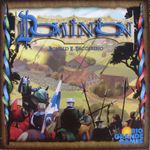
Now, here's one that really gets people heated. You must sleeve your cards to protect your investment. At some point, sleeving became a moral obligation. Unsleeved games are spoken about as if they represent negligence. For the overwhelming majority of games played by the overwhelming majority of people, sleeving is an unnecessary expense that actively makes the game less pleasant to handle. Dominion is the perfect example. Quality cardstock shuffles with a satisfying crispness. Fully sleeved Dominion shuffles like trying to riffle a stack of coasters. The tactile experience the game was built around just disappears. And the economics are absurd. Premium sleeves for a large card game like Spirit Island can cost as much as the game itself. Sleeve manufacturers have done an excellent job convincing hobbyists this expense is mandatory. If you're playing tournament level, on moisture-prone surfaces, or protecting a genuinely irreplaceable first printing, fine. But the default assumption that every card needs a sleeve before the box even opens, that's a myth created by an industry that profits from it. Your unsleeved Wingspan will survive your lifetime. Here's another one the industry loves. A massively funded Kickstarter means the game will be great. There's almost a liturgical reverence for funding numbers. Half a million is exciting. Two million is treated as near definitive proof of quality. The crowd has spoken, and the crowd is wise. The crowd is not wise.
The crowd is excited. Those are very different things. Funding levels reflect marketing effectiveness, IP strength, campaign art quality, and how many people experienced FOMO in the first 48 hours. They measure none of the things that actually determine whether a game is worth your time at your table. Myth raised nearly a million dollars on Kickstarter, backed by thousands of enthusiastic supporters drawn in by gorgeous miniatures and ambitious promises. What arrived was a game so riddled with unclear rules and mechanical problems, it became a cautionary tale discussed for years. And it's not an isolated case. Countless miniature-heavy dungeon crawl campaigns have raised enormous sums on beautiful renders and delivered games that were mechanically thin,
poorly balanced, or fundamentally derivative. Meanwhile, Hanabi slipped out through a small publisher at under $20 with almost no marketing and turned out to be one of the most precisely designed two-player games ever made. Judge the game, not the funding number. And while we're at it, those stretch goals everyone gets excited about. The overwhelming majority were designed, commissioned, and budgeted before the campaign launched. The linen finish at 150,000, the custom wooden tokens at 200,000, the promo card at 250. These cost pennies in manufacturing and were already in the production plan. They're revealed incrementally because each unlock generates social media activity and campaign momentum. Look at any major board game campaign.
Suspiciously neat ladder of goals unlocking at suspiciously regular intervals. First ones unlock within hours because the opening surge always predictably reaches them. Later ones require social media sharing. Each unlock is a designed reward for community behavior, not an honest reflection of what the additional funding makes possible. The mechanism is completely transparent once you've seen it. I'm not condemning publishers wholesale. Running a campaign in an increasingly saturated market is genuinely difficult. But the myth that backers are participants shaping the final product, in most cases, the game was already built. The stretch goals are theater, which is fine. Just know what you're watching. Let's shift to the BGG top 100. Invaluable resource, remarkable database, sophisticated ranking system.
None of that changes the fact that it's a preference list from a specific, non-representative demographic. Treating it as an objective quality measure is a category error. The BGG community skews heavily toward experienced hobbyists who love Euro-style design, worker placement, engine building. Brass: Birmingham sits near the top because it's beloved by exactly the kind of person who rates games on BGG. Codenames, one of the most brilliantly designed social games ever made, ranks outside the top 100 because its best qualities emerge at a diverse game night, not in solo evaluation. Ticket to Ride ranks nowhere near where its cultural significance would put it.
When they use a BGG rank as primary evidence of quality, ask yourself, quality for whom, evaluated by whom, under what conditions? That should complicate the number considerably, which connects to another favorite lie. Eurogames are intellectually superior to Ameritrash. Oh, I was absolutely a Euro snob for my first couple of years. Proper games were about elegant systems and resource management. Agricola, Brass, Terraforming Mars. Serious games for serious people. Blood Rage and Cosmic Encounter were for people who hadn't graduated yet. And then you actually played them. Cosmic Encounter is one of the most asymmetric, replayable, genuinely clever designs in the entire hobby. It's been in print since 1977 across multiple publishers. Blood Rage creates tension that's both intellectually and emotionally engaging in ways cube pushing never managed for me. Euro versus Ameritrash framing was always a false dichotomy. Root draws from both traditions with genuine sophistication. Dune Imperium marries worker placement to deck building and conflict in ways neither tradition could achieve alone. Let's knock out a few more. Solo gaming is a second class experience. Aged terribly. Solo design has matured into a genuinely sophisticated discipline. Arkham Horror: The Card Game Solo is one of the most immersive narrative experiences in the hobby. Friday delivers a puzzle-like
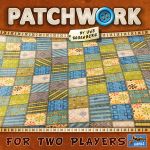
efficiency no multiplayer game replicates. Solo play is often the best way to deeply learn a game. I didn't truly understand Spirit Island until I played it solo a dozen times before bringing it to a group. Expansions always make a game better. Absolutely not. Base Pandemic is a masterpiece. Tight, tense, elegantly constrained. Layering several expansions and it bloats into something that takes twice as long to set up and loses the urgency that made the original brilliant. Dominion's base set is beautifully balanced. Every expansion added to the pool makes it progressively harder to teach and the strategic landscape muddier. Scythe is another example. The base game is complete, but by the time Fenris arrived the systems were absorbing more content than they could gracefully handle. More components equals more value. Kingdom Death Monster arrives in a box so heavy it requires two hands with some of the most intricate miniatures ever produced. It also has a rulebook like a technical manual and a learning curve that drives away a chunk of its buyers. Patchwork is a small box with wooden buttons that's been delivering one of the tightest two-player experiences since 2014. Stop weighing the box as a proxy for the game inside it. Luck has no place in a serious game. The contempt for randomness in certain circles borders on philosophical. But taken to its logical conclusion, a fully deterministic game with perfect information is a puzzle with a known solution. The randomness in
well-designed games isn't a weakness. It's the mechanism by which the game remains genuinely unpredictable across thousands of plays. Terraforming Mars uses card draws to create a different puzzle every game. Forcing you to build engines from whatever the market offers rather than executing the same sequence. That's luck creating the context in which skill operates. More players is always better. Viticulture is adored at three or four and in our experience frustratingly slow at six. The worker placement tension that makes it sing gets diluted when nobody's ever truly blocked. Concordia at five has a downtime problem the same game at three doesn't. The publisher's maximum player count is a sales figure as much as a design recommendation. For most games in my collection the best experience is at or near the lower end. Cooperative games solve player conflict. In practice they introduced something potentially worse.
The alpha player problem is endemic to fully cooperative games. Pandemic is the canonical example. At a table with one experienced player and several newer ones the experienced player instinctively sees the optimal moves for everyone. The temptation to say you should use your medic to clear Cairo and then move to Istanbul before the outbreak rather than letting the new player figure it out themselves is enormous. In practice at many tables one person is playing the game and the others are watching someone play while nominally holding cards. Spirit Island addresses this brilliantly because the asymmetric spirits mean no single player can hold the full picture simultaneously and the table benefits from multiple perspectives. But the alpha problem hasn't been solved. In our view it's been managed in varying degrees by clever designers. And here's what people miss. A competitive game where you're losing is still a game where your agency is intact and your decisions are your own. That matters more than it seems.
Great theme compensates for mediocre mechanics. Theme gets you to the table once. Mechanics determine whether you come back. Vast: The Crystal Caverns has ambitious asymmetric design and striking art. The mechanical execution underneath struggled to hold groups for second and third place. Honamokoji has almost no theme at all and has been in print for years because the mechanics are so precisely calibrated people still find new wrinkles in it. The playtime on the box is accurate. Please. Terraforming Mars says 90 to 120 minutes. Nobody with a full table of five has finished in 90. Realistic window for a learning game at five players is three to four hours. Box playtimes are set by publishers with commercial considerations. A game that honestly says three hours is harder to sell than one claiming 90 minutes.
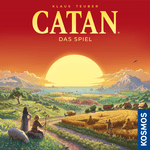
Monopoly hatred is sophisticated design criticism. The criticisms are real. The elimination mechanic is brutal. The randomness is unmitigated and the game runs for hours because most people play with the house rule where money goes to free parking which isn't even in the actual rulebook and dramatically lengthens an already long game. But somewhere between valid critique and the actual discourse something curdled. The disdain became performative and it extended from the game to the people who enjoy it. When a hobbyist tells a casual player that Monopoly is broken garbage and they should play Catan they're not performing design education they're performing membership to a tribe. And the irony is that Catan has its own substantial list of criticisms the same person deploys in a different conversation to prove they've moved beyond Catan too. Monopoly gave millions of people their first meaningful experience of sitting around a table together. Blanket contempt for it and for the people who love it isn't intellectual rigor it's identity performance. Old games are inferior to modern games. The hobby has a systematic bias toward new releases. It shows in how BGG ranks games, how YouTube channels allocate coverage, how collections are curated. The assumption underneath all of it is that design is on a continuously upward trajectory.
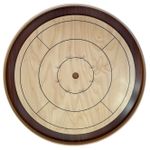
It's not. Crokinole is nearly 150 years old and I haven't found a pure dexterity experience that rivals it. Hive published in 2001 remains one of the cleanest abstract designs in existence. El Grande from 1995 is a masterpiece most modern area control games are still aspiring to equal. For Sale from 1997 delivers more elegance than most of its descendants. The old games that survived did so because they were played enough times by enough people to demonstrate that they held up. They passed a test of time the games we celebrate today haven't been subjected to yet. Carcassonne in continuous production since 2000, Ticket to Ride since 2004. These survived because the design is durable not because of nostalgia.
Treating age as a disqualification is chronological snobbery and it's costing people access to some of the finest games ever made. A high BGG weight score means sophistication. Weight measures cognitive load not strategic depth, not replayability, not design elegance. It measures friction. A game can score high because the rulebook is poorly written or because unusual iconography takes time to internalize. Go sits around 3.5 on BGG lower than its actual strategic depth suggests. Honamokoji sits below two and repays mastery in ways most four plus weight games don't. Weight tells you how long the rules explanation takes. It tells you almost nothing about whether the decisions are interesting.
Theme and mechanics are separable. This is subtler than the others. We talk about pasted on themes as if theme and mechanics are two distinct components assembled separately. But in the best design they're inseparable. Viticulture works because visiting the cellar in autumn to bottle wine pressed in summer using grapes planted in spring mirrors actual seasonal logic. Wingspan's egg laying, food gathering, and habitat mechanics create a system that feels like managing an ecosystem.
When a theme is truly pasted on the mechanics could be reskinned without changing a single rule. That's a real critique.
But making it well requires understanding that the ideal is integration. And finally learning games from the rulebook is how it should be done. I caused real damage to my early game nights by insisting on the rulebook is the proper method. I read rulebooks before sessions, worked through them with the group before a card was drawn, answered questions by citing page numbers. I was insufferable and several games failed to land entirely because of how I taught them. The dirty secret is that most rulebooks are written for people who already know how to play. They're comprehensive reference documents not teaching tools. Root's rulebook is a well-known example. Asymmetric factions each with their own rule sections, steep learning curve for first-time groups, and reading it cover to cover before playing produces confusion rather than understanding. The game is actually quite learnable, but not through that method. The better approaches are well-established.
Tutorial content, teach videos, the experienced player in your group who learned it properly. Spirit Island now ships with a learn to play booklet separate from the full rules reference, which is a direct acknowledgement that these serve two completely different purposes. The rulebook is for edge cases and rule disputes, not pedagogy. The games that get played the most are the ones someone learned through a better method and taught effectively to everyone else. So, that's all 21 lies, and none of them are malicious, really. Some come from the industry, some from community culture, some from the very human tendency to build identity around a hobby, and then defend that identity against any challenge. We believed most of these at various points, and they shaped our purchasing decisions, our game nights, and our conversations in ways we weren't even aware of at the time. What changed things wasn't a single revelatory moment, but an accumulation of contradictory evidence.
Hanamikoji, a light game in a small box, being more strategically satisfying than half the four weight games on my shelf. A Kickstarter exclusive gathering dust while a retail copy of something I almost overlooked became my most played game. A solo session of Arkham Horror: The Card Game being the most immersive evening I'd spent with cardboard in months. Crokinole, nearly 150 years old, reducing experienced hobby gamers to gleeful children at a party. The hobby is bigger and stranger and more interesting than any of these lies suggest. It contains more kinds of excellence than our categories allow for. The games worth your time aren't necessarily the heaviest, the newest, the most funded, the most sleeved, or the most reviewed. They're the ones that keep pulling you back to the table. The ones where something genuinely interesting happens in the space between the rules. The ones you'd still want to play on your hundredth session as much as your first. Go find those games. They may not be where you've been told to look. And the next time someone confidently states one of these lies as if it's gospel truth, you'll know exactly what to say. See you next time, everyone. Later.