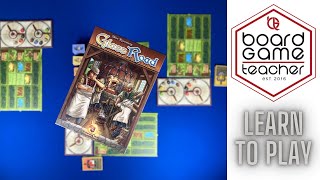
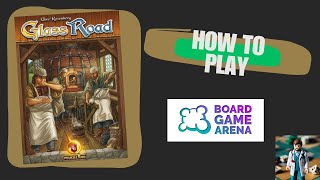
Glass Road box art

Glass Road

Game ID: GID0142769
Game Info
Year
2013
Players
1-4
Age
13+
Playtime
80 min
Collection
Ratings
Expansions & Family
Black Forest
Mechanic profile
Percentile rank vs. all games
Vibe profile
Not enough video data yet
Description

The game Glass Road commemorates the 700-year-old tradition of glass-making in the Bavarian Forest. (Today, the "Glass Road" is a route through the Bavarian forest that takes visitors to many of the old glass houses and museums of that region.) You must skillfully manage your glass and brick production in order to build the right structures that help you keep your business flowing. Cut the forest to keep the fires burning in the ovens, and spread and remove ponds, pits, and groves to supply yourself with the items you need. Fifteen specialists are there at your side to carry out your orders...

In more detail, the game consists of four building periods. Each player has an identical set of fifteen specialist cards, and each specialist comes with two abilities. At the beginning of each building period, you choose a hand of five specialists. If during this building period, you play a specialist that no other player has in hand, you may use both abilities on that card; if two or more players play the same specialist, each of them may use only one of the two abilities. Exploiting the abilities of these specialists lets you collect resources, lay out new landscape tiles (e.g., ponds and pits), and build a variety of buildings, which come in three types:

Processing buildings
"Immediate" buildings with a one-time effect
Buildings that provide bonus points at the end of the game for various accomplishments

Mastering the balance of knowing the best specialist card to play and being flexible about when you play it — together with assembling a clever combination of buildings — is the key to this game.

The 2021 edition of Glass Road includes previously released promotional material: the Oktoberfest and Adventskalender tiles and the Harlekin card for use in the solitaire version of the game.

Description

The game Glass Road commemorates the 700-year-old tradition of glass-making in the Bavarian Forest. (Today, the "Glass Road" is a route through the Bavarian forest that takes visitors to many of the old glass houses and museums of that region.) You must skillfully manage your glass and brick production in order to build the right structures that help you keep your business flowing. Cut the forest to keep the fires burning in the ovens, and spread and remove ponds, pits, and groves to supply yourself with the items you need. Fifteen specialists are there at your side to carry out your orders...

In more detail, the game consists of four building periods. Each player has an identical set of fifteen specialist cards, and each specialist comes with two abilities. At the beginning of each building period, you choose a hand of five specialists. If during this building period, you play a specialist that no other player has in hand, you may use both abilities on that card; if two or more players play the same specialist, each of them may use only one of the two abilities. Exploiting the abilities of these specialists lets you collect resources, lay out new landscape tiles (e.g., ponds and pits), and build a variety of buildings, which come in three types:

Processing buildings
"Immediate" buildings with a one-time effect
Buildings that provide bonus points at the end of the game for various accomplishments

Mastering the balance of knowing the best specialist card to play and being flexible about when you play it — together with assembling a clever combination of buildings — is the key to this game.

The 2021 edition of Glass Road includes previously released promotional material: the Oktoberfest and Adventskalender tiles and the Harlekin card for use in the solitaire version of the game.

Ask a Rules Question
All mentions
Browse transcript mentions, sentiments, pros/cons, mechanics, topics, quotes, and references.
Total mentions: 119
This page: 50
Sentiment: pos 37 · mix 6 · neu 3 · neg 1
Mentions per page
Showing 51–100 of 119
Video wUszf4rZZHw BoardGameCo Discussion at 0:50 sentiment: positive
video_pk 81698 · mention_pk 204037
BoardGameCo - Glass Road video thumbnail
Click to watch at 0:50 · YouTube ↗
Overall sentiment (raw)
positive
Pros
  • easier to table than Black Forest
  • solid design
Cons
  • less rewarding than Black Forest
Thematic elements
  • resource management and tile-based planning
  • forestry and glass production
  • Eurogame abstraction
Comparison games
  • Black Forest
  • A Feast for Odin
Mechanics (from transcript analysis)
Mechanics unknown.
Video topics + discussion points
No key topics recorded for this video.
Quotes (from this video)
  • There are too many great games and not enough time to play them all.
  • Canvas is a great game, pick it up.
  • Revive is phenomenal.
  • Puerto Rico is a solid four to five.
References (from this video)
No references stored for this video.
Video I2U14Ep-X7Y Analysis at 30:54 sentiment: positive
video_pk 81556 · mention_pk 203222
Glass Road video thumbnail
Click to watch at 30:54 · YouTube ↗
Overall sentiment (raw)
positive
Pros
  • Very good game
  • Streamlined solo mode
Cons
  • Tiny iconography
Thematic elements
  • Refined spreadsheet game
Comparison games
  • Glass Road
Mechanics (from transcript analysis)
  • action selection — Players work out if moving a token here allows them to move there next time and take that action effectively again.
  • Blocking — The solo mode works by blocking the player from moving to certain spots.
  • Resource Management — Players try to keep their resources balanced so they can do everything they want to do.
Video topics + discussion points
No key topics recorded for this video.
Quotes (from this video)
  • Sunavalo is a solar punk game.
  • The solo really does just feel like playing with two players. You You get the same sort of interactions.
  • No one knew Fluxx had a solo mode, but yes, they do.
  • It's more puzzly, it's more not strategic, but definitely more puzzly than the chaos of multiplayer Fluxx, which is what some people like.
  • It's a real life board game. It's a great cool app the life game.
References (from this video)
No references stored for this video.
Video OvZScU450Bk The Brothers Murph Unboxing at 139:36:00 sentiment: negative
video_pk 81313 · mention_pk 201182
The Brothers Murph - Glass Road video thumbnail
Click to watch at 139:36:00 · YouTube ↗
Overall sentiment (raw)
Negative
Pros
none
Cons
  • I like Glass Road better. Fight me. I think we should just stuck with Glass Road. We didn't need Black Forest.
Thematic elements
Comparison games
  • Glass Road
Mechanics (from transcript analysis)
Mechanics unknown.
Video topics + discussion points
No key topics recorded for this video.
Quotes (from this video)
  • Our board game collection has surpassed the 1,000 board game mark.
  • It feels like it's time to do another collection tour.
  • This is Tiny Epic Galaxies. It's a really fun dice rolling, resource management, engine building kind of game.
  • Terraforming Mars. This is a classic.
  • The feeling of terraforming Mars is just epic.
  • Too Many Bones. This game has some of the coolest dice I've ever seen.
  • It's a cooperative adventure game with really satisfying combat.
References (from this video)
No references stored for this video.
Video haNMKMXTnrY Rules Teach at 0:03 sentiment: positive
video_pk 79729 · mention_pk 193283
Glass Road video thumbnail
Click to watch at 0:03 · YouTube ↗
Overall sentiment (raw)
positive
Pros
  • Gaining the reward when a building tile is built.
  • In-game scoring from bonus building tiles.
  • Players can gain both action options from a card if they are the only one to play it.
  • The player with the most victory points wins.
Cons
  • Can only copy another player's card twice during a building period.
  • Brick buildings replace other buildings.
Thematic elements
  • The glass trade industry
Comparison games
none
Mechanics (from transcript analysis)
  • economic — Utilizing resources to construct buildings and gain victory points, with a focus on managing goods and production wheels.
  • Hand Management — Players choose five specialist cards for the period or round to their hand, and then simultaneously choose a specialist card from their hand to play for an action.
  • Resource Management — Moving resources on production wheels, with basic and refined sections, and managing goods tokens like food, charcoal, glass, wood, water, quartz, sand, brick, and clay.
  • Set Collection — Victory points are awarded for building victory points and bonus buildings at the end of the game.
  • Tile Placement — Building tiles are placed on the landscape board. Wood buildings can go on any empty space, while brick buildings replace other buildings.
  • Worker Placement — Players choose specialist cards to take actions, and if another player has the same card, they can copy the action.
Video topics + discussion points
No key topics recorded for this video.
Quotes (from this video)
  • glass road this is a one to four player hand management tile placement economic game where you take the role of an entrepreneur in the glass trade industry
  • how do you have the best glass trade empire and win the game by having the most victory points at the end of four building periods or rounds
  • players will simultaneously and secretly choose five specialist cards for the period or round to their hand
  • if when revealed another player has this card in their hand they must play it now
  • once all the players have carried out three cycles of card actions we would move to phase three cleanup
References (from this video)
No references stored for this video.
Video WJ-aS7LTDNQ Top 10 List at 24:00 sentiment: positive
video_pk 78669 · mention_pk 191572
Glass Road video thumbnail
Click to watch at 24:00 · YouTube ↗
Overall sentiment (raw)
positive
Pros
  • packs a lot into a relatively short duration
  • solid two-player experience
  • high replay value due to building variations
Cons
none
Thematic elements
Comparison games
none
Mechanics (from transcript analysis)
  • resource wheels / card-driven building — Resources generated by cards; players build buildings; wheels convert resources; four rounds with variable end conditions.
Video topics + discussion points
No key topics recorded for this video.
Quotes (from this video)
  • it's such a complete experience for such a short game
  • the best half an hour game out there by a mile
  • it's a great game, it plays super quickly
  • there's so much packing into this amount of time
References (from this video)
No references stored for this video.
Video BBU7KPgQToA Review at 6:34 sentiment: positive
video_pk 69543 · mention_pk 166068
Glass Road video thumbnail
Click to watch at 6:34 · YouTube ↗
Overall sentiment (raw)
positive
Pros
  • High variability due to different buildings and flipped components each game.
  • Engaging solo mode that feels puzzly and self-challenging.
  • Interesting worker movement and placement system.
  • Resource wheel mechanic with inherent conversion and cost implications.
  • Good engine building potential.
  • Jobs add side-mission objectives.
  • Thematic integration of mechanics.
Cons
  • The two-player variant with the neutral worker is disliked, seen as unnecessarily aggressive and detrimental.
  • Multiplayer can involve negative player interaction where players pay opponents for occupying spaces.
  • Setup can be a bit of a pain with specific ordering of components.
  • The game might feel too similar to Glass Road for some players who already love that game.
Thematic elements
  • Forests, animals, and potentially resource management/building
Comparison games
  • Glass Road
  • Caverna
  • Feast for Odin
  • Agricola
  • Nusfjord
  • Roll for the Galaxy
  • Race for the Galaxy
  • Star Realms
  • Dungeon Drop
  • Drop Drive
  • Fields of Arle
  • Hollow
  • Brussels 1863
  • Gallerist
  • Galactic Cruise
  • Evolution
  • Timeless Journeys
  • World Order
  • Unconscious Mind
  • Etherfields
  • Storytold Wildwoods
  • Clans of Caledonia
  • Freedom Five
  • Mage Knight
  • The Gallerist
Mechanics (from transcript analysis)
  • area control/placement — Placing pastures and buildings adjacent to others for points.
  • Contracts/Jobs — Jobs appear on the board that require spending resources for rewards.
  • Resource Management — Players manage various resources like wood, clay, water, food, glass, provisions, and commodities.
  • resource wheel — A central mechanic where generating one resource may cost others.
  • Set Collection — Collecting sets of resources or animals for points is a key aspect.
  • variable board setup — Buildings and large components are variable each game, increasing replayability.
  • worker movement — Workers can move between villages along paths, costing provisions.
  • Worker Placement — Players place workers to take actions, with costs associated with placing in already occupied villages.
Video topics + discussion points
No key topics recorded for this video.
Quotes (from this video)
  • The key thing to your strategy might not even be there in a future game.
  • The solo game is a bit different because we don't have one worker to move around we have five workers every round of the game.
  • It's a puzzle of like the chain of um buildings you're going to do the chain of the trades people you're going to visit in what order.
  • I would prefer this for solo I think but I don't know how many times I would just pick this over like say agria or nusi.
  • I don't want to spend a second of a game thinking about how this is going to mess you up the most I want to just build my thing up.
  • But yeah I I don't like that basically and so I think it's going to come down to more than anything like we love glass road so much between us we don't really like the pain of the people to be in places not as first but yeah collectively it's a problem and we both completely for two players hate this and wouldn't be playing with the the neutral marker.
References (from this video)
No references stored for this video.
Video dqYLpFvr5xk Review at 4:58 sentiment: positive
video_pk 69407 · mention_pk 165895
Glass Road video thumbnail
Click to watch at 4:58 · YouTube ↗
Overall sentiment (raw)
positive
Pros
  • More modern and enjoyable than Glass Road.
  • Buildings are all available from the start, allowing for better planning and pivoting strategies.
  • Just the right amount of interaction to avoid multiplayer solitaire.
  • Plays relatively quickly, even with a teach.
  • Rewarding engine building and resource conversion.
  • Player-driven game end, allowing for strategic timing.
  • Replayable due to randomized setup of tradespeople and building sides.
  • Pleasant and satisfying experience.
Cons
  • Can lead to Analysis Paralysis (AP) due to information availability.
  • Initial information load can be challenging in the first few games.
  • Production quality has a slight issue with boards not flattening completely.
  • The 'begging' action feels less satisfying.
Thematic elements
  • Expanding a domain by travelling through villages, hiring tradespeople, constructing buildings, working the land, and breeding livestock.
  • Black Forest
Comparison games
  • Glass Road
Mechanics (from transcript analysis)
  • action selection — On a turn, players can optionally spend a commodity, must move, and then perform an action (visit tradespeople or complete a job) or beg.
  • Building Construction — Players use resources to construct small and large buildings, which provide immediate benefits, ongoing effects, or end-game scoring.
  • Commodity Market — Resource wheels pivot, providing different resources based on their position, with charcoal having a specific gain rule.
  • End-game scoring — Points are awarded for glass, estates, cooking wheel position, livestock, and specific end-game buildings.
  • Resource Management — Players collect and spend various resources like wood, clay, sand, charcoal, food, and livestock.
  • Route Building — Players move between villages, paying provisions for movement along defined paths.
  • Set Collection — Collecting specific buildings or resources contributes to end-game scoring or enables certain actions.
  • variable setup — Buildings and tradespeople locations are randomized, offering replayability.
  • Worker Placement — Players move their pawn ('mercen') around different villages to take actions.
Video topics + discussion points
No key topics recorded for this video.
Quotes (from this video)
  • This is a really pleasant experience I really enjoy the experience that I get out of this.
  • It succeeds in exactly what it's trying to do and as TV Spang says the box cover is pretty great.
  • The buildings are all available from the start, allowing for better planning and pivoting strategies.
  • It's not reinventing the wheel, it's not amazing, a bit more modern, it does and it feels fresh and it's enjoyable and it's it's perfectly pleasant.
  • The problem that I have with Glass Road and why I like this so much more is isn't that I'm a huge planner...
References (from this video)
No references stored for this video.
Video kKTTbz1cvWw Review at 0:00 sentiment: mixed
video_pk 69367 · mention_pk 165835
Glass Road video thumbnail
Click to watch at 0:00 · YouTube ↗
Overall sentiment (raw)
mixed
Pros
  • Resource system where basic resources automatically generate luxury resources.
  • Traditional Euro concepts executed well.
  • Polished game design.
  • Cool main worker movement board with route planning.
  • Manipulating board state by moving traders.
  • Race to get contracts done.
  • Enjoyed the resource wheel.
  • Solid design objectively.
  • Good for Uwe Rosenberg fans.
Cons
  • Overwhelming variety of options.
  • Daunting and too much to take in.
  • Lacks direction.
  • Too sandboxy.
  • Too many conversion tiles.
  • Points feel minor, a lot of work for few points.
  • Too meandering and plotting.
  • Lacks drive and sense of urgency.
  • Foot off the gas, hopeful outcomes.
  • Does not gel with play style.
  • Pulling teeth to get small amounts of points.
Thematic elements
Comparison games
  • Glass Road
Mechanics (from transcript analysis)
  • Building Construction — Players build buildings, with a large variety of small and big ones available.
  • Resource Management — Players get resources, convert resources, and automatically generate luxury resources based on basic resource gains.
  • Route planning — Players spend provisions to move from town to town, trying to plan routes efficiently.
  • Set Collection — There's a race to get certain contracts done.
  • Variable player powers — Different strategies can be employed, such as densely populating player boards or keeping them bare.
  • worker movement — Players move around a map with their worker, visiting different people on the map.
Video topics + discussion points
No key topics recorded for this video.
Quotes (from this video)
  • the newest uve Rosenberg game
  • I have pretty much no uh U rosenbergs games in my collection with the odd exception and those exceptions are not the Farming Simulator style games that he's most known for
  • none of them have really worked for me
  • that mechanism was coming back in a new game Black Forest that really did Peak my interest
  • all the Euro goodness that I tend to enjoy
  • I think it's a polished game as you'd expect with a designer like oia Rosenberg
  • there was one thing that I found a little bit clunky though or maybe not clunky more overwhelming and that was the sheer variety uh of options here
  • I found it a little bit daunting and a little bit too much to take in
  • I felt that this game lacked a little bit of direction
  • I found the game a little bit too Meandering and a bit too plotting um and just Li lacking that little bit of drive and that little sense of urgency that I would have liked to have seen
  • it seems to be a running theme with u Rosenberg games I just find them I don't know they just don't gel with my with my play style too much
  • objectively a good game but just one that's not right for me
References (from this video)
No references stored for this video.
Video oUq_dZ9nSlc Top List at 18:24 sentiment: positive
video_pk 69024 · mention_pk 165340
Glass Road video thumbnail
Click to watch at 18:24 · YouTube ↗
Overall sentiment (raw)
positive
Pros
  • Enjoyable settlement building aspect.
  • Works well as a 2-3 player game.
  • Resource wheels are fantastic.
  • Warmed up to it after giving it another chance.
Cons
  • Too chaotic and AP-inducing with 4 players.
  • Clashing character choices can be frustrating.
  • Not as enjoyable with 4 players compared to fewer.
Thematic elements
  • Building a little settlement with buildings and farms
Comparison games
  • Black Forest
Mechanics (from transcript analysis)
  • card selection — Players select characters from a pool, hoping their choices don't clash with others.
  • Resource Management — Managing resources is key, with resource wheels mentioned.
  • Worker Placement — Implied through the theme of placing characters and building settlements.
Video topics + discussion points
No key topics recorded for this video.
Quotes (from this video)
  • This is something I fancy doing for a bit of a change cuz I don't think I've seen this list done by many other creators.
  • The ones that improved over time. Occasionally is here, but it's less common.
  • Trust me, when I tried to come up with this list, I could only think of 10 games.
  • It's just a case that before I either didn't like them or found them kind of meh. And now I'm like, yeah, I'll play them. I'm fine.
  • The heart has warmed to them and therefore I'm willing to give them a try.
  • It's like, oh, I don't know, I'm going to need this and this well, how do I get that well, I need to get these three things and turn them into this and it's that this whole thing is actually quite cool.
  • And so when you throw in all the janky factions and too many players it just becomes ridiculous. I can't do this.
  • Honestly, the main time I've warmed up to Race of the Galaxy is playing as a two-player. I think two-player is the best way.
  • But the app from Czech Game Editions is just too freaking damn good.
  • This is not my day job, remember?
  • It's still only a game, so hopefully you enjoyed it at the end.
References (from this video)
No references stored for this video.
Video lGCXY2daZiY Rules Teach at 14:55
video_pk 65957 · mention_pk 160180
Glass Road video thumbnail
Click to watch at 14:55 · YouTube ↗
Pros
none
Cons
none
Thematic elements
Comparison games
none
Mechanics (from transcript analysis)
Mechanics unknown.
Video topics + discussion points
No key topics recorded for this video.
Quotes (from this video)
  • I'll take you through five general tips for what can help you to explain board games
  • this is deck building
  • the wind condition
  • Spirit Island is actually a surprisingly difficult game to explain because the turn sequence is completely jumbled up compared with the sequence you would use in your mind to understand the theme
  • there are many games out there even really crunchy Euro red cheaty Euro types of games where you can still really use the theme to your advantage
  • the game is scenario driven the cards will unfold the story and you'll win if you find something that says you are victorious you lose if you max out any track with a red skull
References (from this video)
No references stored for this video.
Video iIliAkamSDw Other at 27:50 sentiment: other
video_pk 65877 · mention_pk 159989
Glass Road video thumbnail
Click to watch at 27:50 · YouTube ↗
Overall sentiment (raw)
own it
Pros
  • Plays well at all player counts (1-4), best with 2 or 3.
  • Satisfying engine building and resource management.
  • Clever action selection mechanism.
  • Efficient playtime for a meaty game (around 40 mins for 2 players).
  • Underrated Uwe Rosenberg game.
Cons
  • The game feels like a "big box" game but plays much faster, which can be surprising.
  • The initial explanation of the production wheels might be confusing.
Thematic elements
  • Building a glass and brick production facility
Comparison games
  • Nusfjord
  • Agricola
  • A Feast for Odin
  • Caverna
  • Le Havre
  • Caverna: Cave vs Cave
Mechanics (from transcript analysis)
  • action selection — Players choose 5 out of 15 specialist cards to play, with bonuses if their card is unique.
  • Engine Building — Players build up their production of glass and brick to acquire more buildings and score points.
  • Resource Management — Players manage resources like glass and brick, with limited storage capacity.
  • Set Collection — Players acquire building tiles that score points in different ways, similar to other Uwe Rosenberg games.
  • Worker Placement — Players use specialist cards representing workers with two abilities, playing them to gain actions.
Video topics + discussion points
No key topics recorded for this video.
Quotes (from this video)
  • it's just not something that i think like is a must own for everyone
  • but for me uh the games i've played so far just kind of felt a little bit flat
  • i do like it quite a bit i think it's a really good design especially as this kind of like family weight game that plays within an hour
  • The biggest and I mean I should say the only criticism I can come up with and I mentioned with you is personally I don't I I would have found a different way to differentiate the lanes and then just laying down the cards I find that the a little bit clumsy sometimes the cards are moving
  • it's always a fairly quick game and it does quite a bit of like unique and novel novel stuff
  • this is an asynchronous game in the sense that one person is going to be the creature and everyone else is going to be basically trying to survive
  • i'm going to give it a play but and i i'm not going to give an asterisk because i feel like every time we're doing these on my own risk on this one i'm going to give it a play but i will say that as you play it consider how often you think you'll get this to the table with four plus
References (from this video)
No references stored for this video.
Video N7ip9DSfvl4 Meeple University Rules Teach at 0:33 sentiment: neutral
video_pk 63865 · mention_pk 157382
Meeple University - Glass Road video thumbnail
Click to watch at 0:33 · YouTube ↗
Overall sentiment (raw)
neutral
Pros
none
Cons
none
Thematic elements
  • Prestige as glass makers while managing subsistence agriculture
  • 13th century glass making in the Black Forest
  • instructional/tutorial
Comparison games
none
Mechanics (from transcript analysis)
  • Building Construction — Construct small or large buildings; costs and prerequisites vary; beige backgrounds give immediate benefits, gold backgrounds provide endgame scoring options
  • End Game Bonuses — End-game scoring based on leftover resources, estate expansions, animals, buildings, and objective cards
  • End-game scoring — End-game scoring based on leftover resources, estate expansions, animals, buildings, and objective cards
  • Estate and animals — Bead-based estate expansion; manage cattle and pigs; butcher to convert livestock into meat; animals must be kept in valid spaces and contribute to scoring
  • Merchant and commodities — Traveling Merchant provides basic resources; spend commodity to swap the Merchant with another trades person; commodity use is optional early in the turn
  • Movement and provisions — Pawn moves between villages; first move on turn 1 is free, subsequent moves cost provisions per road traveled
  • Movement Points — Pawn moves between villages; first move on turn 1 is free, subsequent moves cost provisions per road traveled
  • Production wheels — Two wheels (glass production and cooking) split into basic resources and refined resources; production occurs as spaces allow
  • Resource Management — Gaining and spending basic and refined resources; wheels rotate when there is space to move on both sides
  • Resource management and rotation — Gaining and spending basic and refined resources; wheels rotate when there is space to move on both sides
  • Trades people and jobs — Visit trades people in adjacent spaces; complete a job and draw a new one; some spaces require visiting two trades people in order
  • Trading — Visit trades people in adjacent spaces; complete a job and draw a new one; some spaces require visiting two trades people in order
Video topics + discussion points
No key topics recorded for this video.
Quotes (from this video)

No quotes stored for this video.
References (from this video)
No references stored for this video.
Video a7sjrfeW658 The Board Gaming Doctor Rules Teach at 0:07 sentiment: neutral
video_pk 41199 · mention_pk 125019
The Board Gaming Doctor - Glass Road video thumbnail
Click to watch at 0:07 · YouTube ↗
Overall sentiment (raw)
neutral
Pros
  • Rich engine-building feel with interacting systems
  • Clear division of production/immediate/endgame buildings
  • Card interactions and dual-action choices add depth
  • Solid solo mode and digital interface via Board Game Arena
Cons
  • Steep learning curve and dense rule explanations
  • Complex setup and edge cases
  • Digital UI may differ from physical play and be challenging for newcomers
Thematic elements
  • resource management and tile placement
  • European landscape development with glass production
  • procedural engineering emphasis
Comparison games
none
Mechanics (from transcript analysis)
  • End Game Bonuses — Endgame points from building tiles and remaining resources.
  • endgame scoring with buildings — Endgame points from building tiles and remaining resources.
  • resource wheels — Two resource wheels track basic and upgraded goods; wheels advance when you have upgrades and usable resources.
  • Simultaneous action selection — Secret card choice and simultaneous reveal to resolve actions.
  • Simultaneous Actions — Secret card choice and simultaneous reveal to resolve actions.
  • Tile Placement — Place buildings and landscapes on a personal tableau; some tiles replace landscapes.
  • tile placement / tableau — Place buildings and landscapes on a personal tableau; some tiles replace landscapes.
Video topics + discussion points
No key topics recorded for this video.
Quotes (from this video)
  • glass Road is a Tau building resource management simultaneous action selection game where Whoever has the most points after four or five rounds wins the game
  • the arms of the wheel will automatically move and increase the amount of that particular upgraded good
  • you may play building tiles onto Open Spaces or on top of a landscape tile you simply discard the landscape in favor of the building tile
  • There are some undo buttons along the way as well
References (from this video)
No references stored for this video.
Video VMdOhl9WN44 The Board Gaming Doctor Discussion at 0:37 sentiment: positive
video_pk 40740 · mention_pk 123511
The Board Gaming Doctor - Glass Road video thumbnail
Click to watch at 0:37 · YouTube ↗
Overall sentiment (raw)
positive
Pros
  • layers upon layers of strategy
  • excellent replay value
  • well-tuned balance between depth and playtime
Cons
  • steep learning curve for new players
  • longer play sessions
Thematic elements
  • constructing road networks and managing resources
  • forest/medieval landscape focused on building and resource flow
  • abstract-engineering
Comparison games
  • Terra Mystica
  • Dune Imperium
  • Lost Runes of Arnac
Mechanics (from transcript analysis)
  • Compound Scoring — tiles and routes align to score based on configured patterns
  • pattern_scoring — tiles and routes align to score based on configured patterns
  • Resource Management — balancing wood, clay, and other resources to optimize road building
  • resource_management — balancing wood, clay, and other resources to optimize road building
  • Tile Placement — placing land tiles to form a connected landscape that affects scoring opportunities
  • tile_placement — placing land tiles to form a connected landscape that affects scoring opportunities
Video topics + discussion points
No key topics recorded for this video.
Quotes (from this video)
  • Glass Road... layers upon layers as you play it.
  • I think glass roads is the perfect length and the perfect amount of complexity and strategy for me to replay over and over again.
  • Clank is an excellent game and this just makes it a little bit more accessible for people to try and play.
  • this card game is very tactical with a lot of different ways to score.
References (from this video)
No references stored for this video.
Video NPT9wBZ0WfE The Board Gaming Doctor Top List at 10:06 sentiment: positive
video_pk 40219 · mention_pk 121641
The Board Gaming Doctor - Glass Road video thumbnail
Click to watch at 10:06 · YouTube ↗
Overall sentiment (raw)
positive
Pros
  • Strong replayability and strategic depth
  • Accessible entry point into Rosenberg's designs
Cons
  • Variability not as high as some sandbox games
  • Less dramatic interaction than some heavier euros
Thematic elements
  • Resource management and building with evolving strategies
  • Rosenberg's village-building experience with a forested backdrop
  • Array
Comparison games
  • Fields of ARL
  • A Feast for Odin
Mechanics (from transcript analysis)
  • Building set collection — Assemble sets to score and optimize strategies.
  • Set Collection — Assemble sets to score and optimize strategies.
  • Worker Placement — Collect resources and construct buildings.
Video topics + discussion points
No key topics recorded for this video.
Quotes (from this video)
  • This is all an effort to rerank my collection
  • here are the honorable mentions there are 29 games unique games that start with the letter b
  • Brass Birmingham is the number one game of all time as according to Board Game Geek
References (from this video)
No references stored for this video.
Video hNEAyACOq64 The Board Gaming Doctor Top List at 21:21 sentiment: positive
video_pk 39437 · mention_pk 119047
The Board Gaming Doctor - Glass Road video thumbnail
Click to watch at 21:21 · YouTube ↗
Overall sentiment (raw)
positive
Pros
  • familiar Rosenberg feel with fresh wheel-based action
  • tight, efficient play for a Rosenberg package
  • strong thematic ties to Glass Road lineage
Cons
  • some randomness in job-like buildings
  • static buildings could feel less dynamic over time
Thematic elements
  • forest resource management with building blocks
  • Rosenberg-style forest economy with wheels and tableau-building
  • mechanical, resource-driven progression
Comparison games
  • Glass Road
  • Cascadia
Mechanics (from transcript analysis)
  • grid/worker-like actions — choose actions in a structured flow to optimize engine
  • Tableau Building — construct a set of buildings/cards to score and enable chains
  • wheel/gear resource wheel — rotating resource wheels drive production and actions
Video topics + discussion points
No key topics recorded for this video.
Quotes (from this video)
  • Newford is my favorite game from 2024.
  • I genuinely like this game more than Black Forest.
  • Castle Combo is a really quick and short Tableau building game.
  • 21 actions to seemingly do the impossible.
References (from this video)
No references stored for this video.
Video 243HX50OEUU The Board Gaming Doctor Analysis at 0:00 sentiment: positive
video_pk 38369 · mention_pk 115516
The Board Gaming Doctor - Glass Road video thumbnail
Click to watch at 0:00 · YouTube ↗
Overall sentiment (raw)
positive
Pros
  • Flexible build strategies with early blue production buildings
  • Strong endgame building choices with high scoring potential
  • In-depth notes system aids learning and improvement
  • Distinct 2-player vs multi-player dynamics that encourage different tactics
  • Emphasis on planning and resource unclogging supports meaningful long-term strategy
Cons
  • Complex to learn; not as accessible for casual players
  • Two-player game can feel more deterministic and less chaotic
  • Endgame evaluation can be tricky for new players
  • Requires a fair amount of tracking and planning to optimize leftovers and endgame scoring
Thematic elements
  • Resource conversion and construction economy
  • Medieval European village focusing on glass production and building
  • Eurogame with strategic, analytical emphasis
Comparison games
none
Mechanics (from transcript analysis)
  • building-based scoring — Points come from exposed buildings, endgame buildings, and leftover resources, with explicit scoring opportunities for each category
  • Card Drafting — Drafting of specialist action cards; in 2-player games you draft 5 from 15 and play them in order, while in 3-4 player games cards are drafted and revealed in sequence with opponent interaction
  • opponent-aware decision making (limited interaction in 2P vs higher interaction in multi) — In two players, actions can be taken more independently; in 3-4 players, card reveals and order create more interaction and blocking opportunities
  • Resource Management — Management and upgrading of basic resources (glass, brick, sand, wood, clay, food, charcoal, etc.) to build structures and gain leftovers for scoring
  • round-by-round planning with production/endgame balance — Players plan across four rounds, balancing blue production buildings, tan immediate buildings, and endgame buildings to maximize points
Video topics + discussion points
No key topics recorded for this video.
Quotes (from this video)
  • I'm going to present the things that I've learned about glass Road strategy in a Iceberg tier list format starting with the tip of the iceberg
  • a good score in my opinion is somewhere between 20 and 25
  • unclog your resources
  • the office is a relatively cheap building for one glass and one wood I believe
  • it is fantastic if you can see this building at the beginning of the game
References (from this video)
No references stored for this video.
Video DSVoGVLH4Fw The Board Gaming Doctor Discussion at 0:23 sentiment: positive
video_pk 38184 · mention_pk 114801
The Board Gaming Doctor - Glass Road video thumbnail
Click to watch at 0:23 · YouTube ↗
Overall sentiment (raw)
positive
Pros
  • has thoughtful depth for a Rosenberg game
  • tightly designed with clear cause-and-effect scoring
Cons
  • some players find it heavy for a light-hearted session
  • iconography can be dense for new players
Thematic elements
  • resource management and building
  • medieval craft and glassmaking
  • economic/production optimization
Comparison games
  • Sushi Go
  • It's a Wonderful World
Mechanics (from transcript analysis)
  • multi-use buildings — buildings provide different benefits and scoring opportunities
  • Worker Placement — players place workers/buildings to generate resources and score points
  • worker placement / tableau growth — players place workers/buildings to generate resources and score points
Video topics + discussion points
No key topics recorded for this video.
Quotes (from this video)
  • This was a fun trick-taking game that wasn't too hard to learn.
  • I like the predictive puzzle of not only guessing how much you will win but also where to play certain numbers.
  • The game has that factor that there is a high skill level and high ceiling of play for this game.
  • I would play it again if someone else brought it out.
References (from this video)
No references stored for this video.
Video wHhOIgCLs3c Totally Tabled Top 10 List at 4:28 sentiment: positive
video_pk 38203 · mention_pk 114888
Totally Tabled - Glass Road video thumbnail
Click to watch at 4:28 · YouTube ↗
Overall sentiment (raw)
positive
Pros
  • innovative resource wheels with automatic production
  • deep planning and strategic tension
  • solo play is compelling relative to Glass Road
Cons
  • setup/teardown can be fiddly
  • theme may be niche for some players
Thematic elements
  • resource wheels and automatic production of advanced goods
  • forest/resource-focused village development, wood, and glass production
  • sandbox-like resource management with strategic planning
Comparison games
  • Glass Road
Mechanics (from transcript analysis)
  • game_throughput_pressure — Delaying spending certain goods creates strategic tension
  • resource_wheel — Resources auto-generate based on wheel positions
  • Worker Placement — Place workers along a line to take actions in the forest
  • worker_placement — Place workers along a line to take actions in the forest
Video topics + discussion points
No key topics recorded for this video.
Quotes (from this video)
  • This cooperative bag building and tableau building game takes place in the Invincible comic book universe.
  • The Last Lighthouse is another solo only 18 card buttonshy micro game that has really charmed me.
  • Black Forest is a spin-off, sequel, new take, whatever you want to call it, on Uwe Rosenberg's earlier design, Glass Road.
  • Harmonies is a cozy game that can be as thinky as you want it to be.
  • Endeavor Deep Sea is extremely streamlined and highly replayable.
  • Sori is a surprisingly heavyweight and lengthy Euro game about the University of Sori.
  • Slay the Spire is a faithful recreation of the roguelike deck-building game with a cooperative option.
  • Primal the Awakening is probably my favorite cooperative boss battler.
  • Inventions is my favorite Vital Lerta game for solo play.
  • Civolution is Feld at his best, offering tons of options but also tight constraints that force hard decisions.
References (from this video)
No references stored for this video.
Video gwKYaKc0BvU The Board Gaming Doctor Discussion at 22:45 sentiment: positive
video_pk 37974 · mention_pk 114133
The Board Gaming Doctor - Glass Road video thumbnail
Click to watch at 22:45 · YouTube ↗
Overall sentiment (raw)
positive
Pros
  • clever maintenance of resources
  • great thematic alignment with production crafts
Cons
  • lighter than some Rosenberg titles
Thematic elements
  • material progression and craft
  • medieval glass production and building
  • structured yet open-ended strategy
Comparison games
  • Patchwork
  • Le Havre
  • Ora et Labora
Mechanics (from transcript analysis)
  • Resource Management — monitor and upgrade resources via a circular dial
  • resource wheel — monitor and upgrade resources via a circular dial
  • Tile Placement — build a road/structure network with tiles
Video topics + discussion points
No key topics recorded for this video.
Quotes (from this video)
  • the feeding mechanism exemplified and represented this thought that his games are easy to learn and hard to master basically
  • thematic integration is Peak when it comes to U Rosenberg games
  • the arc of gameplay is very unique to me and the reasons that I think about this include say Agricola
  • the chess-like nature of his games particularly with games such as caverna fields of ARL
  • cozy theme such as farming and still and have a session where you come out of it either winning or losing
References (from this video)
No references stored for this video.
Video xJEXYHkVh9E The Board Gaming Doctor Discussion at 4:10 sentiment: positive
video_pk 36867 · mention_pk 110711
The Board Gaming Doctor - Glass Road video thumbnail
Click to watch at 4:10 · YouTube ↗
Overall sentiment (raw)
positive
Pros
  • UI on Board Game Arena is impressive
  • One of my favorite games of all time
Cons
none
Thematic elements
Comparison games
none
Mechanics (from transcript analysis)
Mechanics unknown.
Video topics + discussion points
No key topics recorded for this video.
Quotes (from this video)
  • I believe that the game license was granted probably four or five years ago
  • an adaptation of Glass Road on Board Game Arena
  • I can't wait to play this game more multiplayer
  • this bit of information on Black Forest was teased by someone who got to play the Prototype
  • really excited to see how this turns out
  • I can't wait to see how that turns out
References (from this video)
No references stored for this video.
Video YgLpB-FtXEM Totally Tabled Top List at 11:00 sentiment: positive
video_pk 36877 · mention_pk 110754
Totally Tabled - Glass Road video thumbnail
Click to watch at 11:00 · YouTube ↗
Overall sentiment (raw)
positive
Pros
  • fenestrated approach to Glass Road with familiar Rosenberg touch
  • potentially deeper than Glass Road due to new map and wheels
Cons
  • uncertain if the pacing remains quick or grows into heavier play time
Thematic elements
  • forest clearing and resource wheels
  • reinterpretation of Glass Road
  • map-centric worker/area-control shift from card-driven to map-based action selection
Comparison games
  • Glass Road
Mechanics (from transcript analysis)
  • personal player land boards — individual boards for building and resource management
  • Player Board | Main Board — individual boards for building and resource management
  • Resource Management — advanced production and resource manipulation via rotating wheels
  • resource wheels — advanced production and resource manipulation via rotating wheels
  • worker movement / placement — map-driven actions replacing Glass Road’s simultaneous selection
  • Worker Placement — map-driven actions replacing Glass Road’s simultaneous selection
Video topics + discussion points
No key topics recorded for this video.
Quotes (from this video)
  • It's an Allstar cast of designers led by Antoine Boza of Seven Wonders and ghost stories Fame
  • absolutely my most anticipated game of the year
  • Slay the Spire the board game is incredible
References (from this video)
No references stored for this video.
Video p2duW6nmHtc The Board Gaming Doctor Discussion at 0:55 sentiment: positive
video_pk 36691 · mention_pk 110158
The Board Gaming Doctor - Glass Road video thumbnail
Click to watch at 0:55 · YouTube ↗
Overall sentiment (raw)
positive
Pros
  • Deep strategy that reveals itself with repeated plays
  • Strong multiplayer dynamics and a satisfying engine payoff
  • Engaging more as you learn the timing and combo possibilities
Cons
  • Steep initial learning curve
  • Arena/competitive ladder can push players toward suboptimal meta early on
Thematic elements
  • Resource management and engine-building through building construction
  • Central Europe, timber framing and glass production as a thematic backdrop
  • Strategic, contemplative with a focus on engine development
Comparison games
  • War of the Ring: The Card Game
Mechanics (from transcript analysis)
  • Engine Building — Developing a set of buildings and resources to generate ongoing benefits
  • engine-building — Developing a set of buildings and resources to generate ongoing benefits
  • Resource Management — Balancing limited resources to trigger efficient combos
  • Tile Placement — Placing tiles to optimize production and scoring areas
Video topics + discussion points
No key topics recorded for this video.
Quotes (from this video)
  • I've been grinding to just really understand the game and get to a point where I feel very comfortable about putting out more content for glass Road
  • Glass Road is so quick that you don't need to worry about that too often
  • This game offers a lot of Randomness in the cards that come out
  • it's a solo only game it's pretty easy to pick up
  • the Mundus expansion to world wonders
  • King Domino is a classic game
References (from this video)
No references stored for this video.
Video txWhLjRkyzg The Board Gaming Doctor Analysis at 0:00 sentiment: positive
video_pk 35731 · mention_pk 106861
The Board Gaming Doctor - Glass Road video thumbnail
Click to watch at 0:00 · YouTube ↗
Overall sentiment (raw)
positive
Pros
  • Strong replayability from two-sided buildings and randomized setup
  • Rich interaction and competition for valuable buildings
  • Familiar Glass Road mechanics with fresh twists
  • Dynamic resource wheel and adaptation through job tokens
  • Estate expansion via the Hut track adds vertical growth and branching strategies
Cons
  • Wheel balance concerns and potential dial stagnation in edge cases
  • Longer playtime (1-2 hours) relative to some similar titles, which could affect pacing for some groups
  • Learning curve due to the confluence of multiple interacting systems and new mechanics
Thematic elements
  • resource management, tableau-building, and competitive building acquisition in a forest setting
  • Medieval/early modern forest village development with modular buildings and expansion via huts and estates
  • Eurogame design emphasis on strategic planning, variability, and direct competition for assets
Comparison games
  • Glass Road
  • Fields of ARA
  • Ora et Labora
Mechanics (from transcript analysis)
  • End-game trigger — The game ends when a player has one or more provision goods tokens crossing a designated point on the cooking dial, which sits near the latter portion of the wheel and helps pace the final turns.
  • Hut track / estate expansion — Advancing on the Hut track unlocks a second board adjacent to your tableau, the Small Estate; this expansion increases space for more Stables and additional tableau-building opportunities, enabling multi-directional growth similar to processo in Ora et Labora.
  • Interaction and competition — While not driven by action cards like Glass Road, the game preserves meaningful interaction through shared resources and a competitive market for valuable buildings; players must balance expansion against denial of high-value tiles.
  • Livestock / Stables — Livestock can be kept on Stables on your board and interact with certain buildings; this introduces another resource track and planning layer that intersects with building choices.
  • Merchant / tradesperson switching — The travelling Merchant can swap positions with a trades person by spending an upgraded good, allowing everyone to gain one of that basic good and reshaping local incentives mid-game.
  • Provisions and upgraded goods — Provisions are used to access actions and to drive upgrades on the cooking wheel; this system forms the backbone of production and conversion, with provisions serving as the primary currency for higher-level goods.
  • Resource Management — An automated wheel generates basic goods and upgrades; turning the dial creates upgraded goods and the provisions on the upgraded goods side are grouped together; jobs tokens appear when the dial is moved to space two, providing additional resource conversion opportunities.
  • Resource wheel / dial — An automated wheel generates basic goods and upgrades; turning the dial creates upgraded goods and the provisions on the upgraded goods side are grouped together; jobs tokens appear when the dial is moved to space two, providing additional resource conversion opportunities.
  • Tableau Building — Construct buildings on your personal tableau; buildings are two-sided and offer different costs and functions; at setup a subset of large buildings are flipped to their B sides to create variability, and there is no mid-game refresh of these buildings, preserving tension for early choices.
  • tile-based tableau building — Construct buildings on your personal tableau; buildings are two-sided and offer different costs and functions; at setup a subset of large buildings are flipped to their B sides to create variability, and there is no mid-game refresh of these buildings, preserving tension for early choices.
  • Trading — The travelling Merchant can swap positions with a trades person by spending an upgraded good, allowing everyone to gain one of that basic good and reshaping local incentives mid-game.
  • Variable Set-Up: Board — There are 12 small state tiles and a pool of backup buildings; large two-slot buildings have a single sign but are complemented by randomized B-side options, creating variability and preventing predictable setups.
  • Variable setup with randomization — There are 12 small state tiles and a pool of backup buildings; large two-slot buildings have a single sign but are complemented by randomized B-side options, creating variability and preventing predictable setups.
  • Worker Placement — Move your pawn to open locations in your current village or to other villages by paying provisions; if the destination is occupied you must give the occupant a basic good; actions come from nearby tradespeople tiles and can be shifted mid-game by the Traveling Merchant.
Video topics + discussion points
No key topics recorded for this video.
Quotes (from this video)
  • I really like what this game has to offer
  • the randomness of where you can move your worker was corrected based off of the image on the back of the box
  • the rules for building out your own Tableau are very similar to Glass Road
  • it gives us the foundation that Glass Road set and the mechanisms the resource wheel the Tableau building the buildings
  • I'm really looking forward to playing this game once it comes out later this year
References (from this video)
No references stored for this video.
Video 25x2uxxY83w The Board Gaming Doctor Discussion at 4:06 sentiment: positive
video_pk 35515 · mention_pk 106005
The Board Gaming Doctor - Glass Road video thumbnail
Click to watch at 4:06 · YouTube ↗
Overall sentiment (raw)
positive
Pros
  • Rich mechanistic depth for a Rosenberg title
  • Strong thematic cohesion and engine-building potential
Cons
  • Steep learning curve for newcomers
  • Complex rule set can be intimidating
Thematic elements
  • Resource management with tableau-like decisions
  • Medieval European setting focused on resource flow and construction
  • Euro-style with deep mechanistic layers
Comparison games
  • Katan
  • Earth
Mechanics (from transcript analysis)
  • Simultaneous action selection — Players choose actions in parallel and resolve, influencing timing and outcomes
  • Simultaneous Actions — Players choose actions in parallel and resolve, influencing timing and outcomes
  • Tile Placement — Tiles are placed to build structures and manage resources
  • Tile/Building placement — Tiles are placed to build structures and manage resources
Video topics + discussion points
No key topics recorded for this video.
Quotes (from this video)
  • "Bonanza does a great job of putting that negotiation forward and creating more of a social interactive experience that I feel like Katan offers as a Euro game that is somewhat unique amongst Euro games today"
  • "Katan by creating that social interaction the fluidity and the kind of non-scripted approach to that"
  • "Sleeping Gods is an amazing experience very reminiscent of an open world game"
  • "This is definitely a step up in complexity"
References (from this video)
No references stored for this video.
Video llkfwfdIVLY The Board Gaming Doctor Discussion at 0:12 sentiment: neutral
video_pk 35431 · mention_pk 105720
The Board Gaming Doctor - Glass Road video thumbnail
Click to watch at 0:12 · YouTube ↗
Overall sentiment (raw)
neutral
Pros
  • Rich, thematic Bavarian glassmaking backdrop with believable infrastructure decisions.
  • Deep resource management that rewards long-term planning and careful sequencing.
  • Distinct specialist actions provide meaningful choices and strategic depth.
  • High-quality components and artwork that support immersion in the historical setting.
  • Multiple viable paths to scoring, encouraging diverse strategic approaches.
Cons
  • Rule complexity can be intimidating for casual players or newcomers.
  • Longer playtime may discourage lighter or more casual game nights.
  • Turn pacing can occasionally slow down if players over-optimize, leading to downtime.
  • Shipping and storage considerations due to component count may require extra setup space.
Thematic elements
  • Industrial resource management with a focus on glass and brick production, employing a structured sequence of actions to craft buildings, roads, and other constructs that shape scoring potential.
  • A historically flavored Bavarian glassmaking industry setting where players balance production, resource management, and infrastructure over several building periods to sustain a flourishing business.
  • Historically informed and strategic, offering a calm, deliberate ambiance that emphasizes planning and resource balancing over fast-paced chaos.
Comparison games
none
Mechanics (from transcript analysis)
  • Resource Management — Players manage glass and brick production streams to meet construction needs, optimize material flows, and unlock scoring opportunities through well-timed completions and upgrades.
  • specialists / worker actions — Specialist actions grant production bonuses or new capabilities, adding depth to planning and requiring players to anticipate how to sequence their workers for maximum efficiency.
  • tile-based construction / layout — Board layout evolves as players place structures and roads, creating a layered interaction between space, resource access, and strategic positioning.
Video topics + discussion points
No key topics recorded for this video.
Quotes (from this video)
No quotes stored for this video.
References (from this video)
No references stored for this video.
Video ebl4h46-DJs The Board Gaming Doctor Top List at 19:20 sentiment: positive
video_pk 34836 · mention_pk 103857
The Board Gaming Doctor - Glass Road video thumbnail
Click to watch at 19:20 · YouTube ↗
Overall sentiment (raw)
positive
Pros
  • Strong Rosenberg design with tight pacing
  • Good two-player or multi-player experience that scales
Cons
  • Losing some novelty after many plays
Thematic elements
  • Resource engine / building via interactive cards
  • Wood/stone to glass production in a rural setting
  • Euro tableau with mind-game card interactions
Comparison games
  • Ora et Labora
  • Agricola
  • Gricola
Mechanics (from transcript analysis)
  • Interactivity via specialists — Specialists are interactive with opponents and drive actions
  • Worker Placement — Carefully planned placements to optimize production
  • Worker placement with a tight board — Carefully planned placements to optimize production
Video topics + discussion points
No key topics recorded for this video.
Quotes (from this video)
  • my top 10, my go-to games that I've played that I call a weeknight Euro game
  • Zapotech is a very Euro game. It is not as thematic as I would want it to be
  • I would play it again if I had the chance, and I would do so on a week night.
  • the weekn night euro is something that offers a lot of these opportunities in a board game
  • Harmonies I feel does what Cascadia does, but it's quicker
  • Earth plays a lot like Wingspan but faster
References (from this video)
No references stored for this video.
Video cZXey6M-tnI The Board Gaming Doctor Playthrough at 0:06 sentiment: positive
video_pk 34672 · mention_pk 103309
The Board Gaming Doctor - Glass Road video thumbnail
Click to watch at 0:06 · YouTube ↗
Overall sentiment (raw)
positive
Pros
  • Strong synergy between animal economy and production buildings
  • Long-term planning rewards (tenement, Smoke House, Hardware Store)
  • Solid endgame scoring potential from animals and built infrastructure
Cons
  • Resource tightness around meat and food to unlock certain buildings
  • Some action spaces can be blocked or require provisions to access, adding friction
  • Partial video coverage; some rounds were not filmed due to recording constraints
Thematic elements
  • Resource management, animal husbandry, and building strategies within a forest economy.
  • A forested medieval village setting with ponds and production buildings.
  • observational planning with strategic commentary
Comparison games
none
Mechanics (from transcript analysis)
  • Animal husbandry and food chain — Meat is produced via ponds/animals and used to enable buildings (e.g., tenement) and feeding troughs; animals provide points.
  • Building Construction — Construction of buildings (tenement, Smoke House, Hardware Store, etc.) requiring resources and providing points and special abilities.
  • Endgame scoring via buildings and animals — Score is accumulated from buildings constructed, resources produced, and animal yields.
  • Pond-based meat production — Ponds generate meat; meat enables certain buildings and animal-related strategies, driving animal-focused play
  • Provisions and access control — Provisions can be spent for actions or to access blocked spaces; some actions reduce resource strain when used wisely.
  • Resource Management — Resources like brick, wood, sand, glass are produced or converted, enabling building construction and meat production.
  • resource management and production — Resources like brick, wood, sand, glass are produced or converted, enabling building construction and meat production.
  • Worker Placement — Five workers are placed each round to village action spaces; some spaces require spending provisions or are blocked by other pawns.
Video topics + discussion points
No key topics recorded for this video.
Quotes (from this video)
  • we're going to play Black Forest solo now
  • you'll notice that I have seated the board accordingly to the requirements
  • this is the fifth month that this has been out
  • placing five workers out onto the board
  • I like this opportunity to get uh some more wood I know wood is pretty scarce in this game
  • the Smokehouse and hardware store out on the board I got 52 points
  • time is running low I'm not going to play this again as there are too many games to play during this Rosen bathon
  • I think these buildings were very good to do so
  • we start with three brick we need some glass so we just need to get some sand in order to build that first building
  • we have some options to build Stables as well now
References (from this video)
No references stored for this video.
Video cCxIpwDh34k The Board Gaming Doctor Review at 0:14 sentiment: positive
video_pk 34202 · mention_pk 101818
The Board Gaming Doctor - Glass Road video thumbnail
Click to watch at 0:14 · YouTube ↗
Overall sentiment (raw)
positive
Pros
  • Tight resource management and engine-building
  • Dynamic tile placement and travel merchant interaction
  • Strong thematic linkage to Glass Road
  • Beautiful art and components (dual-layer wheels)
Cons
  • Early game resource tightness can slow start
  • Job randomness can be swingy and impact balance
  • Two-player interaction relies on a dummy player which some dislike
  • Component printing issues with dual-layer wheels in some printings
Thematic elements
  • industrialization of a traditional region with resource wheels and estate-building
  • Black Forest region, industrial expansion and village development
  • continuation of Glass Road's setting, with expansion into infrastructure and community building
Comparison games
  • Glass Road
  • Aura et Labora
  • Orani Burger Canal
  • Fields of ARA
  • Hollertau
  • Agricola
  • Caverna
  • A Feast for Odin
Mechanics (from transcript analysis)
  • action tiles / worker movement — randomized action tiles placed on a central board; players move into villages to take adjacent actions; entering a village with others costs resources; traveling Merchant adds tile-switching dynamics
  • endgame trigger — ends when a purple provision is moved or an end icon is revealed; all players get one final turn
  • estate / tableau management — players develop an estate by placing buildings and landscape tiles; progress on a track allows extensions that boost scoring and access to forests
  • jobs on main board — unlocked as wheels rotate; players may travel to add jobs, gaining resources and one-time effects
  • Player Board | Main Board — unlocked as wheels rotate; players may travel to add jobs, gaining resources and one-time effects
  • Resource Management — resources tracked on wheels; automatic conversion to upgraded goods when basics are present
  • resource wheels — resources tracked on wheels; automatic conversion to upgraded goods when basics are present
  • Tableau Building — players develop an estate by placing buildings and landscape tiles; progress on a track allows extensions that boost scoring and access to forests
Video topics + discussion points
No key topics recorded for this video.
Quotes (from this video)
  • I give it a nine out of 10 on Board Game Geek
  • this is definitely my most anticipated game of this year
  • it's a continuation of the story that Glass Road tells
  • Glass Road is more preferred in my opinion than Black Forest
  • I think going after animals is very strong
References (from this video)
No references stored for this video.
Video tYku99R3UBQ The Board Gaming Doctor Top List at 0:00 sentiment: positive
video_pk 34099 · mention_pk 101522
The Board Gaming Doctor - Glass Road video thumbnail
Click to watch at 0:00 · YouTube ↗
Overall sentiment (raw)
positive
Pros
  • Strong engine-building potential with flexible production options
  • High endgame scoring opportunities via landscape and grove interactions
  • Office and other private-building options add strategic depth and surprise value
  • Varied building choices support different playstyles and tactics
Cons
  • Some buildings (e.g., Estate) telegraph a player's strategy to opponents
  • Early and mid-game build orders can lock you into plans that are hard to pivot
  • Certain expensive builds (e.g., Mansion) require significant resources and timing to pay off
Thematic elements
  • Resource management, production chains, and engine-building through landscape and private buildings
  • A small European town in the early glass-making era, focusing on resource production and building development
  • Analytical, list-based exploration of buildings and strategies
Comparison games
none
Mechanics (from transcript analysis)
  • Endgame scoring via landscapes and groves — Scoring through completed landscapes, groves and combined effects, with various high-point endgame tiles.
  • Engine Building — Players assemble and optimize their personal boards of production buildings and landscapes to generate resources efficiently.
  • Engine-building / tableau optimization — Players assemble and optimize their personal boards of production buildings and landscapes to generate resources efficiently.
  • Private buildings / feudal lord options — Access to private buildings via office-type tiles and the feudal lord adds flexible resources or private actions.
  • Resource Management — Managing multiple resources (wood, clay, glass, brick, food, coal) and converting them into points and future options.
  • resource management and conversion — Managing multiple resources (wood, clay, glass, brick, food, coal) and converting them into points and future options.
  • Tile Placement — Placement of buildings and landscapes creates synergies and endgame scoring opportunities (groves, landscapes, and endgame tiles).
  • Tile/building placement and landscape interaction — Placement of buildings and landscapes creates synergies and endgame scoring opportunities (groves, landscapes, and endgame tiles).
Video topics + discussion points
No key topics recorded for this video.
Quotes (from this video)
  • Moving on to number eight is the wood trader.
  • The village church can be a little disarming when you see it being played on board game arena specifically because the four points aren't automatically added since it's an endgame building.
  • I can't think of a better tile in this game than the Office.
  • The Office is not only a great show, but The Office is my favorite tile in this set of Glass Road.
References (from this video)
No references stored for this video.
Video tiHPmjT9ZCg The Board Gaming Doctor Discussion at 0:25 sentiment: positive
video_pk 32434 · mention_pk 95967
The Board Gaming Doctor - Glass Road video thumbnail
Click to watch at 0:25 · YouTube ↗
Overall sentiment (raw)
positive
Pros
  • Deep, strategic planning with meaningful long-term choices
  • Rich thematic integration of glass production and village development
  • Strong solo and shared planning elements through board layout
Cons
  • Relatively steep learning curve for new players
  • Longer playtime that may challenge casual sessions
Thematic elements
  • Resource-driven production and village development
  • A European-style village-building setting focused on glass production
  • Strategic, euro-style realism with emphasis on efficiency and planning
Comparison games
none
Mechanics (from transcript analysis)
  • Resource Management — Players manage and convert resources (e.g., wood, glass) to optimize production and scoring.
  • tile/board construction — Players expand and develop their board layout to maximize production lines and scoring opportunities.
Video topics + discussion points
No key topics recorded for this video.
Quotes (from this video)
  • glass Road fully available on board game arena now
  • I am going to do a video a more strategic diving into the depths of glass Road in a video that will come out very soon
  • Legends is slated to come out as well published by Korea board games this is a reimplementation of a game that I probably had heard about but had not thought about in a long time
References (from this video)
No references stored for this video.
Video OxHepfO4Ggo Board Game Dad Discussion at 16:13 sentiment: mixed
video_pk 31849 · mention_pk 93924
Board Game Dad - Glass Road video thumbnail
Click to watch at 16:13 · YouTube ↗
Overall sentiment (raw)
mixed
Pros
  • Innovative clock-based resource system
  • Clever production tracking
Cons
  • Gameplay can feel dry or less engaging to some players
  • Not obviously enduringly replayable
Thematic elements
  • wood, glass, commodities; clock-tracking resource system
  • Resource-management in a forested town
  • elegant, slightly dry Euro
Comparison games
none
Mechanics (from transcript analysis)
  • dual-clock resource management — Two interlocking resource tracks (basic and advanced) track production and upgrade cycles.
  • Resource Management — Two interlocking resource tracks (basic and advanced) track production and upgrade cycles.
  • worker/engine pacing — Workers or actions advance along tracks to generate resources and upgrades; mismanaging the clock creates shifts in production.
Video topics + discussion points
No key topics recorded for this video.
Quotes (from this video)
  • I absolutely want to get my hands on and try out because I love family games
  • it's smart it's clever and it features simultaneous gameplay
  • I read rule books and I don't watch other reviews to influence my impressions
  • Nocturn is a really neat twist on a bidding game, very similar to Raw
  • the core idea of bidding and adjacencies is very interesting
  • I wasn't really too excited about Toll
References (from this video)
No references stored for this video.
Video uk2X_WIspHI Totally Tabled Top List at 6:16 sentiment: positive
video_pk 30791 · mention_pk 90771
Totally Tabled - Glass Road video thumbnail
Click to watch at 6:16 · YouTube ↗
Overall sentiment (raw)
positive
Pros
  • Clever interaction via card selection
  • Low-interaction, quick two-player experience
Cons
  • If both players pick the same card you lose a potential action
  • Requires predicting opponent moves
Thematic elements
  • Building and planning with a clever card-pick system
  • Medieval glass-making and resource management
  • Strategic, puzzle-like euro
Comparison games
none
Mechanics (from transcript analysis)
  • multi-action card drafting — players secretly pick cards; only the unique picker gets both actions
  • Resource Management — using cards to gain resources and build structures
  • two-player efficiency — designed to minimize chaos and optimize planning
Video topics + discussion points
No key topics recorded for this video.
Quotes (from this video)
  • it's great to introduce someone to deck building
  • two-player game ... you have to get both of them to the end
  • tortoise and hair kind of feeling
  • you can customize the map to adjust the length and difficulty
  • the interaction comes entirely from the worker placement spots and blocking those
  • low interaction Euro game that is mediumweight but is fairly easy to learn
  • this is a game that took me a few plays but now every time I play it I just like it more and more
References (from this video)
No references stored for this video.
Video nss-i1NJreI The Board Gaming Doctor Analysis at 0:00 sentiment: positive
video_pk 30054 · mention_pk 88250
The Board Gaming Doctor - Glass Road video thumbnail
Click to watch at 0:00 · YouTube ↗
Overall sentiment (raw)
positive
Pros
  • Powerful, fast engine with flexible conversion
  • Sophisticated card/decision layer adding depth and bluffing
  • Strong endgame scoring with multipliers
  • Efficient land/resource management supports a robust engine
Cons
  • Steep learning curve and heavy planning requirements
  • Complex rule set and domain-specific jargon can overwhelm newcomers
  • Reliance on precise timing and card draws can introduce variance
Thematic elements
  • Resource extraction, land development, and modular economies
  • A German village during glass production
  • Mechanistic, optimization-driven
Comparison games
none
Mechanics (from transcript analysis)
  • Activation economy and timing — The timing and number of activations of processing tiles determine efficiency and final score; pacing is critical.
  • Card action drafting and resolution — Players secretly select five cards from a pool of fifteen; unique cards yield both actions for the player, while shared cards yield only one action each.
  • Card Drafting — Players secretly select five cards from a pool of fifteen; unique cards yield both actions for the player, while shared cards yield only one action each.
  • End Game Bonuses — Glass Works upgrade multiplies scoring for produced glass (and related goods), driving a high-value final phase.
  • Endgame scoring multipliers — Glass Works upgrade multiplies scoring for produced glass (and related goods), driving a high-value final phase.
  • Engine Building — Early resource collection and rapid conversion to advanced goods via buildings like sand factory and processing tiles, enabling a powerful production engine.
  • Engine-building through resource conversion — Early resource collection and rapid conversion to advanced goods via buildings like sand factory and processing tiles, enabling a powerful production engine.
  • Land development and tile placement — Placement of groves, ponds, and other land features to generate resources and enable upgrades, maximizing land use.
  • Office-based flexibility and trade-in — Office lets you discard a tile you don’t want and trade it for any basic good, acting as a built-in safety valve to fix dead cards.
  • Tile Placement — Placement of groves, ponds, and other land features to generate resources and enable upgrades, maximizing land use.
Video topics + discussion points
No key topics recorded for this video.
Quotes (from this video)
  • It's more than a game. It's a master class.
  • The engine was already running.
  • That continuous fine-tuning is what separates the great players from the good ones.
  • The victory wasn't about who collected the most stuff. It was about who could build the fastest, most flexible conversion engine.
  • Burkima hit 27 activations.
  • It's the difference between having the tools and, you know, knowing how to use them non-stop.
References (from this video)
No references stored for this video.
Video xnbwvnlNOVQ Totally Tabled Top 10 List at 9:46 sentiment: positive
video_pk 29452 · mention_pk 86469
Totally Tabled - Glass Road video thumbnail
Click to watch at 9:46 · YouTube ↗
Overall sentiment (raw)
positive
Pros
  • Sandboxy with many viable strategies
  • Smooth, casual feel and strong theme
Cons
  • More complex than typical cozy games
  • Solo play can be lengthy
Thematic elements
  • glass goods via resource wheels
  • Medium-weight Euro farming/resource management in a sandbox
  • sandboxy, flexible and exploratory
Comparison games
none
Mechanics (from transcript analysis)
  • Resource Management — Collect basic resources, wheel to advance to more valuable goods
  • resource wheels — Collect basic resources, wheel to advance to more valuable goods
  • Worker Placement — Place workers to acquire goods and construct buildings
  • Worker Placement/Tile Building — Place workers to acquire goods and construct buildings
Video topics + discussion points
No key topics recorded for this video.
Quotes (from this video)
  • easily the coziest solo game I've played
  • the coolest part of the game is that you actually get to physically draw out the map
  • this is about as stressfree as a board game can possibly get
  • the solo is still really fun and a great cozy time when I just feel like experiencing an adventure story
  • the theme obviously helps evoke this sort of sleepy fishing Village Vibe
References (from this video)
No references stored for this video.
Video FIoOyNMCero The Board Gaming Doctor Discussion at 0:26 sentiment: mixed
video_pk 28759 · mention_pk 84423
The Board Gaming Doctor - Glass Road video thumbnail
Click to watch at 0:26 · YouTube ↗
Overall sentiment (raw)
mixed
Pros
  • Visually appealing cover and components
  • Strong pedigree from Rosenberg and Tito Lawrence
  • Familiar core mechanics with potential for deep strategic play
  • Potential for replayability through board/module layout
Cons
  • Buildings appear static rather than randomized, potentially reducing variability
  • Uncertainty about how dynamic the setup will be compared to Glass Road
Thematic elements
  • Resource management and village-building within a forested landscape
  • A woodland European frontier setting inspired by the Black Forest, focusing on forest resources and settlement development.
  • Historical-agrarian flavor with strategic resource orchestration
Comparison games
  • Glass Road
Mechanics (from transcript analysis)
  • building placement/construction — Players construct and place buildings on tiles, with ongoing and scoring effects
  • dual-wheel resource tracking — Resources are tracked using two interacting wheels to manage different resource types
  • Modular Board — The central board is composed of modules that can be arranged differently each game
  • Resource Management — Resources are tracked using two interacting wheels to manage different resource types
  • Worker Placement — Players place workers on action spots to perform actions on the shared/ modular board
Video topics + discussion points
No key topics recorded for this video.
Quotes (from this video)
  • this game was being developed a while ago solely by Uwe Rosenberg but was soon taken over by Tito
  • this is a direct comparison and sequel to Glass Road
  • I was hoping for the same variability that Glass Road has
  • the market is dynamic and Ever Changing and you always get a different set of buildings that you're trying to play with
  • these spots are modular
  • I think these buildings that we're going to get in this game
References (from this video)
No references stored for this video.
Video hVT2Myd3FNA Totally Tabled Playthrough at 0:00 sentiment: positive
video_pk 28535 · mention_pk 83718
Totally Tabled - Glass Road video thumbnail
Click to watch at 0:00 · YouTube ↗
Overall sentiment (raw)
positive
Pros
  • Robust solo variant that mirrors multiplayer pacing while introducing solo-specific pacing and goals
  • Clever integration of resource wheels creates a living system that rewards planning and adaptation
  • Numerous buildings provide meaningful choices and long-term planning opportunities
  • Strong endgame scoring that rewards domain growth and resource management
Cons
  • Initial setup and tracking can be dense for new players
  • The chain of resource conversions can feel fiddly, requiring careful tracking of wheels and inventories
  • Solo mode may feel slower for players who prefer rapid passes and frequent decision points
Thematic elements
  • glass production, carpentry, farming, and village management as a cooperative competitive engine
  • A stylized medieval forest village où artisans convert resources into glass and other goods to expand a self-contained domain.
  • procedural progression driven by modular buildings and ever-changing resource wheels, with a lightweight plot delivered entirely through gameplay actions
Comparison games
  • Agricola
  • Caverna: The Cave Farmers
  • Ora et Labora
  • Le Havre
  • Ora et Labora (solo comparison)
Mechanics (from transcript analysis)
  • Domain expansion and placement — Gaining new ponds, forests, and fixed locations allows more pawns and actions, expanding strategic options as the game progresses.
  • End Game Bonuses — Rounds are finite and structured; end-game scoring accounts for pawns, buildings, and remaining resources, with multiple scoring levers.
  • end-of-round and end-of-game scoring — Rounds are finite and structured; end-game scoring accounts for pawns, buildings, and remaining resources, with multiple scoring levers.
  • Engine Building — Acquiring and constructing buildings provides ongoing benefits and endgame scoring, shaping path choices across rounds.
  • Engine-building via buildings — Acquiring and constructing buildings provides ongoing benefits and endgame scoring, shaping path choices across rounds.
  • Job/merchant system (solo variant) — In solo mode, jobs appear on the board and provide a structured, scalable set of objectives; the merchant can reposition tiles, adding variability.
  • Path and road system — Travel paths connect villages; moving along roads costs provisions, influencing route planning and tempo.
  • Resource conversion and scheduling — Resources can be spent to generate Glass, Brick, Sand, Coal, and other outputs; timing and sequencing matter for throughput.
  • Resource Management — Resources can be spent to generate Glass, Brick, Sand, Coal, and other outputs; timing and sequencing matter for throughput.
  • Resource wheels (production/consumption wheels) — Two interactive spinning wheels govern what resources can be produced or converted; empties trigger automatic shifts, adding a deterministic rhythm to resource flow.
  • Worker Placement — Players place pawns at villages to take one or more actions, with costs varying by position and number of other pawns present.
Video topics + discussion points
No key topics recorded for this video.
Quotes (from this video)
  • we're ready to begin now
  • the wheel is going to move one to the right automatically
  • this is going to be very valuable for us
  • it's a simple as that
  • we've also taken all five character ponds and we've gone through and we've flipped over 10 buildings to their b side
  • the traveling Merchant that tile might be swapping around and moving around from Village to Village
  • this is going to be two of any basic resource and we have to take two of the same
  • the woodworker so we will remove a forest gain a wood
  • this is going to trigger the making of a glass
  • the cabinet painter so we're here it would cost a provision to move over here
References (from this video)
No references stored for this video.
Video bTO5JBZ-dOQ The Board Gaming Doctor Top 10 List at 13:20 sentiment: positive
video_pk 28351 · mention_pk 83231
The Board Gaming Doctor - Glass Road video thumbnail
Click to watch at 13:20 · YouTube ↗
Overall sentiment (raw)
positive
Pros
  • solid Rosenberg design with familiar depth
  • strong thematic feel and solid production
  • cohesive integration of mechanics and theme
Cons
  • less accessible to newer players compared to some other Rosenberg titles
Thematic elements
  • resource management and contract/recipe fulfillment
  • fictionalized medieval forest economy
  • tableau and engine-like development with shared control dynamics
Comparison games
  • Glass Road
  • Castles of Burgundy
  • Rise and Fall
Mechanics (from transcript analysis)
  • Action Drafting — players select actions from a common action space to develop their tableau.
  • action selection on a shared board — players select actions from a common action space to develop their tableau.
  • contracts and recipes — players fulfill contract goals and craft recipes for points.
  • Resource Management — dial-driven resource management and adjustment during play.
  • Resource management with dials — dial-driven resource management and adjustment during play.
Video topics + discussion points
No key topics recorded for this video.
Quotes (from this video)
  • Rise and Fall has risen for me and not fallen.
  • This is a very strong year of games.
  • I would rather play Rise and Fall over Black Forest.
  • I remember one of the last games I played where everyone was taking a completely different route.
References (from this video)
No references stored for this video.
Video AaFI-rLHrQg BoardGameCo Analysis at 6:05
video_pk 13260 · mention_pk 38867
BoardGameCo - Glass Road video thumbnail
Click to watch at 6:05 · YouTube ↗
Pros
none
Cons
none
Thematic elements
Comparison games
none
Mechanics (from transcript analysis)
Mechanics unknown.
Video topics + discussion points
No key topics recorded for this video.
Quotes (from this video)
  • What enters my collection is a whole another story.
  • I'm absolutely hooked on it. I love Primal.
  • If I add something to my collection, ideally I want to see it there a year from now, at least a year from now.
  • It is such a good implementation of the Glass Road system.
  • It's not forever, but it feels like a forever game for me.
References (from this video)
No references stored for this video.
Video Sbg0P95nARk The Broken Meeple Review at 23:09 sentiment: positive
video_pk 12747 · mention_pk 37186
The Broken Meeple - Glass Road video thumbnail
Click to watch at 23:09 · YouTube ↗
Overall sentiment (raw)
positive
Pros
  • Removes card system from Glass Road
  • Multiple action space options
  • Beautiful artwork
  • Good miniaturization opportunities
  • Well-organized building display
  • Resource management depth
  • Distinct from Glass Road
  • Many viable strategies
  • Tactical opportunities
Cons
  • Can cause analysis paralysis
  • Very many options to consider
  • Heavy decision-making required
  • Not for AP-prone players
Thematic elements
  • Forest settlement
  • Resource management
  • Building construction
Comparison games
  • Glass Road
  • Carcassonne
  • Fields of Arle
Mechanics (from transcript analysis)
Mechanics unknown.
Video topics + discussion points
No key topics recorded for this video.
Quotes (from this video)
  • Review and rant about board games - usually more the latter
  • It's basically Seven Wonders Dual with a minor reskin on it
  • Euro style area control is probably in my bottom five mechanics
  • This game is not forgiving
  • I'm kind of done with this whole genre
  • I'd be the skeletons and he'd be the goblins
  • This will cause your brain to ache
  • The Expo is kind of more like a taster of what's to come
  • Remember as always it's only a game
References (from this video)
No references stored for this video.
Video o63dM11LfwI Chairman of the Board Discussion at 4:23 sentiment: mixed
video_pk 12540 · mention_pk 96296
Chairman of the Board - Glass Road video thumbnail
Click to watch at 4:23 · YouTube ↗
Overall sentiment (raw)
mixed
Pros
  • used as an example of well-regarded design
Cons
  • no detailed discussion provided in the video
Thematic elements
  • Unknown
  • Unknown
  • analytical
Comparison games
none
Mechanics (from transcript analysis)
  • unknown — Not discussed in depth in the video
Video topics + discussion points
No key topics recorded for this video.
Quotes (from this video)
  • Goodbye to the shield of quality, goodbye to the elite shield, and say hello to the chairman's accommodation.
  • Rankings will be dynamic and up-to-date, not tied to a single yearly snapshot.
  • I want these rankings to be something prestigious and genuinely recommend when they rank high.
  • I'm going to be getting rid of shields and replacing them with the chairman's commendation.
References (from this video)
No references stored for this video.
Video EpO1UqE2LGY The Broken Meeple Review at 3:37 sentiment: positive
video_pk 12054 · mention_pk 35331
The Broken Meeple - Glass Road video thumbnail
Click to watch at 3:37 · YouTube ↗
Overall sentiment (raw)
positive
Pros
  • Clear iconography and approachable teaching for a Rosenberg mid-weight title
  • Brilliant resource-wheel mechanic that replaces complex card systems with interactive, strategic planning
  • High replayability due to large variety of buildings and deployment options
  • Low luck factor; largely deterministic with strategic depth
  • Beautiful, colorful art and a satisfying table presence despite its size
  • Solid solo mode and a smooth teaching curve for players familiar with Glass Road
Cons
  • Table hog; requires a spacious playing area and organized setup
  • AP (analysis paralysis) can occur with new players or large groups due to many viable paths
  • Heavy component load and punch-out setup can be time-consuming
Thematic elements
  • Resource management, building, and trade within a developing rural estate.
  • Estate management in a stylized Black Forest environment with villages, forests, fields, lakes and tradable assets.
  • Eurogame presentation with light thematic flavor and strong mechanical focus
Comparison games
  • Glass Road
  • Setti
Mechanics (from transcript analysis)
  • Building placement on side boards — Players build on side boards with a large pool of two-sided buildings that provide various bonuses and end-game scoring opportunities.
  • Endgame trigger via time clock / SLE clock — Game ends when a clock reaches a certain point on a player’s board, then all players get one final turn and scores are tallied.
  • Resource Management — Players manage two intertwined resource wheels; spending or gaining resources automatically advances the wheels, producing secondary resources.
  • Resource wheels / resource tracking — Players manage two intertwined resource wheels; spending or gaining resources automatically advances the wheels, producing secondary resources.
  • Set Collection — Recruit and place animals (cows, pigs) and other assets to earn points and enable conversions on buildings.
  • Set collection / animal husbandry — Recruit and place animals (cows, pigs) and other assets to earn points and enable conversions on buildings.
  • Trade tiles / tradespeople and traveling Merchant — Actions are accessed via tradespeople; a traveling Merchant can swap tiles around to alter available actions.
  • Worker/meeple movement along roads — Players move their meeples along a map via roads to nations' villages and tradespeople to perform actions.
Video topics + discussion points
No key topics recorded for this video.
Quotes (from this video)
  • it's a solid game all around it's not difficult to teach even if you've never played Glass Road before
  • the resource Wheels which was the best thing out of Glass Road you've taken away the cards
  • this game is fantastic
  • it's a comfortable 10 this is a benchmark for Rosenberg and Resource Management games
  • I've already buzzed over Seti when I did that review but I think when all things considered this one is better than Seti
  • this is easily my favorite game I've played this year
References (from this video)
No references stored for this video.
Video 3KEKvck0cz8 Foster the Meeple Discussion at 5:29 sentiment: positive
video_pk 10557 · mention_pk 31043
Foster the Meeple - Glass Road video thumbnail
Click to watch at 5:29 · YouTube ↗
Overall sentiment (raw)
positive
Pros
none
Cons
none
Thematic elements
Comparison games
none
Mechanics (from transcript analysis)
Mechanics unknown.
Video topics + discussion points
No key topics recorded for this video.
Quotes (from this video)
  • we are here today to do a video once again of our shelf of shame
  • we are going to be focusing on our shelf of shame games to try and knock that number down
  • we are going to commit to 20 games that we must play in September
  • Power comes great responsibility
  • that’s a big motivator
  • please do
References (from this video)
No references stored for this video.
Video K8JGVDaPwcQ BoardGameCo Discussion at 3:08 sentiment: mixed
video_pk 10194 · mention_pk 30024
BoardGameCo - Glass Road video thumbnail
Click to watch at 3:08 · YouTube ↗
Overall sentiment (raw)
mixed
Pros
  • Elegant wood-structure and resource management
  • Shorter playtime than some heavy Euro peers
Cons
none
Thematic elements
Comparison games
none
Mechanics (from transcript analysis)
Mechanics unknown.
Video topics + discussion points
No key topics recorded for this video.
Quotes (from this video)
  • "Fantastic game. Not going anywhere."
  • "Oracle of Deli? I do like Oracle of Deli. It is one that I probably should get rid of."
  • "Viticulture still safe. Rouge never going anywhere. Love this game."
  • "Convert the cave farmers. I probably should get rid of it. It's so good though. It's really, really good."
  • "Feast for Odin"
  • "Glass Road versus Black Forest where I said I'm going to keep both."
  • "I think I'm going to keep Black Forest for the gameplay that that gives. This is a new choice. I'm making these choices up on the fly."
  • "Dominion is amazing. I absolutely adore Dominion. I think it's one of the best deck builders out there."
  • "Lord of the Rings, Fellowship. This is totally safe. I love the experience that this gives me."
  • "Sentinels of the Multiverse. That's another one where I like it a lot. I don't play it as much as I'd like to. It's a really satisfying game."
References (from this video)
No references stored for this video.
Video K8JGVDaPwcQ BoardGameCo Discussion at 3:22 sentiment: positive
video_pk 10194 · mention_pk 30025
BoardGameCo - Glass Road video thumbnail
Click to watch at 3:22 · YouTube ↗
Overall sentiment (raw)
positive
Pros
  • Accessible yet flavorful engine with macro decisions
Cons
none
Thematic elements
Comparison games
none
Mechanics (from transcript analysis)
Mechanics unknown.
Video topics + discussion points
No key topics recorded for this video.
Quotes (from this video)
  • "Fantastic game. Not going anywhere."
  • "Oracle of Deli? I do like Oracle of Deli. It is one that I probably should get rid of."
  • "Viticulture still safe. Rouge never going anywhere. Love this game."
  • "Convert the cave farmers. I probably should get rid of it. It's so good though. It's really, really good."
  • "Feast for Odin"
  • "Glass Road versus Black Forest where I said I'm going to keep both."
  • "I think I'm going to keep Black Forest for the gameplay that that gives. This is a new choice. I'm making these choices up on the fly."
  • "Dominion is amazing. I absolutely adore Dominion. I think it's one of the best deck builders out there."
  • "Lord of the Rings, Fellowship. This is totally safe. I love the experience that this gives me."
  • "Sentinels of the Multiverse. That's another one where I like it a lot. I don't play it as much as I'd like to. It's a really satisfying game."
References (from this video)
No references stored for this video.
Video pInvgnKl-iw The Broken Meeple Discussion at 6:24 sentiment: positive
video_pk 9833 · mention_pk 28973
The Broken Meeple - Glass Road video thumbnail
Click to watch at 6:24 · YouTube ↗
Overall sentiment (raw)
positive
Pros
  • clever rondelle mechanic
  • interesting build means with variable player counts
Cons
  • can feel long and fiddly for some
  • older rating discussed as outdated by the author
Thematic elements
  • building and resource management around glass and bricks
  • medieval forest economy; glass production
  • mechanics-led with historical flavor
Comparison games
none
Mechanics (from transcript analysis)
  • engine-building — develop infrastructure to produce glass and bricks for buildings
  • rondelle wheel/resource generation — resources generated via a rotating wheel mechanic; objects grant actions
Video topics + discussion points
No key topics recorded for this video.
Quotes (from this video)
  • temper your expectations people
  • i want board games to be different
  • it's the hotness news at the moment
  • i definitely want publishers to push the envelope
  • i'm not hyped about this at all
References (from this video)
No references stored for this video.
Video BtfCzbHla6U BoardGameCo Top List at 29:32 sentiment: positive
video_pk 9581 · mention_pk 28335
BoardGameCo - Glass Road video thumbnail
Click to watch at 29:32 · YouTube ↗
Overall sentiment (raw)
positive
Pros
  • strong successor to Glass Road with a tighter, more focused engine
  • high replayability
Cons
  • some comparisons to Glass Road may affect perception
Thematic elements
  • evolving tableau optimization in a compact engine
  • forested, abstract strategy backdrop
  • elegant, compact, architecture-forward
Comparison games
  • Glass Road
  • Kverna
  • Feast for Odin
Mechanics (from transcript analysis)
  • abstract tableau optimization — build a scoring tableau with careful placement to maximize points
  • duels/dueloid interactions — inter-player competition for shared resources and optimizations
Video topics + discussion points
No key topics recorded for this video.
Quotes (from this video)
  • It's 80 through 71. We're counting down the list.
  • This is a delightful game that is accessible, easy to teach, and incredibly replayable.
  • Onward is the new version of Sky Tier. It's a MOA-style game with a volcano eruption climax.
  • Canvas is a delightful game. It’s accessible, a great gateway, and the art is stunning.
References (from this video)
No references stored for this video.
Video 2a942jEFRuQ Going Analog Discussion at 37:00 sentiment: positive
video_pk 9335 · mention_pk 27519
Going Analog - Glass Road video thumbnail
Click to watch at 37:00 · YouTube ↗
Overall sentiment (raw)
positive
Pros
  • builds on Glass Road concept with added player interaction
  • merchant mechanic adds dynamic timing
Cons
  • quite heavy and potentially punishing for new players
Thematic elements
  • village-building / resource management
  • Black Forest villages and forests
  • cozy, rustic
Comparison games
  • Glass Road
Mechanics (from transcript analysis)
  • rondell-style resource management — circular track of resources that influence actions
  • tile placement / upgrading — place and upgrade to optimize resource flows
  • villager/merchant interaction — visiting villagers and merchants influence tile exchanges
Video topics + discussion points
No key topics recorded for this video.
Quotes (from this video)
  • it's like a summer camp where I get to play lots of games
  • this is one of the coolest things about this game
  • the turns are so Snappy; you're always ready to go
  • it's a bigger game where you are building out and visiting villages in the Black Forest
  • two things that I love in games: dice placement and engine building
  • the art is fascinating; some people really did not like the art and some people really did
References (from this video)
No references stored for this video.
Video w1qNlcYmcnU Before You Play Review at 39:28 sentiment: positive
video_pk 8929 · mention_pk 26362
Before You Play - Glass Road video thumbnail
Click to watch at 39:28 · YouTube ↗
Overall sentiment (raw)
very positive
Pros
  • Simple turn structure
  • Interesting resource management
  • Variety of building options
  • Relatively short playtime
Cons
  • Initial complexity
  • Overwhelming number of icons
  • Limited player interaction
Thematic elements
  • Resource management and settlement building
  • Rural European landscape
  • Euro-style economic development
Comparison games
  • Glass Road
Mechanics (from transcript analysis)
  • action selection — Players move around a board selecting actions from different village tiles
  • resource wheel management — Players manage resources on two interconnected wheels
Video topics + discussion points
No key topics recorded for this video.
Quotes (from this video)
  • Two-player players are eating really well right now.
  • We play a ton of Uwe Rosenberg games.
  • We were happy to play four solid games back to back.
References (from this video)
No references stored for this video.
Video cDTdockAM68 Rahdo Runs Through Playthrough at 0:00 sentiment: mixed
video_pk 8577 · mention_pk 25272
Rahdo Runs Through - Glass Road video thumbnail
Click to watch at 0:00 · YouTube ↗
Overall sentiment (raw)
mixed
Pros
  • Innovative production wheel that drives a dynamic engine
  • High variability through random buildings and town layouts
  • Satisfying planning and combo potential
  • Tension and interaction in multi-town engine-building
Cons
  • Two-player mode can introduce take-that interactions via the dummy/neutral player
  • Setup complexity and large table space
  • Endgame can feel lengthy or grindy
Thematic elements
  • medieval industry and resource management in a frontier forest
  • 13th century Germany, forested region with glass huts
  • engine-building with variable buildings and estate expansion
Comparison games
  • Glass Road
Mechanics (from transcript analysis)
  • commissions/ traveling salesman / commodities — spend commodities to move traveling salesman to other towns and trigger special combos
  • estate expansion — advancing on a track grants new estates, increasing capacity and points
  • Pick-Up and Deliver — spend commodities to move traveling salesman to other towns and trigger special combos
  • production wheel — two rotating production wheels that generate resources and trigger buildable goods; rotation changes depending on resource allocation
  • tiles/buildings with variable effects — random subset of big buildings each game; left/middle/right columns dictate resource costs and end-game scoring
  • Track Advancement — advancing on a track grants new estates, increasing capacity and points
  • Worker Placement — place a single worker to take two actions in a town, with rest of game moving between towns
Video topics + discussion points
No key topics recorded for this video.
Quotes (from this video)
  • Black Forest is the spiritual sequel to Glass Road.
  • I absolutely adore this... I absolutely adore that this is a game about trying to combo multiple things next to each other.
  • The traveling salesman system is brilliant; it lets you move resources and shift board state.
  • Death By A Thousand Cuts — take-that moves in two-player mode feel spiteful and unnecessary.
  • Glass Road has always been so amazing to me.
  • Two-player balance changes with a third neutral pawn can feel like a hobbled three-player game.
References (from this video)
No references stored for this video.
Transcript Navigation
Showing 51–100 of 119
Game Deep Dive